Belfast's Response to the 1941 Easter Tuesday Raid
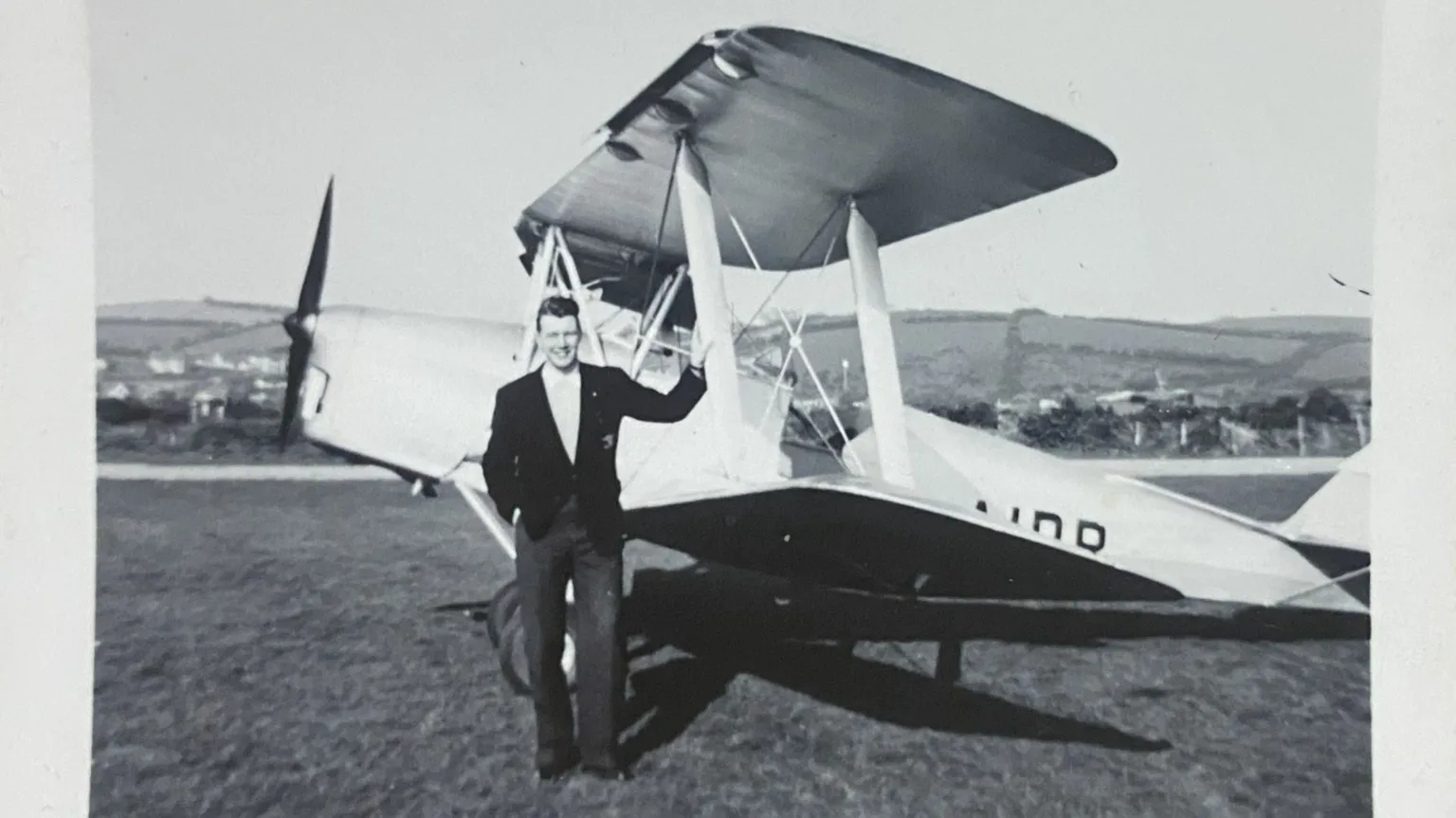
It has been 85 years since Reggie Davidson witnessed the night sky illuminated by the destruction inflicted upon his city.
"From where we were in Stranmillis, you could see the glow - the whole city centre was burning,"
Reggie, then eight years old, had just endured the deadliest World War Two air raid outside London in the United Kingdom. The raid resulted in nearly 1,000 fatalities and 1,500 injuries.
The Easter Tuesday attack on 15 April 1941 was one of four German bombing raids within approximately a month, collectively known as the Belfast Blitz. The assault left the city devastated. However, according to Reggie, now 93, the night also demonstrated the city's resilience.
"It's important that people should know people in the city rose to the occasion."
On the 85th anniversary of the Blitz, Reggie recalled how his mother was asked to help open one of the local air raid shelters when the sirens sounded, and he assisted her.
"You have to buckle in and do what you can,"
The shelters were rectangular red-brick structures with solid concrete roofs and no windows, capable of accommodating up to 100 people.
"It wouldn't be very comfortable but then after all it was an air raid,"
Reggie noted there were many others who contributed during the raids.
"The fire brigade, for example, were really most proficient in the city at that time."
He added,
"It's very hard I would think for any fire brigade to stop a burning building that's been bombed."
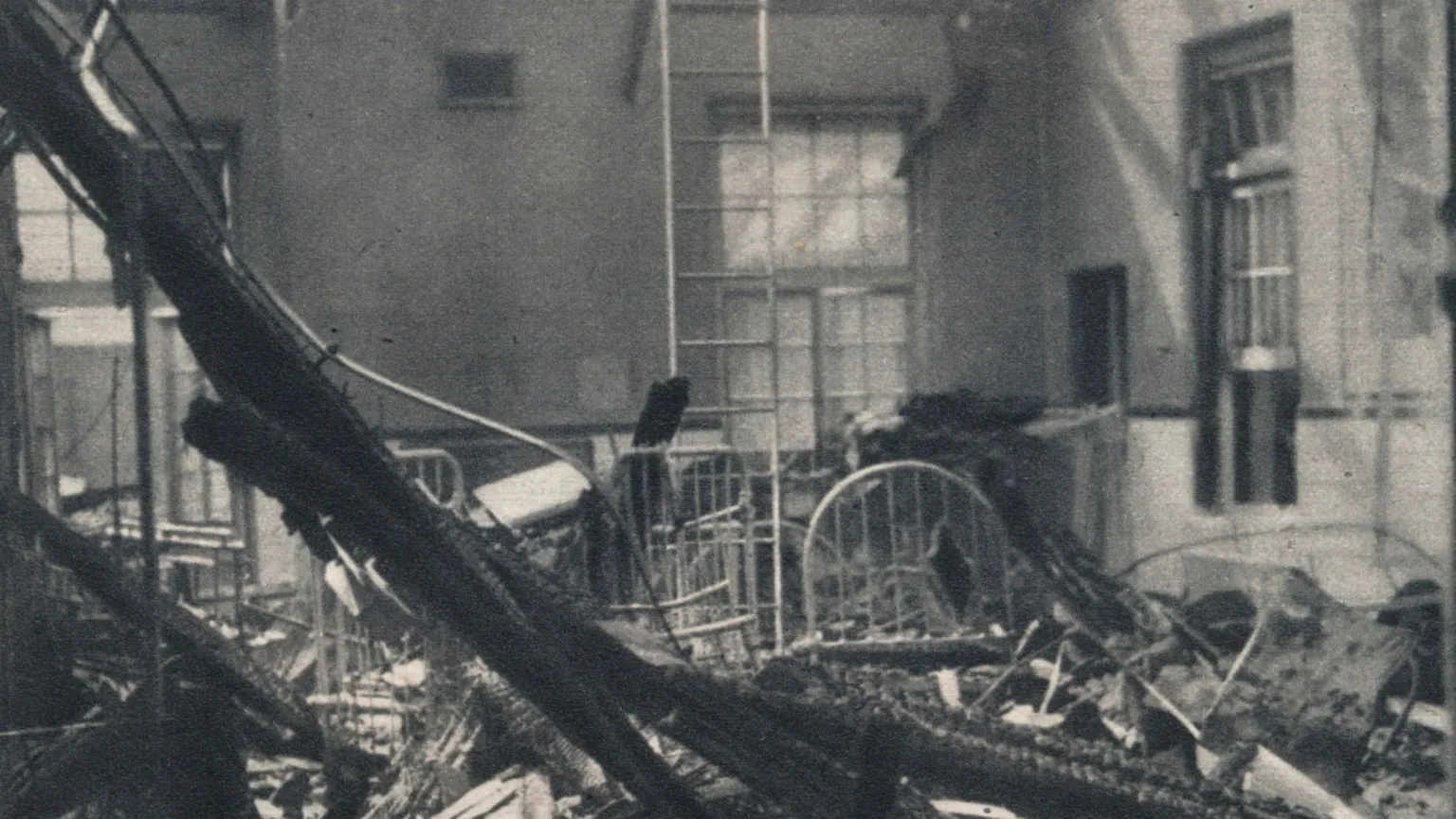
Reggie also recalled cycling to the city centre to observe the destruction after some of the raids.
"It was amazing how much damage was done"
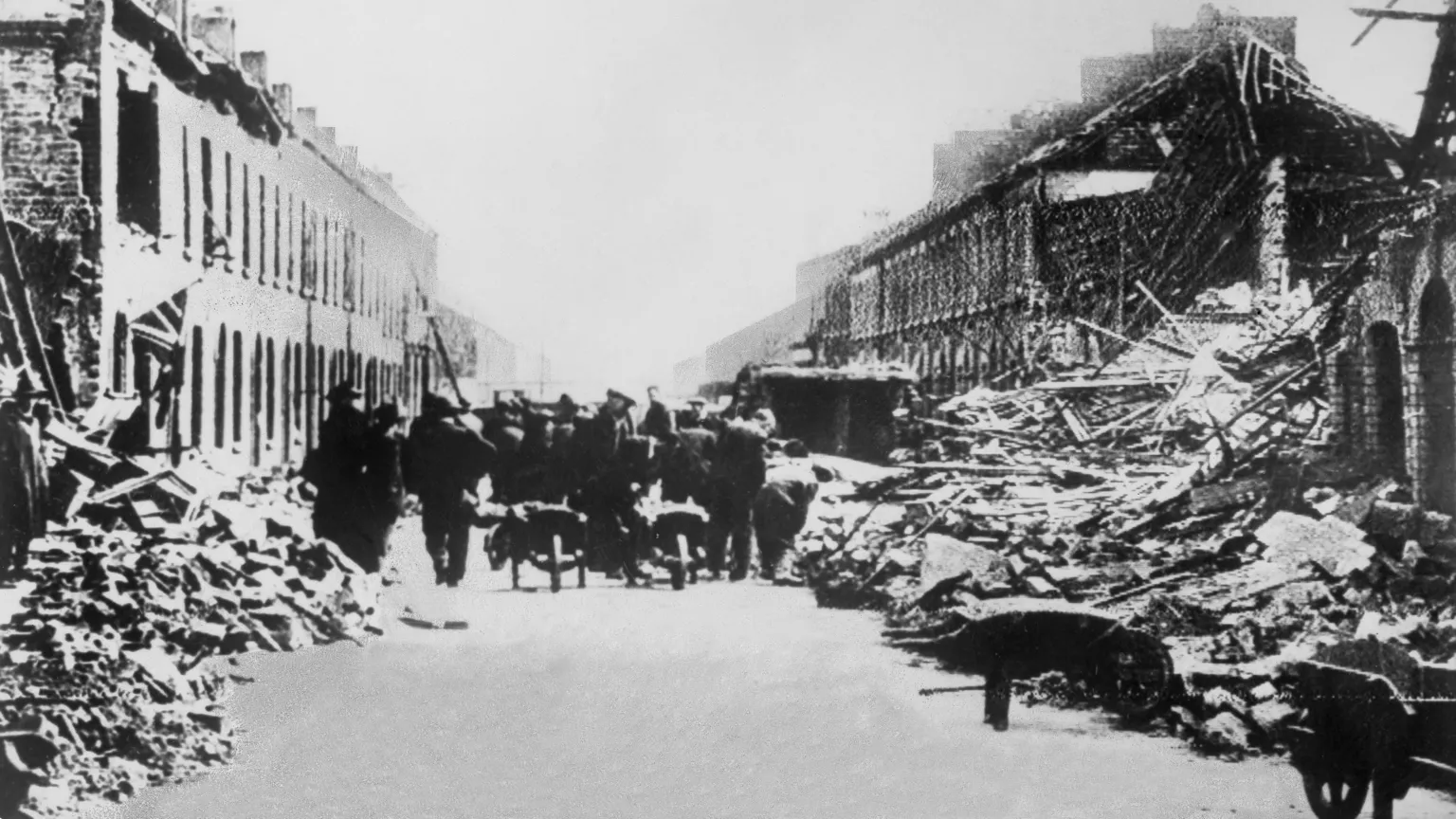
He described the area around York Street as being "just flattened basically" and noted that much of it was still smouldering rather than actively burning.
Following the Blitz, Reggie was evacuated to his grandparents' farm outside Dungannon. He now resides in County Down and reflected on his wartime contributions.
"I suppose at the time you don't think of what you're doing, from what's going to come out in the future, that you'll be sitting answering questions about it."
What was the Belfast Blitz?
Between 7 April and 6 May 1941, the German Luftwaffe targeted Belfast's docks and factories, which were vital to the war effort, resulting in approximately 1,000 deaths.
The city endured four major raids, with bombs destroying half of the houses and leaving 100,000 people homeless.
The most severe attack occurred on Easter Tuesday, 15 April, when 200 German bombers bombarded the city.
Poor visibility that night hindered the bombers' accuracy, causing explosives to fall on densely populated areas.
A New Theatrical Reflection on the Belfast Blitz
To mark the 85th anniversary, a new play titled A Bomber's Moon is being staged at the Sanctuary Theatre in east Belfast, reflecting on the devastating raids.
The theatre is housed in the former Mountpottinger Non-Subscribing Presbyterian Church, which served as a sanctuary for families during the Blitz.
A Bomber's Moon follows the story of 20-year-old Sadie "Minty" Murray as bombs fall on her city.
The term "bomber's moon" refers to a bright full moon during World War Two that illuminated the landscape almost like daylight, aiding aircrews in navigation and targeting.

Co-writer Sam Robinson emphasized the importance of preserving such stories.
"There's a Jewish playwright who survived the Holocaust called Elie Weisel," he said.
"His premise was that whoever listens to a witness becomes a witness.
"I think in listening to the stories Reggie can regale to us and for us to convey them means the next generation then becomes witnesses to it because these stories are so important.
"There's no better witness anywhere in the world than someone who has lived through it."
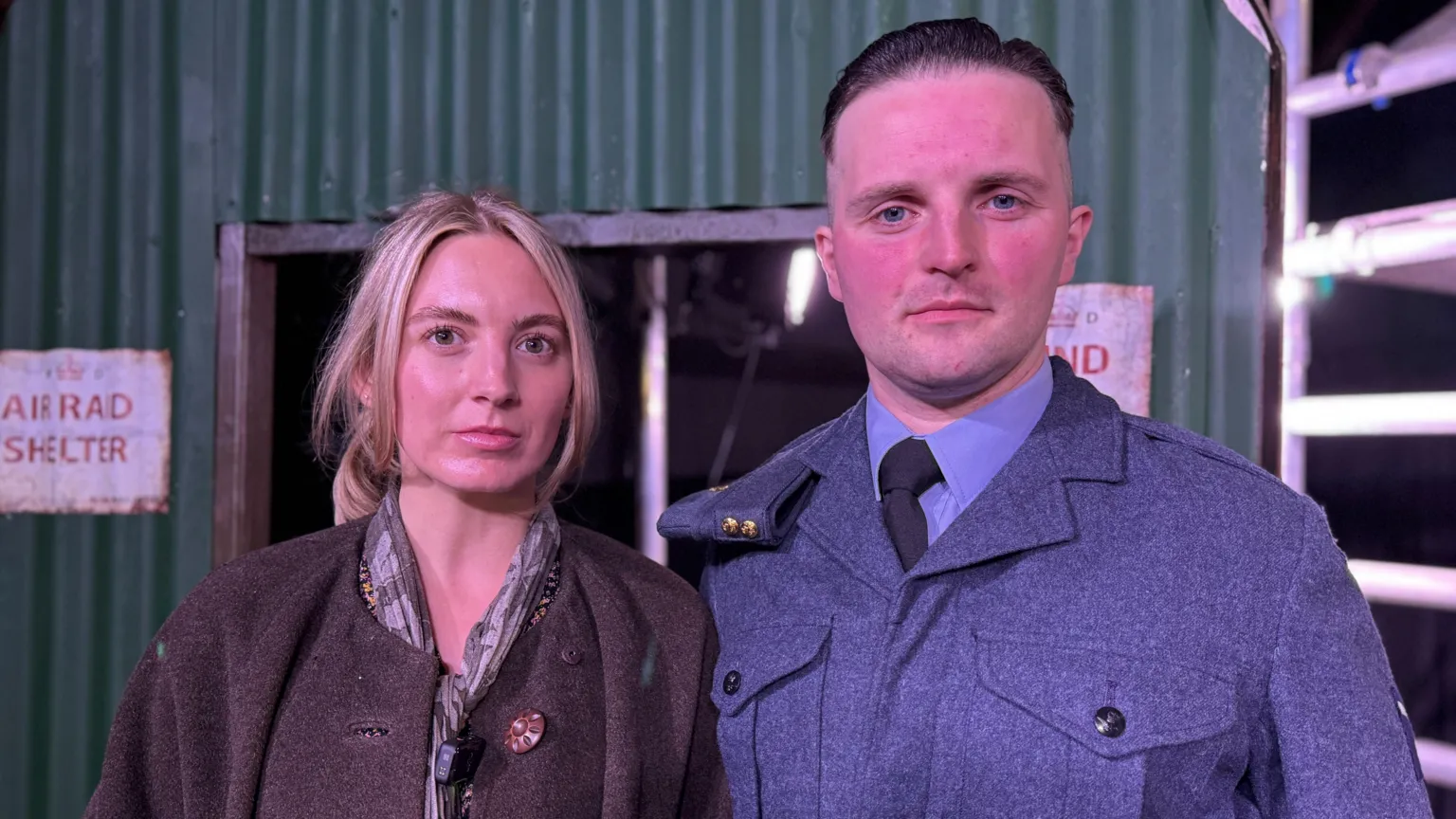
Leah Williamson, who portrays Sadie, highlighted the significance of the play's setting and characters.
"So much of the script has been taken from personal experience of writers' families during the war so I think it is the characters that make this really important."
Glenn McGivern, who plays Sadie's love interest Frank, expressed his appreciation for engaging with stories that deepen his understanding of the city.
"I hope audiences leave with a better understanding of what Belfast went through but also some empathy for all the characters just to see it's not all black and white."
Significance of the Sanctuary Theatre and the Play's Themes
Director and co-writer Trevor Gill emphasized the importance of the building as a place of refuge and community gathering.
"We're carrying the torch, if you like, forward into the future for generations that have gone before us and loved this building."
He believes the story resonates with contemporary issues.
"We're carrying the torch, if you like, forward into the future for generations that have gone before us and loved this building."
"This story is about hope, it's about love, it's about redemption and whether good wins over the more negative elements that are prevalent in society."