

Introduction
With only two days remaining before the polls open, the various claims and counter-claims made throughout the Holyrood election campaign have come under close scrutiny.
BBC Verify has been fact-checking statements from political parties and has identified several questionable claims at the center of the debate.
The spending promises of the main parties have been evaluated in light of warnings from economic experts about a challenging financial environment for whoever assumes office after 7 May.
Additionally, assertions concerning topics ranging from energy bills to the NHS have been examined and provided with additional context where necessary.
Reform UK Links Immigration with Crime in Glasgow
Although immigration is not directly within the remit of the Scottish Parliament, it has emerged as one of the most contentious issues during the election campaign.
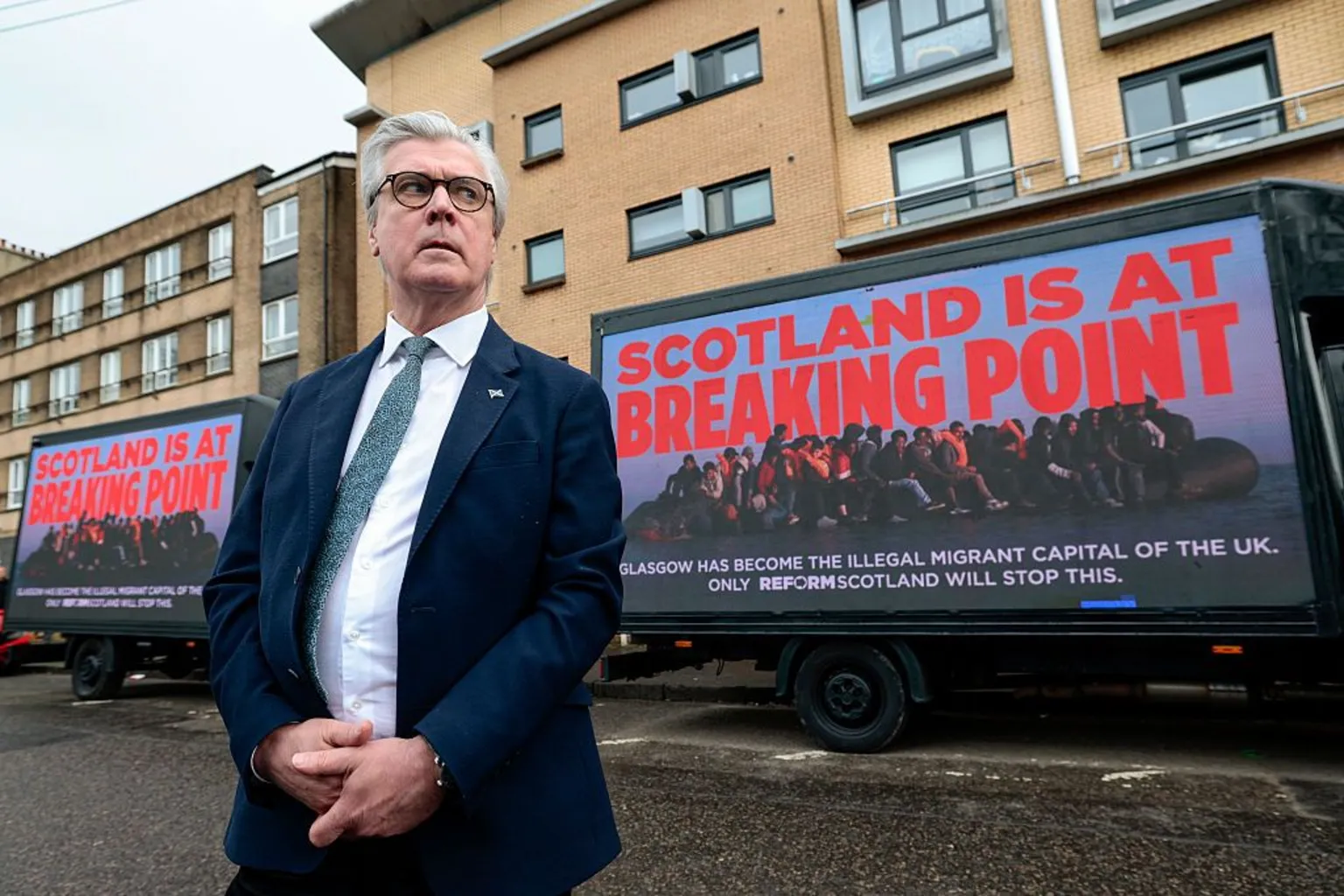
Reform UK has prominently raised this issue, with party member Thomas Kerr making a statement that appeared to associate immigration with crime in Glasgow.
"Under the SNP we've seen our city become lawless with a rapid rise in rapes and sexual assaults - mass illegal migration is pushing Glasgow to breaking point and anarchy."
This follows comments from the party's Scottish leader Malcolm Offord, who previously stated that police had been pressured by "a record number of strangers coming to Glasgow with different cultures and values to our own, making the city less safe for women and girls."
Examining crime statistics in Glasgow, when the SNP assumed control of the council in 2017, the total crime rate was 901 per 10,000 people. Since then, this has decreased to 829, according to Scottish government data.
In the previous year, police recorded 800 sexual assault crimes in Glasgow and 494 incidents of rape and attempted rape.
It is important to note that not all crimes are reported in the year they occur; Police Scotland has indicated that across Scotland, 25% of sexual crimes reported in 2024/25 had taken place at least one year earlier.
The overall sexual assault crime rate in Glasgow was 13 per 10,000 people last year, consistent with the level in 2017/18, while the rate for rape and attempted rape rose from six per 10,000 in 2017/18 to eight per 10,000 last year.
There is no definitive evidence to confirm or refute a connection between these crime figures and "illegal migration." The Scottish government does not publish data on offenders' immigration status, and Police Scotland's crime reporting system does not include markers for asylum or immigration status.
BBC Verify has previously requested Reform UK to provide statistics supporting its claims but has received no response.
Further information on political leaders' claims about the impact of asylum and migration on housing can be found here.
SNP's Claim on Reducing Electricity Bills by One Third if Independent
The SNP manifesto asserts that household electricity bills could be reduced by one third if Scotland were to become independent.
This claim depends on Scotland gaining independence, establishing its own energy policy, and creating a separate electricity market, as outlined in an SNP report.
There are numerous hypothetical factors involved, such as the timing of independence and the design of new systems, making the extent of any savings uncertain.
Ownership of North Sea oil and gas was a significant topic during the 2014 Scottish independence referendum, and it is possible that ownership of offshore wind generation could be contested by the UK government.
A key argument is that the wholesale electricity price in the UK is often influenced by gas prices, which the SNP claims would occur less frequently after independence due to Scotland's substantial renewable electricity production.
However, the UK government aims to generate nearly all electricity from low-carbon sources by 2030, which could similarly reduce reliance on gas prices.
The SNP's plans also include savings from not constructing new nuclear power stations, although additional expenditure on power storage is anticipated.
Further savings are projected from altering charges for energy transmission from generators in remote areas.
Since the SNP manifesto launch, the UK government has announced a significant reform in electricity pricing.

Conservative Claim of 1,000 North Sea Jobs Lost Monthly
The future of Scotland's oil and gas sector, and the pace of transition to renewable energy jobs, has been a prominent theme in the Holyrood campaign.
Scottish Conservative leader Russell Findlay has advocated for increased oil and gas drilling in the North Sea, asserting that 1,000 jobs per month are currently being lost in the sector.
This figure originates from a forecast by the Energy Transition Institute (ETI), a think tank based at Robert Gordon University in Aberdeen, which predicted a monthly loss of 1,000 North Sea oil and gas jobs until 2030.
BBC Verify consulted the ETI, which clarified that they expect 600 to 800 direct oil and gas job losses per month.
The remainder, they explained, would be "indirect" job losses, referring to individuals benefiting indirectly from the oil and gas industry, such as taxi drivers and hospitality workers.
According to a Scottish Affairs Committee report, 70,000 jobs have been lost in the sector over the past decade, equating to approximately 7,000 jobs per year or 583 per month.
Labour's Goal to Build 125,000 Homes in Five Years
Scottish Labour's manifesto sets a target of constructing 125,000 homes across Scotland during the next parliamentary term.
This target encompasses all housing sectors, both public and private, averaging 25,000 homes annually.
Recent housing data shows a decline, with 17,336 new homes completed in 2025—a 13% decrease from the previous year—and 14,999 homes started, down 6%.
Homes for Scotland, an industry body, attributes this to a "sustained downward trend" exacerbated by a "chronic shortage of effective housing land."
The organization warns that completions could fall to 5,000 per year by 2031 unless urgent reforms to the planning system and land supply are implemented.
Such reforms may require legislative changes, which would take time to enact and apply.
Consequently, parties making ambitious housebuilding promises may face significant challenges in delivering on them.
Liberal Democrats Claim 800,000 Scots on NHS Waiting Lists
During a BBC TV debate, Scottish Liberal Democrat leader Alex Cole-Hamilton stated that "800,000 Scots are currently on an NHS waiting list."
However, Public Health Scotland (PHS) indicates that no single database consolidates all patient data, making it impossible to definitively determine the total number of people on NHS waiting lists in Scotland.
PHS data shows that as of 31 March, 571,054 individuals—approximately one in ten of Scotland's population—were on at least one outpatient, inpatient, or day-case waiting list.
This figure does not include all waiting list types, such as those for key diagnostic tests.
The number of patients waiting over a year for planned hospital appointments or procedures has been decreasing since July, though the Scottish government missed its target to eliminate long waits by the end of March.
Scottish Greens Claim More Social Care Vacancies Than School Leavers
In the same BBC Scotland debate, Scottish Greens co-leader Ross Greer advocated for increased immigration "to meet the needs of this country."
He also claimed:
"If every young person leaving school in Scotland today went to work in social care, there still wouldn't be enough care workers."
The party informed BBC Verify that Greer was referencing a comment attributed to Donald Macaskill, head of the private care home trade body Scottish Care, regarding the scale of vacancies.
In 2024-25, the number of Scottish school leavers was 55,801 pupils.
An annual vacancies survey conducted by the Scottish Social Services Council and the Care Inspectorate, with the latest data from 2024, indicates that 44% of registered care services reported staff vacancies.
In nine of Scotland's 32 local authority areas, 50% or more of services reported vacancies.
However, this survey, published more than a year after data collection, does not specify the number of social care vacancies.
The report states that vacancies account for 6.4% of the total workforce on a whole-time equivalent basis.
Census and market data estimate that between 150,000 and 200,000 people were employed in the social care sector in 2024.
This suggests that the number of school leavers would be sufficient to fill existing vacancies.



