

Jo Good Returns to BBC Radio After Bedford Train Crash
Jo Good resumed hosting her late night show on BBC Local Radio on Friday, two weeks after sustaining injuries in the Bedford train crash.
BBC Radio London presenter Jo Good returned to the airwaves following four facial fractures she suffered in the Bedfordshire train collision.
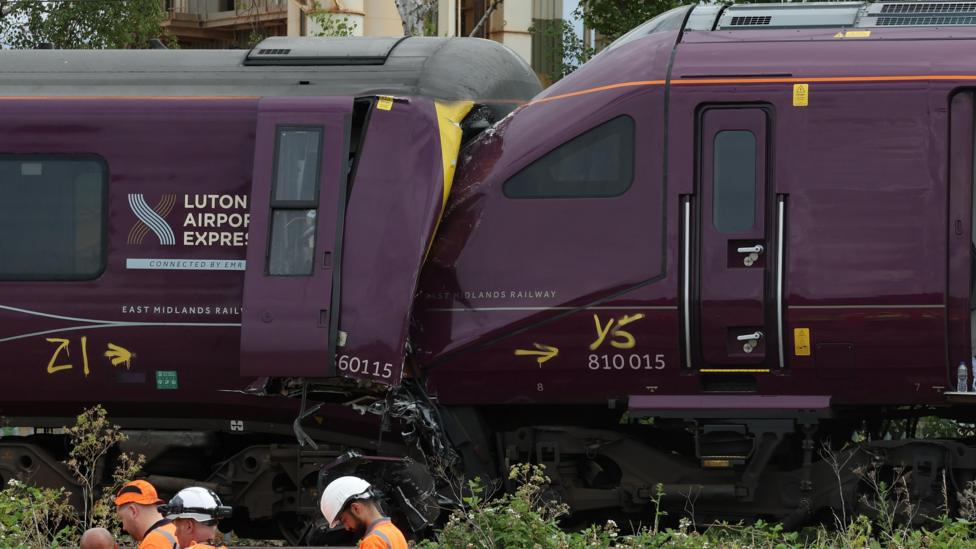
The crash occurred near Elstow, close to Bedford, on 19 June. It resulted in the death of East Midlands Railway driver Shaun Burton and injured 162 people, with 102—including Good—requiring hospital treatment.
During her Late Night Jo show on Friday evening, Good recounted her experience and expressed gratitude to the emergency services and a train guard who facilitated the evacuation.
Good had been traveling from an event in Market Harborough to London St Pancras when her carriage was struck from behind by a London-bound express train, causing it to partially roll over.
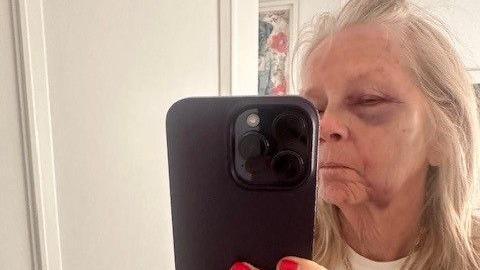
Following her return to broadcasting, Sara David, editor of BBC Radio London, commented:
"We are so relieved to have Jo back on air doing what she does best.
All of the team at Radio London and her listeners have been wishing her well. We are so utterly grateful she's okay."
At the time of the collision, Good was thrown from her seat and sustained fractures to her face.
Reflecting on the immediate aftermath, she told her audience:
"In movies, there's always screaming and high drama. There wasn't any. It was silent actually, people in the deepest shock."
She described how her phone and those of other passengers began sending emergency alerts stating "you have been in a crash," accompanied by a siren.
Good recounted lying on the floor of the carriage with objects falling on her before a "very, very, very brave guard" arrived to oversee the evacuation.

Because the carriage had partially rolled in a remote area, passengers faced a jump down when disembarking and had to wait in a nearby field.
The collision caused the railway line to be blocked and services severely disrupted, with the train remaining at the site for over a week.
Good opened her show by praising the "extraordinary" response of NHS staff at Bedford Hospital and University College Hospital in London, where she received treatment for her facial injuries.
She noted that many doctors and nurses came in off-shift or returned from annual leave after seeing the incident on the news.
"I just cannot praise them highly enough," Good said.
"They said they'd trained for this for 11 years... and they said, 'we never thought we'd have to do it, to practice it'. But it was like clockwork."
Investigation and Circumstances of the Crash
The Rail Accident Investigation Branch (RAIB) continues to investigate the full circumstances of the collision.
It is known that the express train passed a red signal shortly before colliding with the stationary train, which had been traveling from Nottingham.
The crash occurred near Elstow, Bedfordshire, approximately 2.5 miles (4km) south of Bedford.
Good reflected on how a series of coincidental decisions influenced her experience of the crash, likening the sequence to a "sliding doors" scenario.
"That's really what our lives are like," she said.
"I took a train that I wouldn't have taken. I took a train that was an earlier train than the one I was meant to be taking. I sat in a carriage that was a safer carriage. All of these things that are sliding door moments."
She added that the "near-death experience" altered her outlook on life.
"The end result is that life is so precious... and it's made me realise I need to prioritise my friends," Good said.
Listeners can access the best of BBC Radio London on Sounds and follow BBC London on Facebook, X, and Instagram. Story ideas can be sent to hello.bbclondon@bbc.co.uk.
and Links
For more information, see: What do we know about the Bedford train crash, one week on?


