

US Military Engagement Against Iranian Drones
The US military reported that it intercepted and shot down four Iranian "one-way attack drones" that were launched toward the Strait of Hormuz. According to US Central Command (Centcom), these drones "posed an immediate threat to regional maritime traffic."
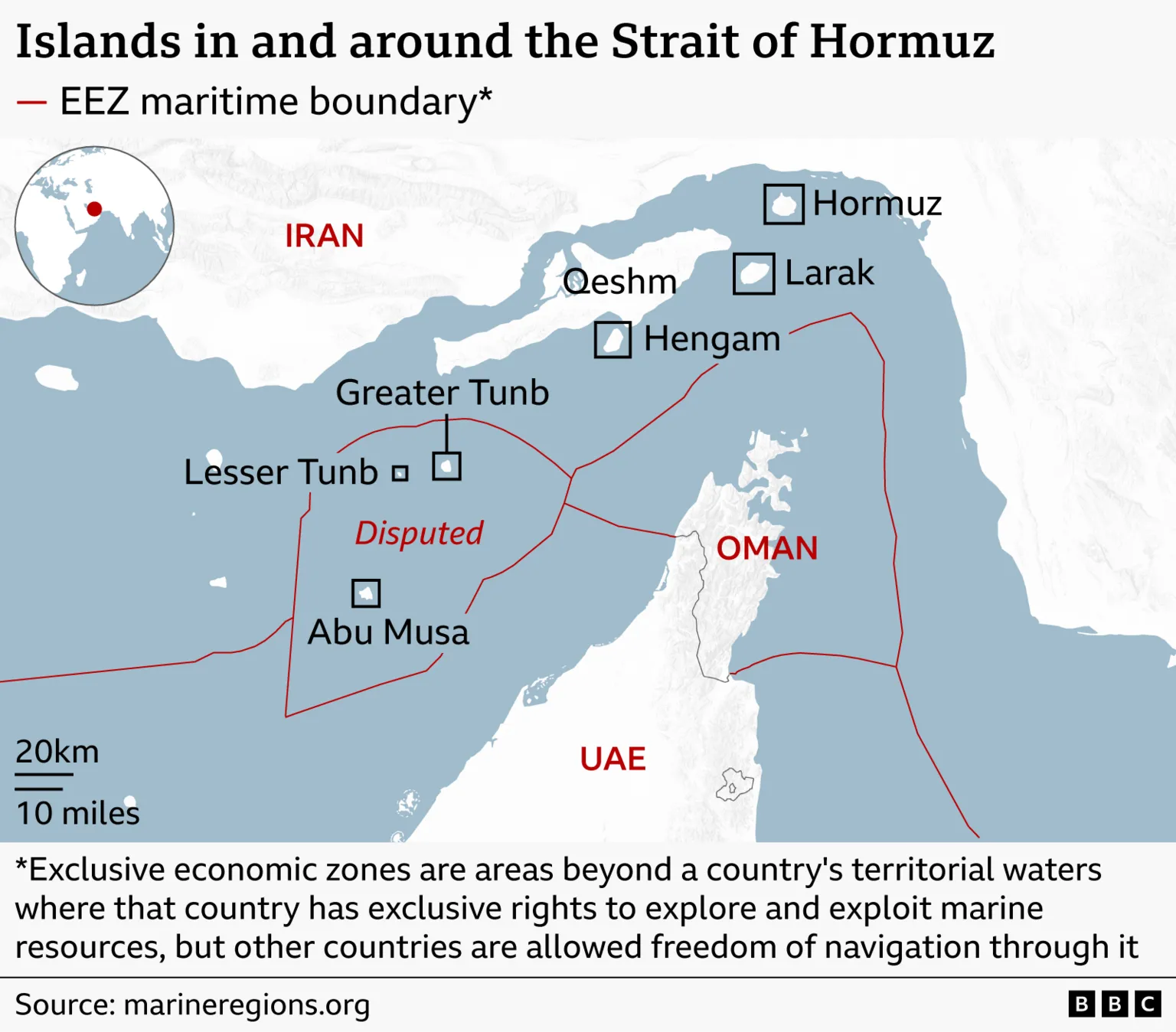
Following the drone interceptions, US forces targeted Iranian coastal surveillance radar sites located in Goruk and on Qeshm Island to prevent further attacks, Centcom stated in an official release.
Iranian Ballistic Missile Retaliation
In response to the US strikes, Iran launched ballistic missiles targeting two US air bases in Kuwait and US Navy facilities in Bahrain, as reported by Iran's state-run Irib news agency.
Centcom's initial assessments indicated that of the seven missiles fired by Iran at the Gulf states, six were successfully intercepted, while one missile failed to reach its intended target.
Context of Escalating Conflict
This series of attacks follows several days of exchanges between the US and Iran, escalating tensions and threatening a fragile ceasefire between the two nations.
On Wednesday, Iranian drone strikes on Kuwait's international airport resulted in one fatality and over 60 injuries, according to local officials.

However, Iran's Islamic Revolution Guard Corps (IRGC) denied responsibility for the airport attack, attributing the damage to an error involving a US missile interceptor.
Centcom refuted this claim, stating that Iran's strike on the airport was a
"deliberate, calculated and unjustified attack".
IRGC's Statement and Retaliation
The IRGC earlier declared that it had targeted US bases in the Gulf as retaliation for US strikes on an Iranian oil tanker and Qeshm Island.
Ceasefire Negotiations and Regional Impact
The attacks occurred amid stalled ceasefire negotiations between the US and Iran, with efforts to reach a resolution failing to progress.
On 28 February, the US and Israel conducted extensive strikes on Iran, igniting conflict across the Middle East.
Iran responded by attacking Israel and US-allied Gulf states and effectively closing the Strait of Hormuz, a critical maritime passage through which approximately 20% of the world's oil and liquefied natural gas is transported. This action caused global oil prices to surge.
Shortly after a ceasefire was agreed upon in early April, the US implemented a blockade of Iranian ports. President Donald Trump stated that this blockade would remain
"in full force and effect until an agreement is reached, certified, and signed".


