

US-Iran Deal Expected Soon Despite Tehran's Doubts
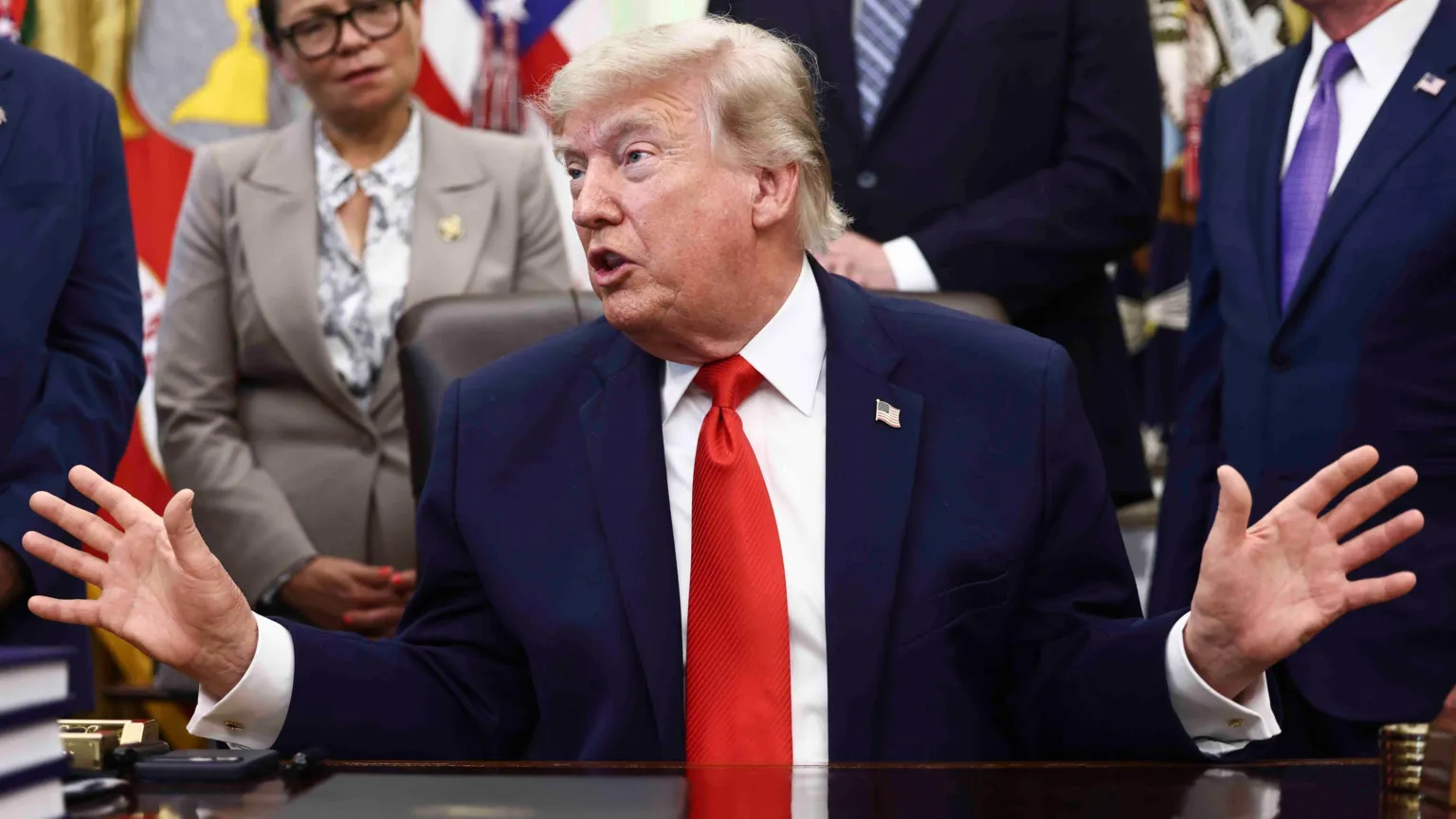
President Donald Trump announced that a deal between the US and Iran is "scheduled to get signed" on Sunday, although Iranian officials have expressed skepticism about the timing.
Before Trump's statement on Saturday afternoon, Iran's foreign ministry spokesman Esmaeil Baghaei remarked:
"We will have to wait and see about the exact date of the signing of the memorandum of understanding, although it will not be tomorrow."
Regardless, the agreement could lead to reopening the Strait of Hormuz in exchange for the US lifting its blockade on Iranian shipping.
Officials indicate the deal will also involve the destruction and removal of Iran's enriched uranium stockpiles, a critical element for nuclear weapons, though technical details remain under negotiation.
If finalized, the agreement will likely be compared to the 2015 nuclear deal negotiated by the Obama administration and other nations, which Trump abandoned during his first term.

Trump's Vision for Iran's 'Nuclear Dust'
Uranium, a naturally occurring radioactive element, has properties useful for fueling nuclear power plants as well as developing nuclear weapons. However, it must first be "enriched," a process that increases the concentration of the uranium-235 isotope, essential for nuclear fuel.
Since the conflict began on 28 February, Trump has repeatedly insisted that Iran must surrender its uranium stockpiles.
"They're going to give us the nuclear dust,"he stated on 29 March.
He reiterated this position during an NBC interview on 7 June:
"If we make a deal now we're friendly, we'll all go together. It'll be our equipment. We'll take it out and destroy it, whether it's onsite or whether we take it offsite."
However, Iran has previously declared that "zero enrichment" is a red line and a violation of its sovereign rights.
The fate of Iran's uranium stockpile was central to the 2015 nuclear agreement—the Joint Comprehensive Plan of Action (JCPOA)—which imposed strict limits on Iran's enrichment activities.
"The number one issue that was running at that time was whether Iran was going to go for building a nuclear weapon,"former JCPOA lead negotiator Baroness Ashton told BBC Verify.
When introduced, the Obama administration asserted that the JCPOA would prevent Iran from developing a secret nuclear program and that Tehran had agreed to "extraordinary and robust monitoring, verification, and inspection."
In return, the US agreed to lift sanctions on Iran, including those affecting oil, trade, and banking.
Under the deal, Iran was permitted to retain only a small amount of monitored, low-enriched uranium. It was required to reduce its stockpile by 98% (to 300kg; 660lbs), limit enrichment to 3.67% purity, and restrict its centrifuges—the machines used for uranium enrichment.
Low-enriched uranium, typically 3-5% purity, suffices for nuclear reactor fuel, whereas weapons-grade uranium requires enrichment of at least 90%.
The 2015 Deal's Collapse
The International Atomic Energy Agency (IAEA), the UN nuclear watchdog, reported that Iran complied with the JCPOA until the US withdrew in 2018.
"The deal was remarkably successful,"said Kelsey Davenport from the Arms Control Association (ACA), a national nonpartisan organization.
"Any move to nuclear weapons, any deviation from the JCPOA's terms would have been detected,"Davenport told BBC Verify, noting that both the IAEA and US intelligence consistently assessed Iran's compliance.
An April 2018 US Department of State report stated that Iran was "transparently, verifiably, and fully implementing the JCPOA."
However, President Trump announced the US withdrawal in May 2018, describing the deal as a "horrible, one-side deal that should never, ever have been made." He criticized it for failing to address Iran's ballistic missile program, for inspection requirements lacking mechanisms "to prevent, detect, and punish cheating," and cited Israeli intelligence alleging Tehran's "history of pursuing nuclear weapons."
Jacob Olidort, chief research officer at the America First Policy Institute, supported Trump's assessment:
"All of these issues were completely pushed to the sidelines, completely deprioritised and not included in the arrangement."
Baroness Ashton, who negotiated the deal for the UN Security Council, disagreed:
"There was always a criticism that we should have covered all kind of things. But the critical question was, 'Could we prevent any fear that Iran was going to build a nuclear weapon?' And we did that."

She added:
"There was plenty of opportunity afterwards to talk about other issues, ballistic missiles, drones etc. And indeed the Trump administration in its first term could have done that. If President Trump felt that the deal was inadequate, then the answer was to build on it, not to rip it up."
Olidort noted the deal's time-limited nature allowed Iran to potentially pursue nuclear weapons eventually:
"It was always made explicit in the deal that the terms of the deal would expire… The sunset clauses in effect nullify their effectiveness."
Davenport explained that some limits on uranium enrichment and stockpile size were set to expire after 15 years, meaning "by January 2031, Iran could theoretically expand its enrichment programme." However, she emphasized that many other provisions, including IAEA safeguards, were permanent and would ensure any move towards nuclear weapons would be quickly detected.
Sanctions and Financial Aspects
Financial issues have been a recurring theme in Trump's criticism, targeting former President Barack Obama multiple times.
"Obama signed that stupid deal where he paid them billions, and billions of dollars. He thought he could bribe them,"Trump said on NBC on 7 June.
Under the JCPOA, Iran gained access to billions of dollars in previously frozen assets and benefited from the lifting of international sanctions.
Baroness Ashton stated that sanction relief was essential for the agreement:
"If you sanction someone because they're doing some behaviour and they change the behaviour, then by definition the sanction cannot stay."
Olidort argued that lifting sanctions helped Iran fund its conventional weapons programs alongside its nuclear ambitions.
Following the US withdrawal, Iran accelerated its uranium enrichment program.
In June 2022, the IAEA assessed that Iran held 43.1kg (95lbs) of uranium enriched to 60% purity.
In June 2025, US and Israeli forces attacked Iran's nuclear facilities, which American officials said significantly delayed Tehran's nuclear weapons development.
At that time, the IAEA estimated Iran possessed 440.9kg (972lbs) of uranium enriched up to 60% purity.
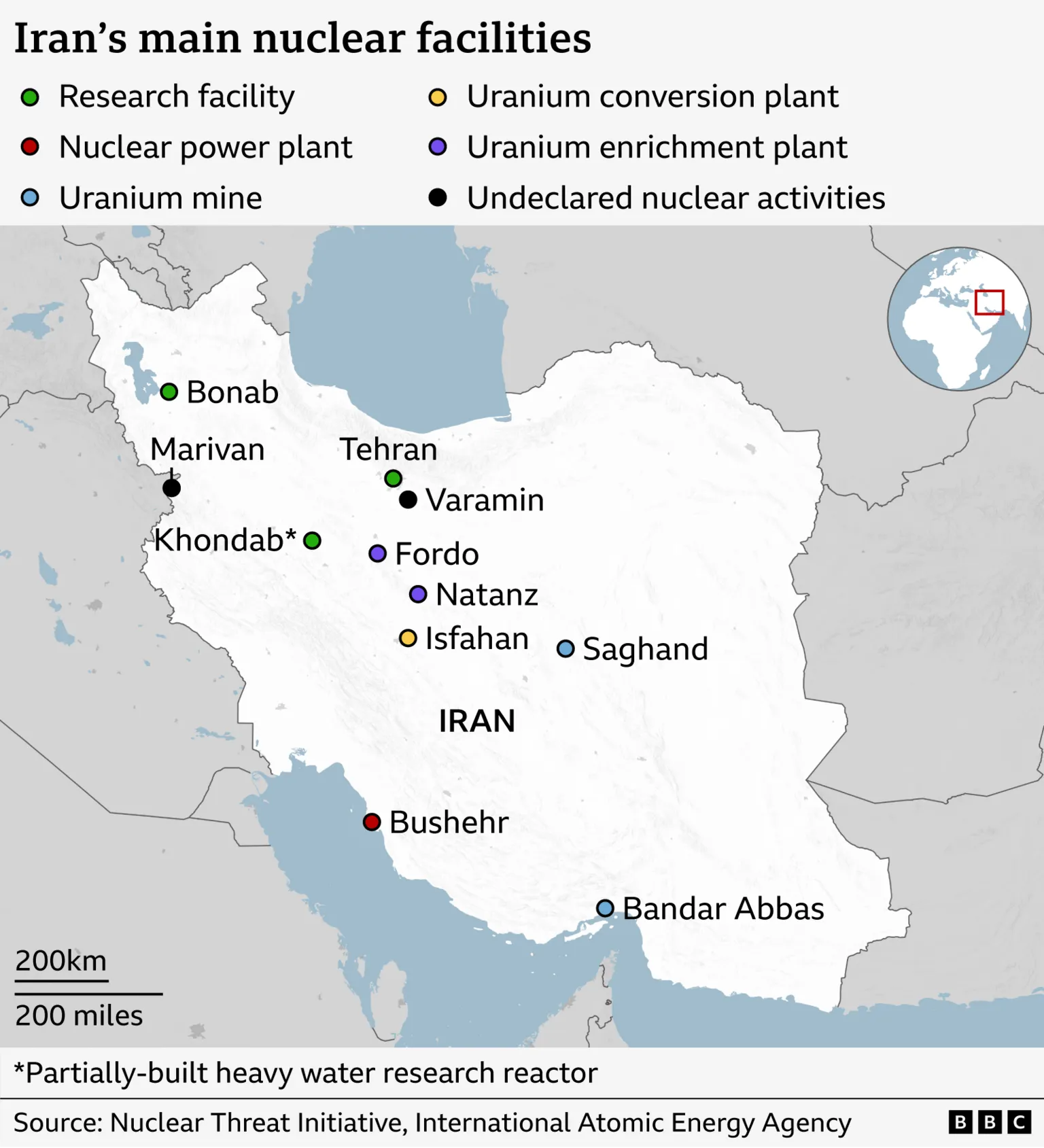
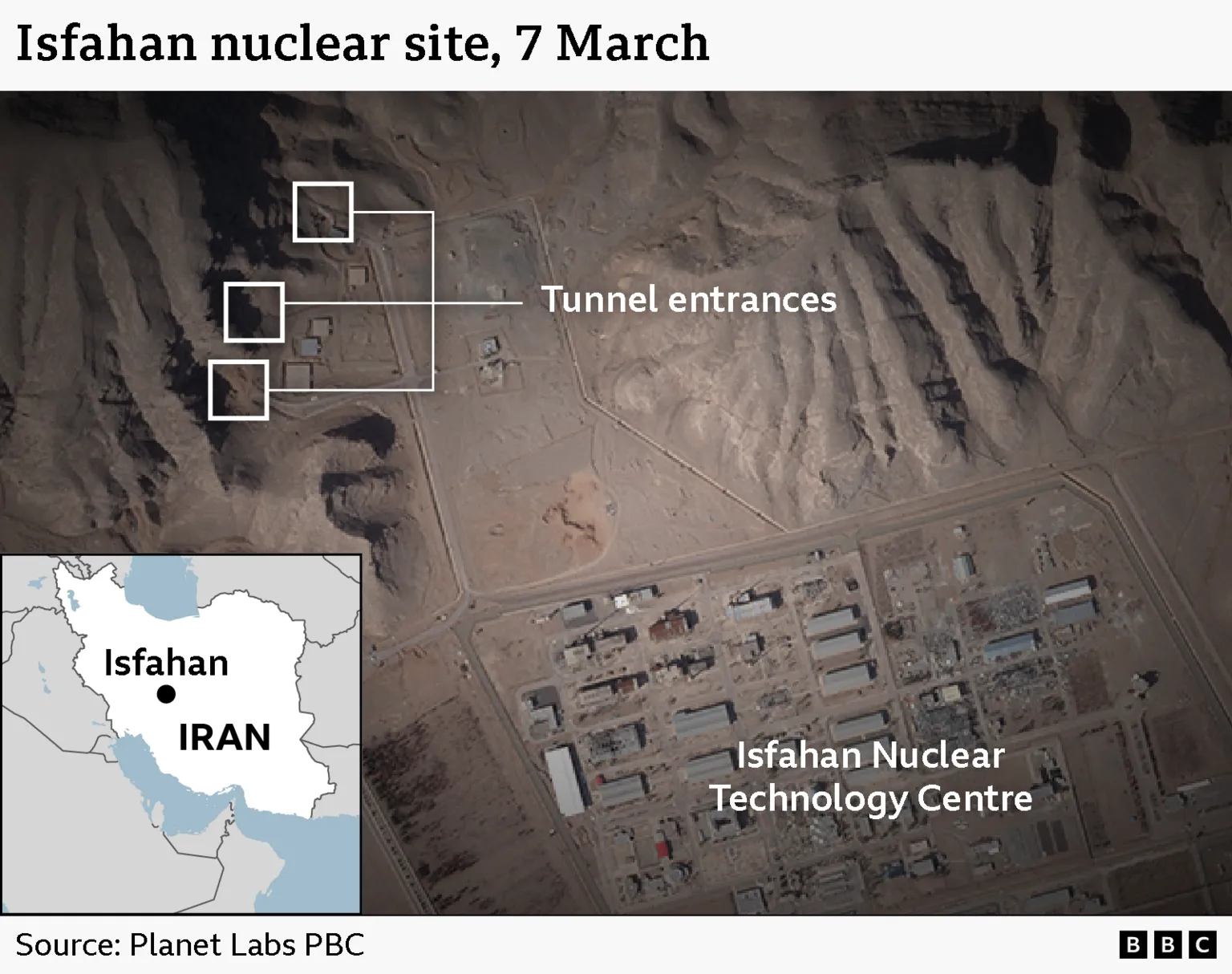
The IAEA's head, Rafael Grossi, told the Associated Press in April that most of Iran's highly enriched uranium (approximately 200kg; 440lbs) was likely stored in underground tunnels at the Isfahan nuclear complex, located about 273 miles (440km) south of Tehran.
Grossi noted inspectors have been unable to verify the site since the conflict began:
"We haven't been able to inspect or to reject that the material is there and that the seals - the IAEA seals - remain there."
He added that the IAEA also seeks to inspect Iran's nuclear facilities at Natanz and Fordo.
Current Nuclear Negotiations
Last month, Trump posted on Truth Social that his envisioned deal would be "far better" than the JCPOA.
While the exact terms remain unclear, Davenport suggests Iran will expect economic benefits from any agreement, and Trump may resist comparisons with the JCPOA due to his prior criticism of sanctions relief.
"Iran is not going to agree to a deal that does not include sanctions relief and assets or access to its frozen assets. Tehran has made very clear that those are key issues,"she said.
Trump will likely aim to demonstrate concessions that Obama could not secure, potentially including a temporary suspension of uranium enrichment and disposal of Iran's existing stockpile.
"He's going to point to two factors to claim victory, that he cleaned up a mess that he'll say accelerated under Biden and he got what Obama couldn't, which was a multi-year suspension,"Davenport added.
However, Davenport also noted that Iran's nuclear program today differs significantly from the 2015 situation due to the apparent destruction of much of its enrichment capacity, complicating direct comparisons with the JCPOA.
Olidort believes the US is negotiating from a position of strength and does not anticipate a deal weaker than the JCPOA:
"Iran is in a much more weakened state from... its capabilities perspectives, but also the state of different proxies in the region."
While details remain uncertain, Baroness Ashton cautions that military pressure alone is unlikely to secure a lasting agreement:
"All I can say is in my experience, the way that negotiations work is that people have to feel that they've got enough to make it worthwhile participating in that negotiation."


