

Trump to Review Iran Ceasefire Proposal
US President Donald Trump announced he would meet with American negotiators to review Iran’s latest ceasefire proposal and decide by Sunday whether to initiate new strikes against Iran.
Trump described the situation as a "solid 50/50" chance of either securing a "good" deal with Iran or resuming military strikes. He plans to meet with special envoy Steve Witkoff and adviser Jared Kushner, among others.
Additionally, Trump is expected to meet with Gulf mediators to discuss the ongoing situation with Iran. Leaders from Egypt, Pakistan, and Turkey are anticipated to participate in these talks. According to a Pakistani security official, a memorandum of understanding aimed at ending the conflict is being "fine tuned," reports.
Iran’s Position and Diplomatic Efforts
Trump’s interview with Axios coincided with statements from Iran’s top negotiator, who declared on Saturday that Iran would not compromise on its national rights during a meeting with the Pakistani army chief in Tehran. Recent days have seen intensified diplomatic efforts to prevent renewed US strikes on Iran and to potentially extend the ceasefire.
Mohammad Bagher Ghalibaf, Iran’s parliamentary speaker, emphasized Tehran’s intent to secure its "legitimate rights," whether through military action or negotiations, while accusing the US of lacking honesty in negotiations, according to Iranian state media.
"If Trump acts foolishly and the war resumes, the response against the United States will certainly be more crushing and bitter than on the first day of the war," Ghalibaf said during the meeting. He added that the Iranian military had rebuilt its capabilities during the ceasefire that began in early April.
These remarks came amid reports that the US was considering fresh strikes on Iran as negotiations for a lasting truce faltered. The Trump administration was reportedly preparing for a renewed round of strikes, citing informed sources.
Trump has frequently threatened military action if a deal with Iran is not reached, though military analysts have expressed skepticism that renewed aerial campaigns would shift the balance in Washington’s favor.
Amid escalating rhetoric from both sides, Iranian state TV reported that Iran was in the "final stage" of drafting a framework for a deal with the US.
Pakistan’s Mediation Role
Pakistan, acting as a mediator between Iran and the US, has intensified efforts in recent days to bridge the gap between the two parties. Pakistan’s army chief, Syed Asim Munir, met with Iran’s president, Masoud Pezeshkian, and foreign minister, Abbas Araghchi, on Saturday before departing Tehran.
The discussions reportedly focused on a 14-point peace proposal by Iran and messages exchanged between the two parties.
A Qatari delegation met with Iranian and Pakistani mediators in Iran on Friday. On Saturday, Trump spoke with the Qatari emir, Sheikh Tamim bin Hamad Al Thani, to discuss "regional and international efforts to stabilise the ceasefire," according to a statement from the emir’s office.
Ceasefire Status and Strategic Importance
A ceasefire between the US, Israel, and Iran has been in place since early April following more than a month of conflict. The truce was intended not only to halt fighting but also to provide space for negotiations on reopening the Strait of Hormuz—a critical chokepoint for approximately one-fifth of the world’s oil and gas supplies—as well as discussions on Iran’s nuclear and ballistic missile programs.

Despite the ceasefire and mediation efforts, talks have largely stalled, and the Strait of Hormuz remains mostly closed.
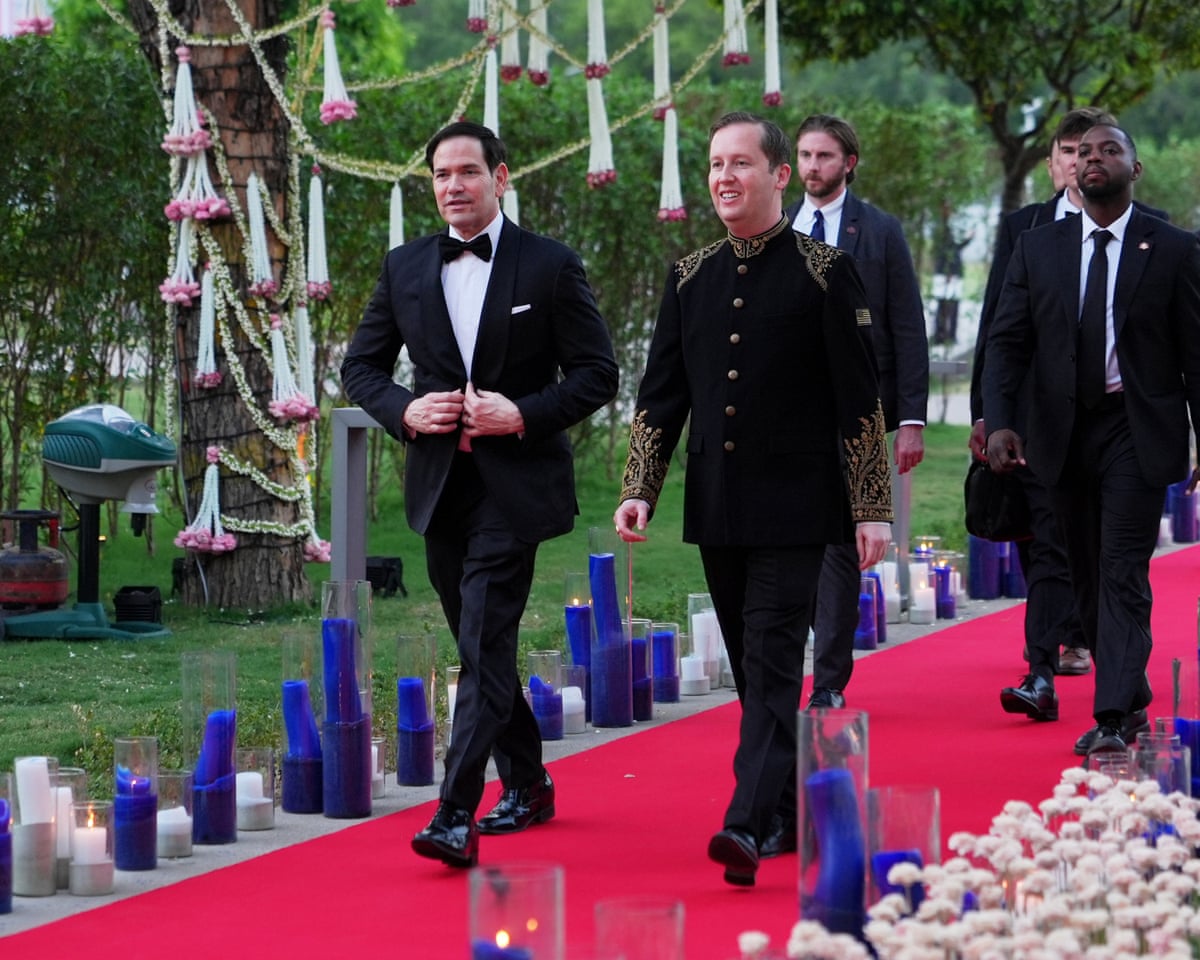
On Saturday, US Secretary of State Marco Rubio expressed cautious optimism about the negotiations. Speaking to reporters in New Delhi during a visit to India, Rubio said,
"There’s been some progress done, some progress made. Even as I speak to you now, there’s some work being done. There might be some news a little later today. There may not be. I hope there will be."
It remains unclear what "news" Rubio was referring to. Mediators indicated on Saturday that they believed they were close to extending the ceasefire by 60 days and establishing a framework for talks on Tehran’s nuclear program, the Financial Times reported, citing sources familiar with the discussions.
Iran’s official IRNA news agency quoted Iranian foreign ministry spokesperson Esmail Baghaei as saying that positions had moved closer in recent days.
Potential for Renewed US Strikes
Trump reportedly planned on Friday to review options for restarting the bombing campaign. He was scheduled to travel this weekend for reasons "pertaining to the government." It remains unclear what the targets of a renewed bombing campaign would be.
Previously, Trump threatened to destroy "a whole civilisation" and targeted civilian infrastructure such as bridges. Israel also attacked energy facilities, and strikes damaged desalination plants during the conflict in March.
Human rights organizations have criticized attacks on civilian infrastructure, arguing that such actions could constitute war crimes due to their impact on civilians.
Potential targets could include sites holding Iran’s stockpile of highly enriched uranium, a key issue in negotiations. However, these facilities and other nuclear sites are likely located deep underground, requiring complex operations with large bunker-buster bombs.
Iran’s stockpiles of drones, ballistic missiles, and missile-launching sites could also be targeted, as in the previous conflict. Targeted assassinations of Iranian officials may also be considered.
Analysts have warned that the US is in a more vulnerable position than at the beginning of the Iran war. It has been reported that the US has depleted much of its stockpile of advanced missile-defense interceptors, a critical munition needed to protect its bases and allies in the Middle East.
Domestic and Strategic Challenges for the US
Much of the US public opposes the war and is frustrated by soaring gas prices and inflation resulting from the closure of the Strait of Hormuz. Trump’s approval rating has declined to about 37%, a historic low.
It is also unclear how much the US achieved in the initial phase of the conflict. The Iranian leadership remains intact, and intelligence assessments suggest that up to 60% of Iran’s missile and drone stockpiles remain.


