

Welcome summary
Hello and welcome to our continuing live coverage of the Middle East crisis and its consequences for the region, the world, and the global economy.
Here are the latest developments:
Donald Trump announced he would extend his pause on the threat to attack Iran’s energy infrastructure for an additional 10 days until 6 April. He claimed this extension was at the request of Tehran and that talks were progressing "very well." The US president had initially threatened last Saturday to strike Iranian energy infrastructure if Tehran did not reopen the Strait of Hormuz. On Monday, he postponed this threat for five days, citing "very good and productive conversations" with Iran regarding ending the war, which Tehran dismissed as "fake news" intended to "manipulate" oil markets. Now, he has extended the pause further.
The price of Brent crude dropped following Trump’s latest announcement. Oil prices had risen to their highest level this week, with Brent crude trading at approximately $108 a barrel after Trump’s cabinet meeting earlier on Thursday.
Yemen’s Houthis stated there is no reason to be concerned amid fears that if Trump follows through on threats to seize Iran’s Kharg Island, Tehran might request them to attack shipping in the Red Sea.
A day after Tehran rejected Trump’s 15-point ceasefire plan, the US president claimed Iran was "begging to make a deal" and insisted he was not the party pushing for negotiations. Earlier, he urged Tehran to "get serious soon" about negotiating a deal to end the war.
Trump denied reports suggesting he was seeking an exit strategy as oil prices surged and political pressure increased to avoid a prolonged Middle East conflict, which he had previously opposed.
"I read a story today that I’m desperate to make a deal," Trump told reporters. "I’m the opposite of desperate. I don’t care."
A senior Iranian official described a US proposal to end nearly four weeks of fighting as "one-sided and unfair," according to on Thursday.
Trump stated that Iran had allowed some oil tankers to pass through the Strait of Hormuz as a gesture of good faith for talks. He noted that Iran permitted 10 oil tankers to transit the strategic strait as a "present" to demonstrate seriousness about negotiations to end the war.
The Pentagon is reportedly considering deploying up to 10,000 additional ground troops to the Middle East to provide Trump with more military options, even as he contemplates peace talks with Tehran, according to the Wall Street Journal, which cited defense department officials.
The Israel Defence Forces’ chief of staff warned that the military could "collapse in on itself" due to increasing demands and a growing manpower shortage while engaged on multiple fronts, as reported by Israeli media.
A Thai-flagged cargo ship that was struck by unknown projectiles in the Strait of Hormuz earlier this month has run aground off Iran’s Qeshm Island, according to Iran’s semi-official Tasnim news agency on Friday.
UAE pushing for international force to reopen Strait of Hormuz – report
The United Arab Emirates has informed allies that it would participate in a multinational maritime task force aimed at reopening the Strait of Hormuz, as it seeks to form a coalition to ensure shipping can pass through the vital waterway, the Financial Times reports.
The UAE has communicated to the US and other Western states that it would take part, with two sources indicating that Abu Dhabi would deploy its own navy.
This move reflects the UAE’s hardened stance towards Iran, as it bears the brunt of Tehran’s retaliation to the US-led war, the report states.
The report has not been independently verified.
It also mentions that the UAE is working with Bahrain on a UN Security Council resolution to provide any future task force with a mandate, though Russia and China may oppose the initiative, according to one source.
Gulf states are concerned that Iran could seek to maintain control even if the war ends. There is growing conviction among some Gulf states and the US that reopening the blocked strait without naval escorts is unlikely.
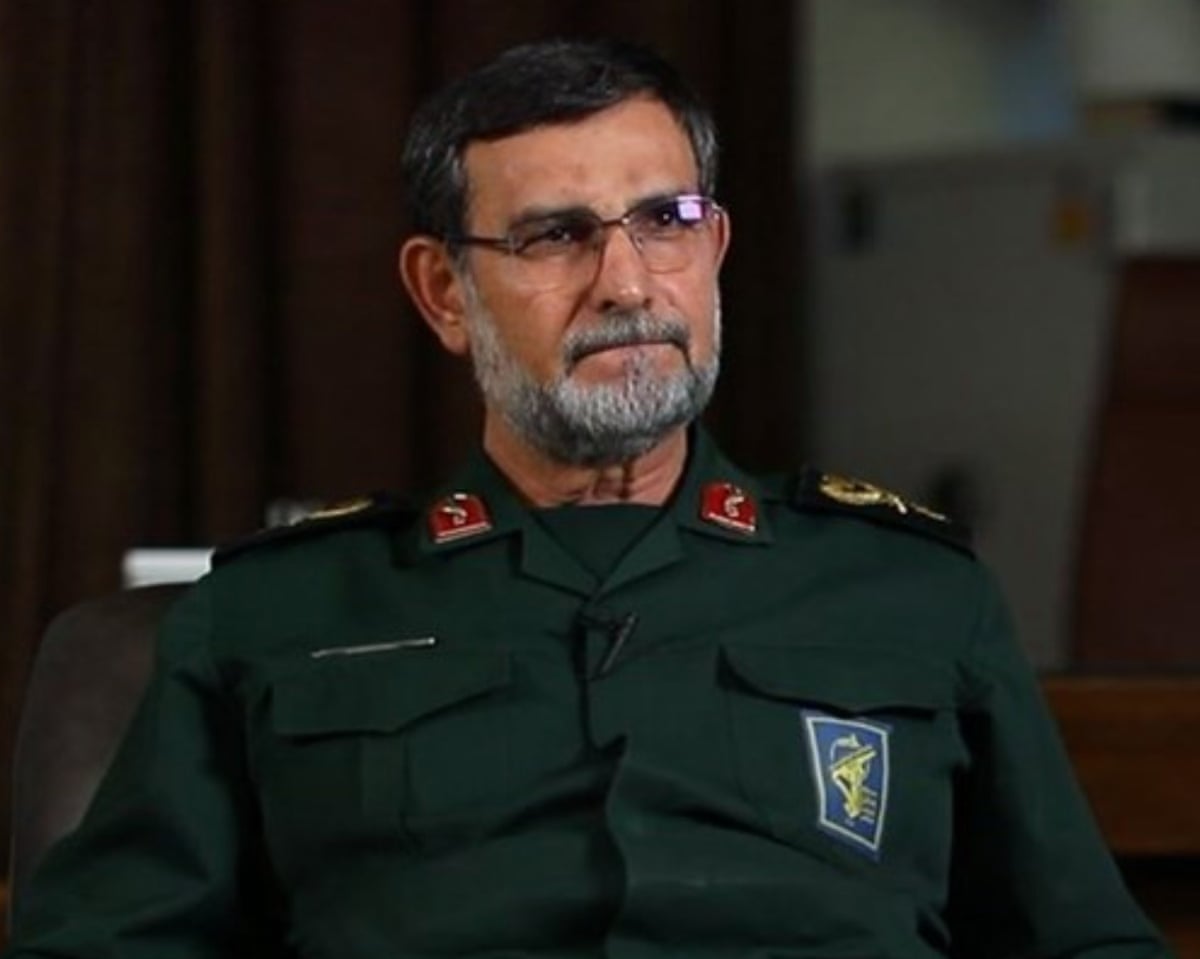
The Iranian Revolutionary Guards’ naval commander, who was killed in an Israeli airstrike on Thursday, was a veteran hardliner known for fiery rhetoric and a keen understanding of the strategic importance of the Strait of Hormuz.

During naval exercises in the Gulf in January, Alireza Tangsiri stated that the Iranian revolution of 1979 represented "a turning point in the history of the Iranian nation and a new dawn for the awakening of the oppressed nations of the world."
Like many senior officials of the Islamic Revolutionary Guard Corps (IRGC), Tangsiri earned his regime credentials as a young man during the bloody 1980-88 Iran-Iraq war. He subsequently received a series of promotions, eventually becoming commander of the IRGC’s maritime force in 2018. In this role, he pioneered unconventional weapons that enabled Iran to project power and influence in the Persian Gulf and beyond.
In addition to cruise missiles and armed drones, Tangsiri strongly supported the use of fast boats—light, maneuverable craft capable of threatening civilian shipping and evading the defense systems of modern warships.
Returning to Donald Trump’s press conference at the White House earlier, the US president criticized NATO, the UK, and Australia for their limited involvement in his campaign against Iran.
We have covered the NATO comments here.
Australia was also mentioned late in the press conference in response to a question about his phone calls with British Prime Minister Keir Starmer. Trump said:
"[Starmer] did something that was shocking: he didn’t want to help us. And maybe in particular that country, you know, the longest bond, the longest ally.
Australia, too, Australia was not great. I was a little surprised by Australia.
I wouldn’t say anybody was great, other than the five countries in the Middle East. We never really had very much support."
More on petrol prices
Vietnam’s trade ministry announced it has temporarily waived an environmental tax on fuel to reduce soaring prices by more than a quarter.
The environmental protection tax rate on gasoline, diesel, and aviation fuel will be reduced to zero from today until 15 April, the ministry said on Friday, adding:
"This is considered an urgent and effective solution to stabilise the petroleum market and ensure national energy security amidst the escalating conflict in the Strait of Hormuz, which is creating the ‘biggest energy bottleneck ever.’"
India has also reduced its special excise duties on petrol and diesel amid soaring prices triggered by the Middle East war.
In a government order on Thursday, the Indian finance ministry cut the excise duty on petrol to 3 rupees ($0.032) per litre from 13 rupees earlier. It also reduced the duty on diesel to zero from 10 rupees.
Lebanon and Israel tensions
Lebanese media reported that an Israeli strike hit Beirut’s southern suburbs early on Friday.
Several explosions were heard from the Hezbollah stronghold, and smoke was seen billowing from the area following the raid, according to Agence France-Presse.
Israel had previously issued sweeping evacuation warnings for the area but provided no specific warning prior to Friday’s strike. It remains unclear if there were any casualties.
Israel has deployed ground troops into southern Lebanon in an effort to establish what it calls a "defensive buffer" zone, while Hezbollah stated its fighters continued attacks on Israeli troops there early on Friday.
Financial markets update
On Thursday, Wall Street experienced its worst day since the war with Iran began.
The S&P 500 fell 1.7%, heading for a fifth consecutive losing week, which would be its longest such streak in nearly four years. The Dow Jones Industrial Average dropped 1%, and the Nasdaq Composite declined 2.4%.
In Asian markets after early Friday trading, South Korean shares fell more than 3% and are set to end the week lower. Japan’s Nikkei share average also declined, on track for a fourth straight weekly loss amid fading hopes for an imminent ceasefire.
Elsewhere, Hong Kong’s Hang Seng index lost 0.1%, while the Shanghai Composite index rose 0.1%. Australia’s S&P/ASX 200 fell 0.5%, and Taiwan’s Taiex traded 1.5% lower.
Global trade concerns
World Trade Organization chief Ngozi Okonjo-Iweala warned that the global trading system is experiencing the "worst disruptions in the past 80 years."
Speaking on Thursday at the WTO ministerial conference, she said:
"The world order and the multilateral system we used to know has irrevocably changed. We cannot deny the scale of the problems confronting the world today."


