

Trump Announces Progress Toward Iran War Settlement
US President Donald Trump stated that an initial agreement aimed at ending the war with Iran is close, following his announcement that he had cancelled planned strikes on the country.
"We just made a great settlement of the war with Iran,"
he told reporters in the Oval Office on Thursday.
However, Iran's foreign ministry spokesperson Esmail Baghaei described reports of an agreement as "speculative" and emphasized that "nothing has been finalised" during a statement to state TV.
Trump has previously made similar claims about nearing a deal to end the conflict. Notably, just hours before this announcement, he had declared that the US would strike Iran "very hard."
Background of Recent Hostilities
The US and Israel launched extensive strikes on Iran on 28 February. In retaliation, Iran attacked Israel and US-allied states in the Gulf region and effectively closed the Strait of Hormuz, a critical shipping route for global oil and liquefied natural gas.
Despite a ceasefire agreement reached in April, intermittent exchanges of fire have continued between the US and Iran, including two rounds of tit-for-tat strikes this week. Concurrently, Trump has repeatedly expressed optimism about the prospects of a deal with Iran.
Following Trump's latest comments, Brent crude oil prices dropped to approximately $89 per barrel (£66), marking a 4.4% decrease on the day.
Details on the Proposed Agreement
Speaking to reporters, Trump said:
"We have a deal that Iran will never have a nuclear weapon, which was the whole purpose of what we had to go through to get this. So, it's a very big thing."
He indicated that there will "probably be a signing, maybe in Europe" once the documents are finalized, adding that it should happen "pretty quickly." He also noted that the documents are in "pretty final shape - so we'll see."
Trump further stated that the Strait of Hormuz would reopen "as soon as we have it signed."
The US president mentioned that he had spoken with regional leaders, including Gulf allies and Israeli Prime Minister Benjamin Netanyahu, asserting that "The whole Middle East is very happy."
Israeli Response and Iran's Position
The Israeli prime minister's office confirmed the conversation with Trump but clarified that Israel "is not a party to the memorandum of understanding."
The statement added that Netanyahu expressed appreciation for Trump's commitment to work toward a final agreement that includes "the removal of enriched material, the dismantling of enrichment infrastructure, limits on missile production, and the cessation of Iran's support for its terrorist proxies in the region."
Meanwhile, Iran's foreign ministry spokesperson Baghaei stated that the majority of the text for the memorandum had already been "finalised," but criticized the US for making "excessive demands" and introducing "new requests." He reaffirmed that Iran would not "depart from its red lines."

Trump's Previous Threats and Iran's Military Response
Donald Trump has alluded to an impending deal with Iran and provided timelines on multiple occasions, although specific details remain largely undisclosed.
Hours before his latest comments on the deal, Trump had declared that "the United States will be hitting Iran... very hard tonight," threatening to seize Kharg Island and other oil infrastructure points "in the not too distant future."
Kharg Island, located in the northern Gulf, is Iran's main oil export terminal, with about 90% of its oil exports passing through the island.
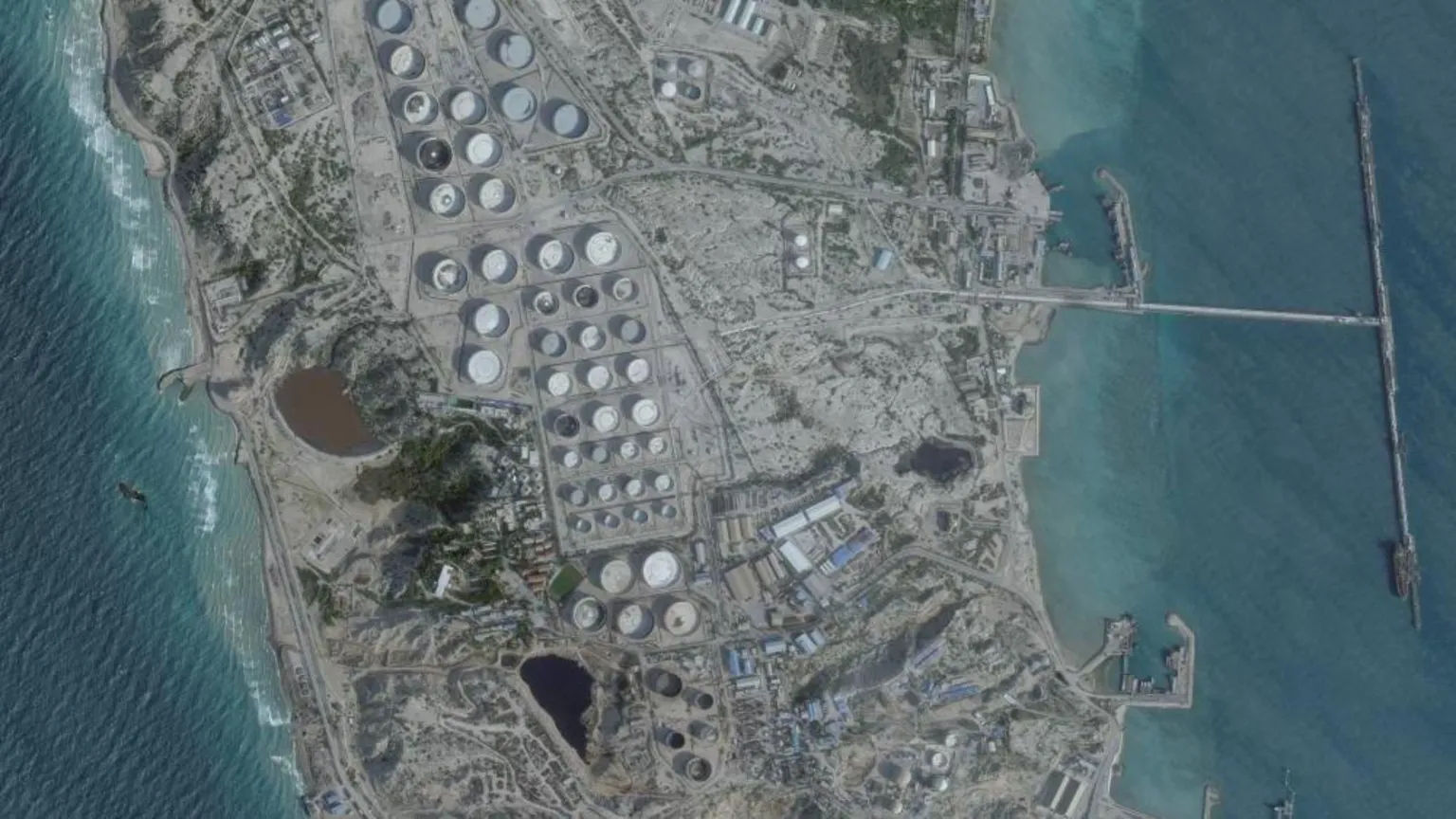
Trump also stated that the US would "assume total control" over the oil and gas markets "much like we have with Venezuela."
In response, Iran's military threatened retaliation "more severe than before" if further attacks occurred.
"Considering recent US threats against Iran's oil infrastructure, either oil and gas exports are for everyone or they will be available for no-one,"
a statement said.
Iran's top negotiator Mohammad Bagher Ghalibaf warned that "wrong strategies and impulsive decisions will... create an endless quagmire that you will be stuck in for years."
Recent Military Exchanges
The two countries exchanged strikes following the crash of a US Apache helicopter in the Gulf on Monday.
On Wednesday, the US Central Command (Centcom) announced it had completed a wave of strikes targeting military, surveillance, and radar sites in southern Iran.
In retaliation, Iran's Islamic Revolutionary Guard Corps (IRGC) launched strikes against American bases in Bahrain, Kuwait, and Jordan. Local authorities in Bahrain reported that an 11-year-old girl was injured by an Iranian drone attack, with damage to homes and vehicles.
Jordan reported shooting down approximately 20 Iranian missiles, and Kuwait's military stated it engaged with "hostile aerial targets."
International Reactions and Calls for De-escalation
India summoned a senior American diplomat after confirming that three Indian sailors were killed in a US strike on a ship in the Gulf of Oman, which India accused of violating its blockade on Iranian ports. Twenty-one crew members were rescued.
US forces have fired on nine vessels so far, including three this week. The blockade aims to prevent ships from entering and leaving Iranian ports to restrict Tehran's ability to profit from oil exports.
The recent strikes have prompted calls for de-escalation. A spokesperson for UN Secretary-General António Guterres expressed deep concern over the continuing escalation in the Middle East.
"He urges the parties to return to the full implementation of the ceasefire and avoid any further deterioration."
Additionally, Pakistan, Russia, China, Turkey, India, and Saudi Arabia have all called for de-escalation.


