

US-Iran Ceasefire Status Amid Strait of Hormuz Incident
US President Donald Trump stated that the ceasefire between the United States and Iran remains in effect following an exchange of fire late Thursday night in the Strait of Hormuz. The identity of the initial aggressor remains unclear.
Iran's highest military authority accused the US of targeting an Iranian oil tanker and another vessel approaching the Strait of Hormuz, in addition to conducting "aerial attacks" on multiple coastal areas.
Conversely, the US reported that it executed "self-defence strikes" in response to Iranian attacks on US Navy guided-missile destroyers operating in the Strait. President Trump remarked that Iran "trifled with us today."
The escalation occurred a day after Iran's foreign ministry indicated it was considering a US proposal aimed at ending the conflict.
In a further indication of the ceasefire's fragility, early Friday, the United Arab Emirates Ministry of Defence announced its air defences were "actively engaging" a missile and drone attack originating from Iran.
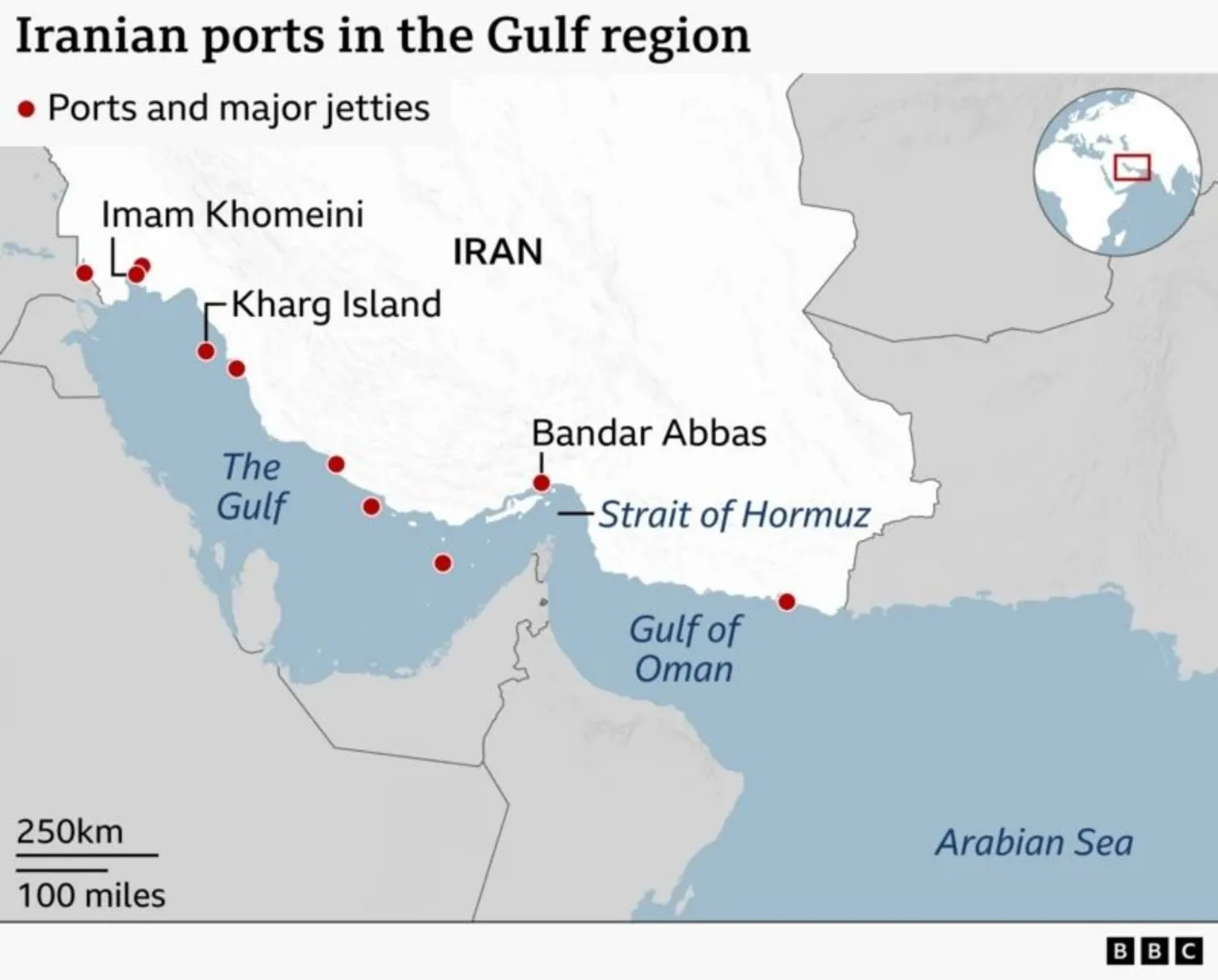
Reports of Explosions and Military Responses
Iranian state media initially reported "explosions" in the Strait of Hormuz, describing the events as an "exchange of fire" with the "enemy." Concurrently, local media in Tehran reported hearing explosions.
Shortly thereafter, a statement from Iran's top military command declared that US "aerial attacks" had struck the coastal regions of Bandar Khamir, Sirik, and Qeshm Island.
The statement asserted that Iran responded immediately by attacking US military vessels, causing "significant damage," and accused the US of violating the ceasefire.
US Central Command (Centcom) characterized the Iranian attacks as "unprovoked," stating that Iranian forces launched "multiple missiles, drones and small boats" as US Navy guided-missile destroyers transited the strait.
Centcom reported it had "eliminated inbound threats and targeted Iranian military facilities responsible for attacking US forces, including missile and drone launch sites; command and control locations; and intelligence, surveillance and reconnaissance nodes."
"Centcom does not seek escalation but remains positioned and ready to protect American forces," the statement continued.
President Trump's Statements and US Military Actions
On the social media platform Truth Social, President Trump stated that the US had destroyed multiple small boats, describing their destruction as "dropped ever so beautifully down to the Ocean, very much like a butterfly dropping to its grave!"
"Great damage" was "done to the Iranian attackers," he added.
The US president reiterated a warning regarding the peace deal, stating:
"Just like we knocked them out again today, we'll knock them out a lot harder, and a lot more violently, in the future, if they don't get their Deal signed, FAST!"
An Israeli source informed the BBC that there was "no Israeli involvement" in the recent attacks.
Context of Rising Tensions and Diplomatic Efforts
The recent escalation in tensions comes despite President Trump's recent assertions that the war with Iran would be "over quickly."
US news outlet Axios reported that the White House believes it may be nearing agreement on a 14-point memorandum of understanding with Iran, which could establish a framework for more detailed nuclear negotiations.
On Wednesday, an Iranian foreign ministry spokesperson stated that the latest US proposal was under consideration and that Tehran would communicate its views to Pakistani mediators.
Pakistan's foreign minister expressed that his country was "endeavouring to convert this ceasefire into a permanent end to this war."
However, a senior Iranian parliamentary member dismissed the 14-point memorandum as a "wish list."
Ebrahim Rezaei, spokesperson for the Iranian parliament's national security and foreign policy commission, posted on X that Iran "has its finger on the trigger," warning that Iran would "deliver a harsh and regret-inducing response" if the US did not "surrender and grant necessary conditions."
Both the US and Iran have issued threats of escalating violence should their respective conditions for a peace agreement remain unmet.
Previous US Threats and Claims Regarding Iran
In a Truth Social post dated 6 May, President Trump wrote that if Iran did not agree to a deal, "the bombing starts, and it will be, sadly, at a much higher level and intensity than it was before."
Trump had earlier stated that Operation Epic Fury—the initial US-Israeli offensive in Iran—would conclude "assuming Iran agrees to give what has been agreed to." Prior to this, US Secretary of State Marco Rubio had declared the operation over and claimed it had achieved its objectives.
Additionally, President Trump reiterated, as he has before, that Iran had agreed never to develop a nuclear weapon "among other things," a claim not confirmed by Tehran. Iran's nuclear program remains a central point of contention between the two nations.


