

Criminals Exploit Middle East Crisis to Target Airline Customers
Your flight has been delayed due to the Middle East crisis, and you seek information online. You find a social media account claiming to represent your airline and post a question, receiving a reply offering assistance.
You are asked to send a direct message with your details, which appears reasonable. A conversation begins, and you are requested to provide your phone number, possibly for compensation. However, instead of receiving money, you lose it. Although the account seemed official, it was a scam.
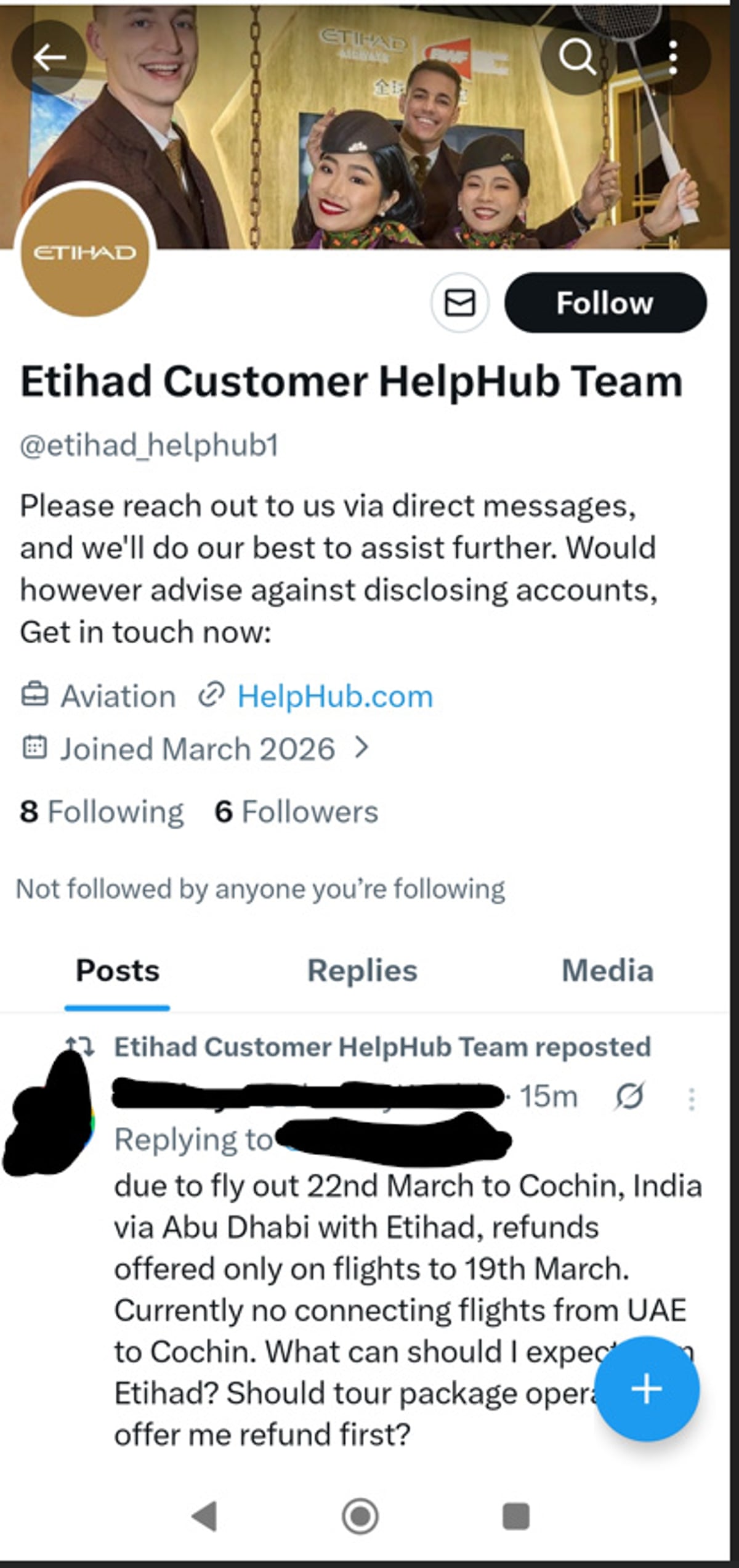
Fake airline accounts are not new, but scammers have intensified their efforts amid the disruption caused by the Iran war, targeting individuals worldwide by creating fraudulent accounts impersonating the most affected carriers.
Santander reports it has already received complaints from customers affected by cancellations and delays who were subsequently defrauded. On the social media platform X, customers have reported being contacted by accounts claiming to represent Qatar Airways, Etihad, and Emirates.
Chris Ainsley, head of fraud risk management at Santander UK, states:
“Fraudsters are quick to exploit uncertainty and the travel disruption caused by the conflict in the Middle East is no exception. “We’re already seeing criminals target people seeking refunds for booked travel and holidays, sending them a link to supposedly receive a refund but instead people’s accounts are being charged.”
What the Scam Looks Like
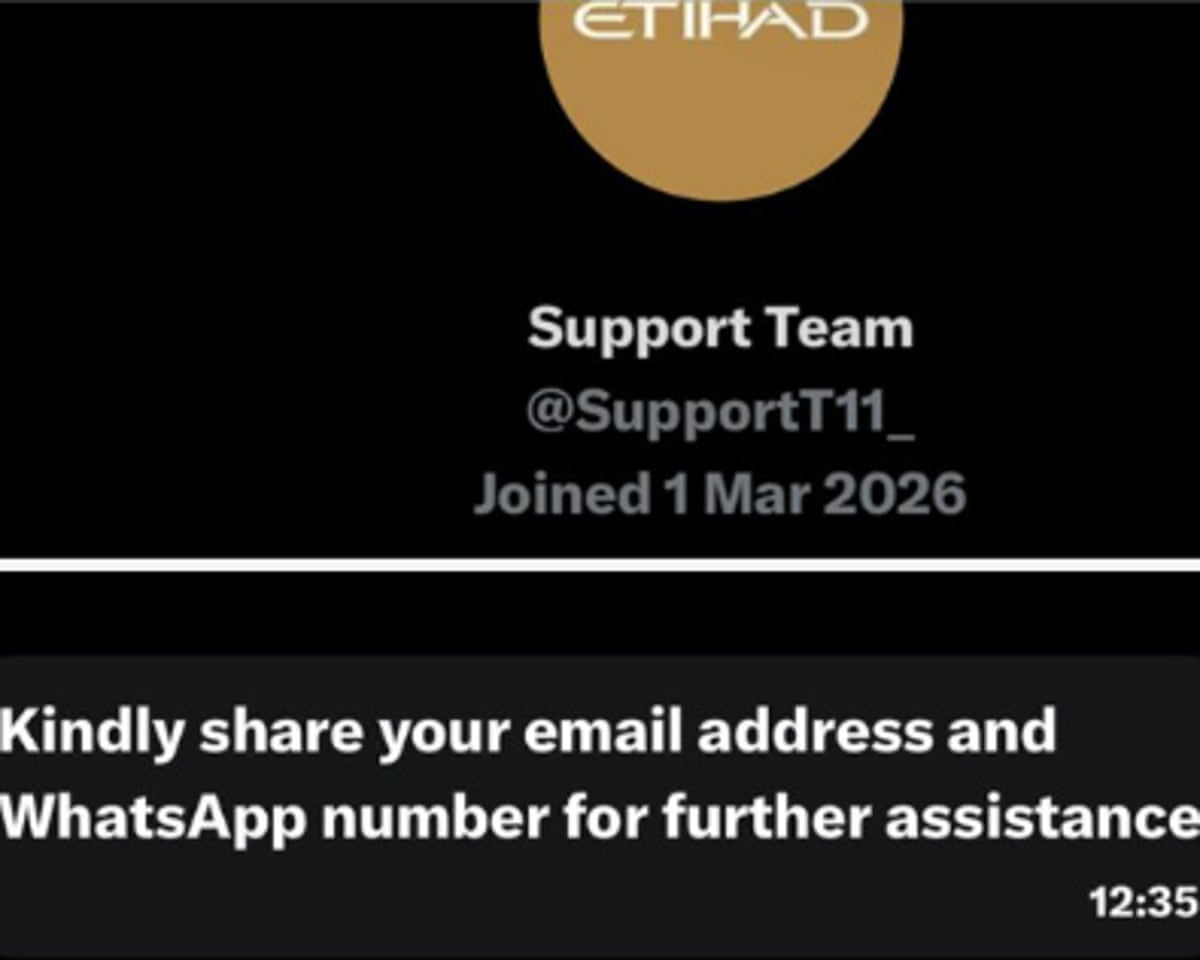
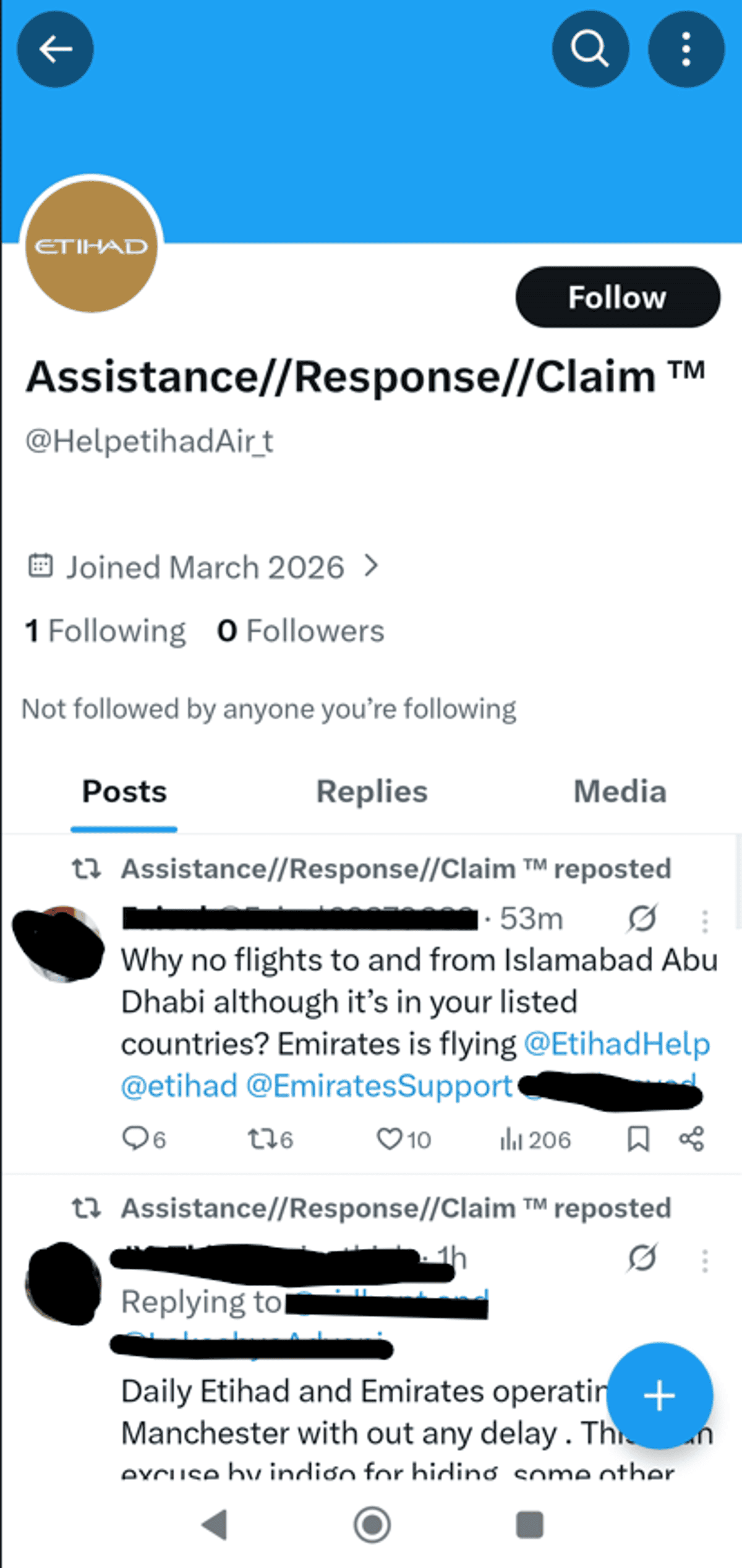
Fraudsters create accounts that appear legitimate, often displaying the airline’s logo prominently. The account name may include the airline’s name or generic terms such as support team, quick response team, or guest services care.
The account description might request your email address or phone number, or sometimes provide no information at all.

While searching for help, you might encounter these accounts. Typically, scammers monitor social media for passengers attempting to contact legitimate airline accounts and reply offering assistance, making it difficult to identify the message as fraudulent.
You will be asked to share your details via direct message. The scammer then contacts you, claiming to be from the airline and offering to process a refund. They send a link to a money transfer app and request you use your digital wallet to accept the refund. Instead of receiving money, your account is debited.
What to Do
Exercise caution with social media accounts not found through the airline’s official website or other verified sources. Airlines usually include the name of their customer service social media accounts in the description of their main account.
If an account replies to your post, verify the name to ensure it is genuine.
Fake accounts often have very low follower counts, typically in single digits, which is a warning sign.
Do not provide payment details or passwords. Etihad has issued a statement saying:
“Etihad will never request passwords, one‑time codes, payment details, or any sensitive information through social media messages.”
If asked for such information, do not provide it.
Ainsley advises:
“Always look for updates on the airline or travel companies’ official website or the Foreign Office website.”


