

Israeli Airstrikes Result in Multiple Fatalities in Southern Lebanon
At least 12 individuals have been killed in seven distinct Israeli airstrikes targeting vehicles south of Beirut, according to Lebanon's health ministry. These strikes occur amid ongoing hostilities between Israel and the Lebanese armed group Hezbollah, despite the existence of a ceasefire.
The health ministry reported that eight people, including two children, lost their lives when drones targeted three vehicles along the coastal highway in the Barja, Jiyeh, and Saadiyat areas, approximately 20 kilometers (12 miles) from Beirut.
The remaining fatalities occurred in strikes on four additional vehicles located further south, in the city of Sidon and the towns of Maaliyeh, Chaaitiyeh, and Naqoura.
Military Statements and Evacuation Orders
The Israeli military has not issued a direct comment on these specific strikes. However, it confirmed that Israeli forces conducted attacks on Hezbollah weapons storage facilities and rocket launchers in various locations across southern Lebanon on Wednesday.
Additionally, the military instructed residents from nine towns and villages in southern Lebanon to evacuate, warning of forthcoming forceful actions against Hezbollah elements in the area.
Hezbollah's Response and UN Concerns
Hezbollah reported that its fighters engaged Israeli troops operating in multiple locations in southern Lebanon using attack drones, rockets, and explosive devices.
The United Nations Interim Force in Lebanon (UNIFIL) expressed growing concern regarding the activities of Hezbollah members and Israeli soldiers near UN positions in southern Lebanon. UNIFIL highlighted the increased use of drones, which has led to explosions in and around its bases, thereby endangering peacekeepers.
Casualties Among Emergency Responders
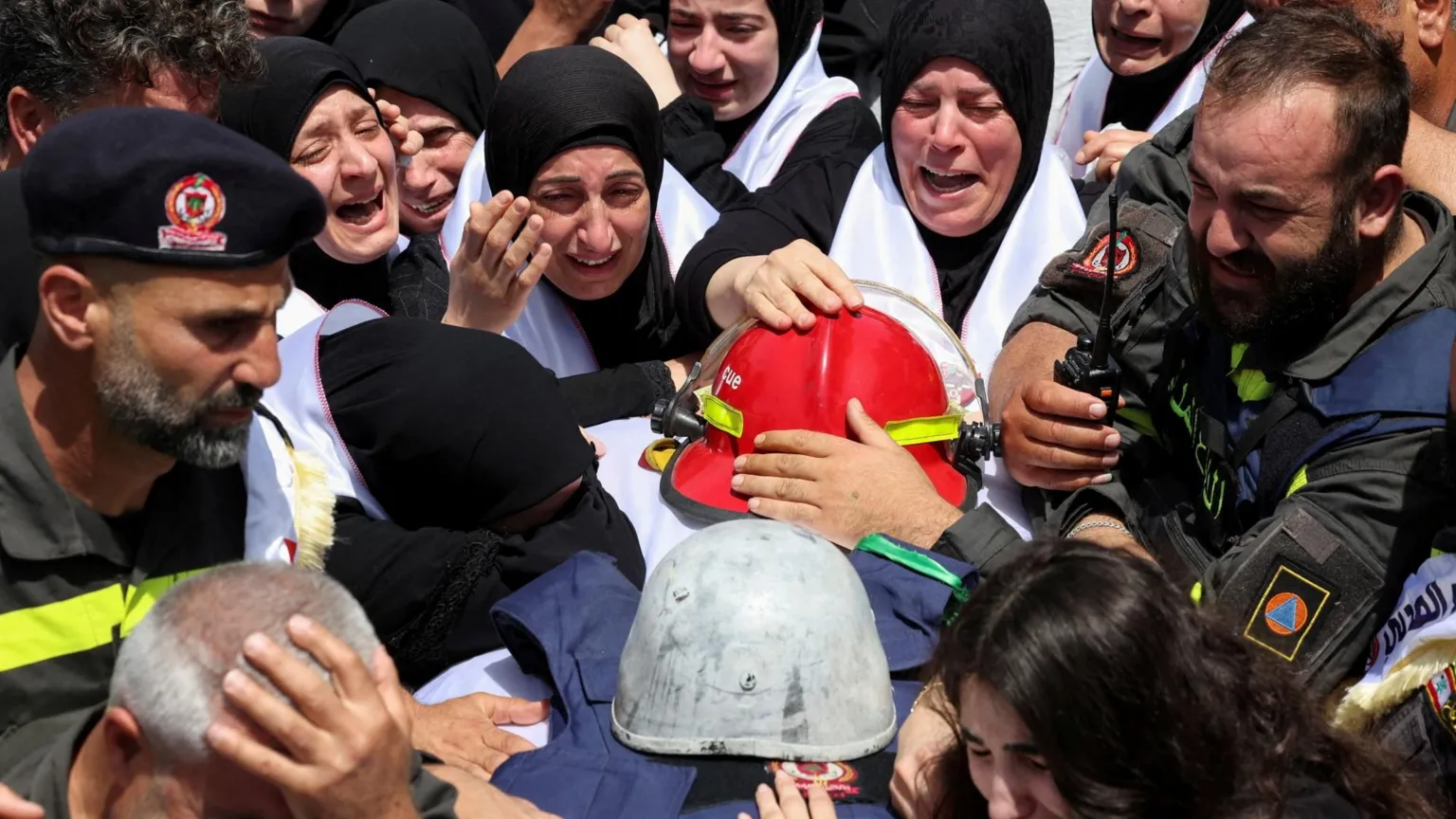
On Tuesday, two paramedics from Lebanon's state-run Civil Defence emergency service were among 13 people killed in strikes in southern Lebanon, according to the Lebanese health ministry.
The ministry accused Israeli forces of deliberately targeting the paramedics during a rescue mission responding to an earlier attack that resulted in one death. The ministry characterized this as a "blatant violation of international humanitarian law."
Israeli Military's Position on Paramedic Strike
On Wednesday, the Israeli military stated it had targeted what it described as a "terrorist" in the Mayfadoun area, south of Nabatieh, asserting that the paramedics were not the intended targets.
"The objectives of the strike were not achieved in the initial strike, and therefore, the terrorist was struck again in order to remove the threat,"
"It should be emphasized that the strike was directed solely at a terrorist, and not toward rescue personnel."
The military also addressed a strike in the Kfar Dounine area on Monday night, which reportedly killed six individuals in a house, including a child, his father, and his aunt. The military stated this strike targeted a Hezbollah operative engaged in artillery attacks on Israeli soldiers.
Casualty Figures and Damage Assessment
According to the Lebanese health ministry, more than 400 people have died across Lebanon since the ceasefire was announced by US President Donald Trump nearly a month ago.
Furthermore, the country's National Council for Scientific Research reported that over 10,600 homes have been damaged or destroyed during the same period.
Escalation of Hostilities
Israel has intensified air and artillery strikes in recent days, particularly in southern Lebanon, targeting Hezbollah fighters and infrastructure.
Hezbollah has responded with drone, rocket, and mortar attacks against Israeli troops stationed in parts of southern Lebanon and against communities in northern Israel.
Upcoming Negotiations and Hezbollah's Stance
On Thursday, Israeli and Lebanese officials are scheduled to conduct a third round of direct talks in Washington aimed at finding a resolution to halt the fighting.
In a letter released on Tuesday, Hezbollah's leader Naim Qassem dismissed these efforts, stating that his group would "not abandon the battlefield."
Background of the Conflict
The conflict began on 2 March, two days after the US and Israel launched a joint attack on Iran. Hezbollah responded by firing rockets into Israel, prompting widespread Israeli airstrikes and a ground invasion of southern Lebanon.
Since the onset of hostilities, at least 2,896 people have been killed in Lebanon, according to the health ministry. These figures do not differentiate between combatants and civilians.
Israeli authorities report that 18 soldiers and four civilians have died over the same period.


