

Internet Blackout Continues Despite Official Announcement
Internet monitors reported no immediate change following an Iranian government statement on Tuesday claiming an end to the 88-day internet blackout. The blackout, the longest in Iran's history, was imposed during the January anti-government protests and remains in effect with no clear indication whether technical or political factors are causing the delay in restoring full access.
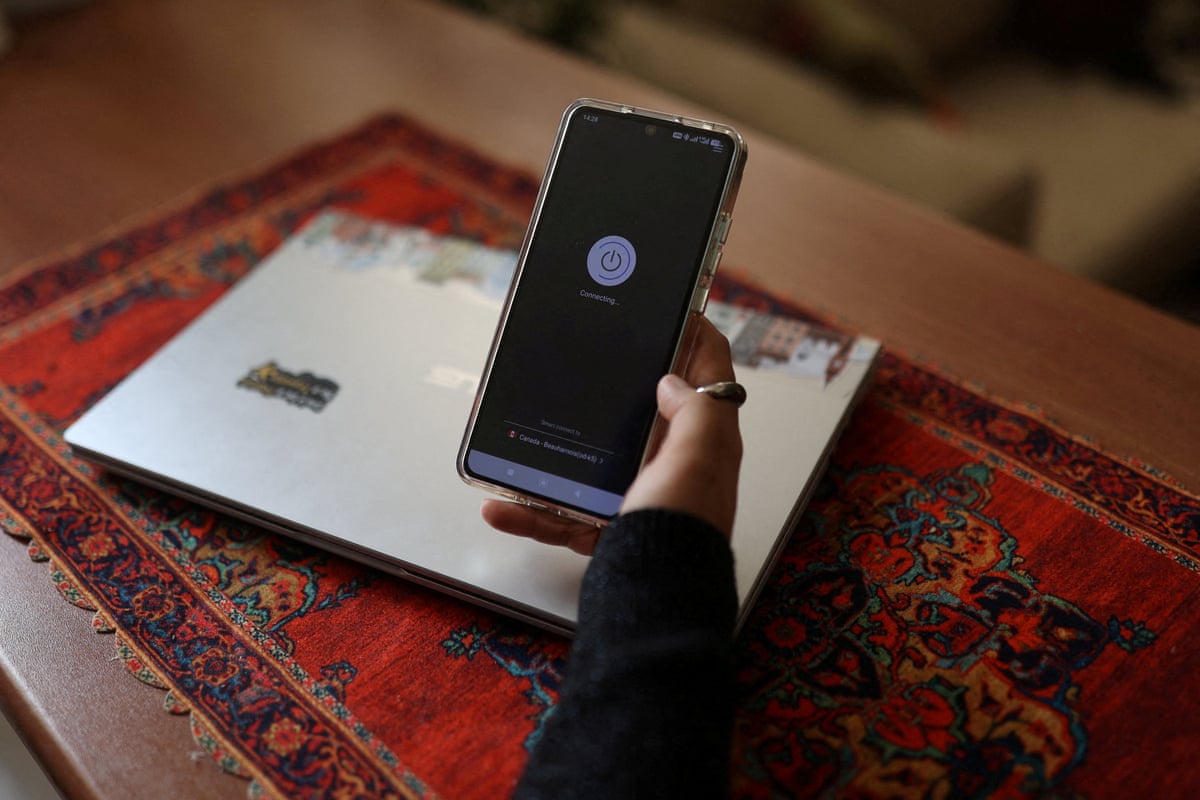
Iranian authorities cited the return of Gmail access within the country as an initial indication that the anticipated restoration was underway. However, the ban has effectively isolated most Iranians from the global internet, except for a privileged minority.
Political and Economic Pressures Behind the Blackout
Concerns over widespread unemployment and business failures prompted President Masoud Pezeshkian, who campaigned on a platform advocating for internet freedom, to engage in behind-the-scenes lobbying with security officials to lift the restrictions. The decision to end the blackout followed a vote by the special taskforce for cyberspace management.
Iran's communications minister, Sattar Hashemi, welcomed the decision but emphasized that internet restoration would proceed gradually.
"Internet restrictions in recent months have caused significant damage to the digital economy, online businesses, and the country’s service industries. The continuation of this situation could, in addition to the economic damage, have led to the weakening of investment, the emigration of elite human resources, and the expansion of communication patterns outside the framework of the country’s official governance."
Security Concerns and Government Justifications
Security officials have resisted returning to pre-protest internet conditions, fearing that unrestricted communication with the West could incite further demonstrations. Iranian authorities frequently attribute anti-government propaganda to satellite channels and social media, which they claim broadcast subversive content into Iranian homes. Many citizens, however, contend that the internet repression aims to conceal a systemic crackdown on protests, including numerous judicial executions.
Amnesty International reported last week that Iranian authorities have "arbitrarily executed at least 36 individuals sentenced to death after being convicted of politically motivated charges." Additionally, at least 78 protesters, dissidents, and others with actual or perceived ties to banned opposition groups remain under death sentence and face imminent execution.

Economic Impact of the Internet Shutdown
Estimates suggest that up to five million jobs in Iran depend on internet access, and the blackout has exacerbated an already severe economic crisis marked by high inflation. The rising cost of food has made staples such as chicken unaffordable for many families. Female workers, particularly in rural areas, have been disproportionately affected by the internet cutoff.
Despite these hardships, the Ministry of Labour recently denied that the shutdown caused job losses, claiming that companies previously operating on Instagram had transitioned to domestic messaging platforms like Rubika. However, many businesses reported reliance on Google search services, and total economic losses have been estimated at over $6 million per day.
A survey conducted by the Tehran Electronics Association involving more than 900 companies revealed that losing access to WhatsApp, Telegram, and Instagram eliminated 75% of their communication channels. Since the onset of the conflict, over 223,000 individuals have applied for government insurance, indicating significant job losses.
Escalation of Blackout and Government Controls
The internet shutdown began amid the January economic and political protests but intensified following US and Israeli attacks on 28 February, as ordered by Iran’s national security council. The government enforces severe penalties on individuals who transmit information or images to satellite channels such as Iran International.
To address demands for internet restoration as a public right, the national security council approved the "Internet Pro" plan, which allows certain groups to access paid internet services with daily limits on foreign websites and international data traffic. However, the cost remains prohibitive for many young Iranians.
Access to Blocked Platforms and Circumvention Methods
Platforms including Instagram, X, and YouTube have been officially blocked in Iran for some time but are commonly accessed via virtual private networks (VPNs). Despite the legal restrictions, many members of the Iranian political elite use X regularly. Additionally, a profitable market exists within Iran for anti-filtering devices that enable access to restricted content.


