

US will no longer have a safe haven in the region, Iran's supreme leader says
Iranian supreme leader Mojtaba Khamenei stated on his Telegram channel that Gulf powers will no longer serve as a shield for US bases, declaring that the US will no longer have a safe haven in the region. This statement comes as Tehran and Washington engage in discussions over a framework to end their three-month-old conflict, according to .
The announcement followed overnight US strikes on Iran, which tested the ceasefire agreed upon in April. These strikes occurred while Iran’s top negotiator and foreign minister were in Qatar for talks with Qatar’s prime minister regarding a potential deal to end the war.
Iran’s Revolutionary Guard Corps asserted its “legitimate and definite” right to retaliate against any US violations of the ceasefire. State media reported that its air defence units had shot down a US MQ-9 drone and fired upon a fighter jet that entered Iranian airspace.
An Israeli airstrike targeted a village in eastern Lebanon’s Bekaa Valley, killing 12 people, as reported by the country’s state-run National News Agency and cited by the Associated Press.
Rescue workers recovered a dozen bodies from the rubble following a series of intense overnight strikes that hit southern and eastern Lebanon.
The escalation in attacks comes just three days before Lebanese and Israeli military delegations are scheduled to meet in Washington for direct talks. Israeli Prime Minister Benjamin Netanyahu announced that he had authorized intensified strikes against the militant group across Lebanon.
Earlier this month, Lebanon and Israel agreed to extend a 45-day ceasefire, although sporadic fighting has persisted. Hezbollah continues to attack Israeli troops in southern Lebanon and northern Israeli towns.
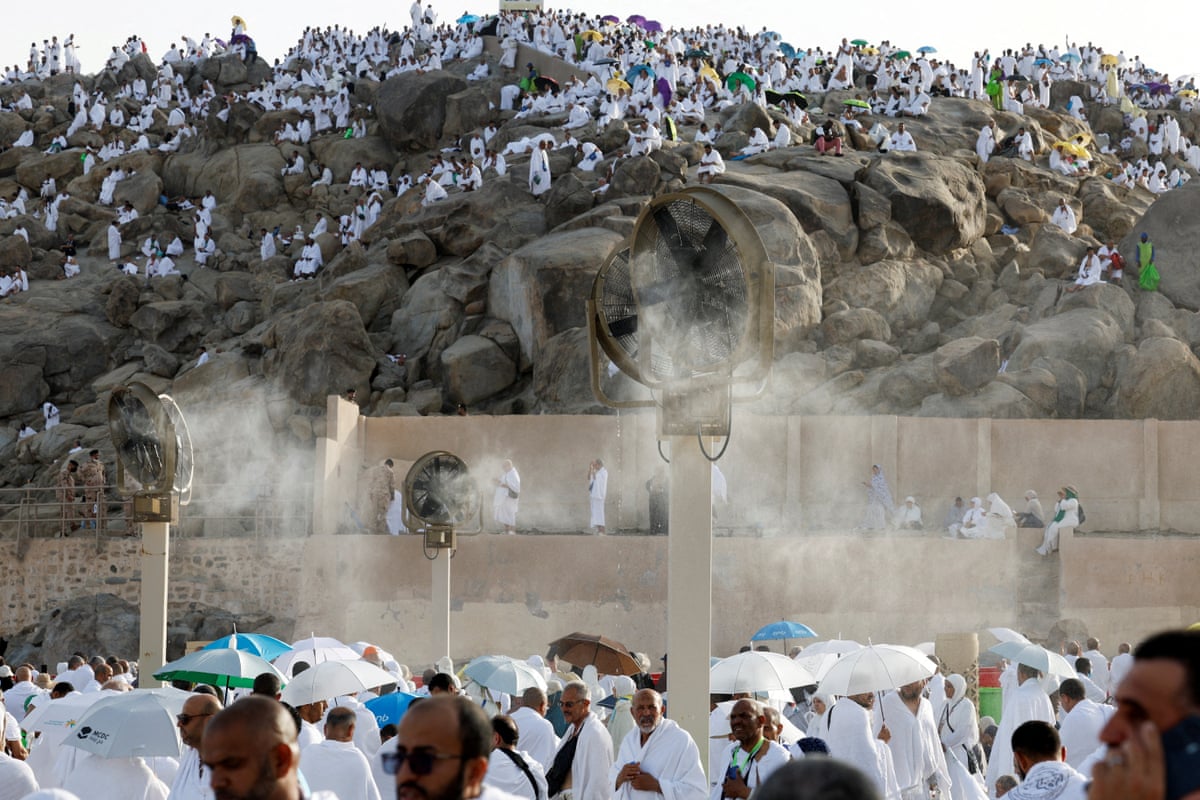
Massive Muslim turnout at Mount Arafat amid Middle East crisis
Despite extreme desert temperatures and ongoing Middle East tensions, vast numbers of Muslims gathered on Mount Arafat for the climax of the hajj pilgrimage, AFP reports.
From daybreak, thousands of worshippers dressed in white recited Quranic verses on the rocky hill near Mecca, the site where the Prophet Mohammed is believed to have delivered his final sermon.
More than 1.5 million pilgrims have participated in this year’s hajj despite the US-Israel conflict involving Iran.
During the conflict, Tehran retaliated with waves of drone and ballistic missile strikes targeting major infrastructure and energy installations across the Gulf, including in Saudi Arabia.
Approximately 30,000 Iranians made the pilgrimage, about one-third of the 86,000 initially expected. Iran’s IRNA state news agency attributed the decrease to the “wartime situation.” Despite the war, Saudi officials reported over the weekend that more pilgrims had traveled from abroad this year than in 2025.
US and allies reportedly plan to alter custodianship of al-Aqsa Mosque
The US and Israel are reportedly “actively working” to remove Jordan’s historic custodianship of Jerusalem’s al-Aqsa Mosque complex, according to a report by Middle East Eye (MEE), which cited multiple unnamed sources.
US, Jordanian, and Palestinian officials, along with Western and Gulf Arab sources, told MEE that the plan, promoted by Donald Trump’s son-in-law Jared Kushner and US Ambassador to Israel Mike Huckabee, would end Jordan’s authority over the site. A new body created by the Israeli government would then declare al-Aqsa a “multi-faith centre.”
Two US officials told MEE that Washington drafted a document outlining their vision for the mosque’s future. They indicated that the US would like to see al-Aqsa stripped of its Muslim identity and transformed into a landmark tourist attraction hosting all three Abrahamic religions.
Al-Aqsa, Jerusalem’s most sensitive holy site, is often a flashpoint. Disputes over access and management have previously led to unrest.
Qatari talks focus on Hormuz Strait and uranium stockpile
In Doha, Iran’s top negotiator and foreign minister held talks with Qatar’s prime minister focusing on the Strait of Hormuz and Iran’s stockpile of highly enriched uranium, quoted an official briefed on the trip.
Iran’s central bank governor also attended discussions concerning the potential release of frozen Iranian funds as part of a final agreement.
The visit followed downplayed expectations from Washington and Tehran regarding an imminent breakthrough on a peace deal to end the conflict.
An Iranian foreign ministry spokesperson stated that nuclear issues would only be negotiated after a framework accord was agreed upon.
Trump urges Middle Eastern countries to join Abraham Accords amid Iran deal talks
Donald Trump called for additional Middle Eastern countries to join the Abraham Accords, which aim to normalize relations with Israel. This comes as the emerging Iran deal faces criticism from fellow Republicans favoring a tougher stance on Iran, potentially complicating negotiations.
Trump specifically mentioned Saudi Arabia and Qatar as countries that should “immediately” , followed by Egypt, Jordan, Turkey, and Pakistan. He stated:
“After all the work done by the United States to try and pull this very complex puzzle together, it should be mandatory.”
In 2020, the United Arab Emirates and Bahrain established formal relations with Israel, ending a decades-old taboo in Arab diplomacy.
The Associated Press reports that Trump has long sought Saudi Arabia’s participation, but the kingdom insists any normalization deal must first establish a clear path for Palestinian statehood. This position is also key for Pakistan, a crucial mediator between the US and Iran.
Islamabad-based analyst Syed Mohammad Ali said Pakistan’s stance on normalization remains unchanged despite Trump’s proposal.

Masood Khan, Pakistan’s former ambassador to the US, commented on the proposal’s feasibility, stating:
“The invocation of the Abraham Accords at this stage gives an altogether new dimension to the diplomatic and mediatory processes because this issue was not on the agenda.”
Analysis: Trump’s deal outline sparks alarm in Israel
At the war’s outset, Israel’s security elite warned that Prime Minister Benjamin Netanyahu risked sacrificing the country’s most vital foreign policy asset—bipartisan US support—in pursuit of regime change in Iran and possibly an electoral boost ahead of October’s elections.
Nearly three months later, US opinion polls suggest that the conflict’s most enduring legacy may be a severe blow to this decades-old alliance.
Israel has been excluded from negotiations with Iran and has not been updated on their progress, according to the New York Times. The Israeli government has relied on regional allies and their espionage networks monitoring Iran’s leadership.
The deal under negotiation by Trump’s team may impose some constraints on Iran’s nuclear program but is broadly considered less restrictive than the 2015 Joint Comprehensive Plan of Action (JCPOA) negotiated under Barack Obama’s administration.
Netanyahu criticized the 2015 deal at the time in Washington DC.
Ben Caspit wrote in Ma’ariv:
“The emerging agreement is far worse than the previous one. If they [Iran] do come to possess a nuclear bomb, it will be Bibi’s bomb.”
This highlights the risk that fallout from the war and ceasefire deal could accelerate Iran’s nuclear program rather than dismantle it as Netanyahu had promised.
Markets in Asia have shown mixed reactions following US strikes in southern Iran, with traders appearing to dismiss the possibility of a return to full-scale war.
Benchmark US crude oil declined over 4% to $91.59 a barrel, while Brent crude, the international standard, gained $1.57 to $94.99 a barrel after falling nearly $5 on Monday.
With peace talks’ status unclear, markets have responded to various developments and comments from Donald Trump.
Stephen Innes of SPI Asset Management commented:
“Markets are behaving as though a full Iran breakthrough already exists, even though the hardest parts of the negotiation remain unresolved. Washington continues to signal optimism, while Tehran insists no agreement is imminent.”
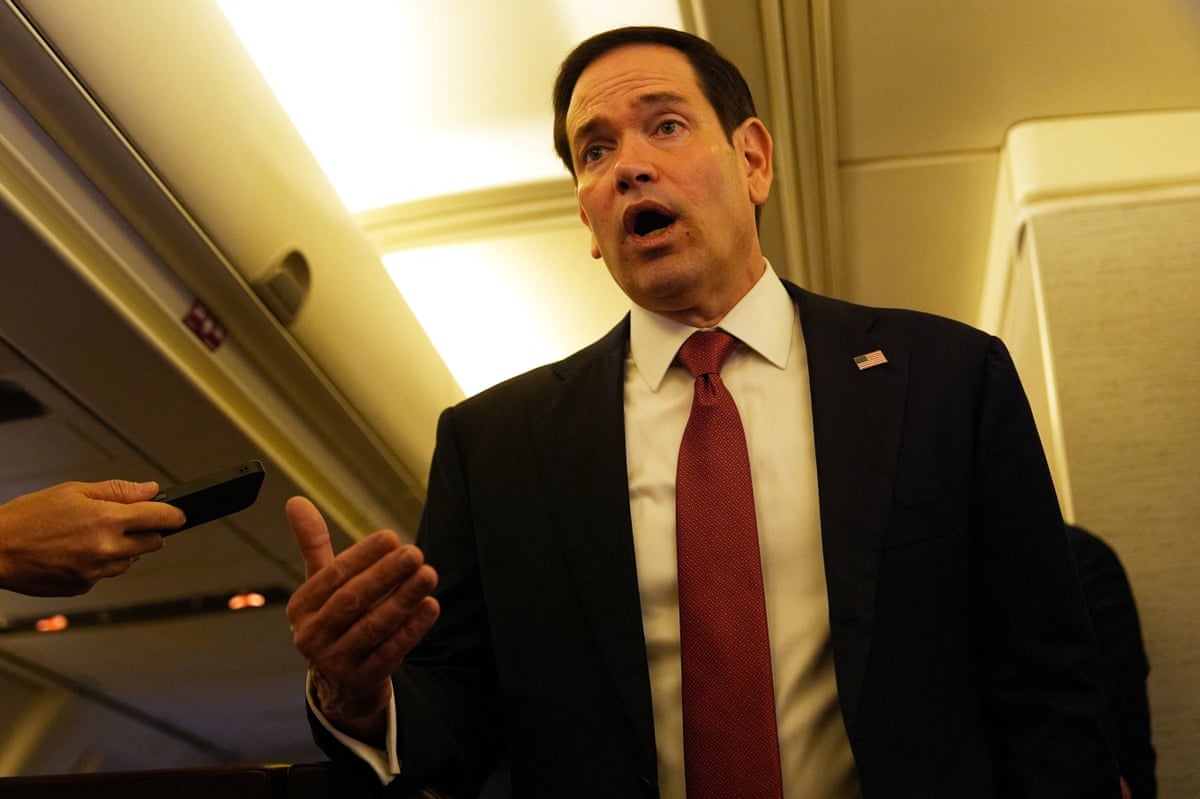
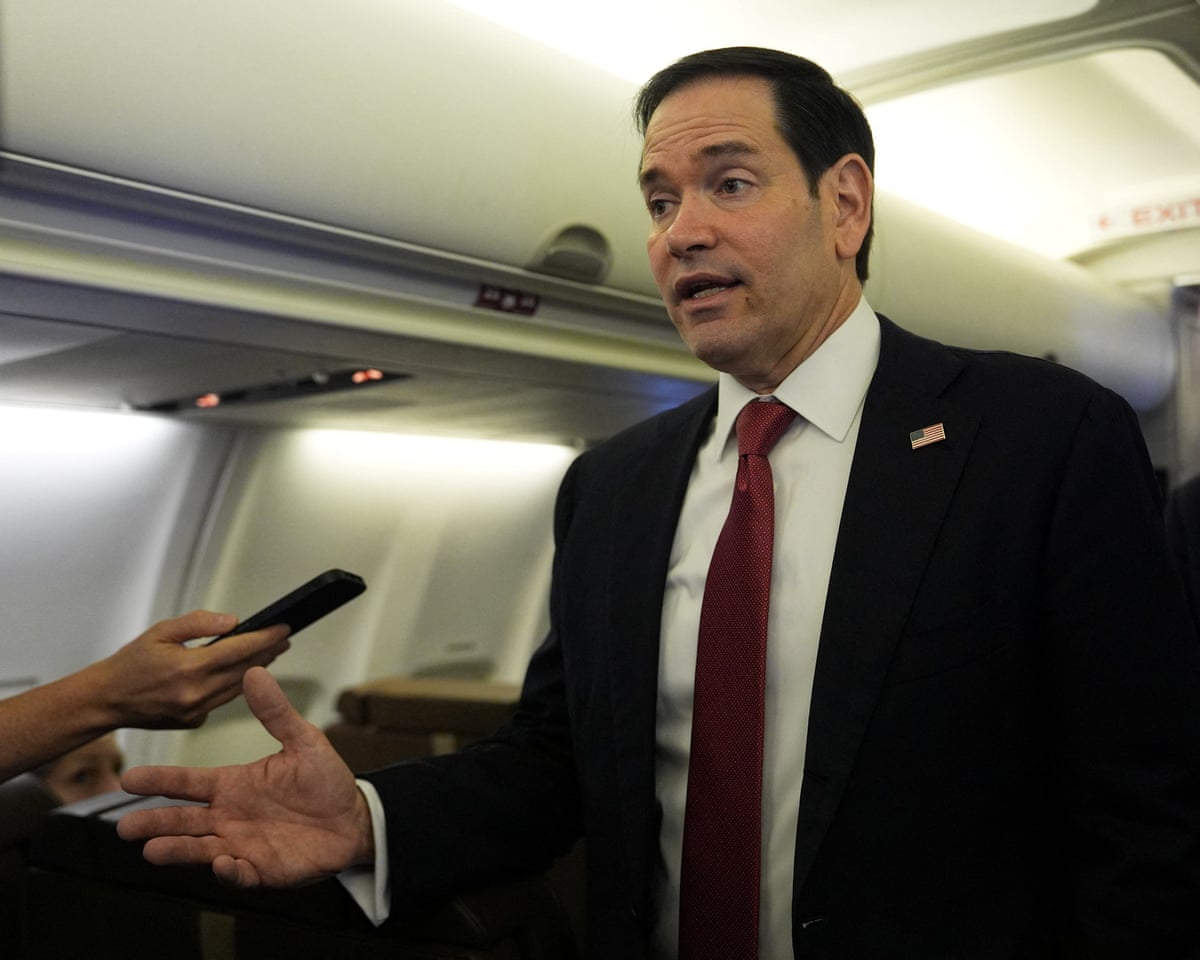
Marco Rubio expressed expectations that progress on a US-Iran deal would “take a few days” amid ongoing discussions over the agreement’s language.
US Secretary of State Marco Rubio, speaking in India during an official visit, said:
“There were some talks going on in Qatar today, so we’ll see if we can make progress. I think it’s a lot of talking back and forth going on about specific language in the initial document, so it’ll take a few days. The president’s expressed his desire to make it. He’s either going to make a good deal or no deal.”
Rubio also emphasized the importance of keeping the Strait of Hormuz open:
“The straits have to be open they’re going to be open one way or the other, so they need to be open.”
Opening summary: US attacks Iranian missile sites and boats
US forces conducted strikes on missile sites in southern Iran and targeted boats attempting to lay mines on Monday, US Central Command announced, coinciding with the arrival of top Iranian negotiators in Doha for talks aimed at ending the war.
A Centcom spokesperson stated:
“US forces conducted self-defence strikes in southern Iran today to protect our troops from threats posed by Iranian forces.”
The statement did not provide further details but noted that targets included missile launch sites and boats attempting to “emplace mines.”
These strikes threatened the fragile ceasefire that began on 8 April and occurred while Iran’s top negotiator and foreign minister met with Qatar’s prime minister in Doha to discuss a potential peace deal, quoted an official as saying.
Meanwhile, Donald Trump described talks with Iran as progressing “nicely” but warned of renewed attacks if negotiations failed, stating on social media:
“It will only be a Great Deal for all, or no Deal at all.”
US Secretary of State Marco Rubio, speaking in India, emphasized the necessity of reopening the Strait of Hormuz, calling the current situation “unlawful,” “illegal,” “unsustainable for the world,” and “unacceptable.”
Rubio noted that the negotiation language for the Iran deal could require “a few days” to finalize.
Trump proposed that any deal to end the war with Iran should require regional countries—including Saudi Arabia, Qatar, Egypt, Jordan, Turkey, and Pakistan—to join the Abraham Accords, agreements brokered by the US during his first term to normalize relations with Israel.
Israeli Prime Minister Benjamin Netanyahu vowed to “crush” Hezbollah in Lebanon, further complicating prospects for a US-Iran deal. Tehran has insisted that any peace agreement also address the conflict in Lebanon.
Iranian Foreign Minister Abbas Araghchi praised Hezbollah’s ongoing resistance against Israel in Lebanon.


