

'We will not bow to any threats,' Iran's chief negotiator says in state media reports
Iran's chief negotiator Mohammad Baqer Qalibaf stated on Sunday, as reported by state media, that Iran had presented significant initiatives to demonstrate goodwill during negotiations with the United States, which led to progress in the talks.
Qalibaf emphasized that the new threats issued by US President Donald Trump would not impact the Iranian people.
If you fight, we will fight, and if you come forward with logic, we will deal with logic. We will not bow to any threats, let them test our will once again so that we can teach them a bigger lesson.
Trump's declaration to blockade the Strait of Hormuz followed the failure of US-Iran talks over the weekend. Despite the breakdown, both parties convened in Pakistan to assess each other's positions. However, it was likely unrealistic to expect a resolution to a long-standing dispute in a single extended session.
's diplomatic editor reported:
It was as if the two delegations in the Iran-US peace talks in Islamabad hoped that the sheer number of negotiators flown into Pakistan could overcome the handicap of having only a finite number of hours in which to settle a 20-year dispute over Iran’s nuclear ambitions, now overlaid by complex new issues such as future control of the strait of Hormuz and US compensation for its attack on Iran.
Iran dispatched two planeloads of negotiators, while the US delegation included Vice-President JD Vance and nearly 300 other officials.
Vance maintained frequent communication with President Trump during the talks, including at least a dozen calls, and also spoke once with Israeli Prime Minister Benjamin Netanyahu. Nonetheless, resolving issues that took two years of negotiations in Vienna between 2013 and 2015 was unlikely in one marathon session.
Robert Malley, an experienced nuclear negotiator under President Joe Biden, commented:
Twenty-one hours was 20 hours too many if the goal was to reiterate a demand Iran had already rejected. It was many hours too few if the goal was to negotiate.
Australian shares fall after Trump announces Hormuz strait blockade
The Australian stock market experienced a sharp decline on Monday morning following the collapse of US-Iran peace talks and President Trump's announcement that the US Navy would blockade the Strait of Hormuz.
The S&P/ASX 200 index dropped 0.8% to 8,890 points in the opening minutes of trading. Prior to the talks' breakdown, futures pricing had indicated a higher opening.
Greg Boland, a market strategy consultant at trading platform Moomoo, noted that increased geopolitical tensions would negatively affect market sentiment.
The potential for US naval action around the strait of Hormuz raises the risk of disruption to global oil supply, which could feed directly into inflation expectations and complicate the outlook for central banks.
Oil prices also rose above $100 per barrel in early trading, according to futures data.
Global equity markets have been volatile due to the Middle East conflict, as energy disruptions and higher oil prices contribute to inflation by increasing costs across a wide range of goods and services.
Iran’s parliamentary speaker, who led Tehran’s negotiators during the weekend talks with Washington, taunted the US over rising petrol prices amid Trump's blockade threat.
He posted on X alongside an image showing gas prices at stations near the White House:
Enjoy the current pump figures. With the so-called ‘blockade’, Soon you’ll be nostalgic for $4–$5 gas.
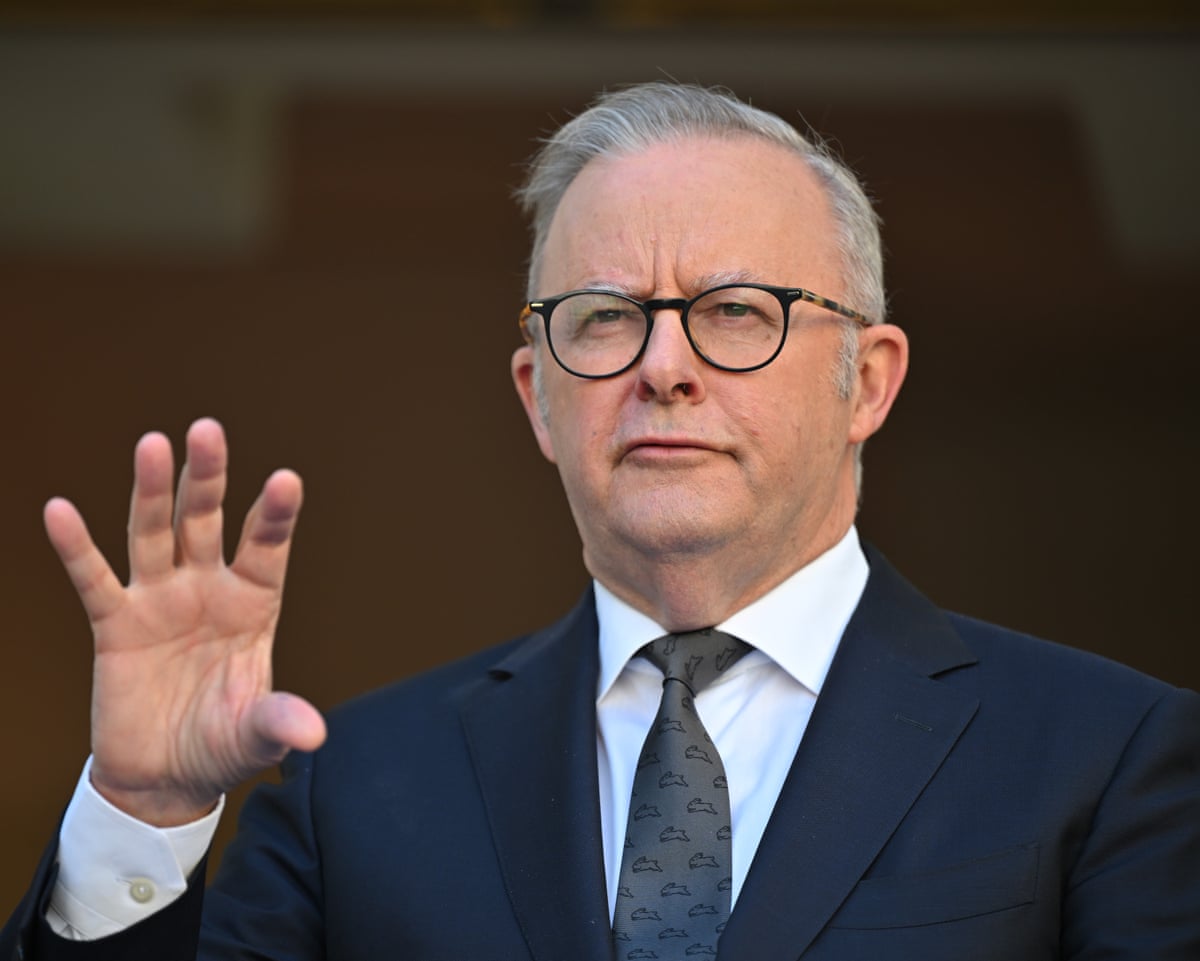
Australia’s Prime Minister Anthony Albanese stated that his government supports the resumption of negotiations between the US and Iran and confirmed that Australia has not been asked to participate in any US blockade of the Strait of Hormuz.
Albanese told Channel 9 television on Monday morning:
We haven’t been asked to participate. We’ve received no requests. We haven’t been asked … and I don’t expect that we will be. What we want is for negotiations to resume. We want to see an end to the loss of life and the loss of infrastructure… in the Middle East. And we want to see trade resume. This is having a massive global economic impact, not just on Australia. Every single country is being impacted.
The conflict involving Israel and the US against Iran has cost Israel approximately 35 billion shekels (US$11.5 billion) in direct budgetary expenses, according to preliminary estimates from the Israeli finance ministry.
The ministry reported that the war has caused significant economic damage, including a major contraction of GDP and increased government spending.
Officials cautioned that the full financial impact, including long-term reconstruction and economic recovery costs, may not be fully apparent for some time.
The largest share of the budget was allocated to the Israel Defence Forces, the defence ministry, the national security ministry, and various intelligence agencies.

Trump considering limited military strikes against Iran – report
According to the Wall Street Journal, citing officials and sources familiar with the matter, President Trump and his advisers are contemplating resuming limited military strikes against Iran in addition to the US blockade of the Strait of Hormuz as a means to break the deadlock in peace talks.
This option was reportedly under consideration on Sunday, hours after negotiations collapsed in Pakistan.
Trump could also resume a full-fledged bombing campaign, though officials said that was less likely given the prospect of further destabilizing the region and the president’s aversion to prolonged military conflicts. He could also seek a more temporary blockade while he pressures allies to take responsibility for a prolonged military escort mission through the strait in the future.
Following the breakdown of talks, Trump spent much of Sunday at his Miami resort, participating in a Fox News program, golfing, and consulting with advisers. Despite his threats, aides indicated he remained open to a diplomatic solution.
A White House spokesperson declined to comment on Trump’s specific options.
Summary of the day so far
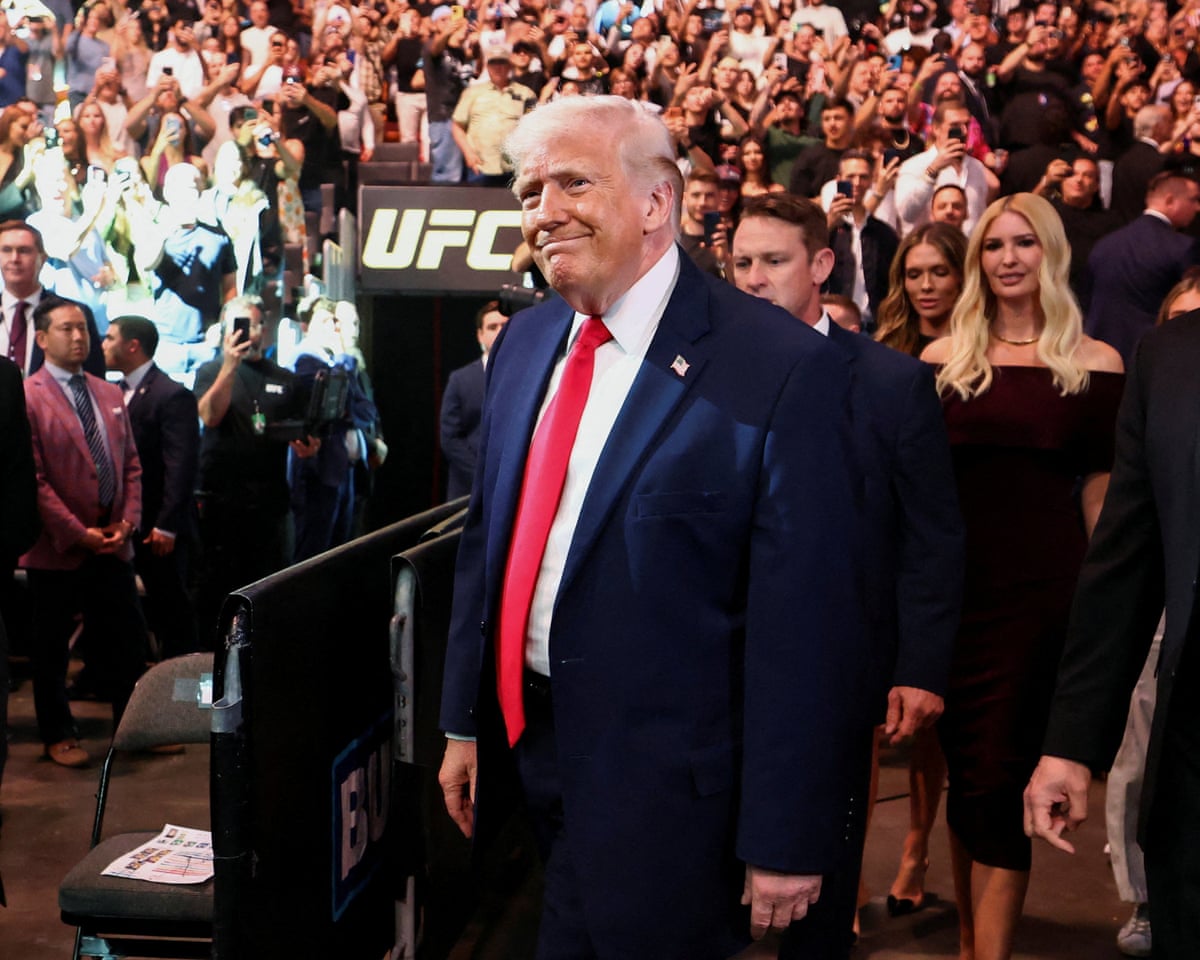
President Trump announced that the US Navy would begin blockading the Strait of Hormuz and would interdict any vessel in international waters that had paid a toll to Iran. In a detailed post on Truth Social, he stated that the US would start “BLOCKADING any and all Ships trying to enter, or leave, the Strait of Hormuz.”
In another post, Trump claimed that Iran had “knowingly failed” to fulfill its promise to keep the strait open, causing “anxiety” and “pain” for many countries worldwide.
US Central Command (Centcom) declared it would initiate the blockade on Monday morning. The announcement stated:
Centcom forces will begin implementing a blockade of all maritime traffic entering and exiting Iranian ports on April 13 at 10am ET [1400 GMT], in accordance with the president’s proclamation.
Iran’s Revolutionary Guard issued a warning that any military vessels approaching the Strait of Hormuz would be considered a violation of the ceasefire.
Trump reiterated his threat to destroy Iran’s power plants and other civilian energy infrastructure if a deal to end the conflict is not reached. He claimed to Fox News on Sunday:
I could take out Iran in one day.
Trump also stated that the US does not rely on the strait for oil supply:
We don’t get our oil from there. We have so much oil. We have boats pouring up to the United States … We don’t need the strait.
Iran’s top negotiator Mohammad Baqer Qalibaf responded that Trump’s threats would not influence the Iranian nation:
If you fight, we will fight, and if you come forward with logic, we will deal with logic. We will not bow to any threats.
Following Trump's blockade announcement, oil prices rose in early trading on Sunday, with US crude increasing 8% to $104.24 a barrel and Brent crude rising 7% to $102.29.
Oil prices rise after Trump blockade vow
US crude oil prices increased by 8% to $104.24 per barrel, and Brent crude rose 7% to $102.29 in early market trading on Sunday after the US announced it would blockade Iranian ports starting Monday.
The Associated Press reported that Brent crude, the international benchmark, has experienced significant volatility during the conflict, rising from approximately $70 a barrel before the war in late February to over $119 at times.
On the Friday preceding the peace talks, Brent crude for June delivery declined 0.8% to $95.20 a barrel.
Iran has effectively controlled the Strait of Hormuz, a critical waterway for global oil and LPG shipments. US Central Command stated that the blockade would be enforced impartially against vessels of all nations entering or departing Iranian ports and coastal areas.
The command clarified that ships traveling between non-Iranian ports would still be permitted to transit the strait.
Approximately one-fifth of the world’s traded oil passes through the Strait of Hormuz daily. Major exporters in the region include Saudi Arabia, Iraq, the United Arab Emirates, Kuwait, and Iran.
Oil prices reportedly rose in early market trading following the US announcement of the blockade after the failure of weekend peace talks.
Iran’s Foreign Minister Abbas Araghchi stated that the negotiations between the US and Iran had at one point approached an agreement but ultimately failed due to the US shifting its demands.
In intensive talks at the highest level in 47 years, Iran engaged with US in good faith to end the war. But when just inches away from ‘Islamabad MoU’, we encountered maximalism, shifting goalposts, and blockade. Zero lessons earned. Good will begets good will. Enmity begets enmity.
Mohammad-Bagher Ghalibaf, Iran’s Parliament Speaker, also reminded the White House of rising gasoline prices in the US:
Enjoy the current pump figures. With the so-called ‘blockade’, soon you’ll be nostalgic for $4–$5 gas.


