State of Emergency Declared
Bolivian President Rodrigo Paz has declared a state of emergency following weeks of protests demanding his resignation.
The declaration grants Paz expanded authority to remove roadblocks set up by demonstrators, which have led to severe shortages of essential goods and have paralyzed significant portions of the country.
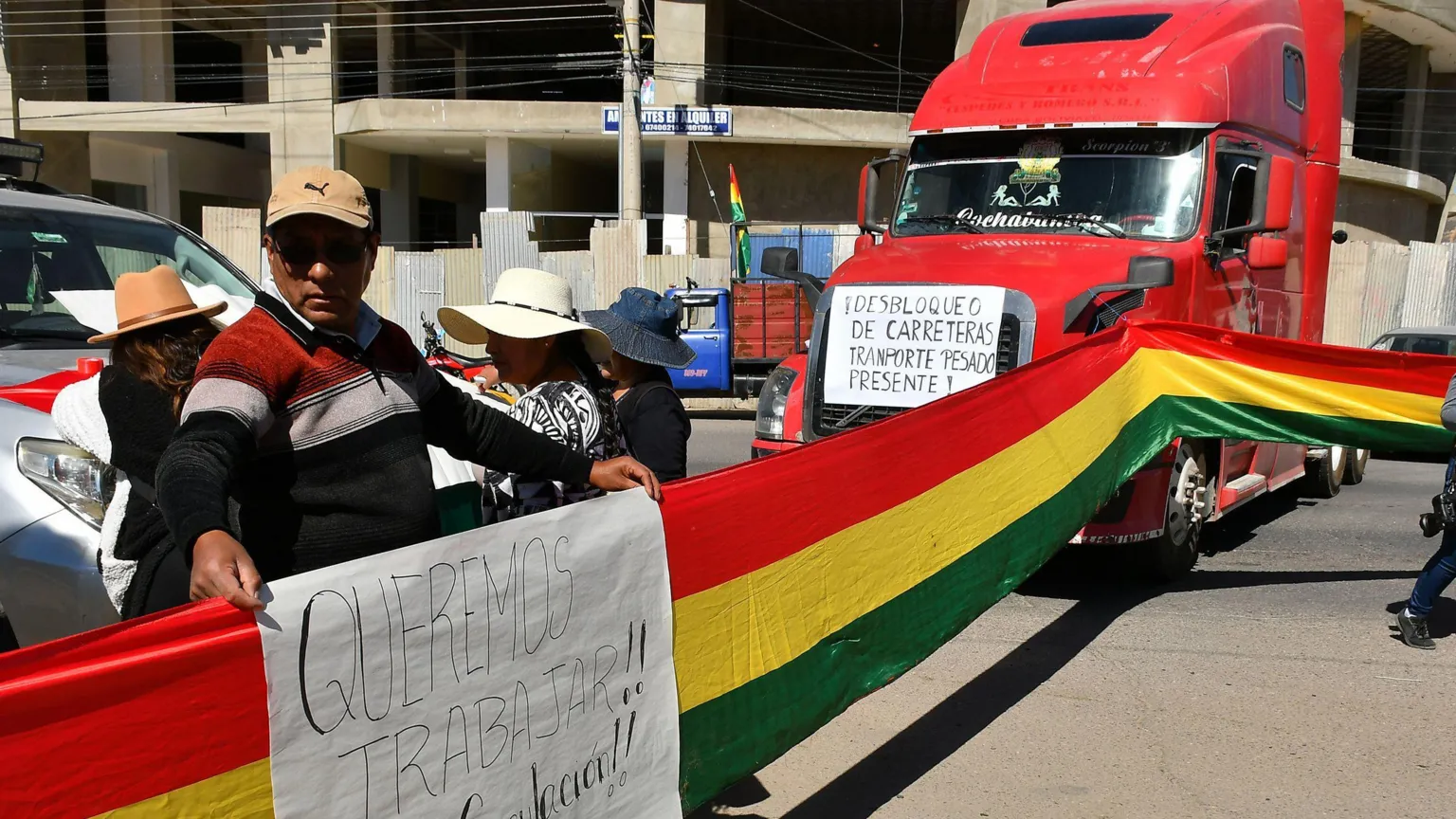
In an official statement, President Paz indicated that the state of emergency aims to "free the country's roads" and "restore" normal conditions.
According to Bolivian law, Congress must either approve or reject this measure within 72 hours of its announcement.
Background and Protest Details
The blockades are organized by miners, farmers, and indigenous groups and are part of protests that began at the end of April.
These demonstrations have resulted in several fatalities and hundreds of arrests during the ongoing unrest.
Protesters are demanding the reinstatement of fuel subsidies, a reversal of austerity measures, and the resignation of President Paz.
Government Response and Statements
President Paz has characterized the crisis as a coordinated effort to destabilize Bolivia.
"Bolivians cannot continue to be hostages of blockades that prevent working, studying, receiving medical attention, supplying themselves, and bringing sustenance to their homes," he stated in a social media post on Saturday.
The announcement of the state of emergency came hours after Paz revealed that an agreement had been reached with the country's principal union, the Bolivian Workers' Confederation.

Despite this, some indigenous groups have declared their intention to continue protesting, with roadblocks remaining in place, according to AFP reports.
Journalists observed police and military personnel deployed in main squares on Saturday.
Origins of the Protests
The protests began in late April, initially triggered by a land reform proposal introduced by President Paz. Critics contended that the reform would facilitate large landowners in acquiring small properties.
Following backlash, Paz withdrew the land reform proposal. However, farmers have been joined by other groups expressing dissatisfaction with additional policies, including cuts to longstanding fuel subsidies.
There has also been opposition to proposed amendments to Bolivia's constitution.
President Paz, a center-right politician elected in October, asserts that these constitutional changes are necessary to open the economy to private investment. Protesters argue that the amendments would weaken oversight of natural resources and other critical economic sectors.
Political Dynamics and Accusations
Paz has accused former left-wing president Evo Morales of orchestrating the protests, an allegation Morales has denied.
Measures to Address Unrest
In an effort to ease tensions, President Paz has reshuffled his cabinet, reduced his salary and those of his ministers by half, and announced the formation of a council to negotiate with societal sectors feeling marginalized by his government.
Despite these initiatives, unrest continues.
Last month, Congress passed legislation facilitating the president's ability to declare a state of emergency and deploy military forces to suppress protests.