Wildfire Forces Mass Evacuations in Southern France
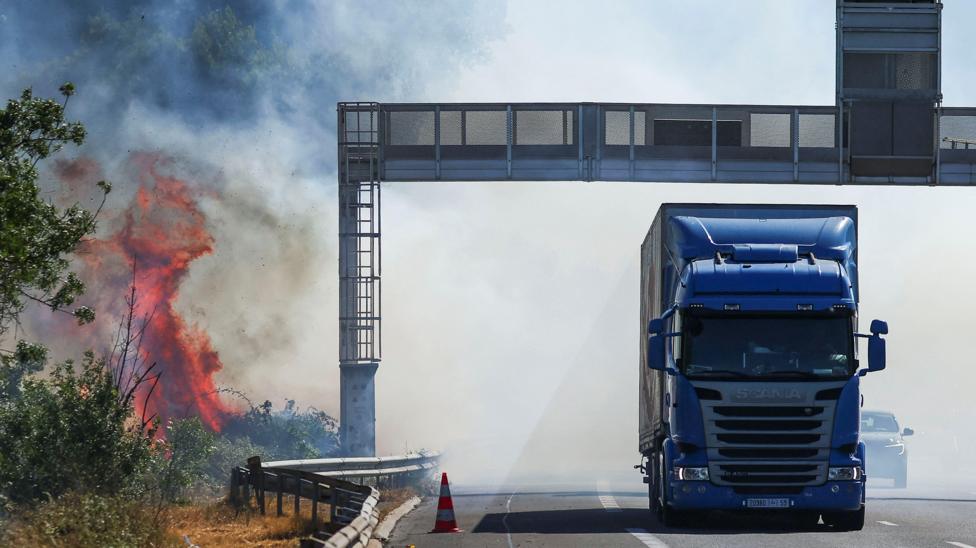
Thousands of residents have been evacuated from towns and villages in the French Pyrenees region due to a rapidly spreading wildfire amid an early summer heatwave affecting much of Europe.
Authorities have ordered more than 10,000 people to leave over a dozen small towns and villages located in the foothills of the French Pyrenees near the Spanish border.
The wildfire, situated in Trévillach near Perpignan, has consumed at least 4,600 hectares (11,366 acres), according to local prefect Pierre Regnault de la Mothe, who shared the information on the social media platform X.
"This morning conditions are deteriorating again," Interior Minister Laurent Nunez warned on French television channel TF1. "Today the battle resumes."
Authorities have cautioned that strong winds may exacerbate the wildfire's spread.
"It came within 300 metres (984ft) of the houses. We were shocked by how fast it spread, it was staggering – bordering on panic," said Patrice, a resident of Trévillach, in an interview with the AFP news agency.
Impact on Tour de France and Emergency Measures
Organizers of the Tour de France have urged spectators to avoid the finish area of the third stage of the cycling race on Monday to ensure emergency vehicles have unobstructed access to the affected region.
The third stage, covering 195.9km (121 miles), starts in the Spanish city of Granollers and ends in Les Angles, located in the Pyrénées-Orientales region of France.
Tour officials have requested that fans and non-essential personnel refrain from attending the final 40km of the stage. Additionally, the motorcade of team vehicles that typically follows the race will be minimized.
"An exceptional fire calls for exceptional measures for the Tour," stated race director Christian Prudhomme. "We invite the public not to come to the edge of the race or to the finish site."
European Support and Regional Fire Impact
European Commission President Ursula von der Leyen announced that the European Union would deploy four aircraft based in Cyprus and Sweden to assist with firefighting efforts.

The wildfire situation has also affected neighboring Spain, where over 2,200 hectares in the Les Gavarres natural reserve have been destroyed.
Catalan authorities reported late on Saturday that the fire was stable and expected to be fully extinguished during the week, according to .
Further south in Catalonia, within the eastern Castellon province, approximately 500 people were evacuated after a wildfire entered the Sierra de Espadan national park.
Heatwave Conditions and Fire Risk
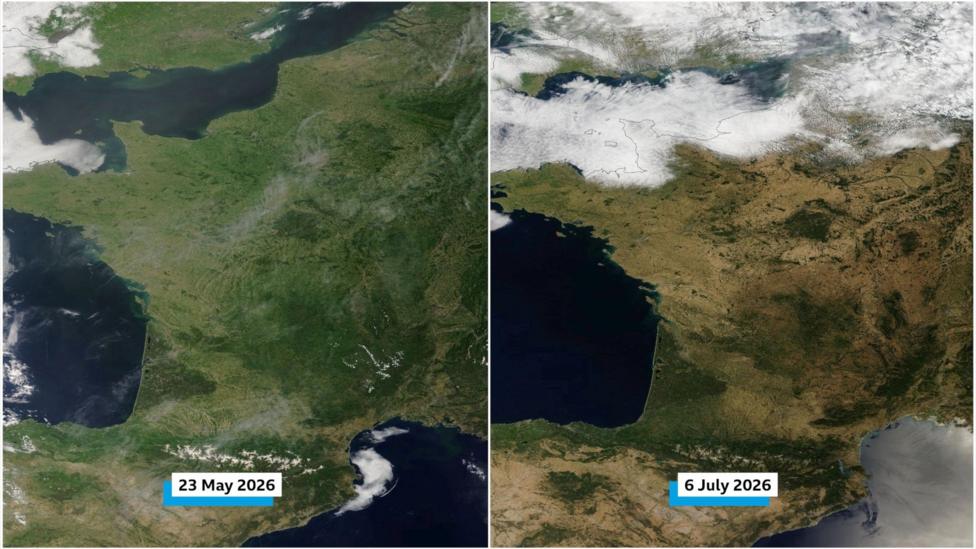
Temperatures in southwestern France could again reach 40°C this week, with parts of Portugal and Spain already experiencing temperatures exceeding 40°C.
"Although this heatwave is unlikely to break records in the way June's did, it will still be exceptional for the time of year," said BBC Weather Lead Forecaster Matt Taylor.
"With the heat expected to persist into next week and little widespread rain forecast, the risk of further wildfires will remain elevated."
During the record-breaking heatwave in June, which saw temperatures reach 42°C in some areas, France recorded its hottest average day nationwide on 24 June.
The heatwave resulted in at least 2,025 excess deaths in France, 1,222 in Belgium, and approximately 480 in the Netherlands.
Climate Change and Its Effects on Europe
Climate change is contributing to rising temperatures globally, with Europe warming twice as fast as the global average, according to the Copernicus climate service.
This accelerated warming is leading to more frequent and intense summer heatwaves, increased pressure on Europe's water resources, and a higher incidence of severe wildfires.

Get in Touch
If you have been evacuated, you can share your experiences here.
- Paris restricts alcohol consumption and sales as Europe's heatwave shifts east
- France records 2,025 excess deaths at peak of heatwave as Europe braces for more extreme weather
- Tour fans urged not to attend end of Monday's stage