

Parliamentary Session Marks New Leadership
A parliamentary session is currently underway in Hungary to officially swear in Péter Magyar as the new prime minister, nearly a month after his party's decisive election victory ended Viktor Orbán's 16-year governance.
Magyar's Tisza party now holds 141 out of 199 seats in the newly formed parliament, a remarkable increase from zero seats just two years ago when the party was established.

Public Celebrations and Political Transition
Outside the parliament building in Budapest, tens of thousands are expected to participate in a "celebration of freedom and democracy" along the banks of the Danube River. Magyar has encouraged the Hungarian people to move through what he calls the "gateway of regime change."

Fidesz Party Faces Dramatic Decline
Orbán's Fidesz party suffered a significant loss, dropping from 135 seats to 52 and showing signs of internal collapse.
Key figures from Fidesz, including Orbán himself, have chosen not to take their parliamentary seats, casting uncertainty over their political futures beyond a vague pledge to "rebuild the national side."
Daily revelations and allegations of corruption continue to emerge against a party that has governed Hungary with little opposition since 2010. Magyar has committed to a "change of system" alongside the change in government.
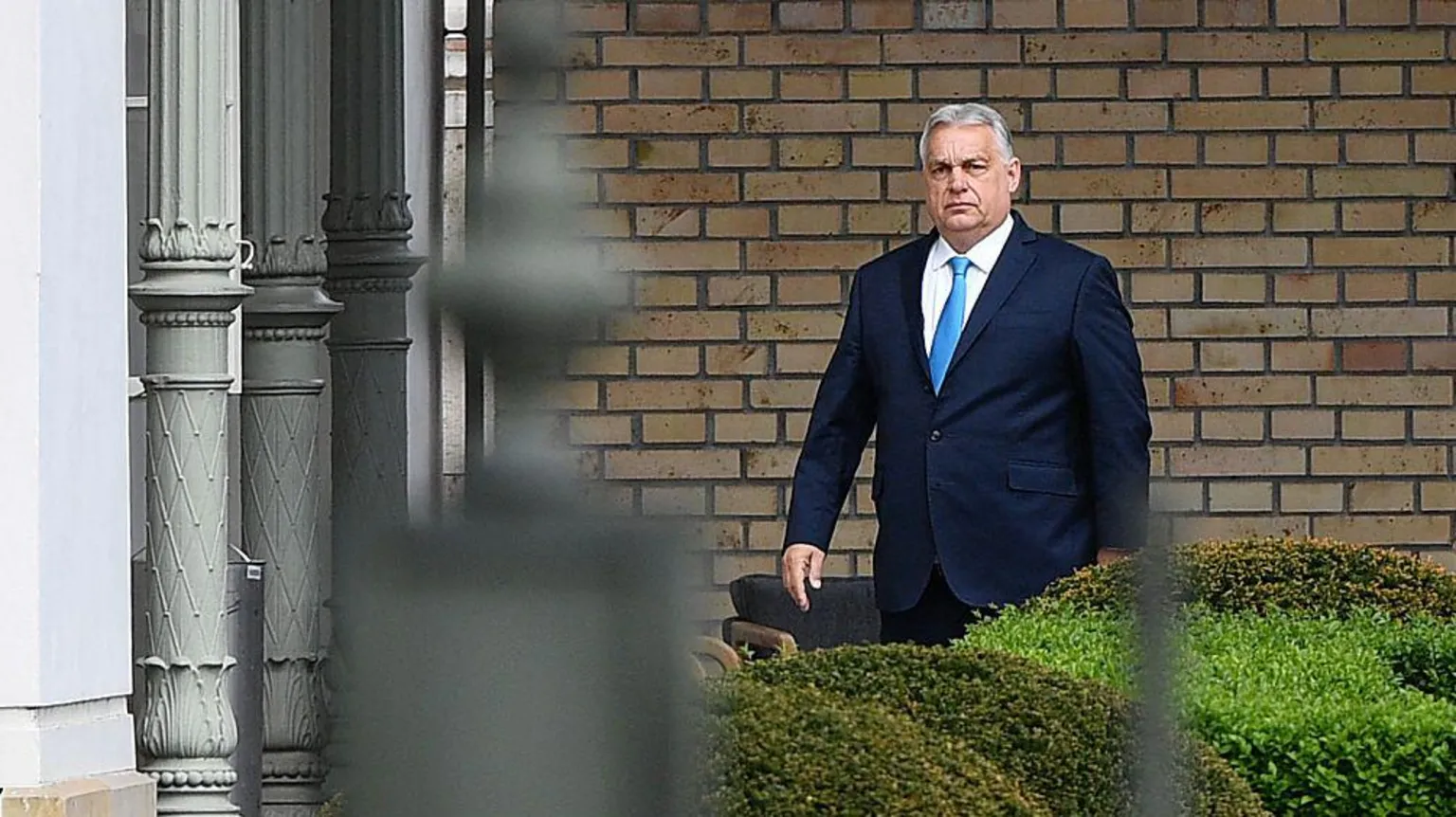
Orbán's attendance at Saturday's parliamentary opening session remains unknown, even as a guest.
Incoming Government Prepares for Challenges
"The main priority is to set up the government... on the ruins of the previous one,"
Zoltán Tarr, the incoming Minister for Social Relations and Culture, told the BBC.
"We are ready to face a very grim economic situation. But at the moment, we just don't know the severity."
The previous government, under Orbán, initiated a spending surge in the last eight months, compounding years of state contracts and funds being directed to business groups close to Fidesz.
The budget deficit has already approached the planned target for the entire year.
Emphasis on Moral Integrity and Accountability
The new government is keen to demonstrate moral superiority over Fidesz.
For instance, György Wáberer, a prominent businessman who switched allegiance from Fidesz to Tisza a week before the election, revealed he had donated £242,000 (€280,000, $331,000) to Tisza. Magyar promptly returned the donation.
When Magyar’s brother-in-law, Márton Melléthei-Barna, was appointed justice minister, the government faced sharp criticism on social media.
On Thursday evening, Melléthei-Barna withdrew his candidacy, stating it was "to ensure that not even the slightest shadow is cast on the transition."
Legal Actions and Investigations
Incoming Tisza ministers have assured there will be no revenge against the outgoing government, but those found guilty of financial crimes will be held accountable. A new "office to recover stolen assets" will be established.
"I don't think that we should talk about a guillotine,"
Tarr responded to calls for trials of those responsible for misappropriating national wealth.
"We are talking about investigations and actions which are totally in line with the rule of law. Interestingly enough, the current chief prosecutor, and the police, have started certain investigations which they did not start before the election. They are questioning people."
A source close to the prosecutor's office told the BBC that the previously small number of prosecutions of prominent figures is now becoming a steady flow.
"Not because we didn't want to prosecute before, but because the police and the tax office were reluctant to gather evidence,"
the source explained.
"What has changed is that people are now coming forward. So a lot more evidence is suddenly available,"
the source added.
Targets of Investigations
One focus of police investigations is the media empire of Gyula Balásy, which secured millions in government contracts over the past decade and ran Fidesz campaigns hostile to migrants and various "enemies," including billionaire philanthropist George Soros, Ukrainian leader Volodymyr Zelensky, and Péter Magyar himself.
In a tearful interview last week, Balásy expressed his desire to transfer his companies and investments to the state, while denying any wrongdoing.
Some of his companies' accounts have been frozen.
Another investigation targets Hungary’s National Cultural Fund, specifically an Urban Civil Fund with a budget of £57.2 million (€64.9 million, $76.7 million). Allegations that it may have funneled money to Fidesz candidates are under scrutiny.
EU Funds and Policy Challenges
The most pressing challenge for Magyar’s government is securing the release of €17 billion in EU funds currently withheld by the European Commission from the Orbán administration.
Last week, Commission sources in Brussels indicated that some of the Hungarian funds might be lost.
Additional issues include establishing a unified stance on an EU migrant pact, which the Orbán government strongly opposed.
The pact is scheduled to take full effect on 12 June, but Hungary continues to incur fines of €1 million per day for non-compliance with European Court of Justice rulings concerning its treatment of migrants.
Recent surveys reveal that voters of the Tisza party, similar to those of Fidesz before them, remain concerned about irregular migration and cautious about Ukraine’s aspirations to join the EU.
Magyar, like Orbán, maintains that Hungary still requires Russian oil and gas supplies, at least in the short term.
Optimism for the Future
"I'm not worried, I'm excited... We are serving the country. We are serving the people. We are not here to rule. We are here to serve. We are here to fulfil a mandate."
Tarr expressed optimism, viewing the EU as a willing partner and confident that the young people who celebrated the election victory on 12 April will remain engaged as festivities continue this weekend.


