Hungarian Public Media Suspend Broadcasting Following Political Shift
Hungarian public media outlets closely associated with former Prime Minister Viktor Orbán have halted broadcasting, according to the country’s new prime minister, Péter Magyar, who praised the move as a step towards ending propaganda control.
Magyar, who defeated Orbán in a decisive election victory in April, posted on Facebook:
“A historic day. Today marks the end of propaganda broadcasts on public media platforms. They lied at night, they lied during the day, they lied on every wavelength. That is now over.”
A firm hold on the media was a key element of Orbán’s 16-year tenure, during which he reshaped Hungary into a so-called “illiberal” democracy, often at odds with European Union standards.
By Tuesday afternoon, the Kossuth radio station and M1, Hungary’s principal public television channel, had ceased transmission. M1 displayed the message:
“Public media should not lie. We are sorry for doing it for so long. Public media now will be reformed so it will be independent and trustworthy. Our news programme is currently suspended. Stay tuned!”
This message appeared on a black screen.
Kossuth radio was broadcasting a Béla Bartók classical music program, as reported by Agence France-Presse journalists, while the websites for both M1 and Kossuth were inaccessible.
According to a statement from Hungary’s state media umbrella organization MTVA, M1 television is scheduled to resume broadcasting in the evening without news programming. Other public service programs will continue unaffected by these changes.
Orbán responded on social media, describing the suspension as:
“Another example of Tisza tyranny!”
He encouraged viewers seeking “the truth” to watch Hír TV, a channel affiliated with his Fidesz party.

Magyar’s Tisza party won the April elections on a platform promising “regime change” and a definitive break from Orbán’s era.
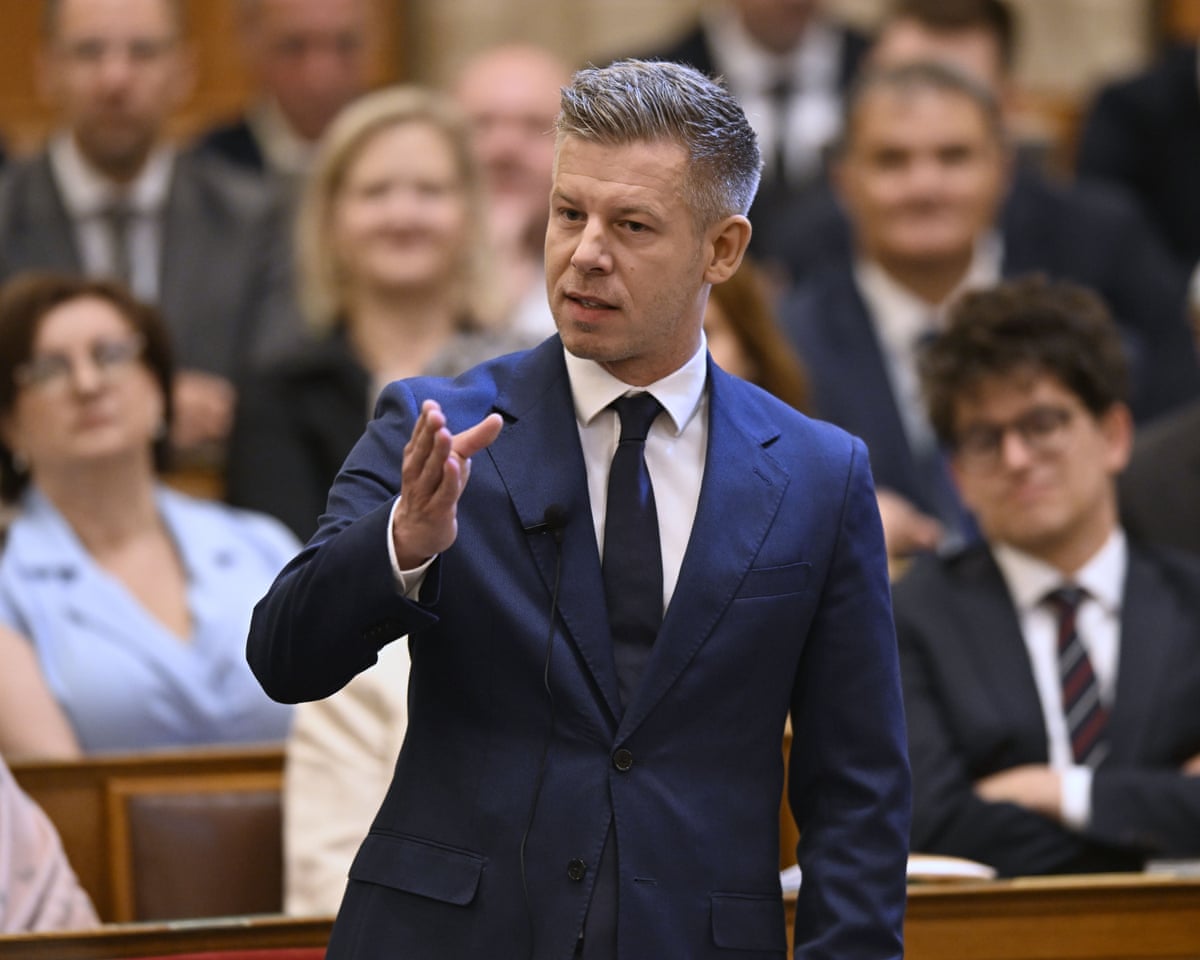
Following the election, Magyar expressed his intention to establish “a truly balanced, objective news service.” One of his initial acts as prime minister was to order a “comprehensive and immediate” review of public service media and its financing.
The suspension of broadcasts on Tuesday occurred shortly after Magyar’s government replaced the management of state television and radio.
In addition to public media, the new administration has targeted private outlets owned by business figures allied with Orbán. At TV2, one of Hungary’s leading private broadcasters, the main news anchors have been replaced and the news director removed since Magyar’s electoral victory.
Since coming to power in 2010, Orbán’s government has utilized media outlets to promote its agenda and allies while vilifying opponents, including philanthropist George Soros and Ukrainian President Volodymyr Zelensky.
Hungary’s ranking in Reporters Without Borders’ press freedom index declined sharply from 23rd in 2010 to 74th in 2026, reflecting government efforts that created a parallel information environment in much of the country.
During the election campaign, state media portrayed Magyar as a puppet of Brussels, an absentee father, and a traitor. Magyar, as a candidate, pledged to suspend state media coverage, describing it as a “factory of lies” comparable to propaganda from North Korea and Nazi-era Germany.
Under Orbán, approximately 80% of Hungary’s media landscape was controlled by Fidesz loyalists, encompassing both state and private outlets. These were positioned against independent media outlets, whose journalists nonetheless exposed numerous scandals.
Several private media companies linked to Fidesz are expected to continue operating under the new government, as they retain popularity, analysts noted. However, their influence may be curtailed by increased competition, and their editorial stance may shift with the political changes.
Agence France-Presse and contributed to this report.