South Australia’s Election and Federal Implications
South Australian politics seldom dominates national headlines, yet the upcoming state election this Saturday is attracting heightened attention due to its potential federal ramifications.
The Liberal party faces a challenging contest, pressured by a popular first-term Labor government and the rising influence of One Nation, which is eroding the Liberal voter base. This election serves as an initial measure of One Nation’s expanding national support, with federal polls frequently showing Pauline Hanson’s party outperforming a weakened Coalition.
One significant uncertainty is the flow of preferences in electorates where One Nation advances to the final preference count, especially given the Liberal party’s strategic choice to position One Nation above Labor on their how-to-vote cards.

Polling Trends and Party Support
All six South Australian polls released this year have consistently placed Labor well ahead, with One Nation leading the Liberals.
However, the polling data has displayed considerable variation. Labor’s primary vote has fluctuated between 35% and 44%. In the Roy Morgan poll, One Nation led the Liberals by over 10 percentage points, whereas earlier polls showed a narrower margin of just one point. It appears One Nation has primarily drawn support from the Liberals, although Labor’s vote has also declined since its 2025 peaks.
The latest survey, an Advertiser/YouGov poll published on Wednesday, recorded Labor at 38% of the primary vote, One Nation at 22%, and the Liberals at 19%.
Given the unprecedented nature of these polling trends, predicting the election outcome remains difficult.
Potential Impact of One Nation’s Vote Share
If One Nation secures over 20% of the statewide vote, it is expected to achieve 30-40% in several regional seats, likely placing it among the top two candidates. In contests between One Nation and Liberal candidates, preferences from Labor and other left-leaning parties will be pivotal, though these preferences are unlikely to strongly favor either side.

Liberal Leader’s Position and Challenges
Liberal leader Ashton Hurn has sought to clarify her party’s stance by stating they are focused on defeating the Labor government.
“This is a vote of no confidence in the government. And that’s who I’m focused on defeating at the election on Saturday.”
Nonetheless, if Liberal support declines as polls suggest, remaining Liberal voters might prefer a One Nation candidate over Labor in certain electorates.
Historical Context and Current Political Landscape
The South Australian Liberal party has secured only one election victory in the past 25 years, winning government in 2018. Labor, under Peter Malinauskas, assumed power in 2022, and his administration has generally maintained popularity despite some recent uneven polling.
Late last year, this election appeared to mirror recent Western Australian elections, with Labor poised to win a substantial majority against a weakened opposition reduced to a few seats. However, the rise of One Nation has complicated this outlook.
It remains uncertain whether One Nation will maintain the polling levels indicated. Some voters may revert to traditional party loyalties, and the presence of established local members might slow the migration of Liberal voters to One Nation in certain areas. Nevertheless, if One Nation surpasses 20% of the vote, it will significantly influence outcomes, particularly in regional and outer suburban areas where it typically performs best.
Electoral Geography and Seat Vulnerabilities
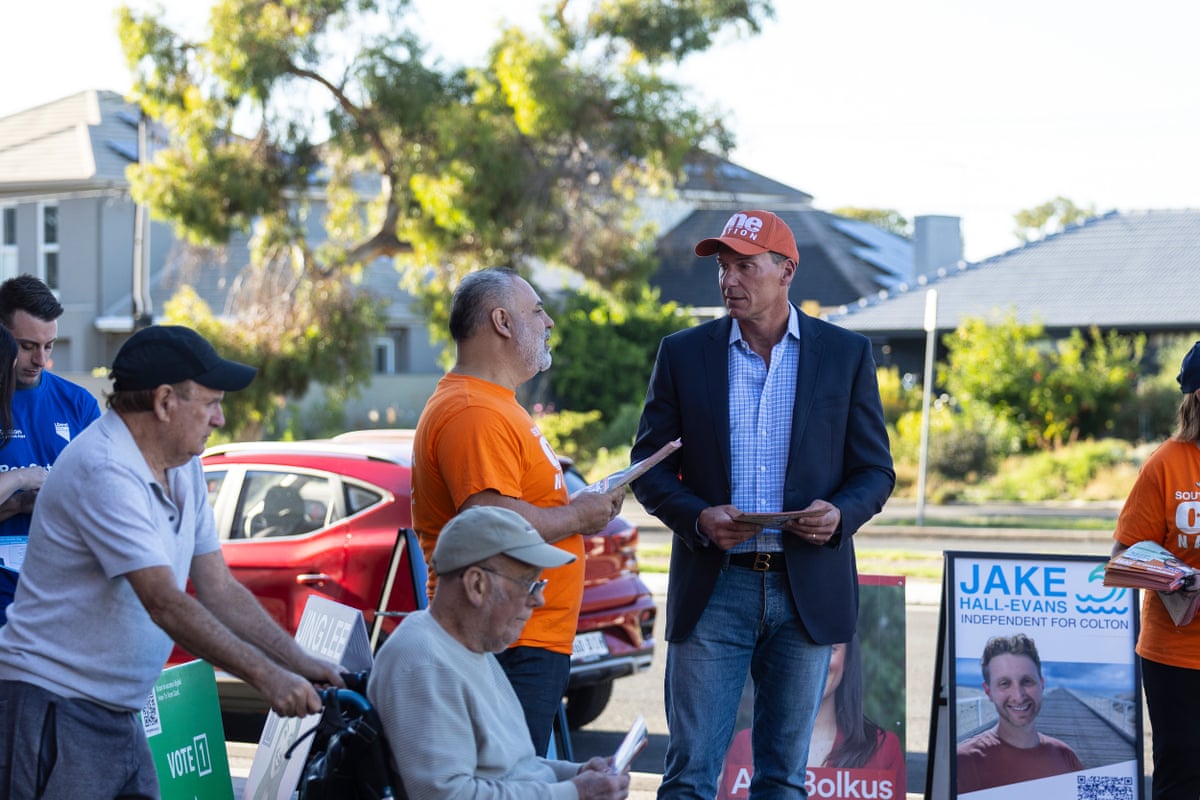
Of South Australia’s 47 seats, 34 are located in Greater Adelaide. The Liberals currently hold only six of these, all marginal. The party faces considerable challenges in seats such as Unley, Morialta, Colton, and Morphett.
Traditionally, the Liberals’ regional seats have been their safest; however, under current conditions, some are threatened by both independents and One Nation candidates.
Several regional seats are already held by independents, with strong challengers in electorates like Flinders and Finniss. One Nation may also contend for seats such as Chaffey, a rural electorate extending to the Victorian border.
Labor is unlikely to lose any seats to One Nation, but in some outer suburban electorates, including Taylor and Elizabeth, a Labor versus One Nation contest is anticipated.