

NSW Government Invokes Special Powers for Israeli President’s Visit
The New South Wales government has activated special powers in preparation for the visit of Israeli president Isaac Herzog next week. Premier Chris Minns has cautioned potential protesters that police will not permit "conflict on Sydney streets" during the visit.
However, a group of 13 state and federal NSW Members of Parliament have appealed to Police Commissioner Mal Lanyon to collaborate with protest organisers to facilitate a planned assembly and march from Town Hall to the state parliament. Several MPs have indicated their intention to participate in the march. The group criticized the premier’s invocation of special powers, accusing him of portraying peaceful protest as "inconvenient and illegitimate."
Details of Isaac Herzog’s Visit and Government Measures
Isaac Herzog is scheduled to arrive in Sydney on Monday and will remain in Australia for five days. During his visit, he is expected to meet with Prime Minister Anthony Albanese, Jewish community leaders, and victims of the Holocaust and their families.
On Saturday, Premier Minns announced that the government had declared Herzog’s visit a "major event" under state legislation. This designation permits police to implement additional measures aimed at managing crowd safety, maintaining separation between groups, and minimizing the risk of confrontations in busy city areas, according to a government statement.
The government emphasized that these arrangements do not constitute a ban on protests or marches, affirming that people retain the right to express their views lawfully.
Additional Police Powers and Potential Penalties
NSW police will be granted enhanced powers, including the authority to direct individuals to move on, close specific locations, and issue directions to prevent disruptions or threats to public safety. Failure to comply with police directions may result in penalties, including fines of up to $5,500.

Protesters have expressed concern that these additional powers could effectively prohibit demonstrations in the central business district and eastern suburbs during Herzog’s visit.
Police Commissioner Mal Lanyon acknowledged on Saturday that the Palestinian Action Group has proposed a rally from Town Hall through the streets of the Sydney CBD. Rallies have been organised in all Australian state capitals ahead of Herzog’s five-day tour, with Sydney as his first stop.
Government and Police Officials Urge Calm and Respect
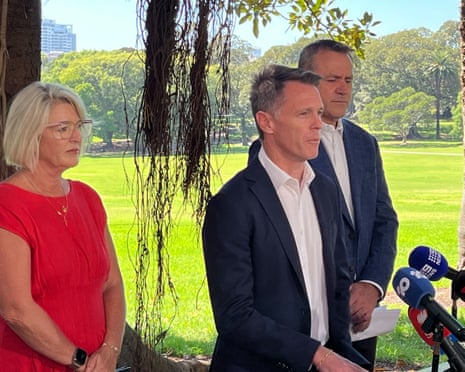
Speaking to the media on Saturday, Premier Minns stated that NSW police would maintain "a massive presence" on Monday afternoon and encouraged people to avoid the CBD if possible.
“We’re hoping that people can remain calm and respectful during that presidential visit,” Minns said. “We can disagree without resorting to clashes or violence on Sydney streets. In fact, that would be devastating for everybody, regardless of your cause.”
NSW Police Minister Yasmin Catley highlighted the significance of Herzog’s visit as a period of mourning with the Australian Jewish community.
“We believe that that is the right thing for them to do, and I really plead with the people of NSW to also join with that community and respect their grieving period.”
MPs Advocate for Right to Peaceful Protest
Greens MP Sue Higginson, one of the 13 MPs who signed the open letter to Commissioner Lanyon, asserted that protesters on Monday will be exercising their constitutional rights.
“The making of a major event declaration and the commentary from the premier and some parts of the NSW Police, trying to paint protest as inconvenient and illegitimate, is misleading and dangerous and must be corrected,” Higginson said.
“The commissioner of police has the power to make sure that everyone that attends the CBD on Monday is kept safe, this includes the general public as well as people who are peacefully opposing the presence of a man who has incited genocide.
“The best and safest thing the police can do is to facilitate the wishes of the people and enable the protest gathering and march. The police here in NSW have a responsibility to ensure that lawful rights are upheld, and that includes the safe exercise of the right to protest.”
Legal Context and Potential Charges for Protesters
NSW police confirmed on Friday that they are aware of plans for a march starting at Town Hall, which falls under the controversial anti-protest legislation enacted following the Bondi terror attack.
Under these new laws, marchers may face charges for offences such as obstructing pedestrians and traffic.


