

Australian States Introduce Measures as Fuel Prices Surge
Two Australian states have announced free public transport initiatives to encourage residents to reduce driving amid soaring fuel prices linked to the conflict in the Middle East.
Victoria, which includes Melbourne, declared it will provide free travel throughout April, while Tasmania has extended free public transport access until the end of June. Other state governments have not adopted similar measures to date.
Concurrently, the federal government revealed plans to halve the nation's fuel excise tax for a three-month period to alleviate financial strain on motorists.
International Context and Impact on Fuel Prices
Australia is among several countries experiencing sharp increases in fuel costs following the onset of the US-Israel war involving Iran and the effective closure of the Strait of Hormuz.
The near-complete blockade of this crucial maritime passage, through which approximately 20% of the world's oil and natural gas is transported, has prompted governments worldwide to implement fuel conservation measures.
Government Responses and Tax Relief
Prime Minister Anthony Albanese has sought to reassure the public amid reports of panic buying and fuel shortages at petrol stations.
On Monday, his administration announced a reduction in the fuel excise tax by 26.3 cents per litre for petrol and diesel, expected to save drivers between approximately A$10 (£5.18, $6.87) and A$20 per tank.
This excise reduction, effective from Wednesday, is projected to cost Australian taxpayers A$2.55 billion.
State-Level Initiatives
Victoria's Premier Jacinta Allan announced on Saturday that all trains, trams, and buses in the state would be free starting Tuesday to alleviate pressure on fuel demand.
"This won't solve every problem, but it's an immediate step to help Victorians right now," she stated.
Similarly, Tasmania's government declared that coaches, buses, and ferries would be free for several months.

"We know the rising cost of fuel is impacting the family budget, and that's why we have again taken strong and decisive action to protect Tasmanians," said Premier Jeremy Rockliff.
Tasmania's transport minister also highlighted that paid school bus services would be made free, saving users approximately A$20 (£10.40) weekly.
Other States' Positions
Other Australian states have refrained from implementing comparable free public transport policies.
New South Wales Transport Minister John Graham explained to broadcasters that the state is reserving resources for long-term crisis management.
"We are keeping our powder dry," Graham said, noting that free public transport would cost millions daily, funds needed for sustained support.
South Australia is expanding senior travel card availability while absorbing increased fuel costs, and Queensland pointed to a flat 50-cent fare introduced last February, according to SBS News.
Western Australia Premier Roger Cook noted that his state had already reduced fares.
"Rick Astley was top of the charts when fares were this low in Western Australia back in the 80s," he remarked.
Fuel Price Trends and Supply Considerations
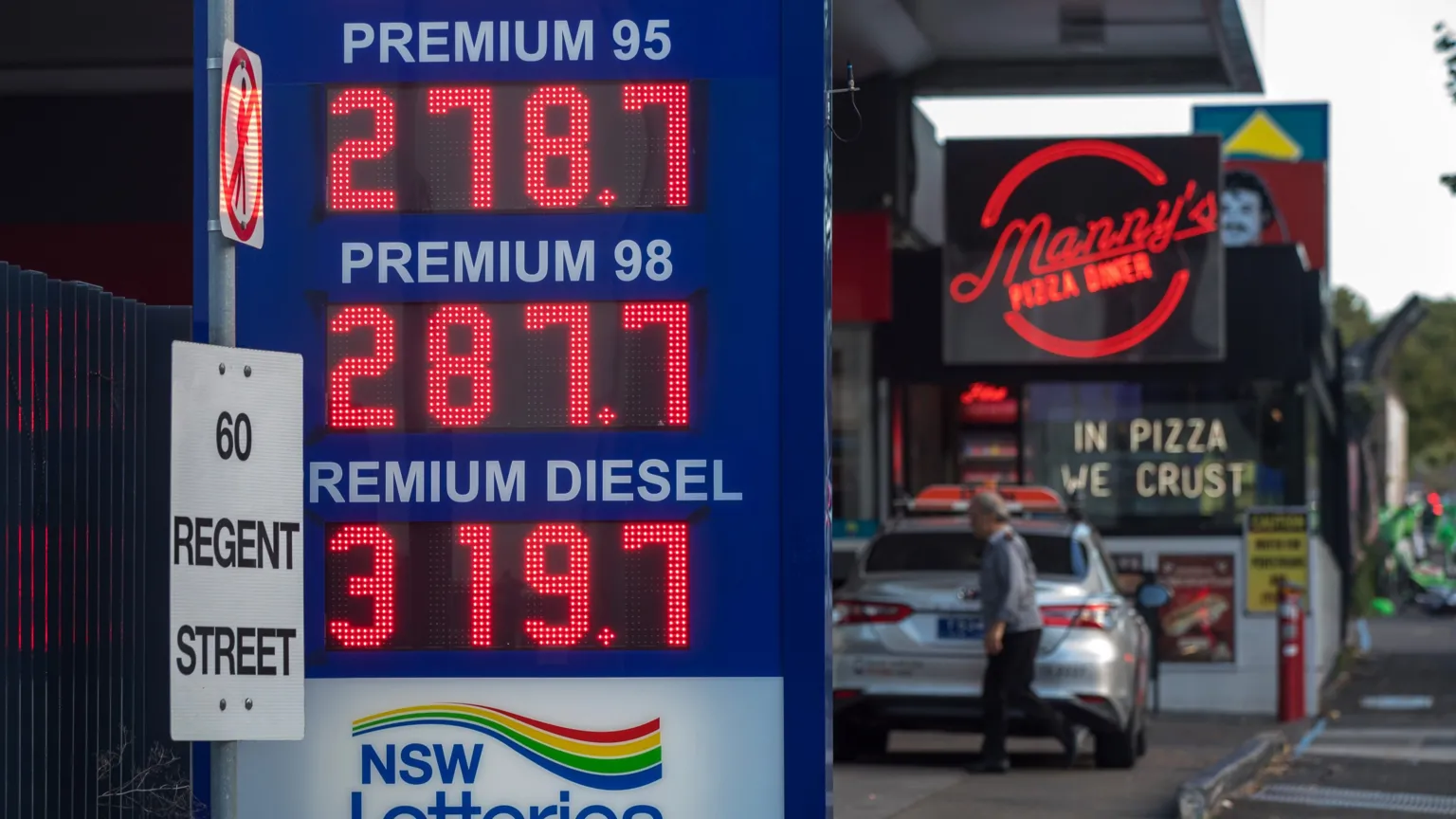
As of last Sunday, the average petrol price in Australia rose to A$2.38 per litre, up from approximately A$2.09 at the war's onset a month earlier, according to the Australian Institute of Petroleum.
The Australian government asserts that supply remains stable; however, international oil price increases have directly influenced domestic fuel prices.
With only limited cargo ship passage through the Strait of Hormuz due to fears of Iranian attacks, concerns persist that a prolonged blockade could significantly impact the global economy.
Global Fuel-Saving Measures
Rising fuel costs have prompted various governments to adopt conservation strategies.
In Egypt, shops, restaurants, and cafes were instructed to close early starting Saturday, alongside directives for non-essential workers to telecommute one day weekly and increases in public transport fares.
Similarly, Ethiopia mandated that state-owned companies and public institutions place non-essential employees on leave to reduce commuting.
On Tuesday, the Philippines declared a national emergency, offering subsidies to transport drivers, reducing ferry services, and instituting a four-day workweek for civil servants.


