

Trump's Warning to Taiwan After Beijing Summit
Hours after meeting Chinese President Xi Jinping in Beijing last week, Donald Trump issued a firm warning to Taiwan against pursuing independence.
"I'm not looking to have somebody go independent. And, you know, we're supposed to travel 9,500 miles to fight a war. I'm not looking for that. I want them to cool down. I want China to cool down,"
he told Fox News in an interview that aired on Friday.
Trump's remarks, among the strongest a US president has made on the matter, immediately prompted responses from Taiwan, which stated it does not see the necessity to formally declare independence.
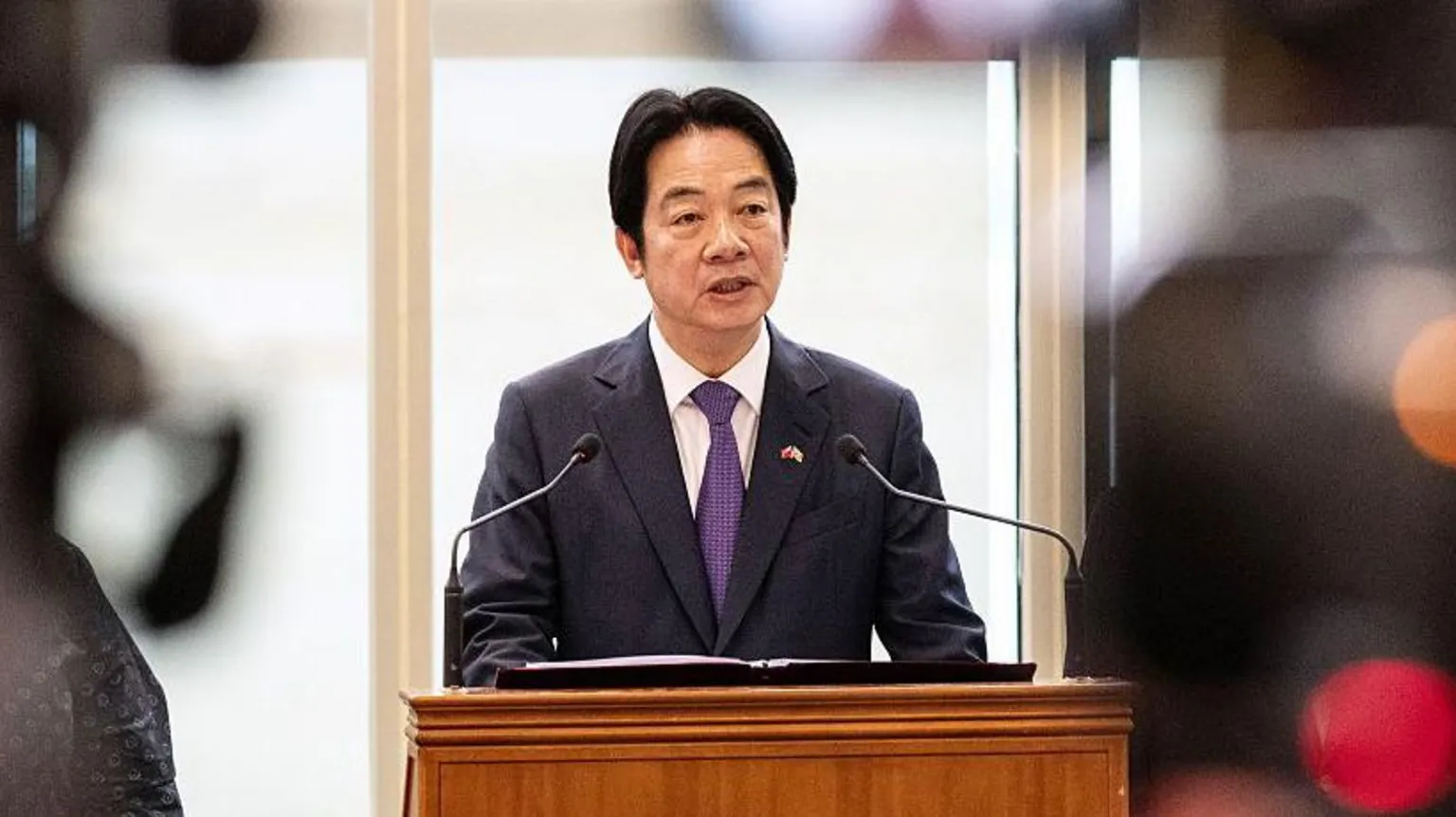
Taiwanese independence remains a critical red line for Beijing, which claims Taiwan as its territory and has accused its president Lai Ching-te of being a separatist.
However, the issue is complex and nuanced.
Why Does China Want Taiwan?
China's aspiration to "reunify" with Taiwan has deep historical roots.
This dates back to the conclusion of the Chinese civil war in 1949, when the Chinese Communist Party secured control over mainland China, and the defeated Kuomintang forces retreated to Taiwan, establishing their own government.
Since then, Beijing has claimed the self-governed island. Under Xi Jinping's leadership, the Chinese government has intensified its threats and efforts to suppress what it perceives as separatism. Taiwan's "reunification" with China has become a central objective, with Xi himself describing it as an "unstoppable" reality.
In recent years, China has escalated pressure through military drills simulating blockades, diplomatic isolation of Taiwan, and greyzone tactics involving frequent incursions of warships and fighter jets near Taiwanese waters and airspace.
During last week's summit, Xi emphasized to Trump that Taiwan is the most important issue in US-China relations and warned that mishandling it could lead to conflict.
As the United States is Taiwan's closest ally and is legally obligated to provide the island with means to defend itself, there is longstanding concern that any attack on Taiwan might draw the US into direct conflict with China.
China's position on Taiwan is codified in its Anti-Secession Law, enacted in 2005, which expresses a desire for "peaceful reunification" with Taiwan.
However, the law also stipulates that if "Taiwan independence" forces cause secession or peaceful reunification becomes impossible, China may employ "non-peaceful means" to protect its territorial integrity.
This implies that China does not exclude the use of military force to take Taiwan if deemed necessary. Most analysts believe a formal declaration of independence by Taiwan's government would trigger such a response.
Does Taiwan Want Independence?
Taiwan maintains close economic and cultural ties with China, but most Taiwanese, benefiting from a robust democratic system, consider themselves politically distinct from China, which has grown increasingly authoritarian in recent years.
The majority prefer to maintain the status quo, avoiding both formal independence and unification with China.
The official stance of Taiwan's government, led by the Democratic Progressive Party (DPP) since 2016, aligns with this perspective.

President Lai Ching-te and his predecessor Tsai Ing-wen have maintained that Taiwan views itself as an independent country, thus there is no need to formally declare independence.
"Since Taiwan considers itself an independent country, there is no need to formally declare independence,"
this approach asserts Taiwan's sovereignty while avoiding crossing Beijing's red line.
Even if desired, neither the president nor the government can unilaterally declare independence; it requires a constitutional amendment passed by Taiwan's Legislative Yuan and approval by a majority in a referendum.
Nonetheless, Beijing remains wary of the DPP, which initially advocated for sovereignty, and particularly criticizes Lai, who made strong anti-Beijing statements before taking office. Beijing frequently labels him and his party as "pro-independence" separatists.
Does the US Support Taiwan Independence?
While Trump's recent statements on Taiwan have attracted attention, no US administration has explicitly endorsed Taiwan's independence.
Following his summit with Xi, Trump remarked that the Chinese leader "doesn't want a movement for independence" in Taiwan and that he "heard him out" but "didn't make a comment on it."
The US generally maintains a delicate balance on the sensitive Taiwan issue.
In 1979, the US severed formal diplomatic ties with Taiwan upon establishing relations with Beijing, thereby acknowledging Beijing's claim that there is only one Chinese government.
However, in the same year, the US enacted the Taiwan Relations Act, which authorizes the US to "provide Taiwan with arms of a defensive character," underpinning ongoing arms sales to Taiwan.
The act also declares that peace in the region is a US interest and that the US maintains the capacity "to resist any resort to force or other forms of coercion that would jeopardize the security or the social or economic system" of Taiwan.
Trump's recent warning to Taiwan surprised some observers, who interpreted it as a potential wavering of US commitment and suggested that Xi may have influenced the US president.
Ryan Hass, an analyst with the Brookings Institution, commented that Trump had "elevated the risk of confrontation" and that his "visible sympathy for Xi's framing on Taiwan will embolden Beijing to increase pressure on Taipei."
Nevertheless, Trump emphasized that "nothing's changed" regarding US policy on Taiwan and expressed a desire to speak directly with President Lai, a move that would anger Beijing as it did previously.
Many are closely monitoring US actions to determine if a policy shift is underway, including whether Trump will approve a potential $14 billion arms package to Taiwan, following an $11 billion weapons sale announced in December.
After the summit, Trump was non-committal about final approval of the latest package, stating to Fox News that it "depends on China" and that "it's a very good negotiating chip for us frankly." He later told reporters he would "make a determination over the next fairly short period."
Despite rhetoric from various presidents, US policy on Taiwan has remained fundamentally consistent, bound by the Taiwan Relations Act.
Former President Joe Biden twice stated the US would defend Taiwan if China attacked, seemingly diverging from the policy of "strategic ambiguity," under which the US neither commits to defending Taiwan nor rules out the option.
Each time, however, his administration clarified that US policy on Taiwan had not changed.


