

Armenia's Upcoming Election Under Russian Economic Pressure
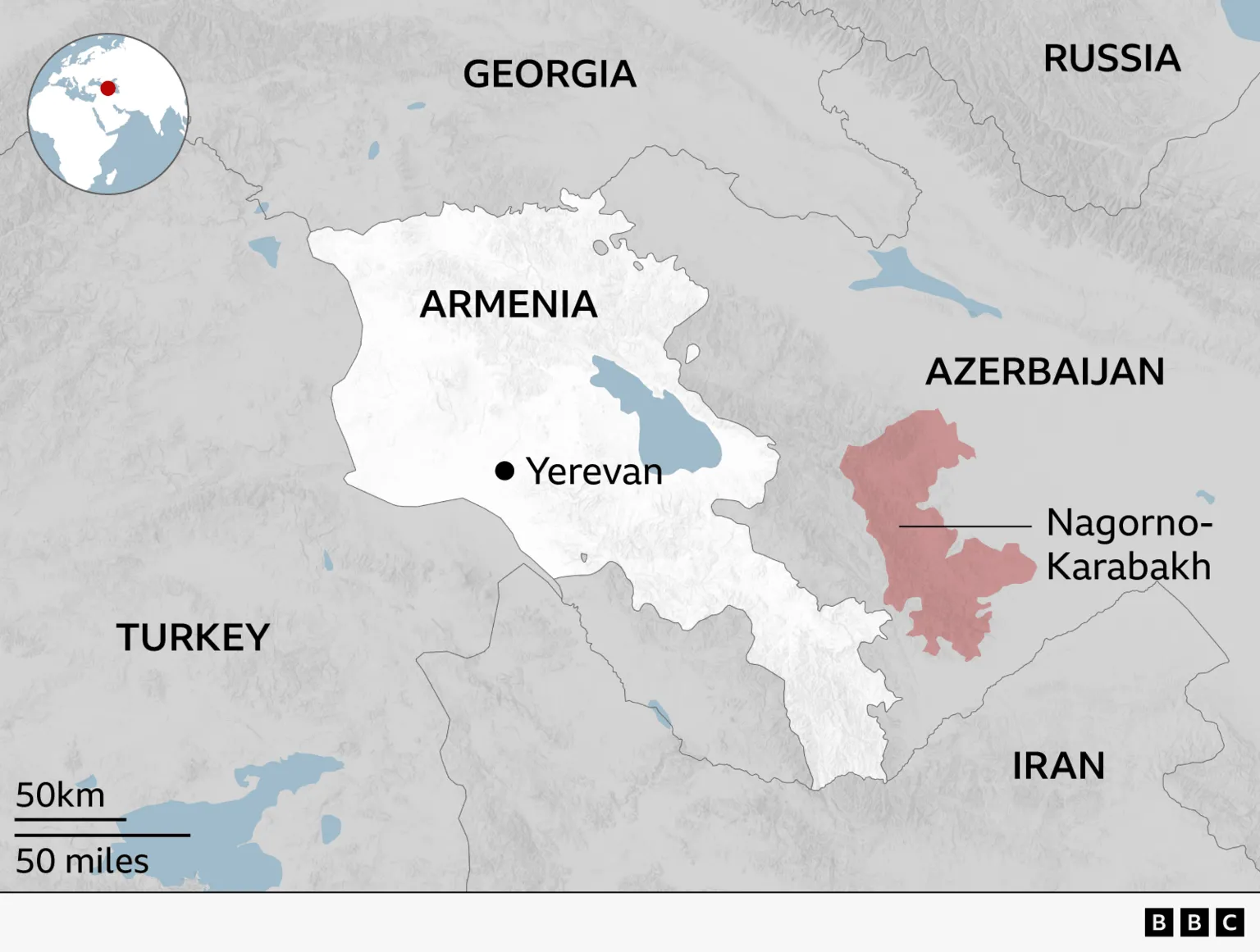
Armenia is set to hold parliamentary elections on 7 June amid increasing economic pressure from Russia. Prime Minister Nikol Pashinyan is seeking re-election on a platform advocating closer ties with Europe.
The election has attracted substantial international focus on this small South Caucasus country of three million, which has been moving steadily closer to Western alliances while maintaining significant economic links with Russia, its largest trading partner.
The shift towards the West is largely attributed to Pashinyan's leadership. Since assuming office in 2018, he has moved Armenia away from Moscow's influence, enacted legislation to initiate the process of joining the European Union, and expedited peace negotiations with neighbouring Azerbaijan through a US-mediated agreement. This peace process earned him the endorsement of former US President Donald Trump.
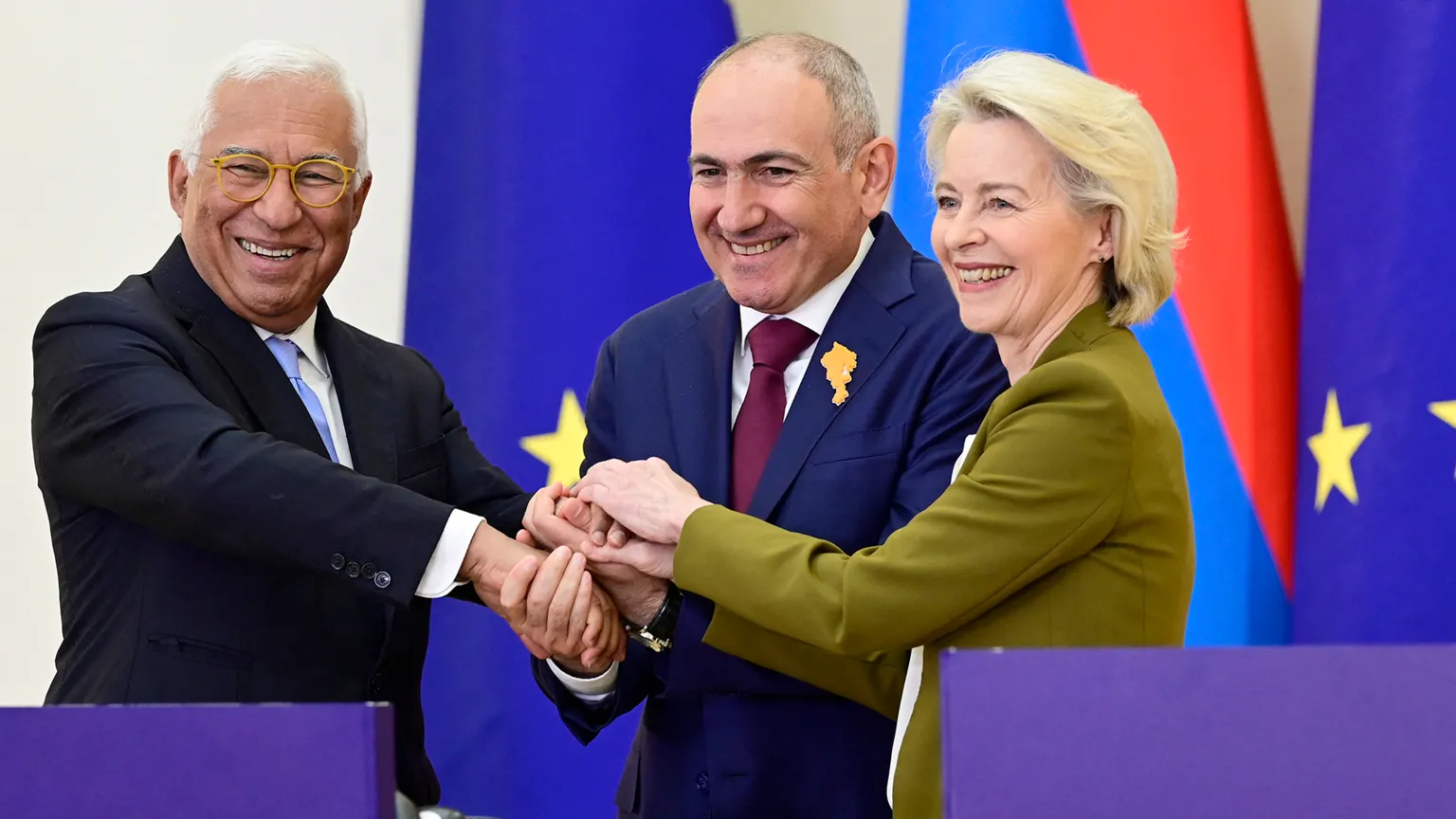
Earlier this year, Pashinyan hosted a significant summit in Yerevan featuring EU leaders and Ukrainian President Volodymyr Zelensky, further signaling Armenia's Western orientation.
Despite these diplomatic advances, Pashinyan's domestic approval has declined from 54% in 2021 to approximately 30% currently.
The primary factor contributing to this decline is the situation in Nagorno-Karabakh, a mountainous enclave within Azerbaijan that was home to around 100,000 ethnic Armenians before Azerbaijan regained control by force in 2023.
Pashinyan's opponents criticize him for making concessions in the peace process, including his refusal to campaign for the release of former Nagorno-Karabakh leaders imprisoned in Azerbaijan.
The peace agreement with Azerbaijan remains contentious within Armenia. A recent poll indicated that 44% of the population supports the deal, while 41% oppose it.
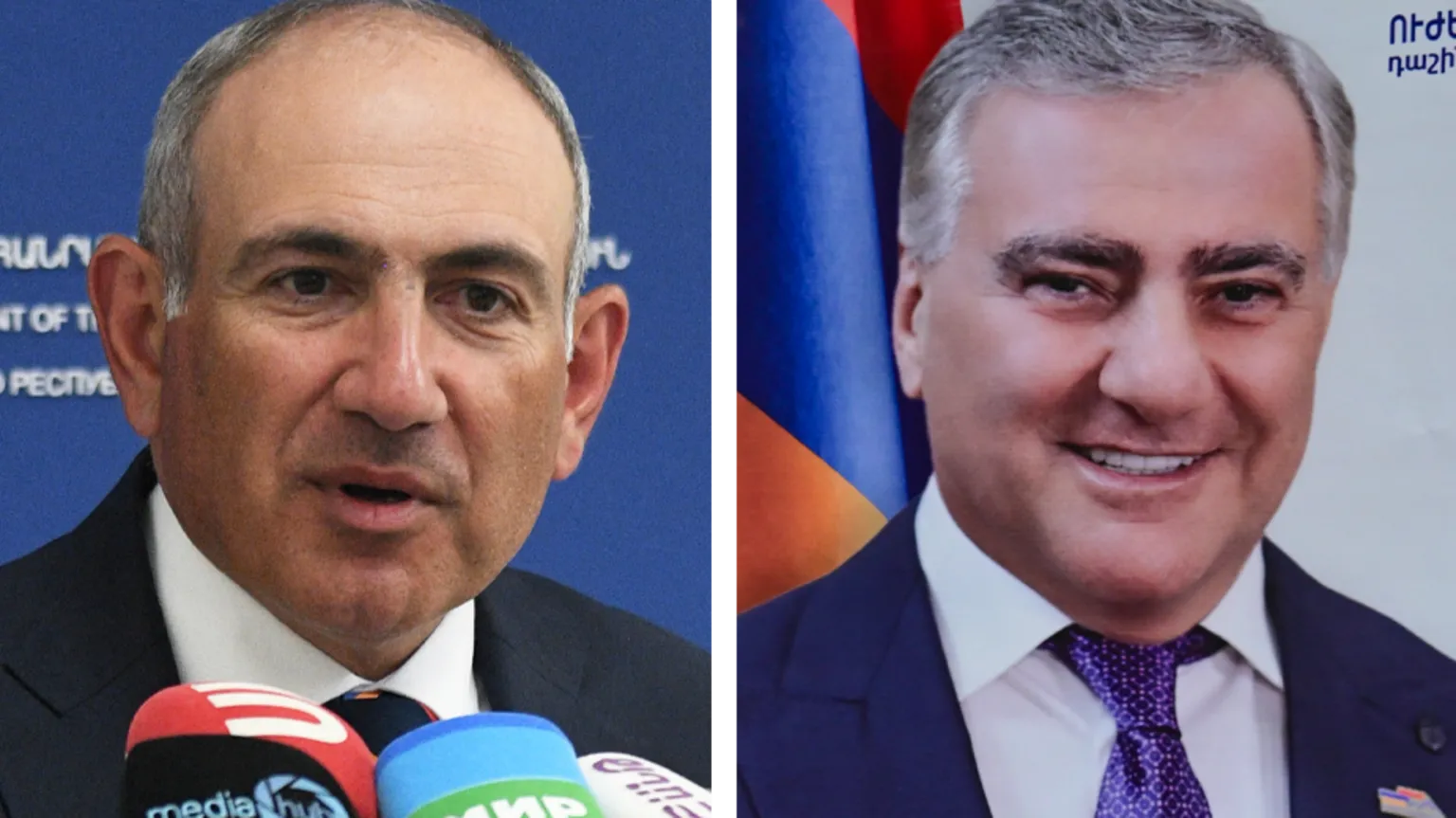
Pashinyan's critics have formed several opposition parties and alliances. Notably, two are led by former presidents Robert Kocharyan and Serzh Sargsyan, both linked to the pre-2018, Russia-aligned political order. They argue that restoring strong military and economic ties with Russia is essential for Armenia's national security.
The prime minister's main challenger is billionaire Samvel Karapetyan, who amassed his wealth in Russia. Currently under house arrest on accusations of plotting to overthrow the government, Karapetyan is conducting his campaign through his nephew.
The latest poll by the International Republican Institute shows Pashinyan's Civil Contract party leading with 32%, while about 40% of voters express distrust in all political figures.
If opposition candidates unite, they could potentially match Pashinyan's vote share; however, their division prevents them from surpassing him.
Russia's Economic Pressure on Armenia
In the month preceding the election, Russian President Vladimir Putin outlined the economic consequences Armenia might face if it pursues closer relations with the West, remarking that "the crisis in Ukraine began with efforts to move toward EU accession."
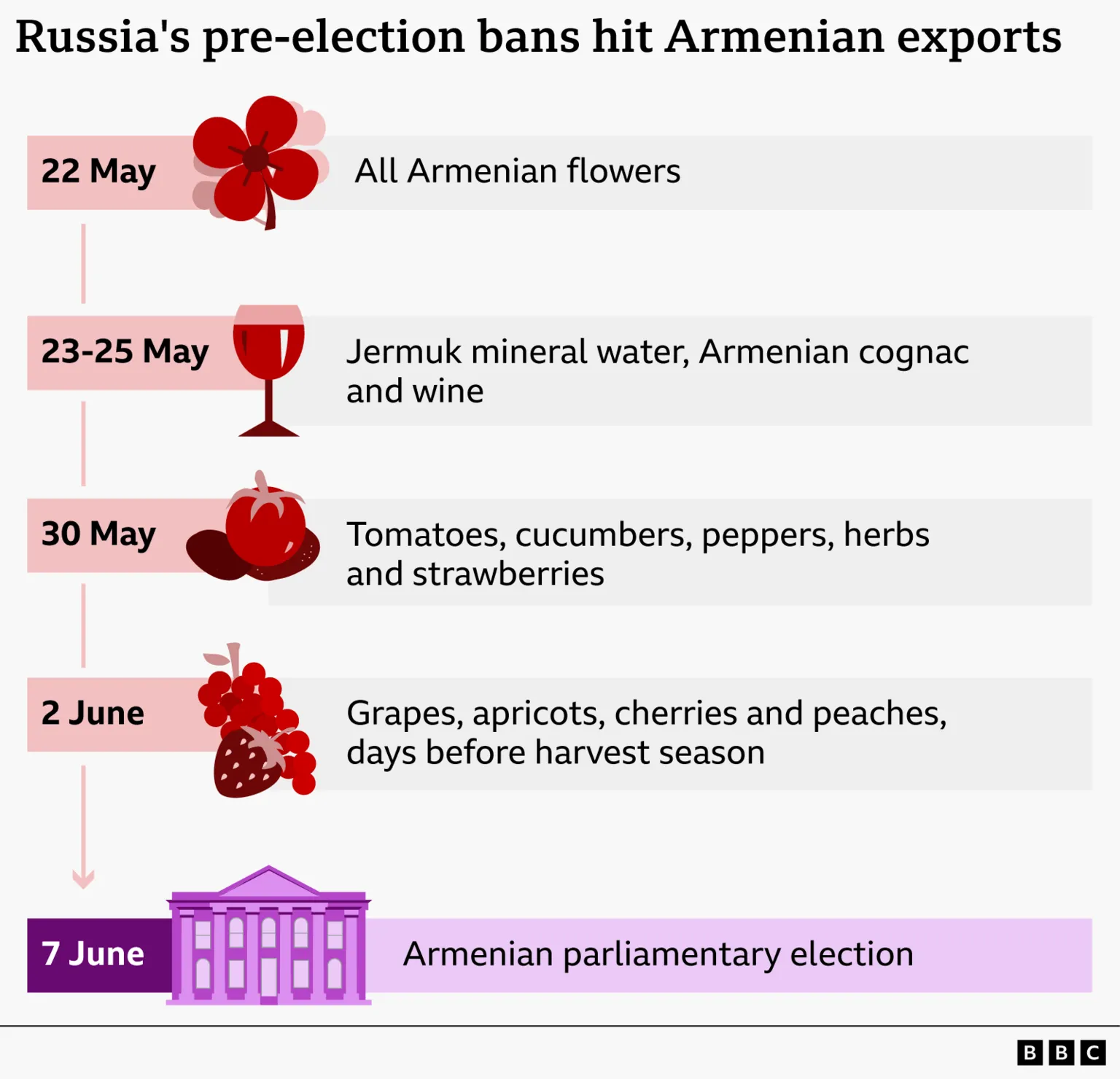
Following this rhetoric, Russia imposed tangible economic restrictions. In the two weeks before the election, Moscow banned exports of Armenian flowers, mineral water, cognac, fresh vegetables, and fruit.
Russia remains Armenia's largest trade partner, accounting for 36% of its foreign trade in 2025.
Haykaz Fanyan of the Armenian Centre for Socio-Economic Studies commented on Moscow's intentions:

"We in Armenia believe it is very highly correlated with current political processes."
He also noted that Armenia's reliance on Russian military equipment has significantly decreased, with approximately 95% of military imports now sourced from India, France, China, and other countries.
Fanyan added:
"The only way Russia can impact Armenia now is economic."
Despite this, economic leverage remains a powerful tool for Moscow. Russia supplies Armenia with gas at $177.50 (£87) per 1,000 cubic metres, whereas European market prices, as Putin highlighted to Pashinyan in April, exceed $600.
In late May, Putin also urged Armenia to hold a referendum "as soon as possible" to decide between joining the EU or remaining in the Russian-led Eurasian Economic Union (EAEU), a customs bloc from which Armenia benefits.
Pashinyan responded cautiously, emphasizing that Armenia has not yet attained EU candidate status and that EU membership remains a distant prospect.
He stated:
"We will continue to work within the EAEU until the choice between its current membership and the EU becomes unavoidable. Today this choice is theoretical in nature."
The EU, meanwhile, is actively supporting Armenia. On Thursday, European Commission President Ursula von der Leyen pledged €50 million (£43 million) to Armenia, condemning what she described as "Moscow weaponising economic relations for political pressure." She also announced plans to facilitate trade with Yerevan for goods targeted by Russian bans.
A Contentious Election Campaign
Pashinyan has campaigned under the slogan "Stand for Peace!".
However, the campaign has experienced tensions, notably between Pashinyan and displaced Karabakh Armenians. One confrontation resulted in the prime minister using offensive language toward civil activist Artur Osipyan, who was subsequently arrested on charges of obstructing the election campaign and initiated a hunger strike in protest.
These incidents have led opposition figures to accuse Pashinyan of increasing authoritarianism and exploiting state resources, including pressuring civil servants to attend his rallies.
Artur Khachatryan, a member of parliament from the opposition Armenia Alliance, stated:
"Pashinyan and his regime are using all possible and impossible administrative levers. They are spreading the atmosphere of fear and blackmailing."
He added:
"I cannot remember any campaign as tense as this one."
Pashinyan's platform promotes his vision of a "Real Armenia"—a nation at peace with Azerbaijan and integrated into Europe, rather than defined by territorial disputes and dependence on Moscow.
Although his support has diminished, many voters view him as the only alternative to a return to a past marked by corruption and authoritarianism.
For ordinary Armenians, the election poses a challenging question beyond geopolitical considerations: whether they are willing to endure the economic hardships resulting from Pashinyan's chosen path—hardships exacerbated by Russia—while recognizing that a European future remains distant.
On 7 June, the electorate will provide an answer.


