Introduction to Vusimusi 'Cat' Matlala's Role
Vusimusi "Cat" Matlala addressed some of the accusations against him when he spoke to lawmakers about corruption in the police force last year.
The name of controversial businessman Vusimusi "Cat" Matlala has been a persistent presence throughout South Africa's major inquiry into alleged police corruption.
The 49-year-old has been accused of providing lavish gifts—including 20 impalas, the weight-loss drug Ozempic, and personal loans—to gain influence and secure police contracts.
Matlala, who has been in police custody for over a year in connection with a separate case, was scheduled to present his testimony before retired Constitutional Court judge Mbuyiseli Madlanga and his panel on Wednesday. After a two-hour in-person appearance, it was agreed that he would begin his full testimony in September.
The revelations at the Madlanga Commission, ongoing for 10 months, have captivated South Africans eager to hear Matlala's responses.
Dressed in a Fendi shirt and Gucci glasses, Matlala previously gave evidence at a parallel parliamentary corruption inquiry last November.
He stated he did not personally know senior police officers or politicians and denied corruption allegations, though he admitted to making donations related to the African National Congress (ANC), the main party in the coalition government.
However, he has yet to address the broader allegations presented at the Madlanga Commission, including claims that he was part of a drug trafficking cartel allegedly known as the Big Five.
Background and Early Life

Matlala and his wife Tsakane Matlala deny an attempted murder charge.
Although now a central figure, Matlala only came to public attention three years ago when his name surfaced in news reports concerning alleged tender irregularities at a state hospital—a tender he denies involvement with.
Details of his early life are limited and primarily derived from his parliamentary testimony last year.
Born in 1976 during South Africa's apartheid era, Matlala grew up in a township east of Pretoria, the capital.
"I had to raise myself. I was actually a street kid,"
he told lawmakers, explaining that he was raised for a time by a single mother who later "disappeared on me." He reunited with her in 2002 when she was terminally ill. After her death, Matlala learned she had been sexually assaulted, which he attributed to myths surrounding her albinism, including the false belief that sex with a woman with albinism could cure illnesses.
After leaving school, Matlala started an informal business to support himself, which led to various encounters with the law.
In 2001, he was convicted and imprisoned for possession of stolen goods. Over the years, he faced arrests for crimes including house robberies, a cash-in-transit heist, and assault. He denied involvement in all these cases and was either acquitted or had charges withdrawn.
Regarding his nickname "Cat," Matlala explained it was not due to his reputed "nine lives" but because he has nine children with his wife.
Legal Challenges and Business Ventures
In May 2025, Matlala was arrested and charged with attempted murder, charges he denies. His wife faces the same charge and also denies it; unlike Matlala, she has been granted bail.
He was later charged with corruption related to providing health services to the police. Last month, he pleaded guilty as part of a prosecution deal but has since withdrawn the plea after the agreement collapsed.
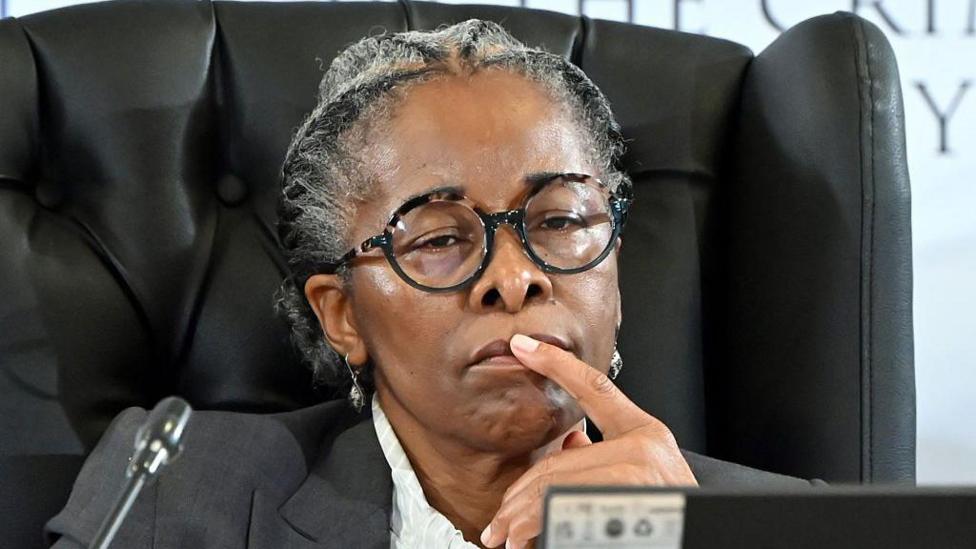
Sesi Baloyi is one of the three commissioners who has been listening to the months' of testimony.
Matlala told the parliamentary inquiry last year that he turned his life around in 2017 by registering his first formal business providing security services.
He said he later expanded into healthcare, which led to lucrative contracts with a hospital and then the police, despite admitting to lawmakers that he had no prior healthcare service experience.
Allegations of Corrupt Relationships with Police Officials
Since September, testimony at the Madlanga Commission has revealed allegations of Matlala's close and corrupt relationships with senior police officers.
Among these are claims that the now-suspended Police Minister Senzo Mchunu indirectly received campaign funds from Matlala to support his political activities. Mchunu denies these allegations.

Matlala has also been linked to Mchunu's predecessor, Bheki Cele.
Matlala told parliament's inquiry he had paid Cele a 500,000 rand ($31,000; £23,000) "facilitation fee," which Cele demanded after police returned firearms seized from Matlala.
Matlala further alleged Cele requested assistance to buy a home and pay for his son's education, requests Matlala refused.
Cele admitted knowing Matlala for a few months and staying at his rented Pretoria penthouse twice but denied receiving money.

Shadrack Sibiya, who has been suspended as deputy police chief, has denied having a close relationship with Matlala.
Matlala's relationship with suspended deputy police chief Maj-Gen Shadrack Sibiya has also been scrutinized.
Both deny a close relationship, asserting their interactions were strictly professional.
However, testimony at the Madlanga Commission suggests otherwise.
It was alleged that Sibiya received 20 impalas from Matlala around the time Matlala was awarded the police contract. Sibiya denied this, stating he would never "receive anything from a service provider."
A witness claimed Matlala boasted of close connections with senior police officials, including Sibiya, following his May arrest.
Other Senior Officers and Alleged Connections
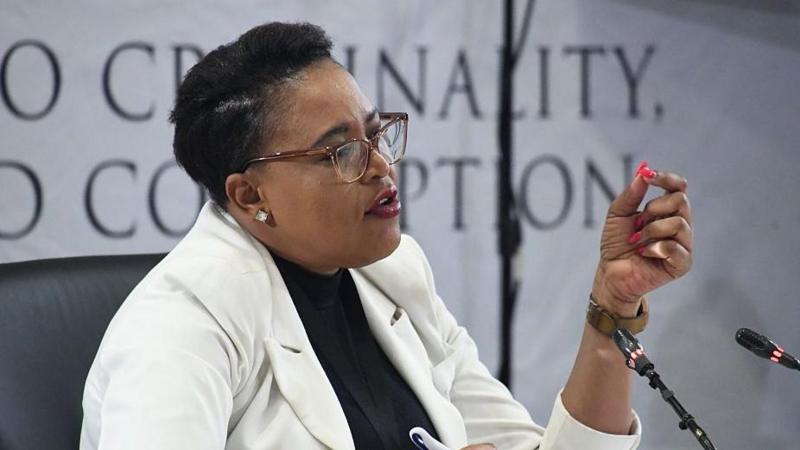
Brig Rachel Matjeng, who revealed details of her personal relationship with Matlala, has been sacked from the police.
Matlala's alleged ties to other senior police officers have also been raised at the commission.
Brig Rachel Matjeng, who managed the controversial police contract awarded to Matlala, testified she had an on-off romantic relationship with him, which included receiving lavish gifts such as shots of Ozempic.
Another senior officer, Maj-Gen Richard Shibiri, head of the police's organized crime unit, admitted to receiving a personal loan of $4,000 from Matlala, which he repaid.
Shibiri, responsible for anti-gang, narcotics, and illegal mining investigations, said the loan was for repairs to his son's car. He denied a close friendship with Matlala despite frequent communication and advising him on personal matters.
"At no stage was I aware that he was a member of any cartel or that he was a subject of any criminal investigation,"
he said.
Both Shibiri and Matjeng have since been dismissed from the police force.
Additional Allegations and Public Reaction
Matlala's name also surfaced in connection with a scandal in Ekurhuleni, a local government area east of Johannesburg.
It was alleged that Julius Mkhwanazi, acting police chief of Ekurhuleni, arranged for blue lights and sirens to be installed on Matlala's personal vehicles.
Mkhwanazi, now suspended, denied these allegations but admitted to receiving money from Matlala, describing him as a "blood brother" during his testimony at the commission.
The startling disclosures since the Madlanga Commission began in September have raised questions about how such corruption was permitted.
Many South Africans, eager to understand the mechanisms behind the alleged corruption, hope Matlala's testimony starting 1 September will provide clarity.

Additional Resources
For more on alleged police corruption in South Africa, see:
- 'Gifts' from a lover and 'botched' cocaine raids: Police inquiry grips South Africa
- An alleged drug cartel and a murdered witness: South Africa's police corruption probe
- Top policeman shakes South Africa with explosive allegations about his boss
- Whistleblower murder suspect is former elite officer, South African police say
Visit BBCAfrica.com for more news from the African continent.
on Twitter @BBCAfrica, on Facebook at BBC Africa, or on Instagram at bbcafrica.