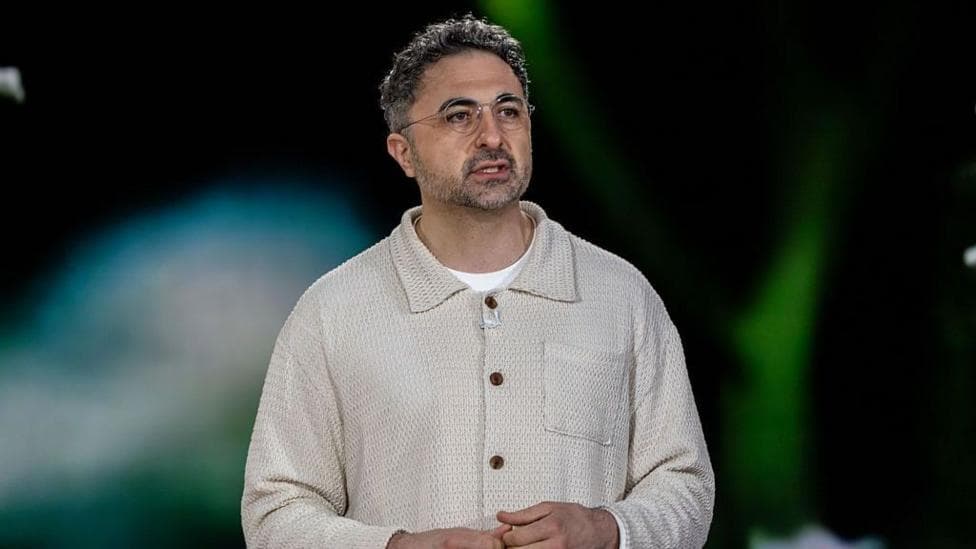
Introduction to Phantom Robot
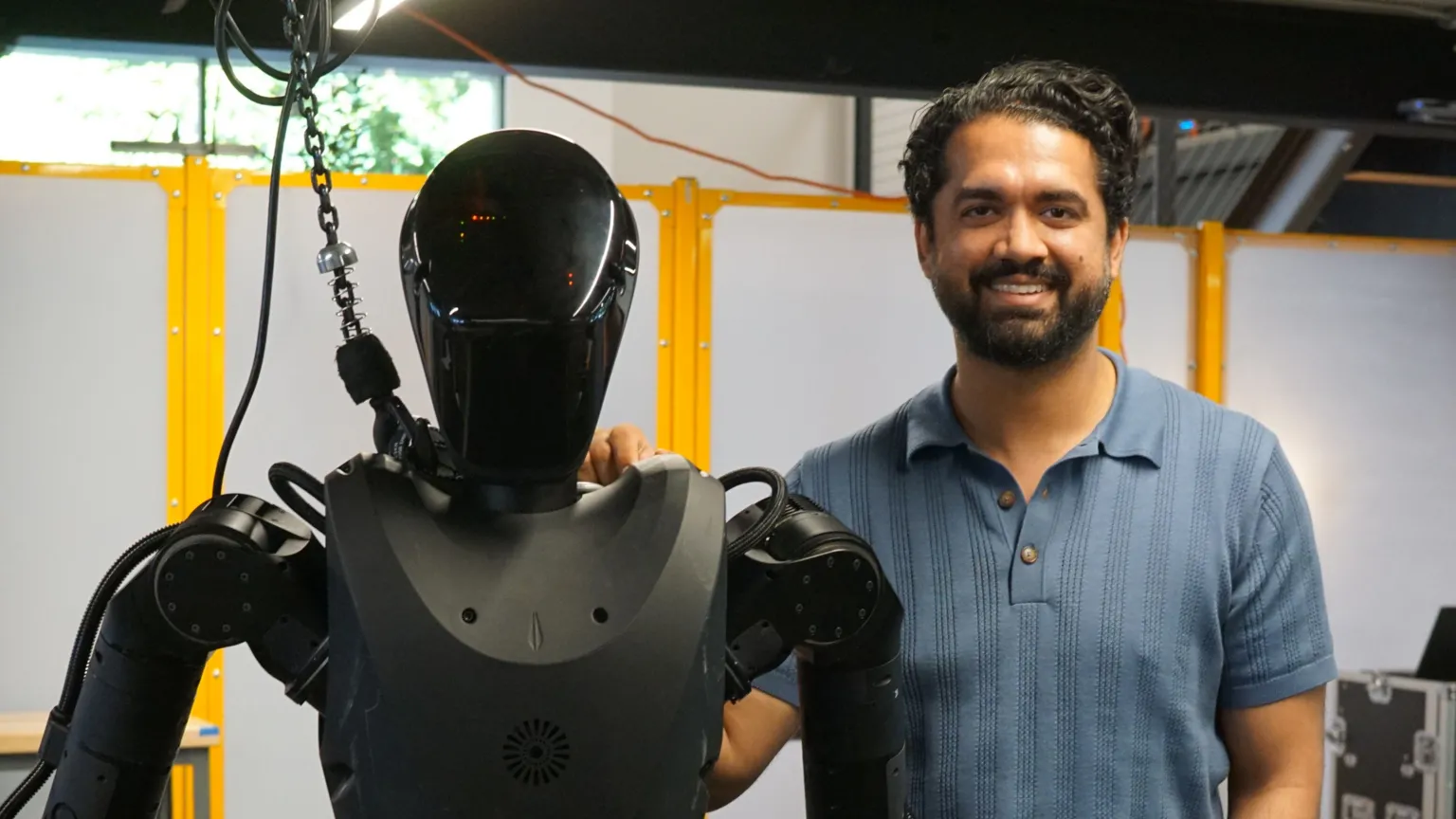
In an industrial space within a technology-intensive area of San Francisco, expectations of witnessing a menacing humanoid robot soldier performing combat-like activities were met with a different reality. The black, shiny, faceless Phantom robot was observed engaged in "free play," manipulating a collection of colored children's blocks.
"We need data from it just interacting with its environment…[and] this is today's menu,"explained Sankaet Pathak, co-founder and CEO of Foundation Robotics, a two-year-old startup developing Phantom for both military and civilian applications.
Pathak later demonstrated the robot's stability by pushing its 80kg steel-covered body around the room and showcased its walking capabilities.
While numerous companies are creating autonomous humanoid robots for industrial, domestic, or companionship purposes, Foundation Robotics claims to be the only U.S. firm developing humanoid robots specifically for a broad spectrum of defense applications.
Defense Applications and Weaponisation
These applications include support roles such as supply pickup, reconnaissance, recovery of equipment or casualties, and hazard inspection. More controversially, the company is exploring warfighting roles aimed at engaging and neutralizing threats, a concept Pathak refers to as "frontline weaponisation."
"Arming robots could keep human soldiers out of harm's way,"Pathak argued. He suggested that robots could enter and search buildings, where chokepoints pose lethal risks, and potentially reduce collateral damage. According to him, land-based autonomous systems can achieve greater precision than autonomous aerial strikes.
Current Capabilities and Future Developments
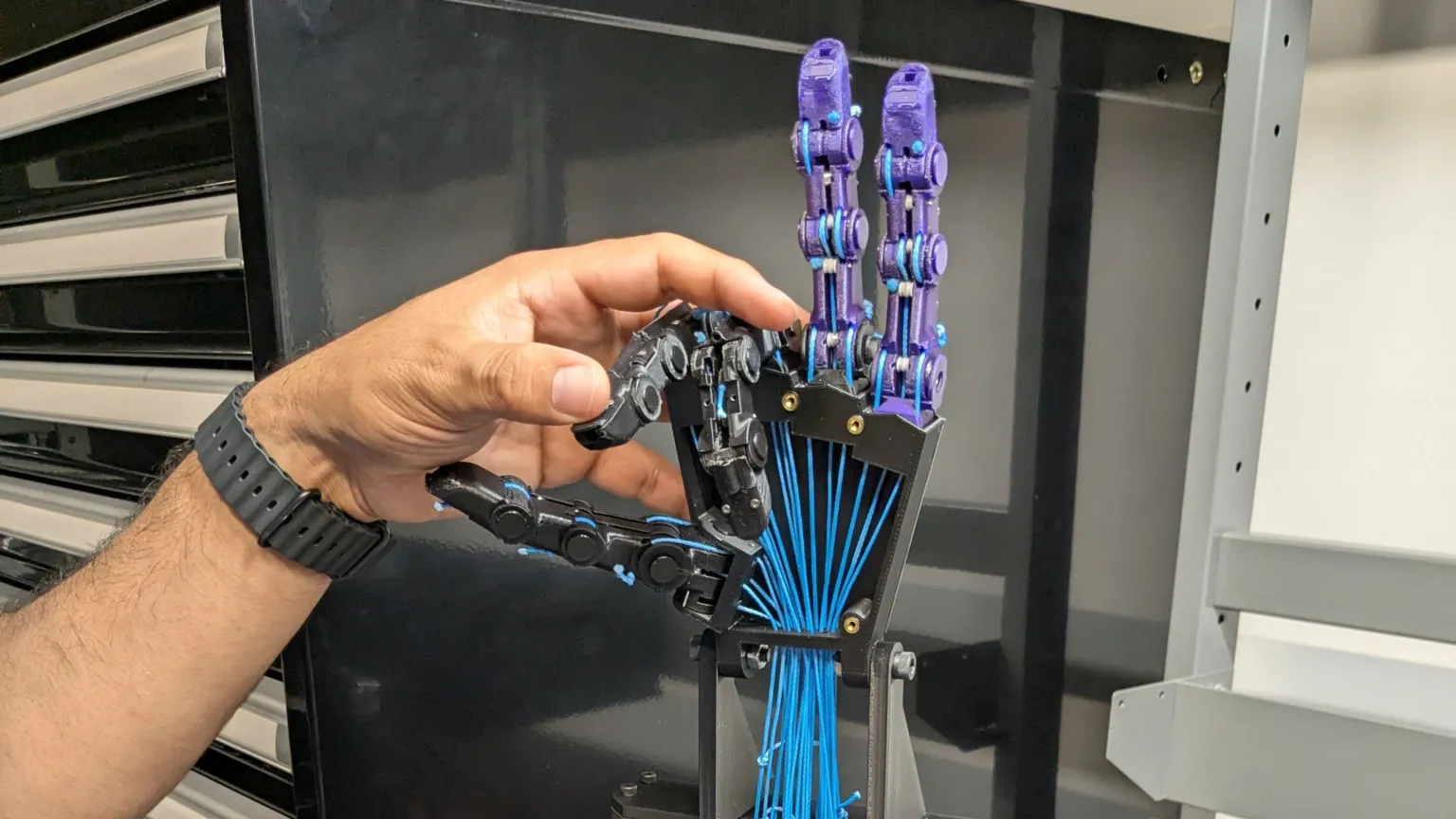
These capabilities remain futuristic for Foundation's Phantom. The first-generation model, Phantom MK-1, lacks a battery, is not dust or waterproof, and cannot recover if it falls. Its hands, a significant robotics challenge, lack strength and dexterity, and it does not yet have functional wrists.
A second-generation model, Phantom MK-2, is under construction in a restricted area of the facility. Pathak stated that this model will be weatherproof, equipped with a large battery providing approximately six hours of runtime, capable of recovering from falls, and able to withstand greater force.
Improved hands are a critical focus. The next set of hands will have enhanced articulation, including wrists to facilitate weapon handling, Pathak said.
Foundation Robotics aims to produce at least 40,000 units annually by the end of 2027, with long-term costs projected to be under $20,000 (£15,000) per unit.
Strategic Context and Market Position
Pathak emphasized that China is actively pursuing similar technology, and the West must maintain competitiveness. He envisions hundreds of thousands of AI-driven humanoid robots forming a ground force, paralleling the increasing use of autonomous drones in aerial combat. Such a fleet could serve as a significant deterrent to conflict.
Foundation Robotics currently holds $24 million (£18 million) in research contracts to pilot its technology with the U.S. military and has two units undergoing testing with the Ukrainian military. The U.S. military pilot restricts the robot to handling tasks without firing weapons, while weaponisation is part of the testing in Ukraine.
Earlier this year, the company attracted attention when Eric Trump, son of the U.S. President, became an investor and advisor.
For Pathak, Foundation Robotics also represents an opportunity to demonstrate his capabilities following the bankruptcy filing of Synapse, the financial services firm he co-founded and led, in 2024.
Military Interest and Ethical Considerations
The military's interest in humanoid robots is evident. Dean Fankhauser of Robozaps, a humanoid robotics advisory firm operating a marketplace for commercial systems, referenced a current U.S. Army contest for humanoids intended to support soldiers across diverse tasks.
"It is completely inevitable,"Fankhauser said, that companies would identify business opportunities in weaponising humanoid robot technology.
Numerous simpler robotic systems, including drones and some ground robots, are already used to carry explosives, missiles, and other payloads, with battlefield deployment particularly visible in Ukraine. Some companies have also pursued weaponising quadruped, dog-like robots, though their active use in warfare remains limited.
Conversely, some legged robot manufacturers have opposed weaponisation, citing harm risks and ethical concerns.
Pathak disagrees with this stance, arguing that it is dangerous for more firms not to follow Foundation's lead.
"Humanoid robot soldiers make sense because the world is built for humans. From screwdrivers to weapons, there is no need to reinvent existing tools,"he said.

He emphasized that humans should remain "in the loop," approving any use of lethal force before the system acts, although he acknowledged exceptions where autonomous firing might be necessary to prevent catastrophic outcomes and scenarios where human authorization is less critical.
Artificial Intelligence Challenges
The most significant challenge for all companies developing humanoid robots is creating artificial intelligence capable of operating in real-world, unpredictable, and complex environments.
Phantom is controlled by an AI system called Cortex, with a new version under development. The system assigns Phantom a goal—such as transporting supplies or mapping a building—based on tasks it has been trained to perform through demonstrations using videos, images, and text.
The robot navigates its environment using cameras embedded in its helmet, providing 360-degree vision. This allows the AI to assess surroundings and adapt movements accordingly.
According to Pathak, Cortex integrates two AI model types:
- A "reasoning model," trained on task-specific examples, which interprets the goal and formulates Phantom's action plan.
- A broader "world model," trained on internet videos and data gathered from the robot's physical interactions—including its "free play" with blocks—which predicts environmental responses, aiding safe movement and task execution.
Debate on Humanoid Form Factor
Not all experts agree that the humanoid form is the most effective for battlefield robots. Fankhauser noted that quadruped robots can navigate terrain more quickly and efficiently.
He also observed that commercial humanoid technology remains immature. Current commercial humanoid robots struggle with basic tasks such as warehouse packing and cannot yet perform actions like opening doors.
"If there was a war in Taiwan today, the likelihood that China is going to militarise these humanoids and fight effectively is fanciful,"Fankhauser added.
While Chinese robots have demonstrated impressive performances, these have occurred in highly controlled or structured environments, which differ significantly from real-world warfare. Fankhauser suggested that the situation might evolve over the next five to ten years.
Academic Perspectives and Practical Difficulties
Robert Griffin, who works on humanoid robots at the non-profit Florida Institute for Human and Machine Cognition, which includes military-funded humanoid projects focused on non-combat applications, shared insights. One of the institute's spin-out companies was later acquired by Foundation Robotics for part of its core technology.
Griffin acknowledged the value of humanoids in reducing risks to human soldiers but emphasized that unpredictable environments remain a significant obstacle.
"Getting a robot to jump through a window of unknown height, land on uneven ground, and immediately navigate an unfamiliar interior is hard,"he said.
"You get an impression of human-level capability by seeing the human form… but [these autonomous systems] don't know how to handle open-ended uncertainty yet,"Griffin added.
He noted that human soldiers have easily confounded AI systems by performing unexpected actions, such as somersaulting or placing cardboard boxes over their heads.
Practical challenges also persist. Runtime remains a problem "plaguing every humanoid company," according to Griffin, as locomotion and joint movement consume significant power. Achieving six hours of operation would be "very impressive."
Whether Foundation can develop hands capable of manipulating weapons designed for humans remains uncertain.
"[The company is] setting extremely hard challenges for their engineering team to either meet or fail at,"Griffin concluded.
Ethical Concerns
Ethical issues surrounding lethal autonomous weapons are substantial. Nicole van Rooijen, executive director of Stop Killer Robots, a global coalition of non-governmental organizations, highlighted that such weapons lower the threshold for warfare, dehumanize conflict, and obscure accountability.
She expressed particular concern about the humanoid form.
"Human-like machines may appear familiar and trustworthy as their civilian use grows, increasing the risk people misread danger,"van Rooijen said.
She advocated for international regulations to de-escalate the current technological arms race.