

Goonhilly Earth Station to Support Artemis II Mission
A satellite earth station located in Cornwall is set to contribute to NASA's Artemis II mission, which aims to send astronauts around the Moon. NASA announced it is on schedule to launch Artemis II in early April, marking the first crewed lunar flyby in over 50 years.
Goonhilly Earth Station, near Helston, will assist in tracking the Orion spacecraft as it journeys around the Moon and returns to Earth. The station has a longstanding history in space communications, including broadcasting the Apollo 11 Moon landing in 1969 and supporting the first commercial spacecraft landing on the Moon.
In 2022, Goonhilly provided essential communication and tracking support for NASA's Artemis I mission.
Expertise and Infrastructure at Goonhilly
Matthew Cosby, chief technology officer at Goonhilly, highlighted the station's ongoing role in deep space missions.
"We regularly support about three or four deep space missions.
"The infrastructure was here right from the beginning, it's a great location because we are high up above the sea, we have a great view of the horizon.
"We have great people who can operate the antennas, we have been a part of the space industry for decades."
Cosby further explained the importance of multiple antennas during spacecraft landings for data download and the station's demonstrated capability.

"During the landing there will be multiple antennas required to download the data.
"They do need help and we are demonstrating using Artemis II that we have the capability to do it.
"We have done it before for Artemis I and they have invited us back to do it again.
"Now we have a opportunity to be a part of something great, all from Cornwall."
Local Talent at the Forefront
Oliver Hancock, 26, a deep space network mission operations engineer at Goonhilly, expressed enthusiasm about working on pioneering space projects.
"I went to do physics at university, followed by meteorology as a masters degree and I came back to Cornwall as I'm born and bred here," he said.
"It's amazing to be able to use the skills that I learned back home here in Cornwall - it's a really nice part of the world to live in."
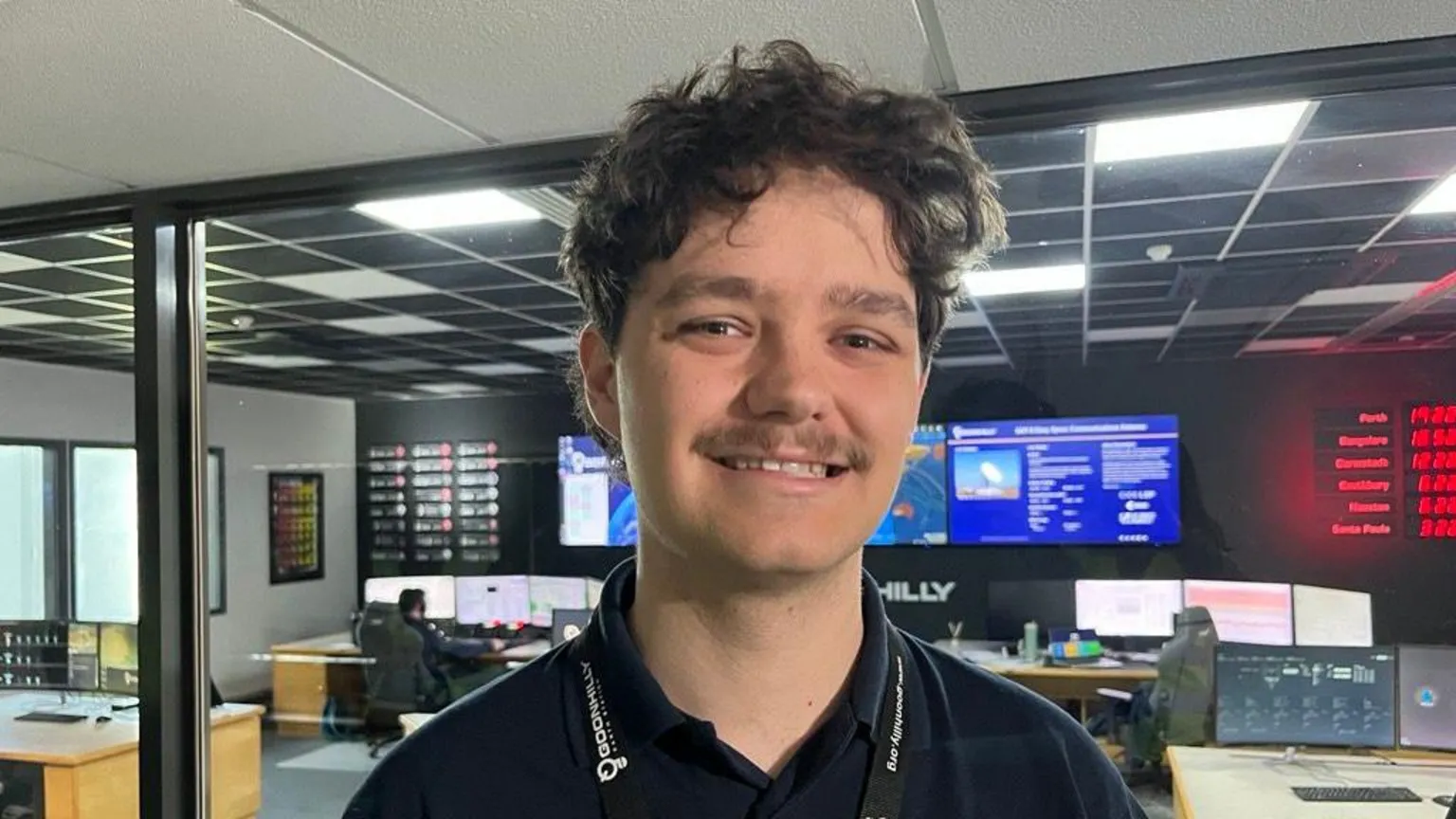
Hancock described his role as "pretty cool" and emphasized the significance of contributing to groundbreaking space exploration efforts from his home region.
Follow BBC Cornwall on X, Facebook, and Instagram. Send your story ideas to spotlight@bbc.co.uk.


