Inspiring Ambitions Through Artemis II
As NASA's Artemis II mission orbited the Moon, a significant impact was felt back on Earth, according to Caitlin Gould.
Gould is the founder and director of TECgirls, a Cornwall-based organisation dedicated to increasing female participation in technology and engineering fields.
"Children often struggled to believe careers in space genuinely existed for them, but actually seeing a mission within their lifetime makes them realise this is real,"she explained.
"Realising that it's a real thing, and with future missions planned, it could be something that they're involved in, that's huge."
Gould highlighted the involvement of teams at Goonhilly Earth Station, a satellite communications centre that supported the Artemis mission, as evidence that space-related work is not confined to America.
"Although it seems very far away, actually it's been really nice to be able to connect it back to how we are connected to it in Cornwall,"she said.
She also aims to dispel stereotypes about who works in space, noting the diverse backgrounds of astronauts.
"The people that went up into space, they came from a mixture of backgrounds, pilots, engineers and scientists."
For TECgirls, demonstrating the starting points of these careers is essential.
Its Reach for the Sky festival, an aviation and aerospace event for girls, has been held for three consecutive years at Spaceport Cornwall, a £20 million centre for space and aeronautics near Newquay.
Interest in the upcoming event on 20 and 21 June was exceptionally high.
"We almost sold out within the first week on our Saturday, so we've had to make it Saturday and Sunday because so many young people and their families are interested in this and want to learn more."
The festival unites universities, employers, colleges, and training providers, offering a variety of career pathways through higher education, apprenticeships, and local colleges.
Families also play a crucial role, as parents may not always recognise these careers as attainable for their children.
For Gould, while missions like Artemis II ignite enthusiasm, the essential work happens on the ground.
The Cornwall Space Cluster, which includes Spaceport Cornwall, Goonhilly Earth Station, and the National Drone Hub at Predannack Airfield, is focused on expanding Cornwall's data, space, and aerospace industries.
A 2024 report from the cluster noted that since 2022, schools, outreach, and public engagement activities have increased, but training opportunities have declined, likely due to funding constraints.
The number of further education courses in the sector has also decreased, with degree courses in software, data, and environmental science remaining largely unchanged since 2022.
The report suggested several measures to enhance skills development and recruitment within Cornwall's data, space, and aerospace sectors.
On 1 April, Spaceport Cornwall announced a pause in its education programme and ended an education outreach worker role, citing "funding challenges."
Spaceport Cornwall has been contacted for comment.
On a positive note, research from EngineeringUK in 2022 indicated that 16.5% of engineers are female, up from 10.5% in 2010.
Broader Career Opportunities in Space
Matthew Cook, head of space exploration at the UK Space Agency, emphasised that space careers extend beyond astronauts and engineers.
"You don't necessarily have to be involved in the tech,"he said.

"If you're organised, we really need project managers. If you're good at understanding geopolitical nuance, we need space lawyers. If you're good with finance and numbers, we need economists."
Cook noted that the Artemis II mission could play a vital role in encouraging young people to consider futures in space.
"To say that the UK was involved in tracking Artemis II is really important,"he said.
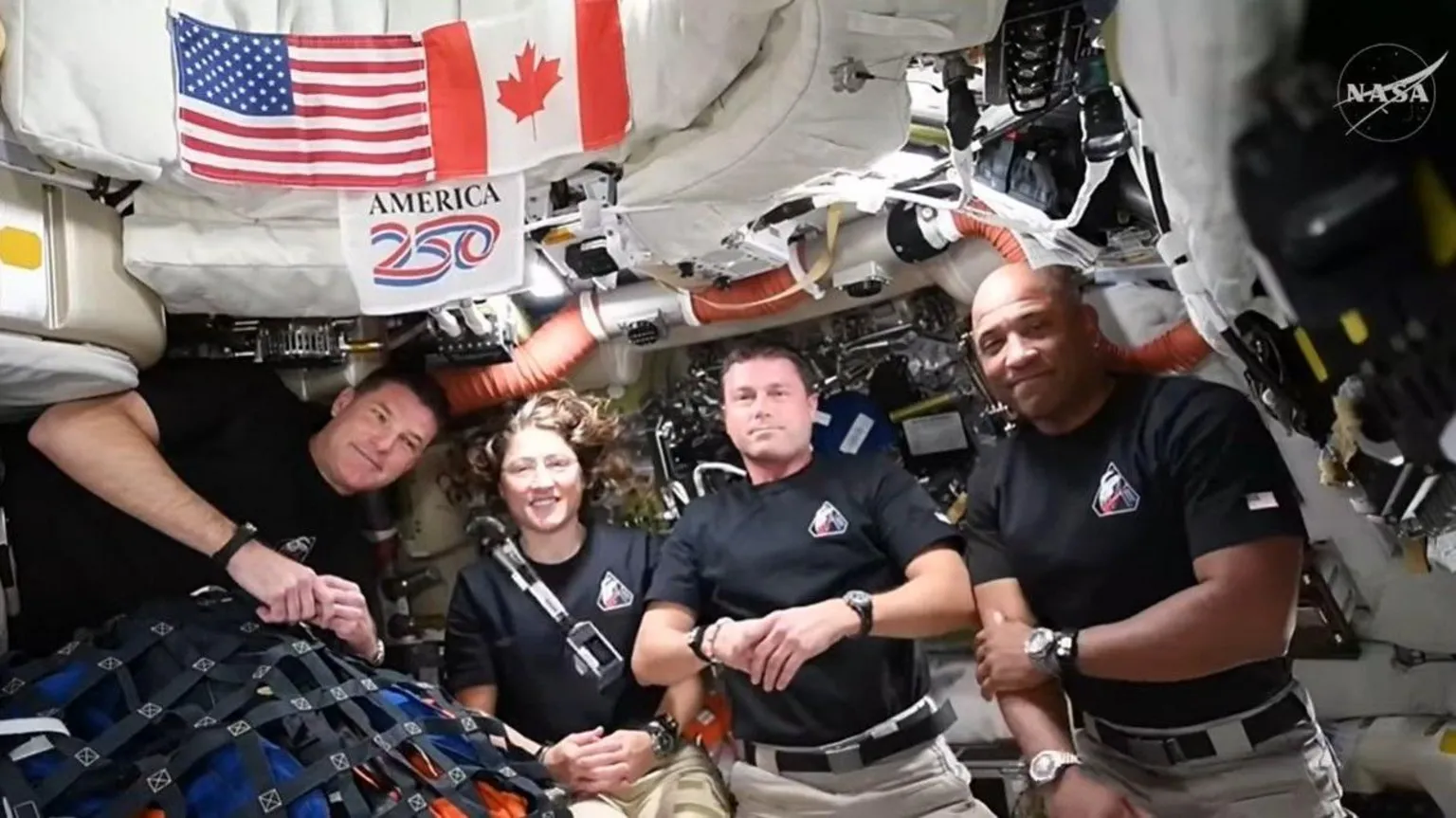
He identified astronaut Christina Koch as a positive role model.
"The past 24 people that have been to the vicinity of the Moon were all white men from America,"Cook stated.
"Now we're breaking through those barriers."
He also referenced the UK's astronaut programme as evidence of increasing inclusivity.
The UK currently has more female astronauts than male, and John McFall became the world's first astronaut professionally certified to fly to the International Space Station with a physical disability.
Goonhilly Earth Station's Role in Artemis II
During the 10-day Artemis II mission, while many followed NASA's livestreams and spacecraft images, Will Parker experienced the mission differently.
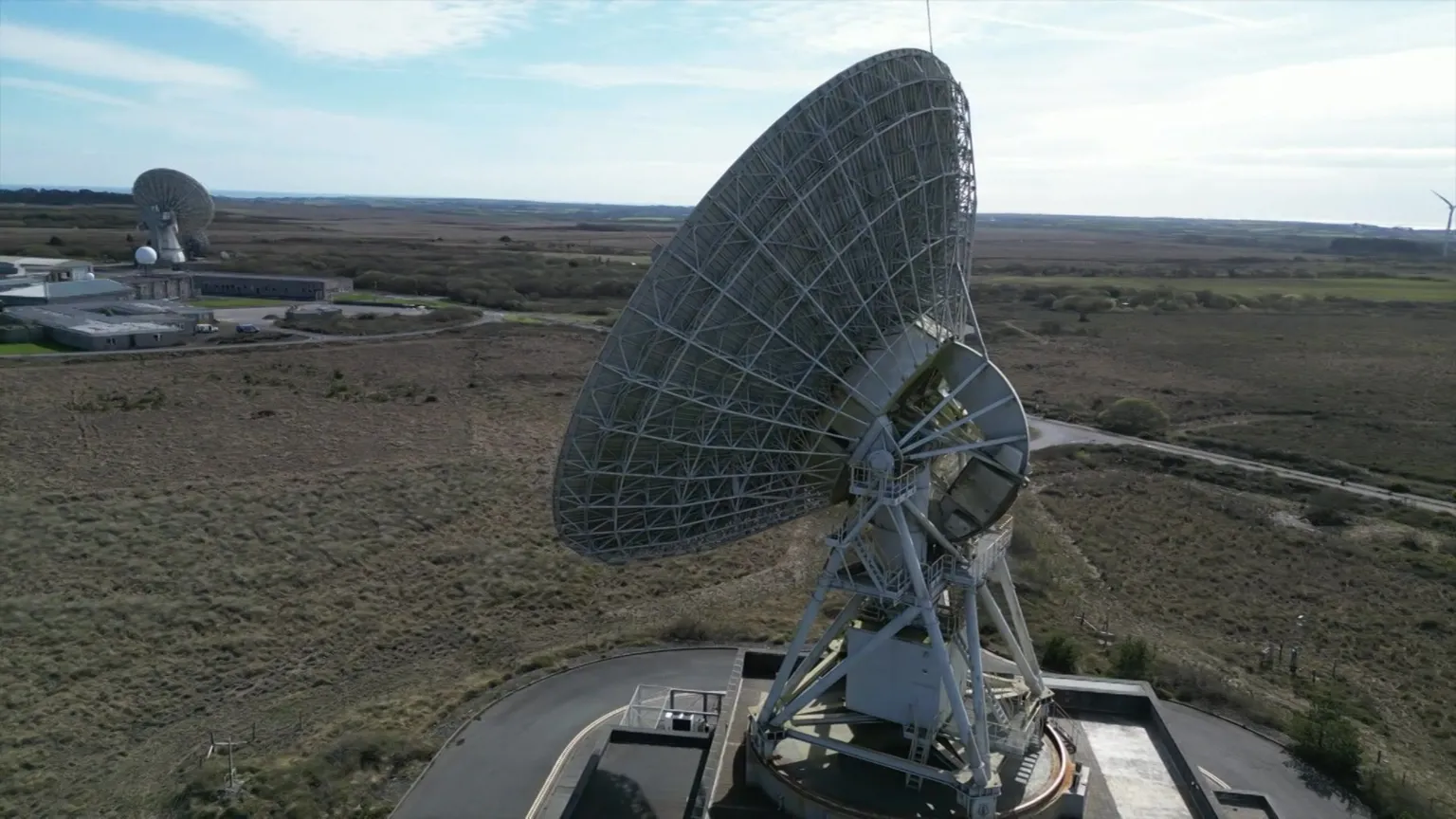
Parker, a mission operator engineer at Goonhilly Earth Station in Cornwall, monitored live radio communications from the Orion capsule, listening to real-time exchanges between the spacecraft and Houston.
Goonhilly has a history of involvement in significant space events, including broadcasting the Apollo 11 Moon landing in 1969 and supporting the first commercial spacecraft landing on the Moon.
Its large satellite dishes form part of a private space communications network that tracked the Orion spacecraft whenever the Moon was visible above the horizon, processing and forwarding data to NASA.
Parker described the experience as "fantastic" and "historic," viewing it as a continuation of the Apollo legacy.
In the operations room, screens displayed NASA's livestream while the team listened to the capsule's radio feed.
Each time the astronauts conducted tests, Parker's team observed corresponding real-time changes in the signal.
"Seeing the effects of the various tests they were running actually modifying what we were seeing from the signal in real time, that was something really special,"he said.
"Whenever the Moon was up in the sky, throughout the night, we were tracking the capsule and making sure that all the data we were collecting was processed correctly and sent off to NASA."
Parker acknowledged that more challenging missions lie ahead.
"This was kind of the easier mission, so there's lots of work still to be done,"he said.
Reach for the Sky Festival's Growing Popularity
The Reach for the Sky festival, focused on aviation and aerospace for girls, will run across two days for the first time on 20 and 21 June due to overwhelming demand.
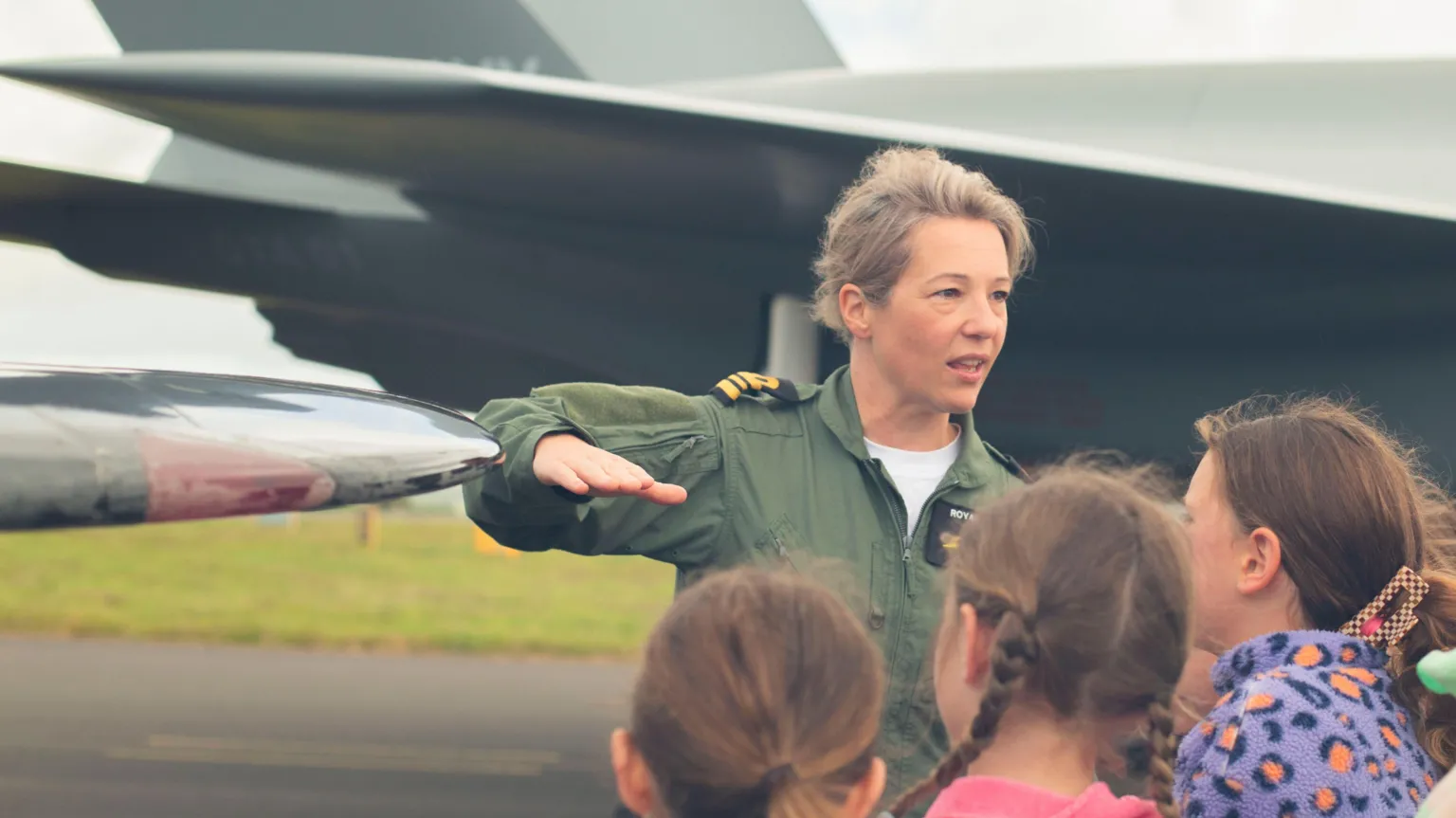
Families and young people are eager to learn more about space careers, and the festival provides a platform connecting educational institutions and employers with prospective students.
TECgirls continues to promote awareness and accessibility of space-related careers, aiming to inspire the next generation of women in technology and engineering.
Follow BBC Cornwall on X, Facebook, and Instagram. Story ideas can be sent to spotlight@bbc.co.uk.