Heatwaves Affect Women More Intensely
Overwhelmed, irritable, dizzy, bloated, exhausted.
These are common descriptions from women who have contacted the BBC, many still recovering from the record-breaking heat in June and preparing for further hot weather.
While extreme heat affects everyone, heatwaves act as a "stress-test" for women's cardiovascular systems and impact them more severely than men, explained Dr Nighat Arif, an NHS GP specialising in women's health.
Women may also be slightly more vulnerable to heatwave-related mortality compared to men, although further evidence is required, noted Dr Cat Pinho-Gomes, an academic public health consultant at UCL's Institute for Global Health.
As climate change leads to more frequent and intense heatwaves in the UK, experts emphasize the need for increased awareness of women's specific risks and targeted protective measures.
Hormone Levels and Physiological Responses to Heat
Biological factors primarily explain why women are more affected: the natural fluctuations in hormone levels and differences in the body's response to heat compared to men, according to Dr Arif.
Research, including a 2025 study, shows that women produce less sweat and begin sweating at higher temperatures.
This reduces their ability to dissipate heat rapidly and makes it more difficult to recognise when their bodies are under thermal stress, as less visible sweating occurs on skin or clothing.
The same research found that women tend to have higher core body temperatures and a greater percentage of body fat than men, which acts as an insulating layer.
Combined with hormonal fluctuations, which can disrupt the brain's temperature regulation systems, women face additional challenges. These hormonal changes occur notably during the menstrual cycle, perimenopause, menopause, pregnancy, and breastfeeding, reducing temperature regulation efficiency.
All these factors place increased strain on the cardiovascular system, especially during hot weather.
However, biology is not the sole factor increasing women's risk. Dr Pinho-Gomes, co-author of a review on sex differences in heatwave-associated deaths, highlighted socioeconomic factors such as lower income and caregiving responsibilities, which can limit women's ability to care for themselves during heatwaves.
Age is also significant; older individuals are more vulnerable to heat, and since women generally live longer than men, they face greater health risks. Additionally, elderly people are more prone to dementia, which can impair thirst recognition, and conditions requiring diuretics, both of which increase susceptibility to heat stress.
Menstrual Cycle and Heat Sensitivity
Heat sensitivity fluctuates with hormone levels throughout the menstrual cycle, Dr Arif explained.
Progesterone rises in the second half of the cycle before menstruation, raising core body temperature and increasing discomfort during hot weather.
When menstruation begins, oestrogen levels drop to their lowest, placing further strain on the heart's ability to cool the body.
"I bled a normal amount but noticed a big increase in fatigue, dizziness, anxiety and sleepless nights," said Michaela Finn from north London, who was on her period during the late June heatwave.
"My shifts at work landed on the same days, too. During my morning shower, I felt faint; I had to be realistic and call in sick. My body was completely exhausted, aching and cramping."
Charlie Paddock, 27, reported worsened period symptoms during the June heatwave and difficulty relieving cramps without her usual hot water bottle.


Charlie Paddock, 27, from south London, said she "nearly fainted twice and the hot flushes were unreal," while Jess Allingham, 26, described feeling "absolutely exhausted, more than normal," and experiencing "total brain fog."
Menstruation also causes iron loss, which can affect sleep quality and oxygen delivery, increasing cardiovascular workload. Studies indicate low iron is especially common among women with heavy periods.
Menopause and Heatwave Symptoms
Hot flushes and night sweats are common during perimenopause and menopause due to declining oestrogen levels, Dr Arif noted.
Women undergoing chemical or surgical menopause, treatments for hormone-sensitive cancers or conditions like endometriosis and polyendocrine metabolic ovarian syndrome (PMOS), may also experience these symptoms.
Heatwaves can exacerbate the frequency and severity of hot flushes and night sweats, as supported by a study on climate change's impact on menopause.
"Truly horrendous, especially at night time," said Hilary Serif, 57, from Cheshire, describing her hot flushes during the June heatwave.
"You're dozing off and then it hits you from nowhere. You're already warm, there's no relief at all. It's like a double whammy. The good old HRT helps a lot but doesn't control it."
Dr Rosaline West, 41, from Kettering, who is perimenopausal, said enduring the heatwave "was just about survival."
"I was regularly changing my underwear, and by the end... my friend and I had just given up on bras altogether because of that sweatiness, that discomfort."

Pregnancy and Heat Stress Vulnerability
Pregnant women have greater difficulty regulating body temperature due to increased metabolic heat production and fluid requirements, making them more susceptible to heat stress, according to research published earlier this year in The Lancet.
Progesterone fluctuations during early to mid-pregnancy can increase body temperature, which later decreases as both progesterone and oestrogen rise in later stages.
Body size also influences cardiovascular burden, as carrying a fetus increases strain.
Research suggests heat stress may raise the risk of adverse outcomes for both mother and child, particularly in high-risk pregnancies.
"Being heavily pregnant in the thick of summer, it's hell," said Jess Bloom, 35, who is expecting a baby at the end of July.
"Being heavily pregnant in the thick of summer, it's hell – it's literally hell," she added.
She has tried sleeping on the kitchen floor and taking cold baths nightly. "Sometimes a Mars ice cream would join me," she said.

Recognising Heat Exhaustion and Heat Stroke
Heat exposure is linked to increased cardiovascular morbidity and mortality, especially among women, according to a major review of heat exposure effects.
During heatwaves, the strain on the heart can lower blood pressure, and combined with fluid and salt loss from sweating, may lead to heat exhaustion.
If blood pressure falls too low, the risk of heart attacks increases.
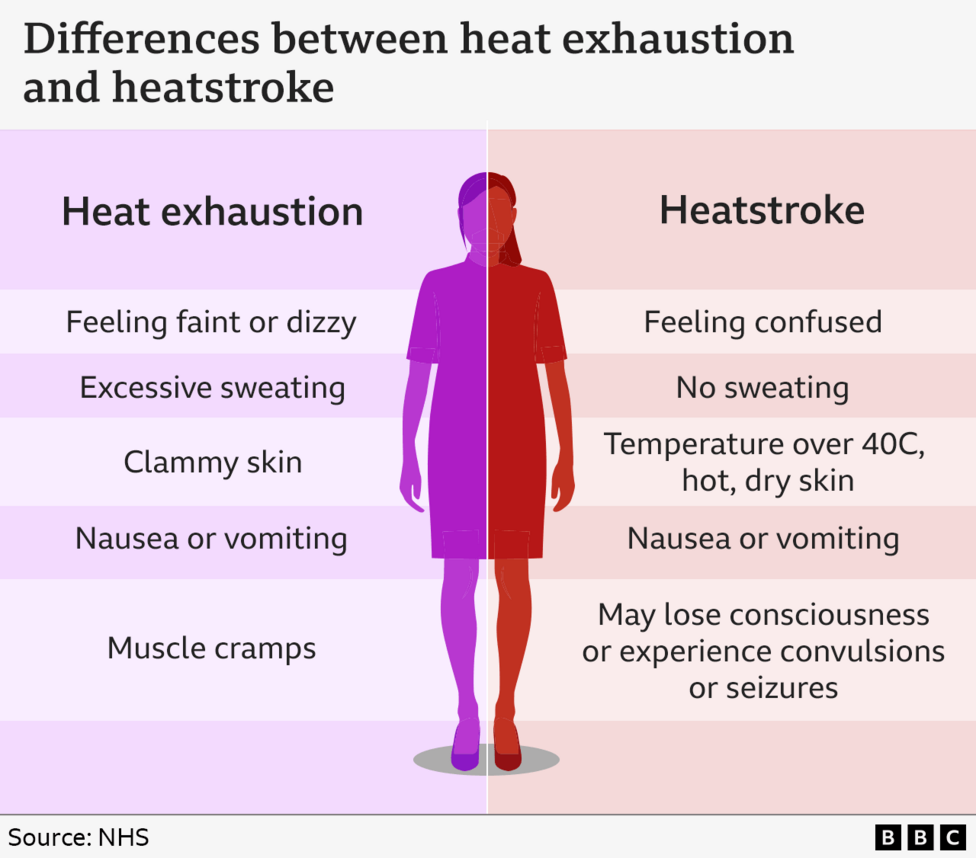
Dr Arif advised:
"Know the signs of heat exhaustion and heat stroke... drink plenty of fluids, have your fans, your cooling stuff. Make sure you do your exercise before sunrise or after sunset. Use sun cream, track your periods.
"Treat the heat like a cardiovascular stress-test," she said. "Slow down, take care of your body."
She also called on employers, colleagues, and policymakers to be "more mindful" of women's sensitivity to hot weather.
Dr Pinho-Gomes concurred, stating:
"We need more women sitting at the decision table... in positions of power and influence," who will better understand women's needs than men.
Dr Arif concluded:
"This is not a woman's problem. This is a societal problem. If we get it right for women, we get it right for everyone."
Additional reporting by Alix Hattenstone and Mary Litchfield.
Get in Touch
Are you affected by the heat? Share your experience.