

Spanish Authorities Prepare for MV Hondius Arrival
Spanish authorities are finalizing preparations for the arrival of the MV Hondius this weekend, describing the response as an “unprecedented operation” to receive, assess, and repatriate the 149 passengers and crew onboard.
The Dutch-flagged cruise ship, which was en route from Argentina to Cape Verde, is expected to arrive off the Canary Island of Tenerife around midday on Sunday.
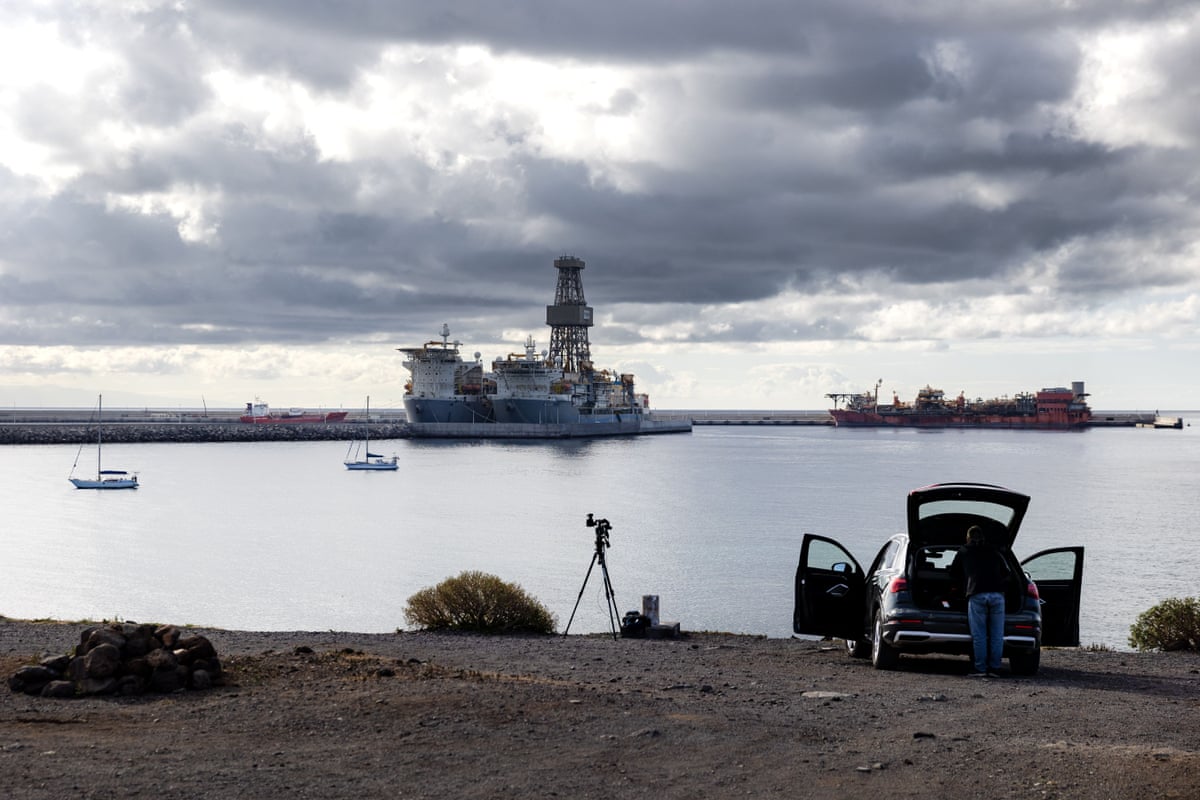
Following negotiations between the Spanish government and the regional authorities of the Canary Islands, the MV Hondius will remain anchored in the port of Granadilla and will not dock in Tenerife. Passengers will be evaluated onboard, and no contact with the local population will occur when individuals are transferred from the ship for repatriation or, in the case of the 14 Spanish nationals onboard, transported to a military hospital in Madrid for quarantine.
Health Minister Details Coordination and Protocols
Spain’s health minister, Mónica García, described the operation during an interview with Spain’s state radio broadcaster, RNE, on Friday morning.
“This is an unprecedented operation in response to an international health alert involving 23 countries,” García said.
“We’re coordinating this from Spain and the World Health Organization has entrusted Spain with this operation – which, as I’ve said, is unprecedented. We’re going to do what we have to do, which is work and deliver the necessary health and logistical management.”
García confirmed that non-Spanish citizens who do not require urgent medical attention will be evacuated to their home countries even if they exhibit symptoms of hantavirus, which has resulted in three fatalities onboard.
“If they show symptoms but don’t need urgent medical attention, they will be evacuated with their respective health workers to their respective countries,” she explained.
“The international protocols will be followed – as will all the strict measures when it comes to health prevention. The protocol is based on no one needing urgent medical attention. And we think that won’t be the case because everyone was asymptomatic when they left Cape Verde and they’ve been on the boat for many days now, which makes us think that the risk that they’ve been infected is diminishing each day.”
World Health Organization Assesses Risk
The World Health Organization (WHO) stated on Friday that the risk posed by the hantavirus strain involved is minimal to the public, as it spreads only through “very close contact.” To date, the WHO has registered five confirmed cases and three suspected cases.

“This is a dangerous virus, but only to the person who’s really infected, and the risk to the general population remains absolutely low,” WHO spokesperson Christian Lindmeier said during a press briefing in Geneva.
Lindmeier noted that even individuals who shared a cabin with an infected person on the MV Hondius “don’t seem to be both infected in some cases.”
“The disease is not spreading anything close to how Covid was spreading,” he added. “Contact tracing is effective because it traces those who have been in close contact.”
International Response and Contact Tracing Efforts
The United Kingdom and the United States are among the countries that have agreed to send planes to Tenerife to repatriate their citizens. Health authorities across four continents are actively working to track and monitor passengers who disembarked before the hantavirus outbreak was detected, as well as tracing individuals who may have come into contact with them since.
On 24 April, nearly two weeks after the first passenger died onboard, more than two dozen people from at least 12 different countries left the ship without contact tracing, according to the ship’s operator and Dutch officials. The WHO confirmed that hantavirus was not diagnosed in a passenger on the MV Hondius until 2 May.
Local Concerns and Government Responses
The impending arrival of the cruise ship in Tenerife has caused significant local concern. Fernando Clavijo, the regional president of the Canary Islands, opposed the ship docking at Granadilla and successfully persuaded the central government to keep the vessel at anchor instead. On Friday, Clavijo stated that Spain had no legal obligation to accept the ship and argued that it should have docked in Cape Verde, which denied permission.
“We continue to maintain that Spain had no legal obligation to receive that ship and that the operation now being deployed here could have been perfectly organised in Cape Verde,” Clavijo said. “We still argue that this could have been resolved earlier, without the need for a three- or four-day voyage.”

Later on Friday, Clavijo outlined a plan designed to minimize the time and contact passengers would have while on Tenerife. He added that foreign nationals would be removed from the ship and placed directly into vehicles bound for waiting planes.
“We know with certainty that no one will get off the ship if their plane is not already waiting on the runway,” he said.
The town council of Granadilla de Abona, where the port is located, also expressed concerns regarding the central government’s decision.
“Granadilla de Abona is a committed and supportive municipality, ready to collaborate in any health emergency,” the council stated. “However … decisions directly affecting their municipality cannot be made unilaterally or without the involvement of the local government. The willingness to collaborate must be accompanied by sound health criteria and proper planning, especially when the safety and wellbeing of our residents are at stake.”
Agence France-Presse and Associated Press contributed to this report.


