1. Let in cool air and encourage air flow
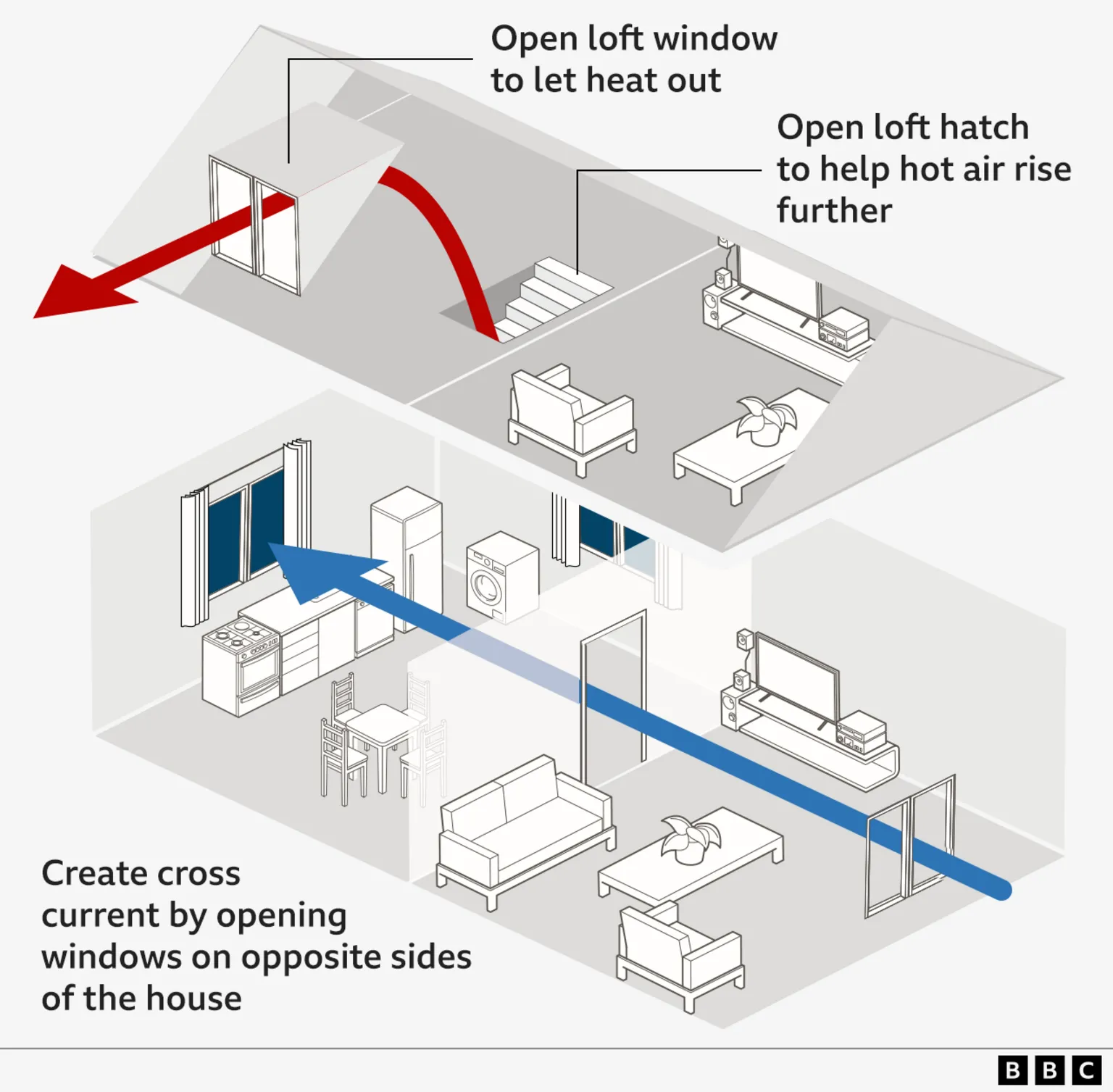
Opening windows on opposite sides of your home promotes air circulation by expelling trapped warm air and allowing cooler air to enter. This is most effective when the outdoor temperature is lower than indoors, typically during the night or early morning hours.
For flats with windows on only one side, opening doors and using a fan can help generate airflow. Since hot air rises inside buildings, opening loft vents or windows can release heat accumulating on upper floors, which is especially beneficial for sleeping areas.
Adding extra insulation can also reduce heat ingress during summer while lowering energy consumption and costs in winter.
2. Keep warmer air out during the day
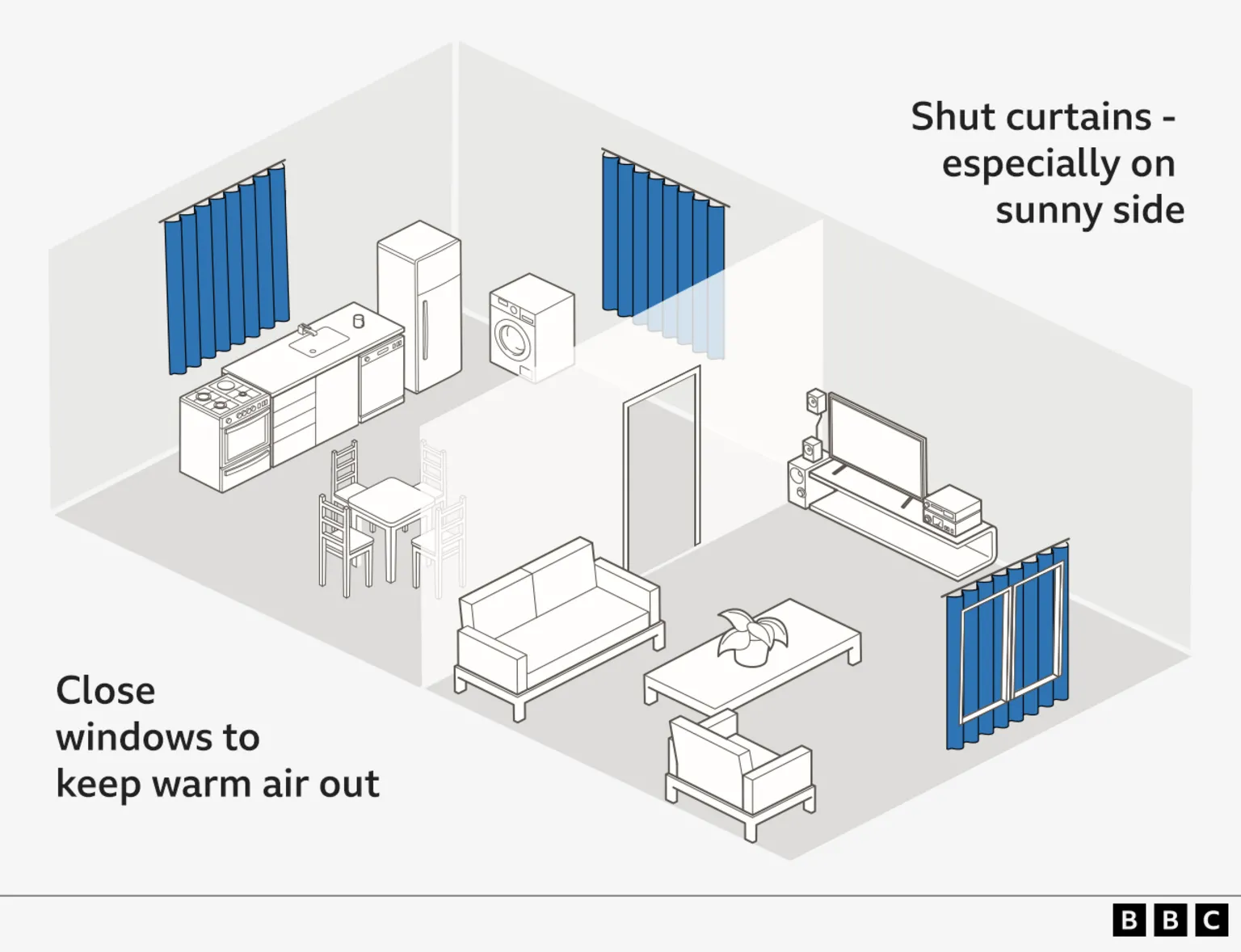
During the hottest parts of the day, it is advisable to keep windows closed and draw blinds or curtains, particularly on the side of the house exposed to direct sunlight. This helps prevent heat from entering your living space.
3. Use a fan to enhance the breeze
Fans offer an affordable and energy-efficient method to maintain air movement and help cool you down. According to the Energy Saving Trust, operating a freestanding fan continuously for 24 hours typically costs between 15p and 31p.
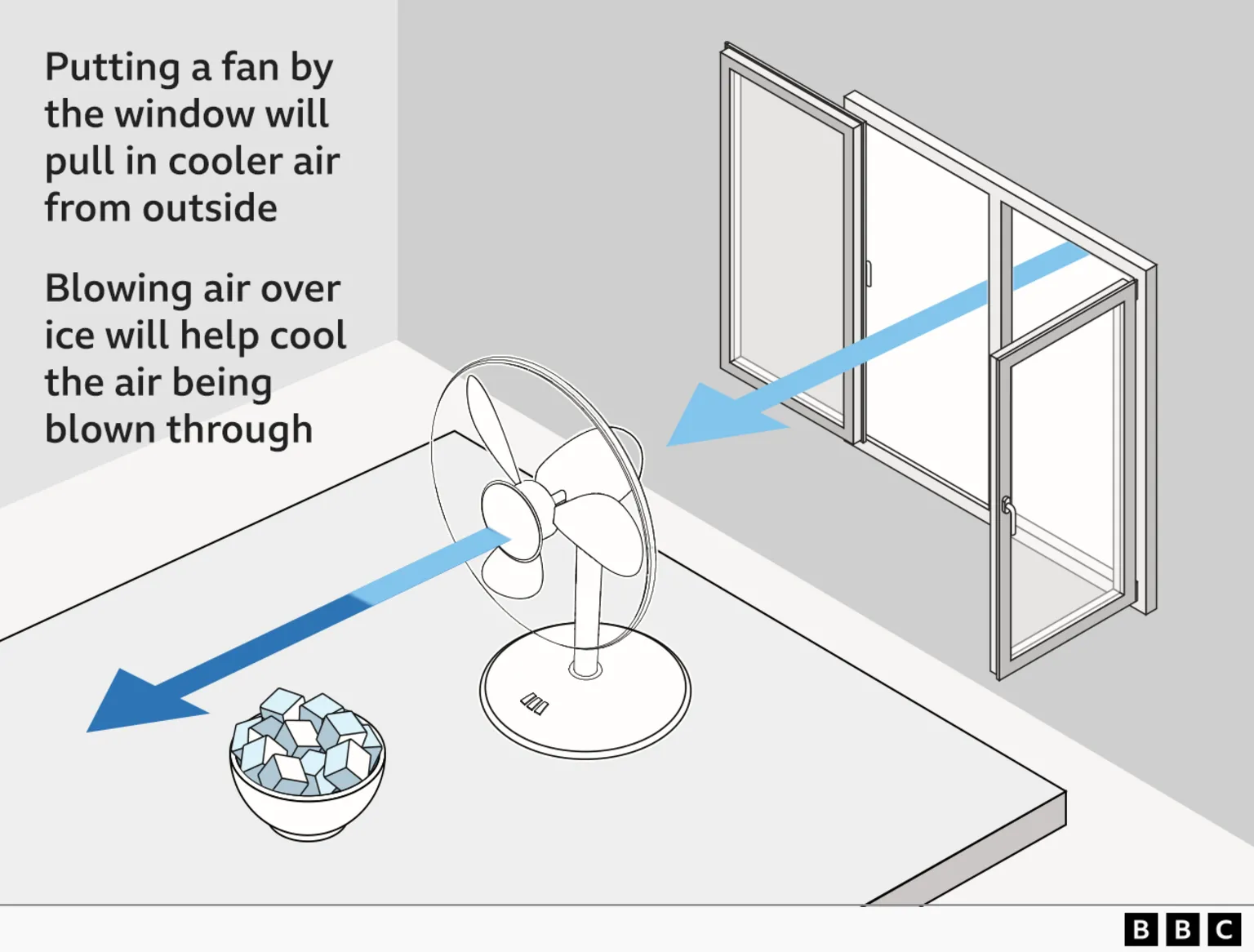
Positioning a fan in front of an open window can draw cooler outside air into the room, provided the outdoor temperature is lower. Placing ice cubes in front of the fan can further cool the air directed toward you. Using multiple fans can create cross currents for improved cooling.
Prof Mike Tipton of the University of Portsmouth explains, "Fanning the face improves thermal comfort most, but fanning the whole body helps lower body temperature more."
However, he cautions that when temperatures exceed 35°C, fans may worsen discomfort by blowing hot air onto the body.
While air conditioning provides more effective cooling, it is significantly more expensive. The Energy Saving Trust estimates that 24 hours of continuous air conditioning use costs between £4.84 and £6.

4. Limit hot activities
Using ovens and cookers generates substantial heat during and after cooking. Opting for cold meals such as salads, especially during peak heat hours, can reduce unnecessary heat production.
Other household appliances like washing machines and dishwashers also emit heat, so it is advisable to avoid using them when temperatures are highest.
Heat exhaustion can be exacerbated by high humidity, which is moisture in the air. Reducing humidity levels can help mitigate this risk.
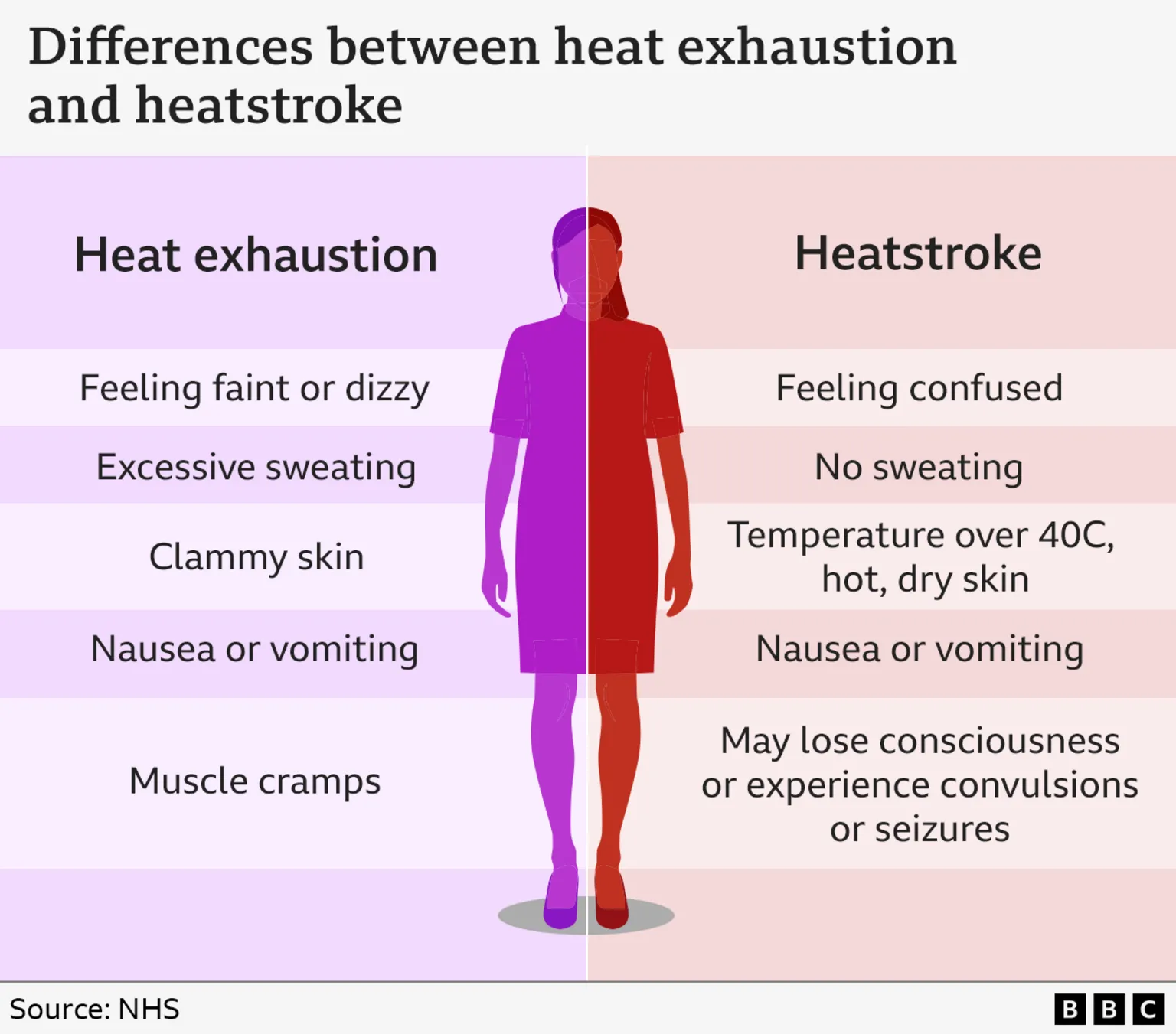
Heat exhaustion symptoms include feeling faint or dizzy, excessive sweating, clammy skin, nausea or vomiting, and muscle cramps. While heat exhaustion is generally not serious if promptly managed by cooling down, heatstroke is a medical emergency requiring immediate attention.
Call 999 if you suspect someone has heatstroke.
5. Cool yourself down
Tepid showers can effectively lower body temperature while conserving energy and reducing costs. Prof Tipton advises caution with cold water:
"The trick is to try and get the skin as cool as possible whilst maintaining maximum blood flow to it. Too cold and the body will shut down blood to the skin and trap the heat in the body making it harder to get out."
Applying an ice pack or cold-water bottle to the body provides immediate relief; wrapping it in a towel prevents direct skin contact.
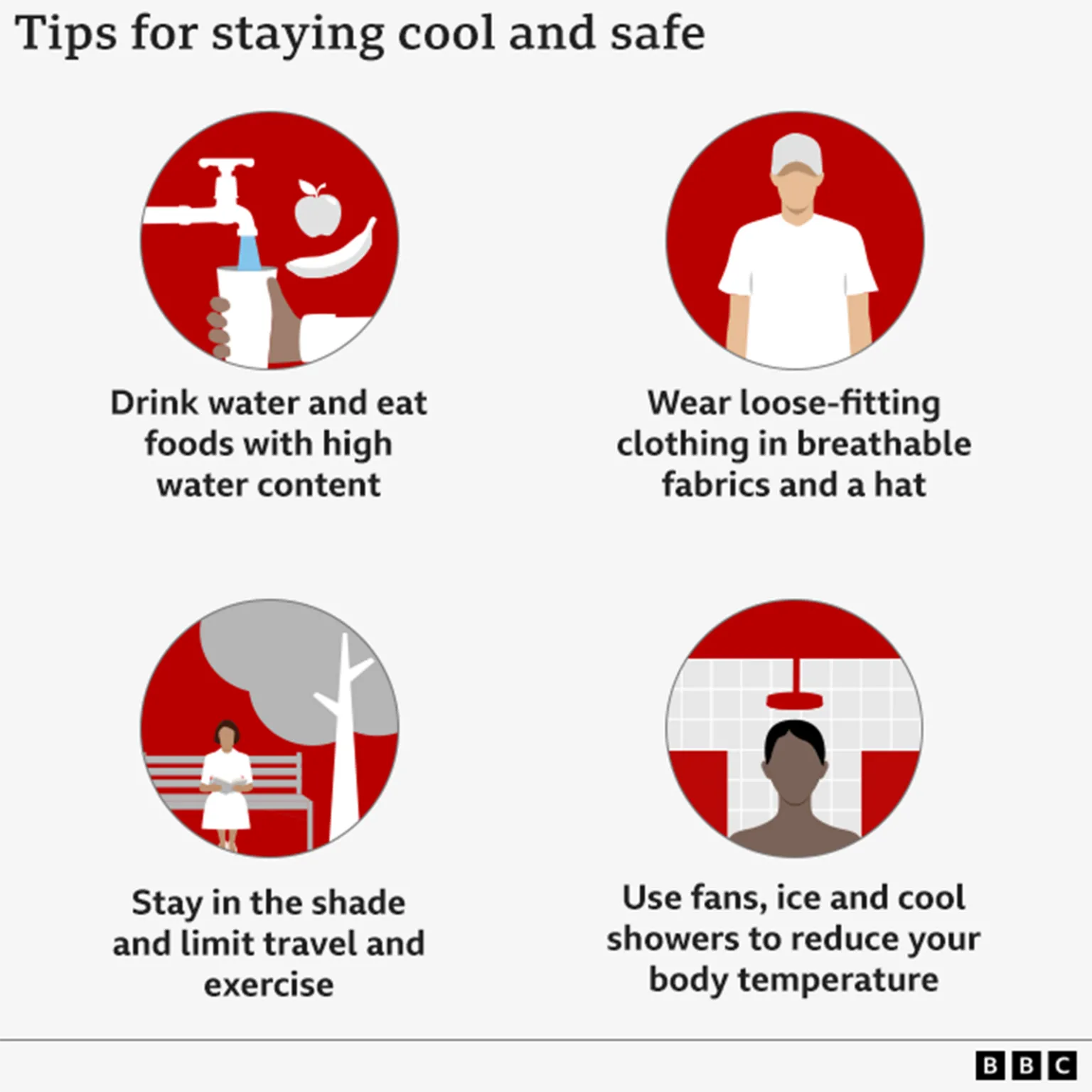
Clothing choices also influence body temperature. Natural fibers such as cotton and linen help regulate temperature, and loose-fitting garments allow airflow to cool the skin. This principle extends to bedding, where cotton sheets can improve sleep comfort in hot conditions.
6. Find an alternative space
If your home becomes uncomfortably hot, air-conditioned public venues such as libraries, leisure centres, and shopping centres offer respite.
Several local authorities, including those in London, Manchester, and Bristol, have established networks of "cool spaces" accessible to the public during heatwaves.