Concerns Over Deteriorating Health Buildings
Auditor General Dorinnia Carville has conducted an examination of public spending to ensure taxpayers receive value for their money.
A recent report from the Northern Ireland Audit Office reveals significant concerns regarding the condition of healthcare buildings across Northern Ireland. The report indicates that a substantial number of these facilities are unable to provide safe and effective services.
The Auditor General's latest assessment of the health estate found that only 40% of the facilities are in an acceptable condition. Many buildings have been classified as "high risk" and require urgent maintenance estimated to cost over £250 million.
According to the report, nearly half of the health estate is over 50 years old, with approximately one-sixth exceeding 75 years in age.
The Department of Health has welcomed the report and stated that work has already commenced to address some of the identified issues. It also noted that health trusts have "provided assurance" that all associated risks are being managed to maintain buildings in a safe condition to support service delivery.
While the Department of Health holds ultimate responsibility for the £3.7 billion health estate, the majority of buildings and land are owned and managed by health trusts and the fire service.
- 'Shocking': More delay for ten years overdue £97m maternity hospital
- Mental health patients sleeping on sofas months after issues found
- Children's unit one of 14 healthcare projects put on hold
Condition and Maintenance Challenges
The Northern Ireland Audit Office highlighted that the condition of healthcare buildings is deteriorating. It emphasized the need for a more strategic approach to ensure the safe and efficient delivery of services and to achieve value for money.
The report warns that essential maintenance spending has been reduced to "absolute minimal levels," and with increasing future costs, there is a risk of entering a "cycle of deterioration."
'Poor Condition'
"High-risk maintenance relates mostly to building structures, including roof replacements, and the potential for material to fall from height and cause injury to staff, service users or visitors," said Auditor General Dorinnia Carville.
She described the health estate as a critical enabler of frontline health and social care services but noted that "much of the estate is ageing, in poor condition, and increasingly costly to maintain."
"It is important to note that mitigations are in place to protect patients, staff and services.
However, this reactive approach risks storing up problems for the future when it will potentially be much more expensive to address them properly."
"The department already holds substantial data on the performance and condition of the health estate.
It now needs to use that data better to improve decision-making and take action to better use the limited resources available and achieve more value for money."
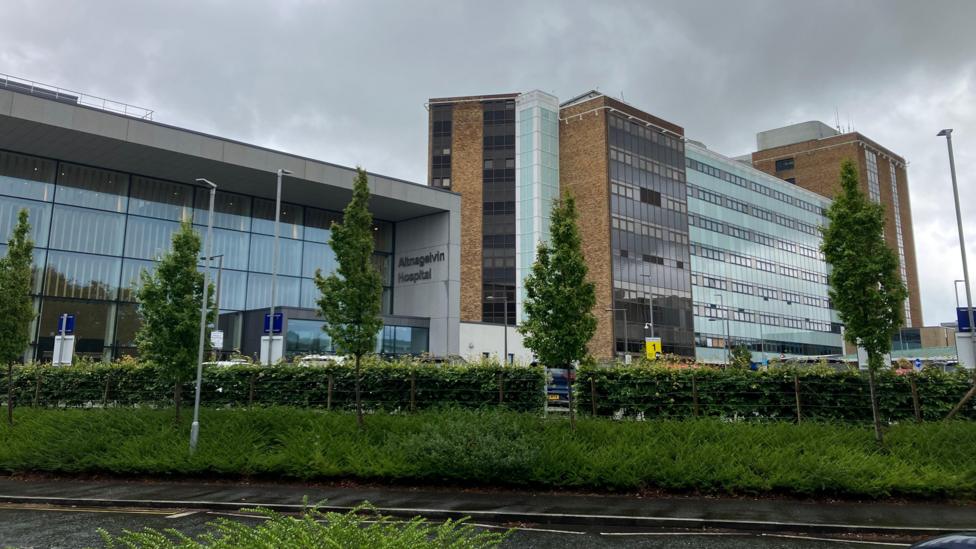
Altnagelvin Hospital was prominently mentioned in sections of the report addressing the cost of high-risk building maintenance.

The estate's value comprises £3.4 billion in property and £300 million in land, encompassing 1,500 freehold buildings and over 200 leasehold properties across more than 400 sites.
Healthcare facilities include hospitals, residential accommodation, day centres, health clinics, ambulance stations, fire stations, warehouses, and storage and administration buildings.
There are also numerous vacant properties, primarily located in larger and older hospital sites.
More than half of the £251 million required for high-risk maintenance is within the Western Health Trust, mainly focused on Altnagelvin Hospital in Londonderry and the Tyrone and Fermanagh Hospital site in Omagh.
'Constrained Resources'
In response, the Department of Health expressed gratitude to the Northern Ireland Audit Office for its work and indicated it would carefully consider the recommendations.
The department stated that the recommendations would aid the development of the Departmental Strategic Asset Management Plan, which is scheduled for completion by March 2027.
It acknowledged that calculating and reporting backlog maintenance has been a "longstanding issue," particularly given the ageing and challenging nature of many assets.
The department has issued guidance to health trusts to "unify the approach" to backlog maintenance.
Health officials are also reviewing "vacant and underused assets" to ensure value for money.
The statement emphasized that the priority remains to ensure health estates continue "to safely support frontline services, while delivering best value for public money, particularly within the context of constrained resources."