

Christine Campbell Values Every Minute with New Ovarian Cancer Treatment
Almost three years after being diagnosed with terminal ovarian cancer, Christine Campbell describes every moment as "precious." She views the recent approval of a new drug by the medicines regulator as a potential "lifeline" for patients like herself in Northern Ireland.
The drug, mirvetuximab soravtansine, has been approved for specific patients by the National Institute for Health and Care Excellence (NICE), and NHS England has committed to funding it. However, despite Stormont's Department of Health generally following NICE's recommendations, this does not guarantee immediate availability of the drug for patients in Northern Ireland.
Each year, approximately 7,750 ovarian cancer cases are diagnosed in the UK. Mirvetuximab soravtansine represents the first new treatment for difficult-to-treat ovarian cancer in two decades. It has demonstrated a more tolerable side effect profile and the ability to extend patient survival.
The medication is indicated for patients with ovarian, peritoneal, and fallopian tube cancers when chemotherapy is no longer effective, and the tumors express specific biomarkers.
Christine, from Dundonald, currently receives a different treatment called Avastin but welcomes the introduction of a second option.
"In July 2023, I thought there was no hope for me. Here we are... years later and a second drug has come on the market in the UK," she told Good Morning Ulster.
"When you are a life-limited patient, every minute counts.
"And because it is a targeted therapy, with less side effects, the quality of life will actually be better than the normal chemotherapy route.
"I'm on my fourth line of chemotherapy, so if my current drug was to stop working, there is the possibility that I could access this drug, which is a miracle in itself.
"I would love to see it become available in Northern Ireland."

How Does the Drug Work?
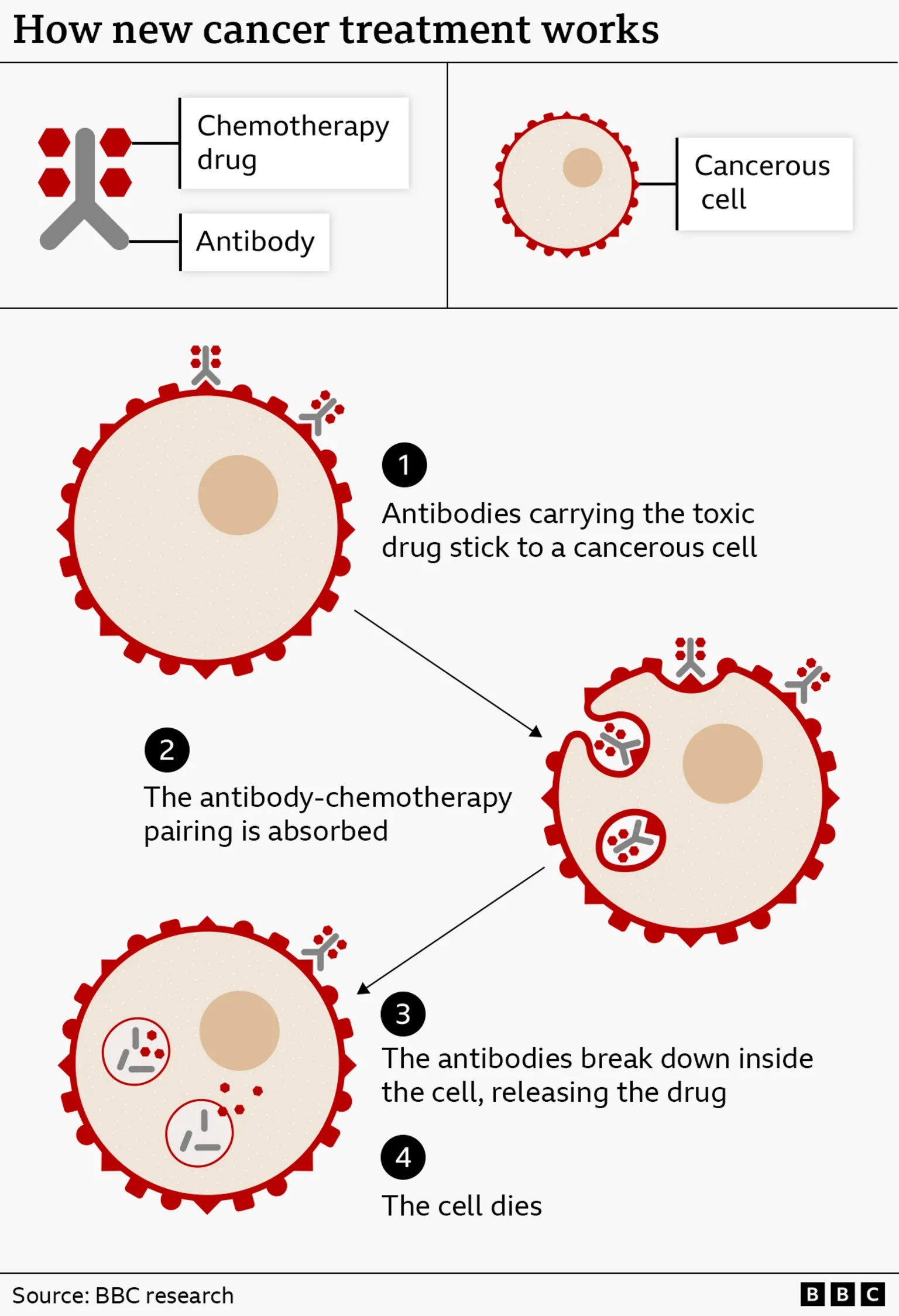
Mirvetuximab soravtansine, now accessible via the NHS in England, is a treatment that extends survival while being gentler on the body.
It functions as a "biological missile," delivering chemotherapy agents directly to cancer cells rather than exposing the entire body to the drugs, thereby reducing severe side effects.
On average, the therapy extends survival from 12.8 months with conventional chemotherapy to 16.5 months. It also results in fewer adverse effects. Patients often retain their hair, and the treatment is administered intravenously every three weeks, compared to weekly sessions with standard chemotherapy.

"Who doesn't want extra days or weeks or months? Every minute is precious," Christine said.
"A seven or eight month extension may not sound like a lot of time, but it is for terminally-ill patients."
"I would like to see it rolled out in Northern Ireland as quickly as possible," she added.
"For the people who would benefit from it, other options may have run out and they will need that extra lifeline."
Will Patients in Northern Ireland Have Access to the Drug?
Analysis by Marie-Louise Connolly - Health Correspondent, NI
The decision to make newly approved drugs available to patients in Northern Ireland rests with the Department of Health (DoH). Although NICE does not have statutory authority in Northern Ireland, the DoH typically reviews NICE guidance and often endorses it for use within the Health and Social Care (HSC) system.
However, there have been multiple instances where families and patients have criticized the DoH for delays in decision-making regarding drug availability. Funding considerations are usually the primary cause of such delays.
Following NICE's approval, a detailed process ensues in Northern Ireland, involving protocol development, consultations with patients' consultants, and funding assessments before a drug can be administered locally.
Department of Health's Position
The Department of Health stated it maintains a "formal link" with NICE and that NICE appraisals are "reviewed locally for their legal and policy applicability in Northern Ireland."
"Where found to be applicable, they are endorsed for implementation within Health and Social Care (HSC) organisations," the department added.
"This link has ensured that Northern Ireland has access to up-to-date, independent, professional, evidence-based guidance on the value of health care interventions.
"In practice, this means that treatments that have been recommended by NICE for routine use in the NHS in England are also available in Northern Ireland."


