French Passenger Develops Symptoms During Flight Home
A passenger from a cruise ship affected by a hantavirus outbreak exhibited symptoms of the disease while being repatriated to France, according to the French prime minister.
Sebastian Lecornu stated that the French national began showing symptoms during a chartered flight from Tenerife to Paris. Consequently, all five French evacuees from the MV Hondius were
"immediately placed in strict isolation until further notice".
The French citizens are part of over 90 tourists being transported home from the Dutch vessel, which anchored off the Canary Islands before dawn on Sunday.
Deaths and Evacuations
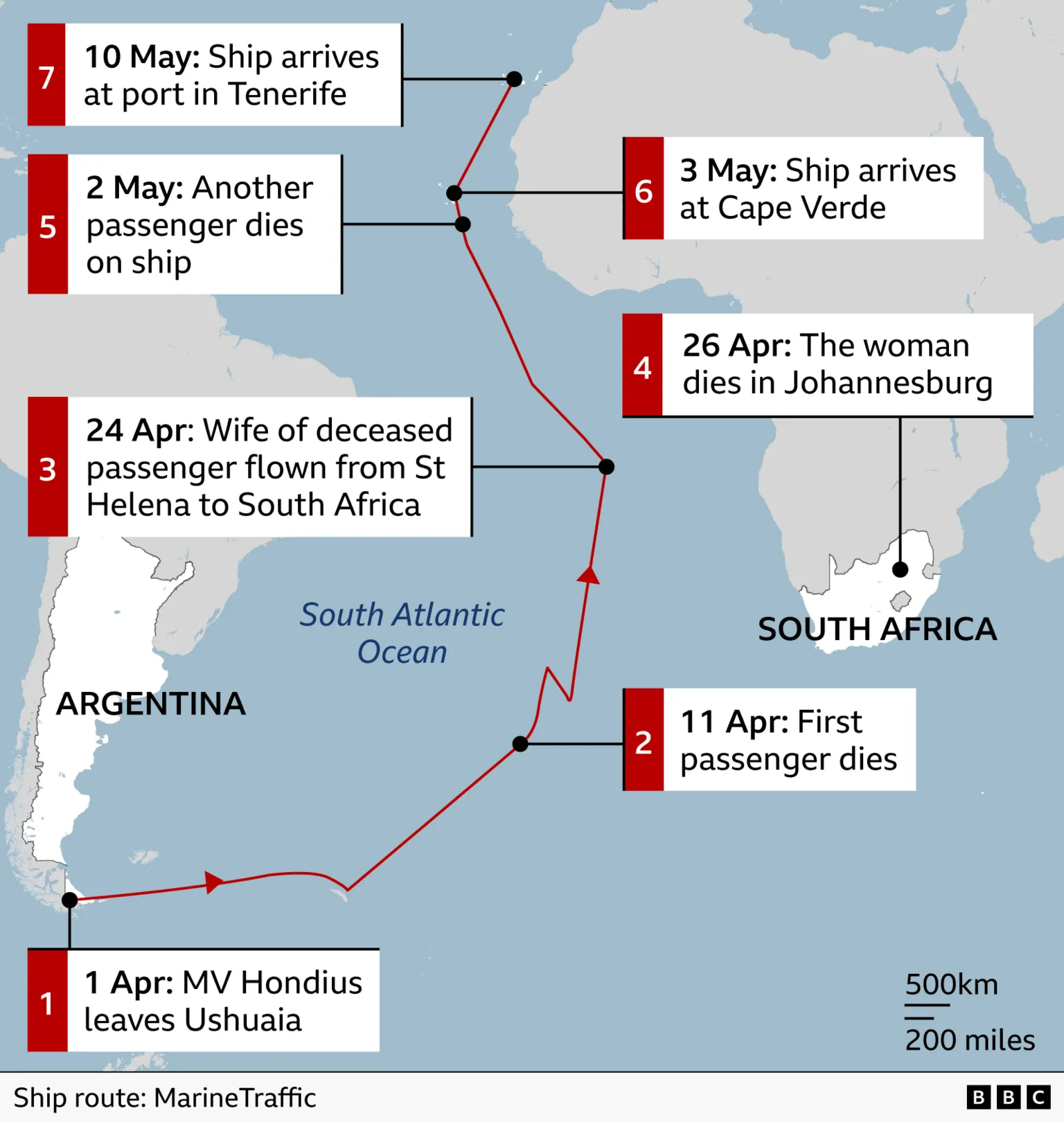
Three passengers who traveled on the ship have died, with two confirmed to have contracted the virus.
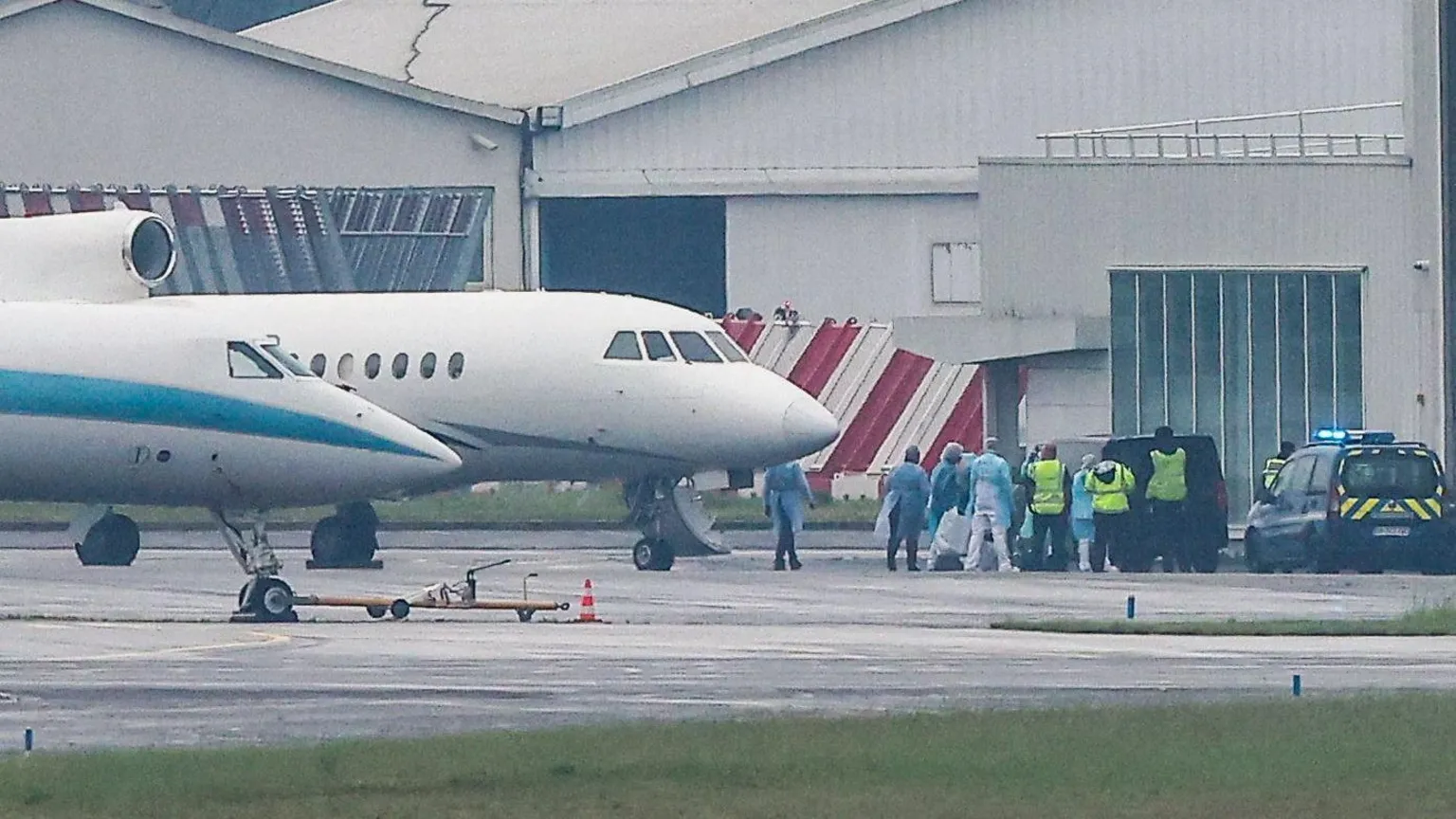
Upon arrival at Le Bourget Airport, officials wearing personal protective equipment (PPE) greeted the passengers on the tarmac. Ambulances then transported them to Bichat hospital in Paris.
At the hospital, they will undergo a 72-hour quarantine and a comprehensive medical assessment before being allowed to return home to self-isolate for 45 days, according to a statement from France's Ministry for Europe and Foreign Affairs.
Meanwhile, 14 Spanish nationals flown from Tenerife to Madrid are now subject to mandatory quarantine at a military hospital in the Spanish capital.
British nationals have been flown back to Manchester. Additionally, a flight carrying 26 passengers and crew, including eight Dutch nationals, has arrived in the Netherlands.
Flights for Turkish, Irish, and US citizens are also scheduled for Sunday.
Ongoing Repatriation Efforts
Spain's Health Secretary, Javier Padilla, reported that more than 90 of the 150 passengers and crew aboard the Hondius will have been repatriated by the end of Sunday. A flight to Australia is anticipated on Monday.
The cruise ship anchored in the port of Granadilla earlier on Sunday. Medical teams boarded the vessel at approximately 07:00 local time (06:00 GMT), initiating the carefully coordinated evacuation and repatriation process developed by the Spanish government and the World Health Organization (WHO).

Passengers were observed on the ship's deck and at windows, all wearing white medical face masks as the initial evacuations commenced Sunday morning.
Several passengers sat socially distanced on the first evacuation boat, recording videos and taking photographs as they approached land, where officials in white protective suits awaited them.
While en route to the airport, some British passengers, dressed in blue PPE, waved and gave thumbs-up gestures to the media gathered nearby.
Local Concerns and Virus Details
The arrival of the Hondius was met with opposition from some local officials, including the Canary Islands' regional president, who expressed concerns about the potential spread of the virus to Tenerife.
Hantaviruses are typically carried by rodents, but human-to-human transmission of the Andes strain—which the WHO believes some passengers contracted in South America—is possible.
Symptoms of hantavirus infection can include fever, extreme fatigue, muscle aches, stomach pain, vomiting, diarrhea, and shortness of breath.
Timeline of Fatalities and Cases
The first passenger death occurred on 11 April, followed by another on 2 May. A 69-year-old Dutch woman who left the ship in St Helena on 24 April traveled to South Africa, where she died two days later.
Two British men with confirmed cases are receiving treatment in the Netherlands and South Africa.
A third British individual is being treated for a suspected case on the remote Atlantic island of Tristan da Cunha, where British Army medics parachuted in with fresh supplies to provide care.
British nationals returning to the UK will be taken to an isolation facility for up to 72 hours. Medical personnel will then determine whether they can self-isolate at home or require another suitable location based on their living conditions.
Once all passengers and crew have disembarked, the Hondius will proceed to the Netherlands. There, the body of one deceased passenger and their belongings will be disinfected prior to removal.