Extensive Fish Kills in Northern Ireland Linked to Water Pollution
Plunket Scullion, a fisherman and wildlife photographer from County Tyrone, has witnessed firsthand the impact of water pollution on local rivers.
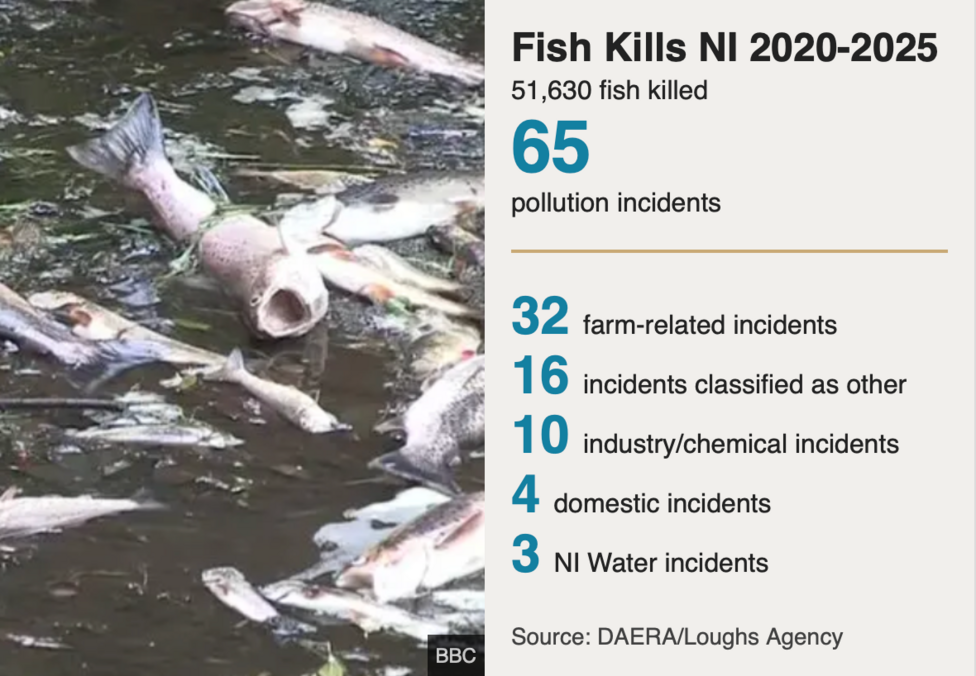
Data reveals that more than 50,000 fish have died in Northern Ireland over the past five years as a result of 65 distinct water pollution incidents affecting rivers and waterways.
The majority of these fish kills occurred in counties Armagh, Tyrone, and Fermanagh. In nearly half of these cases, authorities did not take further enforcement action.
The Department of Agriculture, Environment and Rural Affairs (Daera) explained that when the source of pollution could not be identified, no enforcement action was pursued.
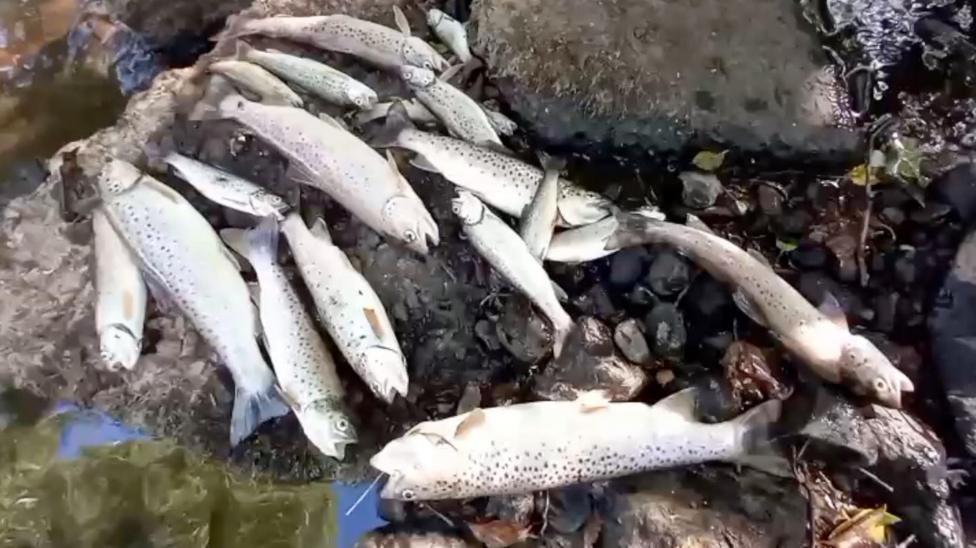
A pollution incident in the Torrent River in June 2022 saw almost 4,500 fish killed because of a slurry spill
A Daera spokesperson stated:
"The department investigates every water pollution incident that is reported, with a view to identifying the source, preventing further pollution, taking action to minimise the environmental impact and undertaking enforcement action against the polluter where appropriate."
According to the data, nearly half of the fish kill incidents were linked to agricultural pollution. Other sources included industrial activities and Northern Ireland Water.
In response, the Ulster Farmers Union (UFU) acknowledged that fish kills and water pollution incidents are "extremely serious," but emphasized that agriculture is not the sole contributor to pollution.
A UFU spokesperson added:
"The overwhelming majority of farmers take their environmental responsibilities seriously and work hard to manage nutrients, slurry and farm infrastructure properly."
These figures were obtained through a series of Freedom of Information requests.
NI Water commented:
"Fortunately, pollution incidents from NI Water assets that result in fish kills are rare. When an incident does arise, a multi-team review is carried out and any recommendations or lessons learned are implemented across our assets where appropriate."
Since 2020, 30 fish-kill cases have resulted in prosecutions or ongoing legal proceedings, with fines and remedial costs totaling £44,000.
The largest single fine, just over £6,000, was related to the June 2022 slurry spill in the Torrent River, which caused the death of nearly 4,500 fish.
'I've Given Up Fishing in the River'
Local fisherman and wildlife photographer Plunket Scullion was among the first to notice the pollution in the watercourse near Clonoe.
"I just remember looking into the river and seeing all these dead fish and I knew something was seriously wrong, I haven't fished into since them, it's never been the same,"he said.
"You see the odd smaller fish, but all the large fish are gone, anglers don't really bother coming to this part of the Torrent River anymore."
Scullion described the fish population as "completely wiped out."
"It's not just our wee river, it's all over the country, when you hear 50,000 fish killed, I think it's an absolute disgrace,"he added.
Impact on Lough Neagh and Wider Environment
Gerry Darby, representing the Lough Neagh Partnership, highlighted the ongoing issue of large blooms of potentially toxic blue-green algae in Lough Neagh, partly caused by long-term pollution.

"Already this week at Ballyronan Marina we've seen the return of the algae to Lough Neagh, and we already know that's going to need a long-term solution,"he said.
"But in the short term there are things that can be done, previously it was suggested getting river s to monitor rivers, that's local people who can be the eyes and ears of our rivers, things like that can really help."

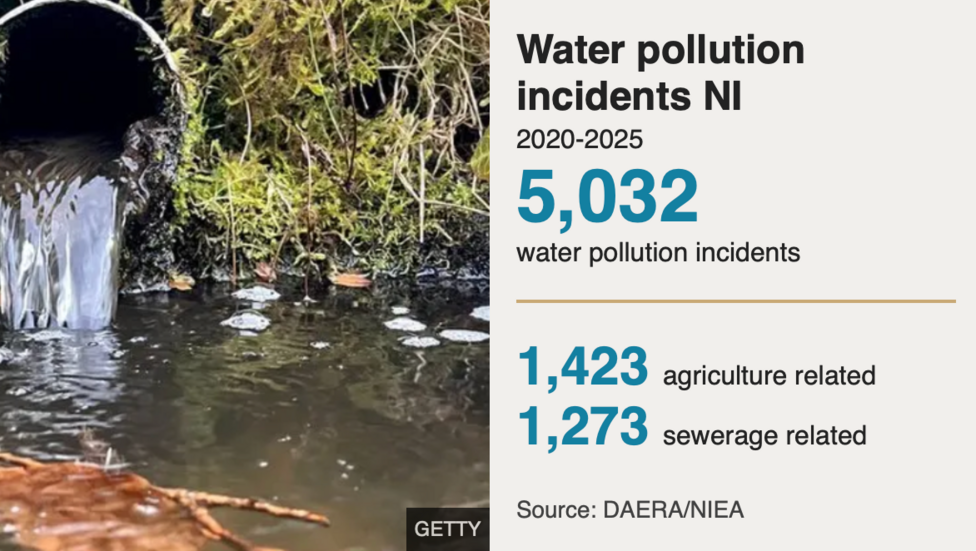
Data from the Northern Ireland Environment Agency indicates that while agriculture remains the largest overall source of water pollution, NI Water is also a significant contributor to pollution incidents.
New statistics show that between 2020 and 2025, there were over 5,000 water pollution incidents in Northern Ireland.
Peter Mitchell of the Ballinderry Rivers Trust emphasized that responsibility for pollution extends beyond farmers.
"You have to look towards big industries and the likes of NI Water in terms of what's going on into the rivers,"he said.
"With increase in population and pressure on housing demands - waste has to go somewhere and if it's going to water treatment plans that are outdated, then it can't deal with it and sadly some of that ends up in rivers."
NI Water has previously warned that without urgent reforms and increased funding to upgrade wastewater systems, pollution problems will persist and worsen.
A spokesperson for NI Water told NI that the organisation takes its environmental responsibilities seriously.
"We operate an extensive wastewater network, and while robust measures are in place to manage and maintain our assets, the scale and complexity of that network means there is always a risk of pollution incidents occurring,"they said.
NI Water also noted that pollution incidents can result from inappropriate flushing of items such as baby wipes.
'It's a National Disgrace'
For nearly two decades, NI Water has been shielded from the harshest pollution fines due to a special arrangement recognizing its outdated and underfunded infrastructure.
In March, Environment Minister Andrew Muir indicated that reforms could lead to NI Water facing stricter penalties for waterway pollution.
Last month, Minister Muir introduced a new bill aimed at increasing fines and penalties for pollution offences. This legislation must pass through Stormont's legislative process before becoming law.
The recent fish kill data has prompted renewed calls for stronger deterrents to prevent water pollution.
James Orr from Friends of the Earth stated:
"50,000 dead fish was not a trivial amount."
"It's not just the fish,"he continued.
"What are the kingfishers going to eat? What are the otters going to eat, what about the insects which are the building blocks of our rivers? They're all impacted and it's a national disgrace."
Orr suggested that the low prosecution rate may encourage polluters due to a lack of effective deterrents.
"The government needs to stand up to these polluters to protect our water,"he concluded.