Rebooting Robusta: The Amazon’s Coffee Revival
Long considered inferior to arabica, robusta coffee is gaining renewed respect as small growers in Brazil’s Amazon region revitalize its reputation for resilience and quality.
When the Paiter Suruí community expelled the last invaders from their land in 1981, they faced a difficult choice regarding the coffee plantations left behind by colonisers. Some destroyed the plantations due to the violence and death associated with them, while others spared the trees out of compassion.
More than four decades later, the surviving estates are being carefully nurtured, supporting both local families and environmental conservation.
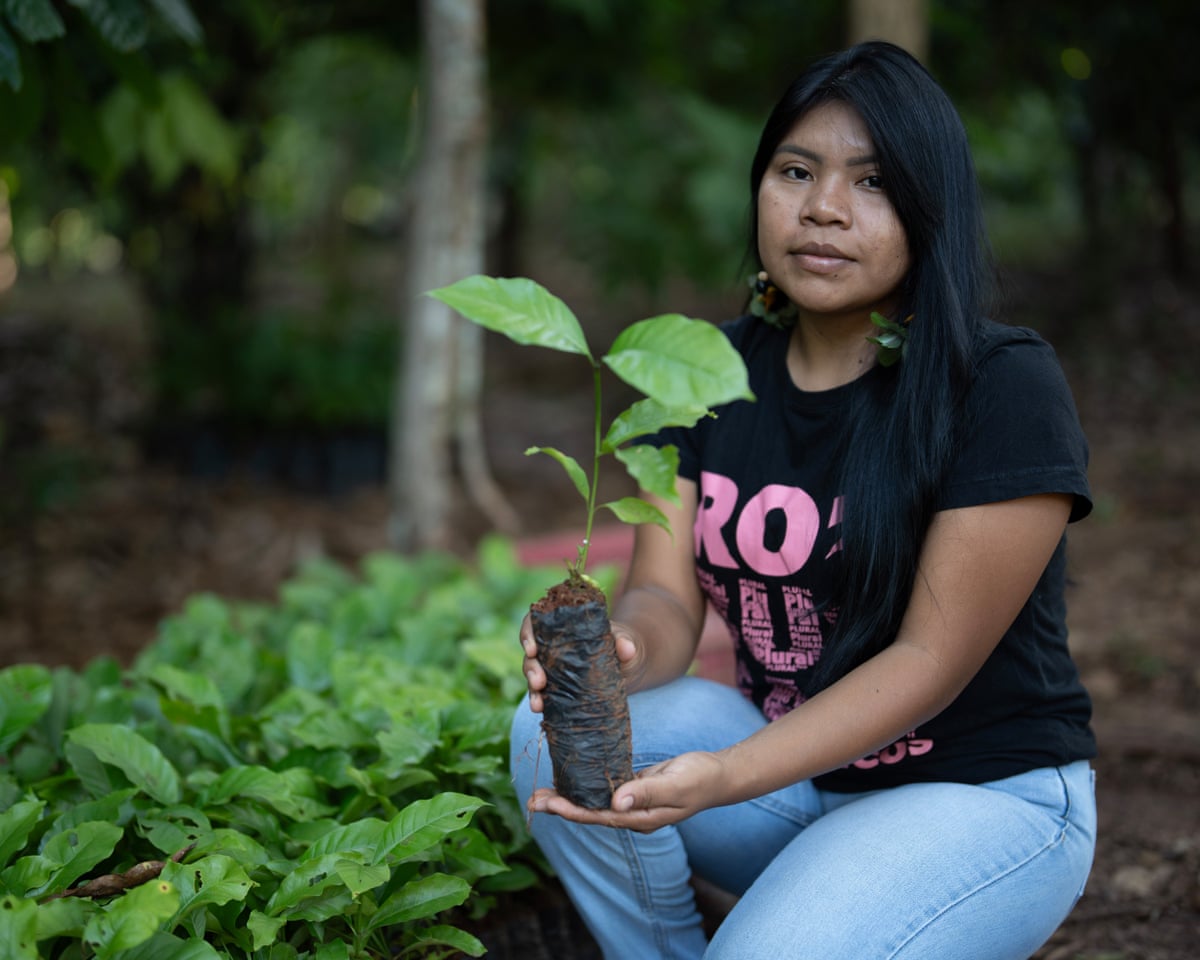
“Today, we use coffee as a way to preserve the forest,”says Celeste Paytxayeb Suruí, a renowned Indigenous barista and coffee producer in the Brazilian state of Rondônia, located in the western Amazon. The fine coffee she produces, known as “Amazonian robusta,” has won awards for its quality.
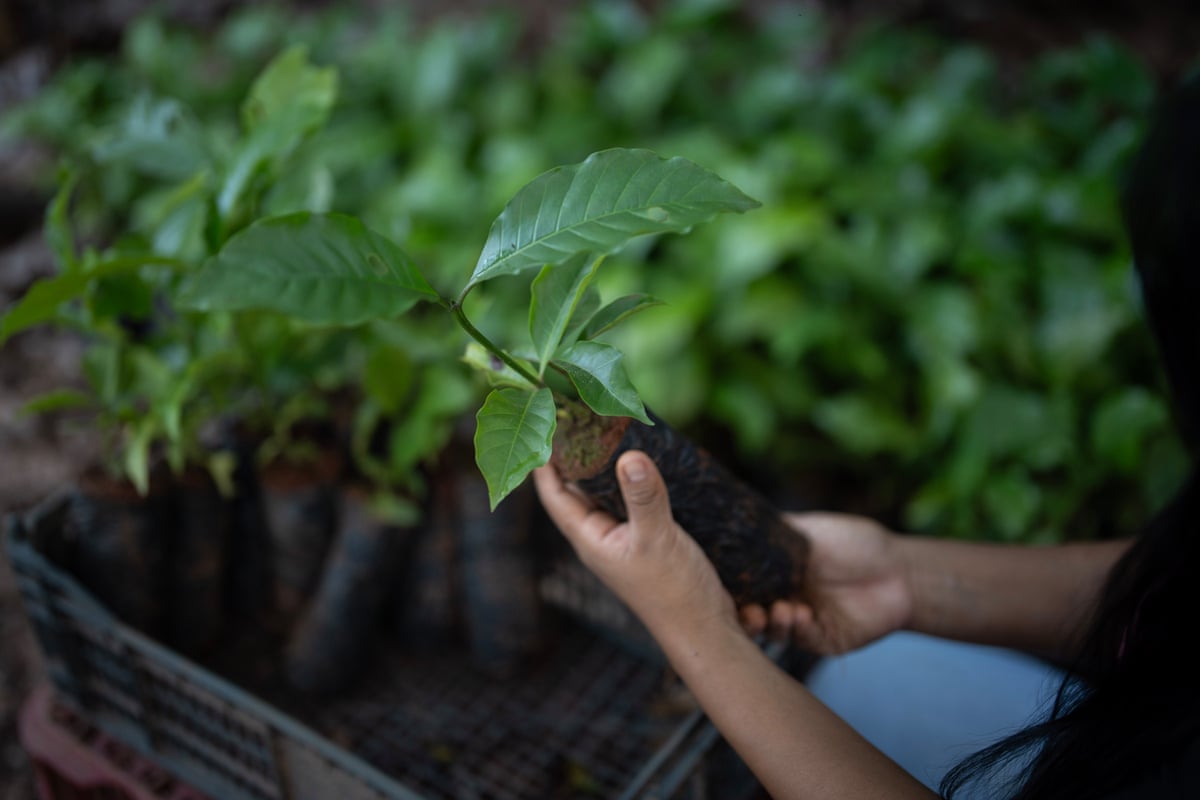
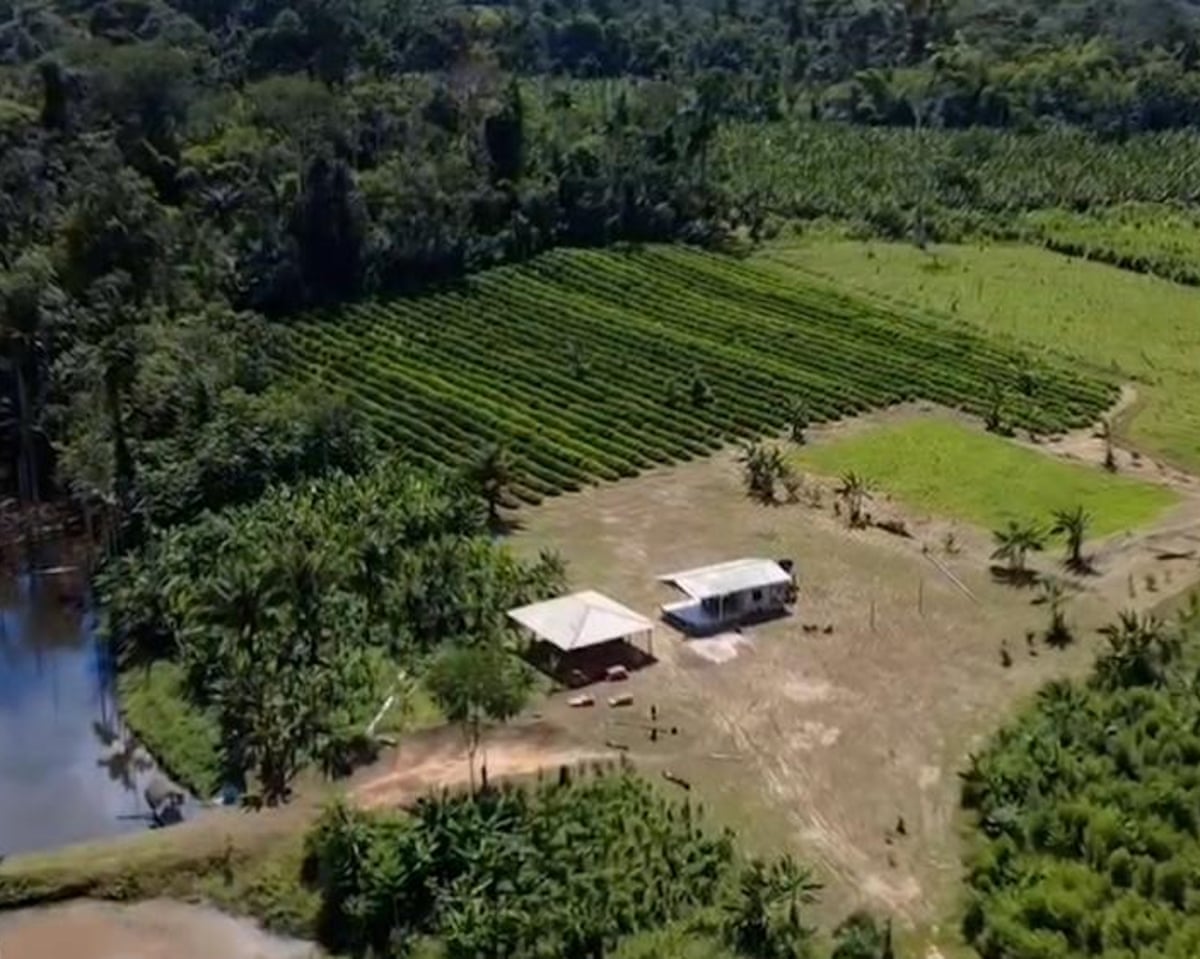
Nearly 140 Suruí families cultivate small coffee plantations on the Sete de Setembro Indigenous land, where abundant rainfall and a climate similar to the robusta’s native basin have enabled the coffee to flourish.
Changing Perceptions of Robusta Coffee
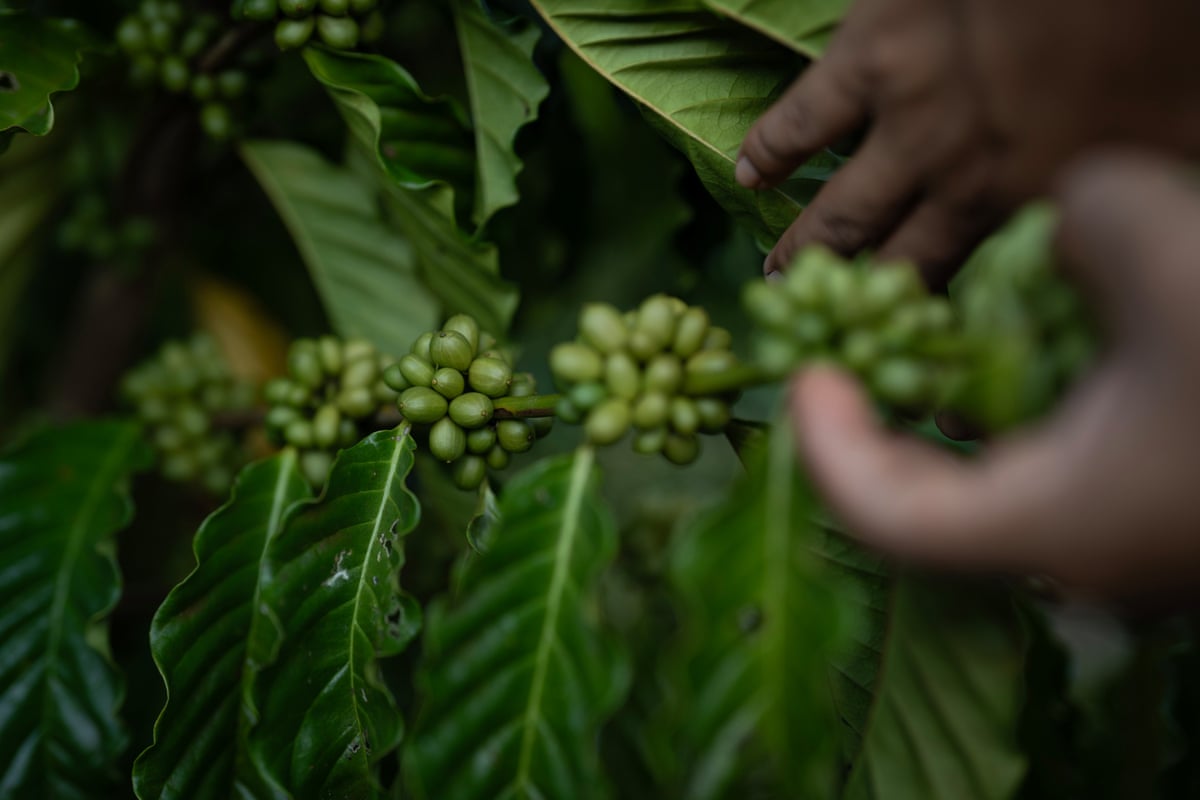
Historically, robusta has been viewed as a lower-quality coffee, often used in inexpensive blends alongside the more favored arabica. However, researchers have been working to improve robusta’s quality and demonstrate that it can produce a refined brew.
Enhancing robusta is not only about taste but also climate adaptation. Because robusta is more tolerant of higher temperatures than arabica, it is expected to play a crucial role in meeting global coffee demand. Robusta production has already increased significantly in recent years.
Climate Crisis Threatens Latin America’s Coffee Producers
As the climate crisis intensifies, coffee producers throughout Latin America—from Central America’s steep hillsides to Brazil’s forests and Colombia’s Andean slopes—face existential challenges.
Despite global markets projecting abundance, small farmers across the region struggle with rising costs, unpredictable weather, and a shrinking workforce, prompting many to question the viability of coffee farming.
The climate crisis is driving up temperatures in key coffee-growing regions. A recent analysis by Climate Central found that the world’s five largest coffee producers—Brazil, Vietnam, Colombia, Ethiopia, and Indonesia—now experience an average of 57 additional days of damaging heat annually.
This trend is particularly evident in Latin America, which includes major producers such as Brazil, Colombia, Mexico, Honduras, Guatemala, and Peru, accounting for more than half of global coffee output. Brazil, the largest producer, now endures 70 more hot days per year.
“High temperatures place coffee plants under stress, reducing much of their productive potential. This is affecting coffee plantations around the world, as most are located within the same latitudes,”explains Celso Vegro, an agronomist and researcher at São Paulo’s state agriculture agency.
Vegro notes that global coffee production has fallen short of expectations since 2021. Countries have struggled to keep pace with growing demand, leading to depleted global stocks and higher prices.
“This year, Brazil’s harvest is expected to be large and to replenish supplies. But it will be only a temporary reprieve, as the same climate conditions persist,”he adds.
Insights from Latin American Coffee Producers
In ’s new series, Coffee crisis, producers from four Latin American countries share the challenges they face amid the changing climate.
A recent Climate Central report highlights that the climate crisis affects all leading coffee producers, including Brazil, which now experiences significantly increased heat stress.
Although robusta is better adapted to higher temperatures, it is not immune to climate impacts and depends on sufficient rainfall. When drought struck Rondônia in 2024, production on Celeste’s small plantation within Suruí territory dropped by 40%. That year, global robusta output also declined due to droughts in Vietnam and other regions.
Despite rising demand, research indicates that the global area suitable for growing coffee will shrink by 50% for arabica and 30% for robusta.
Innovations to Sustain Coffee Production
In response, experts and farmers worldwide are intensifying efforts to breed more resilient coffee plants that can withstand extreme temperatures, drought, variable rainfall, and increased pest pressure associated with warmer climates.
Over the past two decades, researchers at Embrapa, Brazil’s federal agricultural research corporation, have improved robusta’s quality and resilience. Amazonian robusta originated from natural crossings of conilon and robusta coffee trees.
Currently, Embrapa is testing 64 new hybrid crossings, selecting trees for enhanced tolerance to heat and drought as well as improved flavor profiles.

Harvest and post-harvest care are also critical to improving robusta quality.
“If you harvest ripe beans, and wash and dry them appropriately, the quality increases exponentially,”says Enrique Alves, a researcher who relocated to Rondônia 15 years ago and shares best practices with local farmers.
Sustainable Farming in Rondônia’s Forests
These efforts have benefited many small family farms in the “Forests of Rondônia” region, where about 10% of farmers produce fine robusta coffee, according to Alves.
Research shows that coffee plants thrive near forests, which provide high humidity, stable temperatures, pollinators, and natural pest control.
Historically, the federal government encouraged migrants to clearcut forests in Rondônia, mainly for cattle ranching. Today, 45% of the Forests of Rondônia region remains forested, while coffee plantations occupy less than 1% of the land.
The Suruí community has been actively reforesting their territory since 2004, following the completion of a territorial management plan.
A Family Model of Sustainable Coffee Farming
Near the city of Cacoal in Rondônia, the Bento family has set a sustainable example on their 12-hectare farm. The 14-member family produces high-quality robusta coffee from planting to roasting and serves coffee to tourists visiting their farm.
“We don’t charge for the visit; we want them to come here and see how we do it; then they will choose our coffee,”says Deigson Bento.
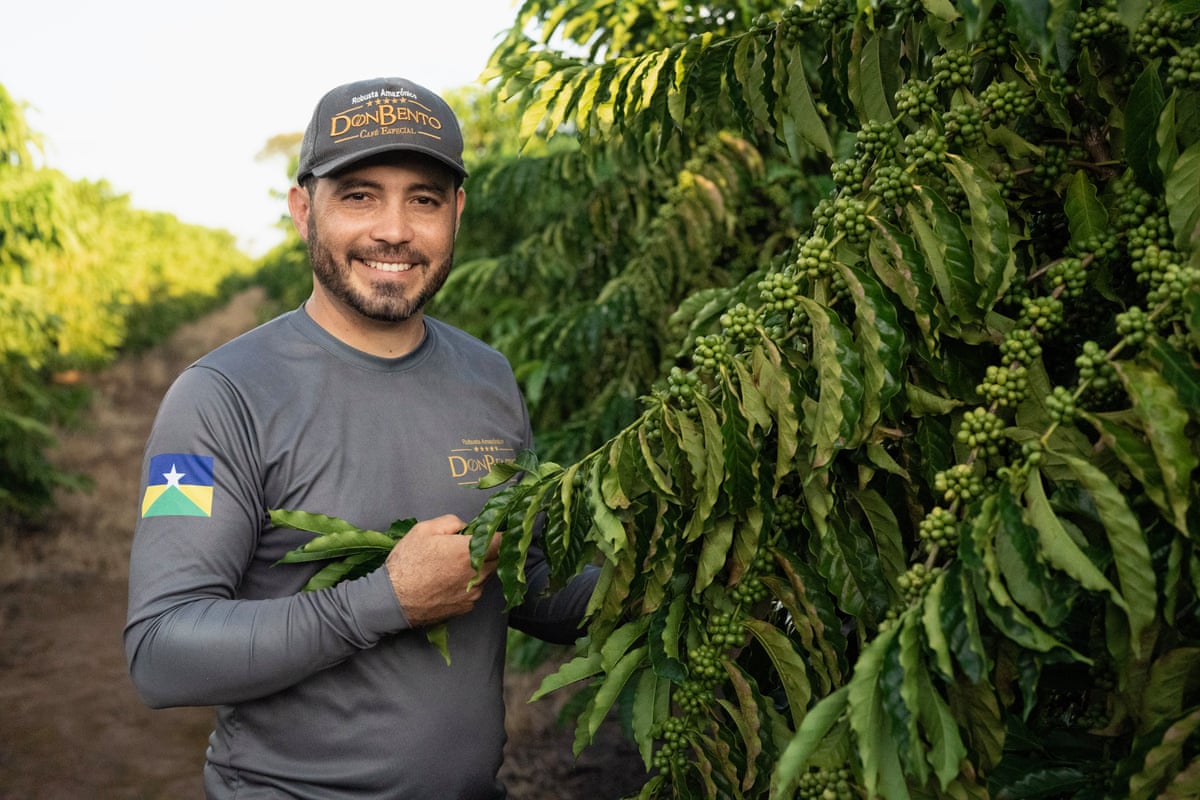
The Bento family has won the state’s coffee quality award multiple times by implementing water-saving irrigation, planting 1,500 trees to protect water sources, raising bees to support robusta pollination, and rotating coffee with corn, beans, and other crops to enhance soil health.
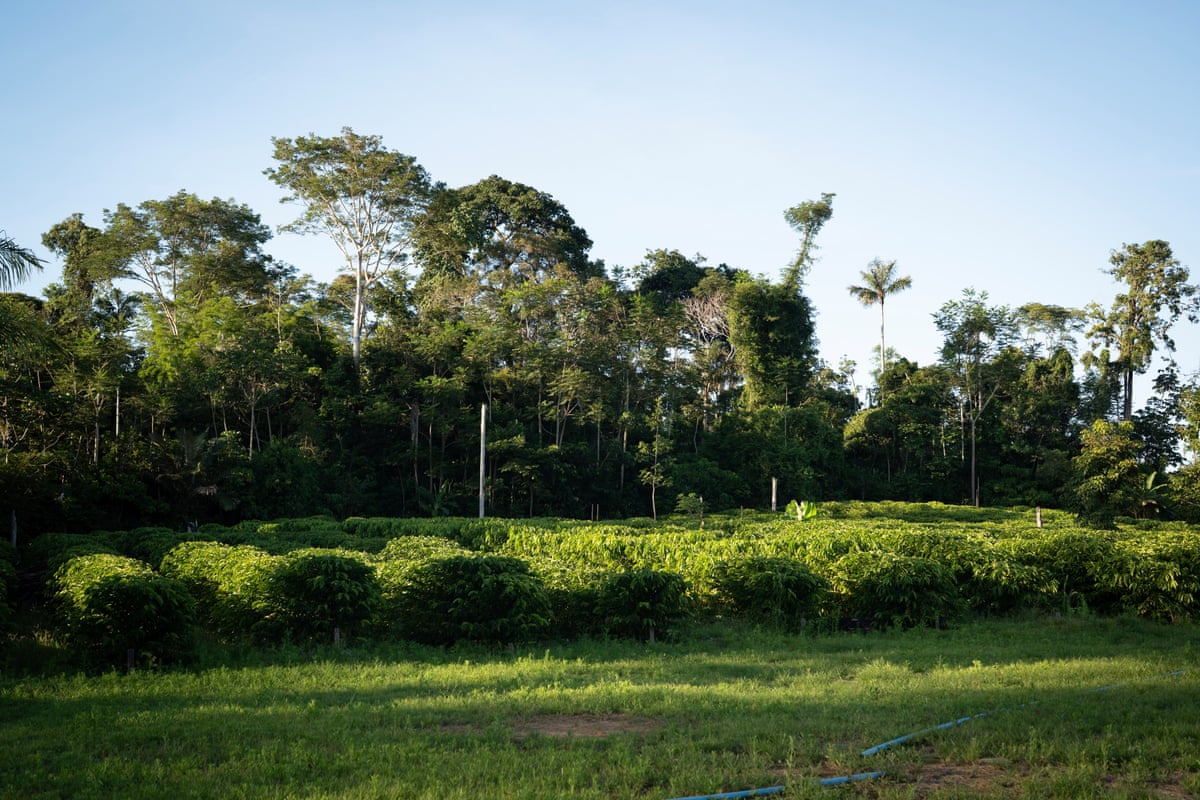
“You can have a 5,000-reais [£720] monthly income for a family on only two hectares of coffee,”Bento explains.
“We’ve advised over 500 people. People are eager to improve. Rondônia’s coffee was an ugly duckling, and now it’s a swan.”
Concerns Over Large-Scale Expansion
However, some experts worry that rising coffee prices could incentivize replacing small, sustainable family farms with large plantations that disregard forest conservation efforts.
“Robusta coffee is great, but you need a strategy, or else it can generate deforestation, because monoculture causes that. It works with the Suruí because they have a plan for the territory’s environmental management,”says Neidinha Suruí, coordinator at the Ethno-environmental Defence Association Kanindé, which helped develop the Suruí management plan.
She emphasizes that reforestation and forest protection should not rely solely on Indigenous peoples and calls for increased government subsidies to farmers who protect the environment. She also urges consumers to make informed choices when purchasing coffee.
Valuing Indigenous People and Knowledge
Paytxayeb Suruí, who has represented Indigenous-produced coffee commercially since 2024, highlights the importance of recognizing the people living within the Amazon forest.
“When we talk about the Amazon, people think about the forest, but don’t think about the people who are inside the forest. They need to be valued as well as their work and their stories.”
Renowned scientist Carlos Nobre advocates for a cultural shift to develop markets for forest products such as Brazil nuts, açaí, cocoa, cupuaçu, and buriti. He notes that although Brazil is home to the largest tropical forest, non-timber forest products account for only 0.4% of the country’s GDP.
Global Efforts to Secure Robusta’s Future
Brazil is not alone in seeking a robust future for coffee producers. The nonprofit World Coffee Research (WCR) launched a robusta network in November, including six countries: Vietnam, Ghana, India, Indonesia, Rwanda, and Uganda.
“Testing coffee trees across many countries and climates helps us see how they perform under a wide range of conditions – just like the variability farmers will face as the climate changes,”says Tania Humphrey, WCR’s director of research and development.
In addition to improving robusta’s adaptability and quality, researchers aim to change market perceptions of its taste. They have created a new sensory reference for the botanical varieties within the canephora coffee species, which includes robusta and conilon.
“Coffee tasters were trying to fit canephora into a protocol created for arabica,”explains Fabiana Mesquita de Carvalho, a neuroscientist at State University of Campinas.
“Canephora is like red wine, and arabica is like white wine. Not all notes of red wine will be positive for white wine and vice versa.”
Protecting Forests for Coffee’s Future
For robusta to have a sustainable future, broader recognition and protection of forests are essential. Paytxayeb Suruí stresses the need for collective action beyond Indigenous communities.
“If only the Indigenous people do their part, things won’t change. We need collective action to make a difference. The forest is the mother not only of Indigenous people, but of everyone.”