The River Trent is a major Nottinghamshire landmark
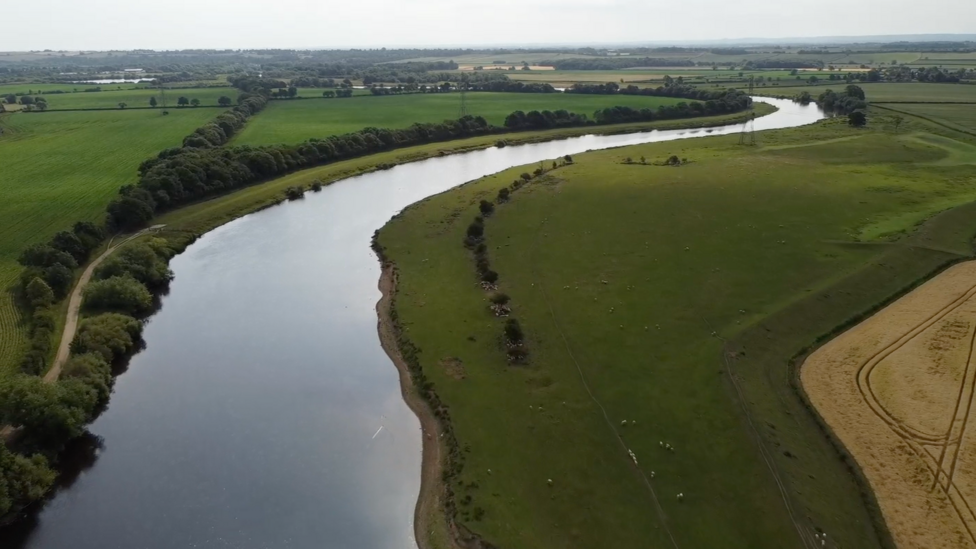
The River Trent ranks as the third longest river in the United Kingdom, extending 185 miles (298 km) from its source in Staffordshire through the East Midlands, ultimately flowing into the Humber and the North Sea.
Despite its prominence as a well-known watercourse, the origin of the River Trent's name remains uncertain, with various theories and contested claims lost over time.
One possible explanation suggests a Gallic connection referencing the river's abundant variety of fish species. This interpretation has inspired the Trent Rivers Trust, a charity dedicated to the river's conservation.
The charity is encouraging the public to "fish for the facts" through its Trent30 Challenge, which invites anglers to document their catches via a mobile application over the next 12 months. The goal is to identify 30 different fish species inhabiting the river.

Anglers contribute to understanding the river's biodiversity
"There's a few theories as to why the Trent is called the Trent," said Dr Scott McKenzie, head of rivers and nature-based solutions at the Trent Rivers Trust.
"The one I like the most is the Trent is so-called from the French for 30, which is 'trente'.
"It's thought that number is from the 30 fish species that you could supposedly once find in the River Trent.
"Looking at the species we've got now and considering how much cleaner the water was back then, how much more natural the rivers were, I could easily see there being 30 species picked up."
According to the Canal and River Trust, this theory was proposed by author J.W. Martin in a 1906 publication and is also referenced by earlier poets.
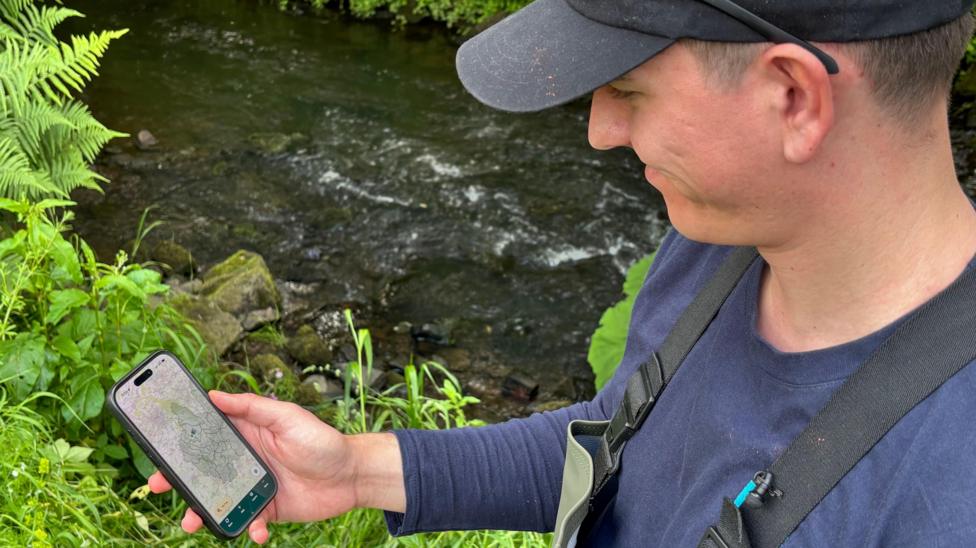
While the theory is likely apocryphal, Dr McKenzie stated that the more mythical explanation inspired the Trent30 campaign. The charity aims to use the data collected to better understand the health of the River Trent and its tributaries.
"We can't be everywhere all at once, and we are very aware that anglers are a wonderful pair of eyes and ears on the riverbanks for us," he said.
"What we want to do is try and tap into that passion.
"These are incredible citizen scientists, they're gathering data without even knowing about it, so we want to be able to utilise that data as much as possible to focus our conservation efforts."
The Trent30 initiative is a "catch and release" project, ensuring that fish are not harmed during the process, the charity added.
Marcus Bowles, a fisheries apprentice with the Trent Rivers Trust and an avid angler, commented on the challenge of finding 30 different species within a year, noting it would require various fishing techniques.

"The Trent is one of those top rivers that anglers love to fish," he said.
"It has so much variety. Within Staffordshire it's a lot smaller when you compare it to when you get towards Derby, Nottingham, when it's a lot wider.
"Sometimes you just don't know what you're going to catch."
The River Trent's name origins remain a mystery
Although the conservation campaign may provide valuable insights into the current ecological state of the River Trent, the true origin of its name is likely to remain unknown.
Jayne Carroll, professor of Early English and name studies at the University of Nottingham, explained that the names of major rivers in England often predate the Norman Conquest of 1066 and are usually of Celtic origin, the language spoken prior to Roman arrival.
"The names of the really major watercourses in England are usually Celtic, the language spoken on this island before the Romans arrived," she said.
"Clearly these river names were actually passed on to both Roman conquerors [and] also Anglo-Saxon settlers, and they adopted those Celtic river names and used them themselves."
Carroll further noted that "Trent" is a historically recurrent name, with several other watercourses bearing the same or similar names.
"We have the River Trent in Nottinghamshire, but we also have the Tarrant and the Trent Brook in Dorset. There's also at least one Welsh instance - the Trannon in Powys," she said.
One river that may hold clues to the Trent's name is the River Arun in Sussex, which was historically known as the Tarrant. An early spelling of this river's name, "Trisanton," appears in a 2nd-century text by Ptolemy, a geographer and polymath based in Alexandria, Egypt.
Carroll suggested that "Trisanton" might mean "trespasser" or "great wanderer," with another interpretation describing the water as "pouring very strongly." Both meanings are thought to reflect the Trent's tendency to flood.
"Place names and river names are usually descriptive," she said.
"Place names are often descriptions of the landscape, [and] river names often give us an indication of how the watercourse actually behaved."
Regardless of the actual origin of the name, Carroll expressed support for the Trent Rivers Trust's efforts to engage the public in conservation.
"Anything which starts a conversation about place names is a good thing," she added.
Correction 29 June 2026: We have updated our piece to clarify that French did not become widely spoken in England following the Norman invasion.
Get in touch
Tell us which stories we should cover in Nottingham.
Listen to BBC Radio Nottingham on Sounds and follow BBC Nottingham on Facebook, on X, or on Instagram. Send your story ideas to eastmidsnews@bbc.co.uk or via WhatsApp on 0808 100 2210.
- Croquet used to decide river's pronunciation
- New £18m River Trent bridge officially opens
- How a 'forgotten' river shaped Nottingham
- The history hidden in place names