Large Jellyfish Bloom at Bude Sea Pool
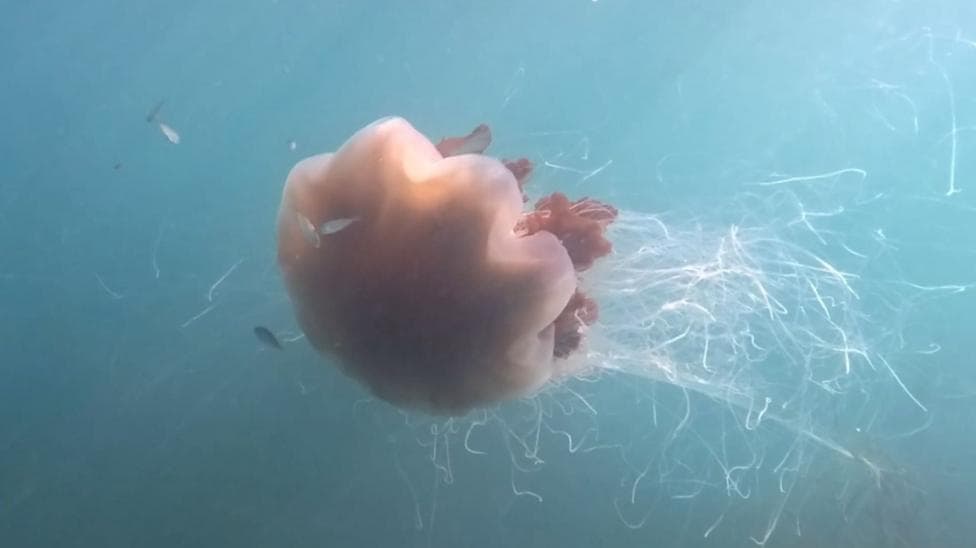
Approximately 16 wheelbarrows of jellyfish were deposited by the tide at Bude Sea Pool, Cornwall, according to staff members. Jodie Harper, representing Bude Sea Pool, reported that the concrete terrace of the tidal swimming baths was "completely covered" with jellyfish, and the shallows were filled with them following high tide on Thursday.
"We have never seen anything like it. Once they're stranded out of the water they don't survive for long so there was nothing we could do to save them."
Increased Jellyfish Sightings Linked to Weather and Currents
Experts have noted an increase in jellyfish sightings nearshore in recent days, attributing this to calmer waters. Additionally, some jellyfish species typically found in the Mediterranean have been observed off the UK coast. The mauve stringer jellyfish, usually native to Mediterranean waters, has been among these sightings.
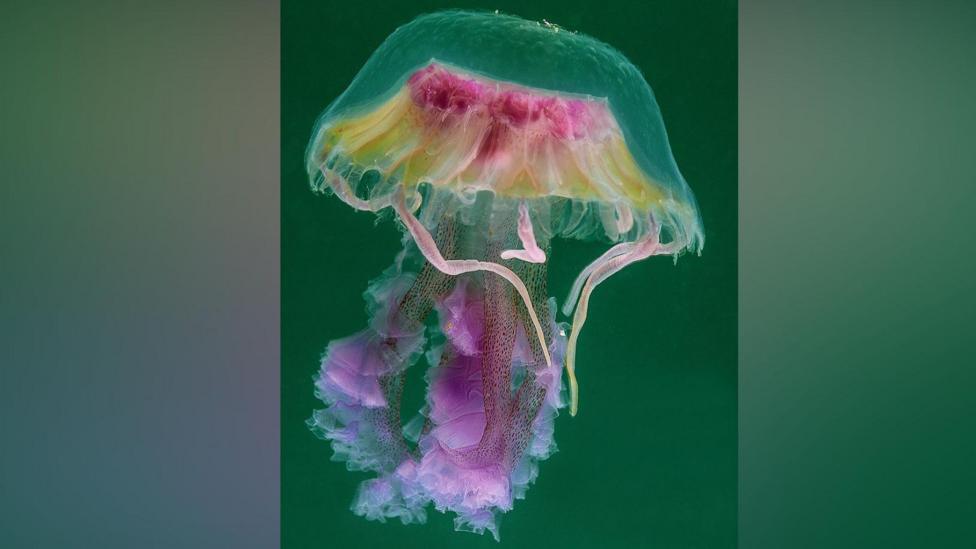
Devon's Wembury Marine Centre has reported seeing "lots of blue jellyfish," according to the county's wildlife trust. Compass jellyfish have also been spotted in various parts of the UK.
Devon Wildlife Trust's Coral Smith stated, "Jellyfish sightings were quite common and expected at this time of year. They rely on the ocean currents to move around, so they will have got swept in perhaps on windy days," adding that jellyfish tend to stay inshore during calm weather.
Smith further mentioned that there have been "a few reports" of mauve jellyfish from the Mediterranean region in the area, linking their presence to warmer seas and recent heatwaves.

Understanding Jellyfish Presence and Safety Measures
Coral Smith, marine education officer, explained that the mauve jellyfish "can pack quite a sting" and that they sting "what they think is prey." She noted that sensitivity to jellyfish stings varies among individuals.
"Some people can be quite sensitive to them and other people tolerate them better."
She advised that if stung, individuals should remove tentacles using a credit card or similar object, rinse thoroughly with lukewarm water, take an antihistamine if necessary, and seek emergency medical help if symptoms are severe.
Smith also commented on species variation, stating, "The species of jellyfish do tend to change" and that "the early signs are there" indicating an increase in jellyfish sightings during warmer weather. She added, "The species that favour warmer waters are likely to do quite well."
Local Observations and Reporting
At Bude, Harper reported that mainly moon jellyfish were observed at the outdoor pool, along with "a couple of blue and a barrel jellyfish both of which can give a mild sting and are best observed from a distance."
Smith encouraged the public to report jellyfish sightings to assist in monitoring species distribution.
For updates, follow BBC Cornwall and BBC Devon on X, Facebook, and Instagram. Story ideas can be sent to spotlight@bbc.co.uk.
and Further Reading
- How warming seas are altering our underwater world
- Hundreds of jellyfish wash up on Cornish coast
- Thousands of dead jellyfish wash up on beach