May's Full Moon to Illuminate the Sky on Friday, 1 May
May's full Moon is scheduled to light up the night sky on Friday, 1 May. Known as the Flower Moon, it will reach its fullest phase at 18:23.
The name Flower Moon is believed to originate from the abundance of blooming flowers in May, marking the height of spring.
This year's full Moon is classified as a 'micromoon,' meaning it will appear slightly smaller than usual.
If you miss observing the Flower Moon, a rare second full Moon, called a Blue Moon, will occur later in the month.
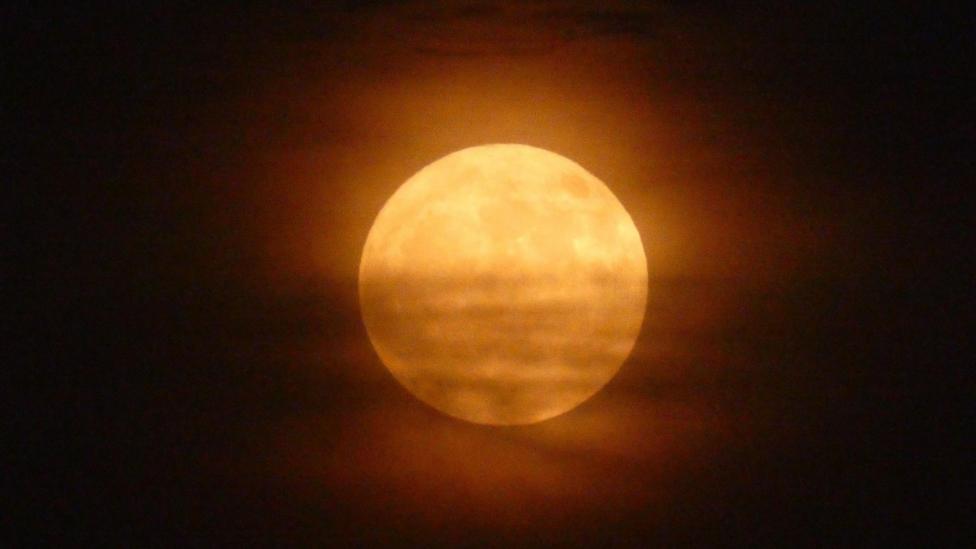
The Flower Moon in 2025 was observed on 12 May, as captured by a Weather Watcher in Sheerness, Kent.
What is a Micromoon?
The Moon’s orbit around Earth is elliptical rather than perfectly circular, causing variations in its distance from Earth. Consequently, not all full Moons appear the same size.
When this year’s Flower Moon reaches fullness, it will be near its apogee, the point in its orbit farthest from Earth.
This means the Moon will appear slightly smaller because it is approximately 406,000 km (252,000 miles) away from Earth at this time.
The difference between apogee and perigee (the closest point to Earth) is about 43,000 km (26,000 miles). Although this distance is significant, the size difference is barely noticeable to the naked eye, except in photographs.
The overall effect is that a micromoon appears a bit smaller in the sky and may be marginally less bright than average.

Will the Weather Affect Visibility?
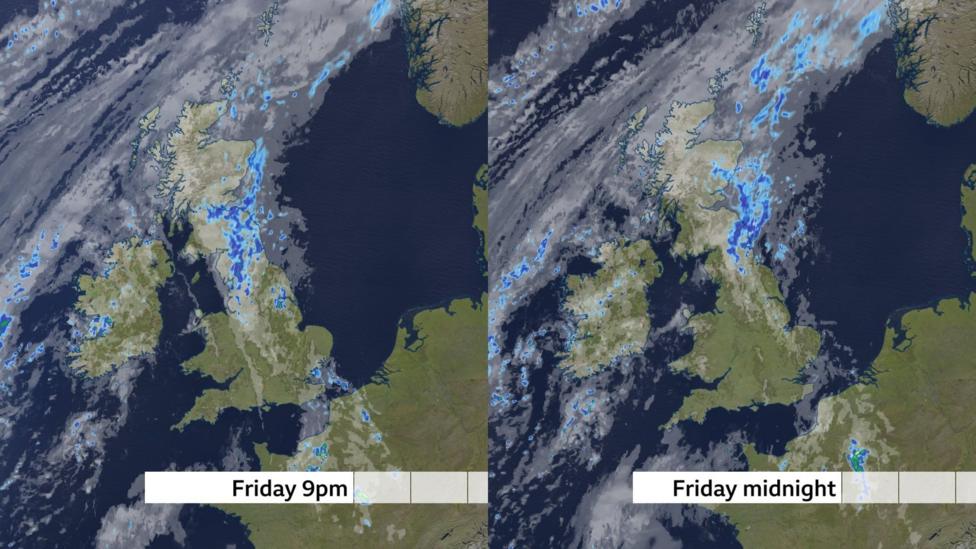
Some parts of the UK will experience areas of cloud and showers on Friday evening.
The Flower Moon coincides with a shift in weather patterns. A high-pressure system that has brought sunny days and clear nights is moving away toward the near continent.
As pressure falls, more cloud cover is expected to arrive from the west, increasing the chance of showers.
On Friday night, clearer skies may return to Wales, the Midlands, and southern England. Even glimpses of the Flower Moon through the clouds will provide a dramatic sight.
You can check the latest weather forecast on the BBC Weather website and app.
Viewers are encouraged to share their photos of the Flower Moon through BBC Weather Watchers.
When is the Blue Moon?
If you miss the Flower Moon, there will be a rare second full Moon in May, known as a Blue Moon.
Since the lunar cycle is approximately 29.5 days, every two to three years there are 13 full Moons in a calendar year instead of the usual 12.
In 2026, this extra full Moon will occur on 31 May and is referred to as a Blue Moon.
The phrase "once in a Blue Moon" originates from the rarity of this event.
Celestial events will continue to illuminate the spring night sky.