Water and Wine: The Vital Role of Andes Glaciers
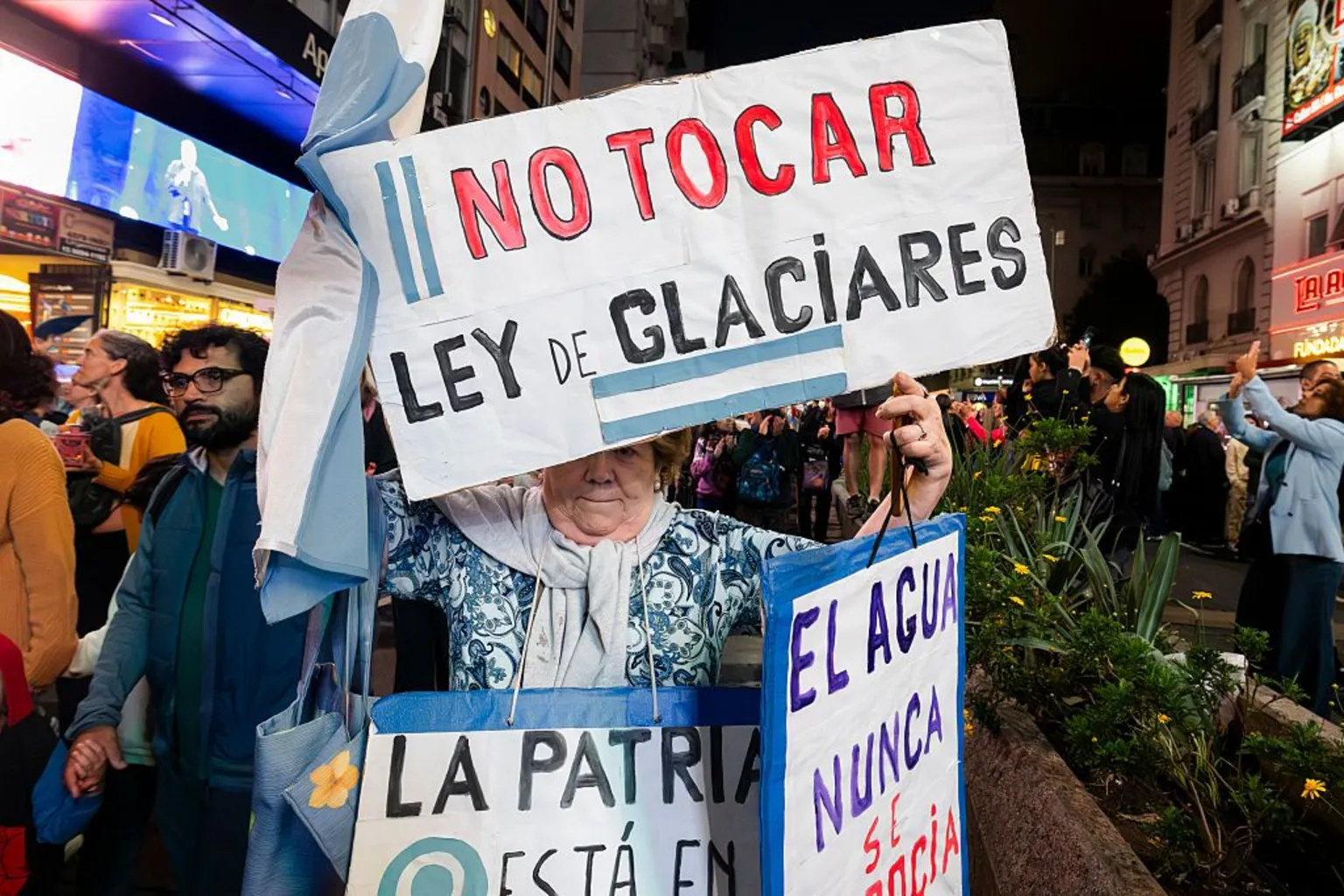
"Without water, there would be no wine," Virginia de Valle says as she guides a tour of her family's 16-hectare (40-acre) vineyard in Mendoza, situated beneath the Andes mountain range.
Winemakers in Argentina's wine capital depend on fresh water from the Andes to irrigate their crops. However, following recent reforms passed by Argentine MPs that loosen protections on glaciers, De Valle fears the water supply for her vineyard is at risk.
"The Andes mountains, with their winter snow and glaciers, feed the rivers and streams that flow into the valley to irrigate our crops," she explains. "This is also the water we consume in our homes. That is why people say 'Mendoza is the daughter of water'."
While snowfall in the Andes is the primary water source for Mendocinos, in years with particularly low rainfall and snowfall, meltwater from glaciers—permanent bodies of dense ice—helps mitigate drought effects, which are increasingly frequent in Mendoza, sustaining vineyards like De Valle's.
"Every drop of water counts," she says.
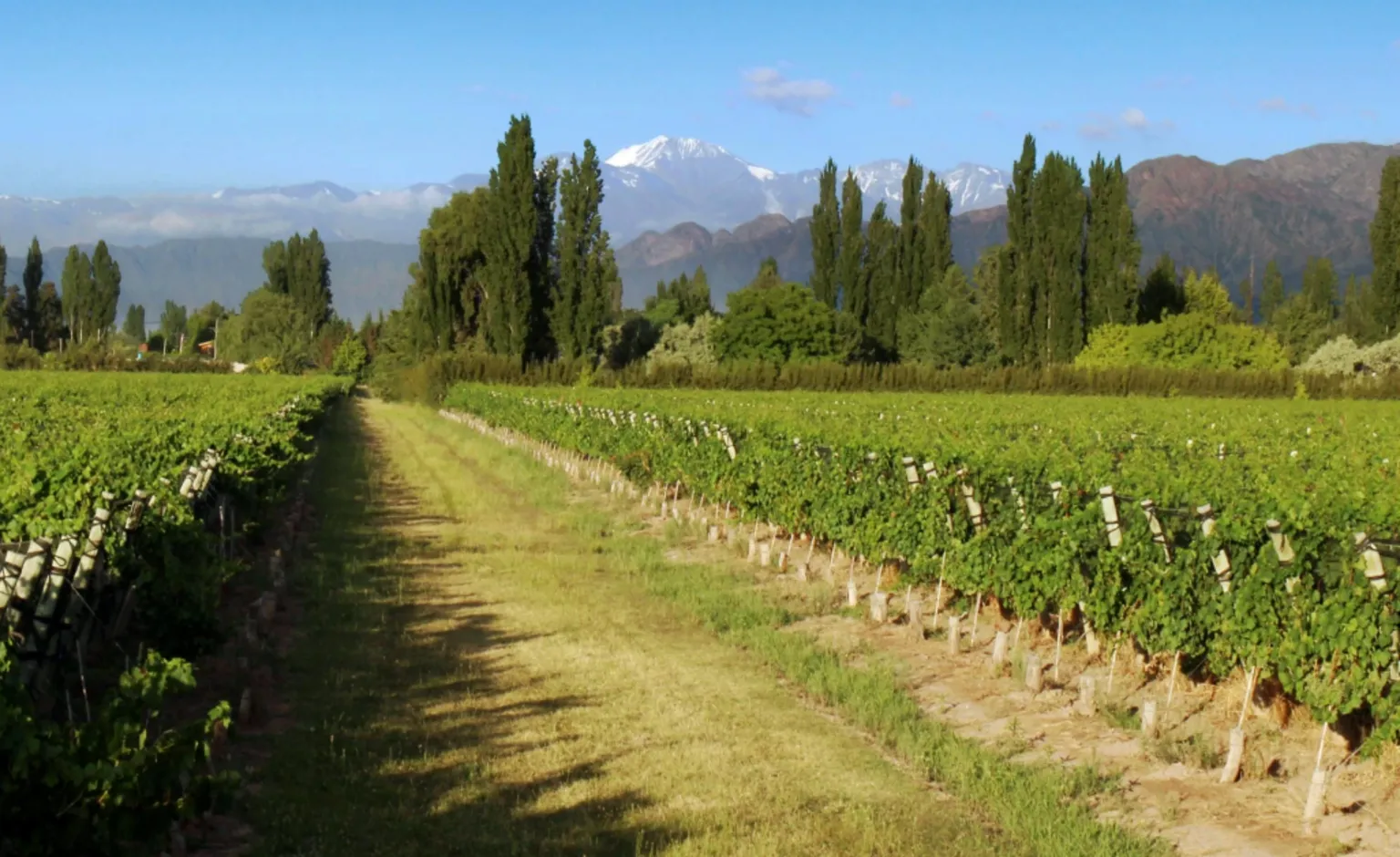
Glaciers are crucial beyond Mendoza. Argentina hosts 16,968 glaciers that supply water to 36 river basins across 12 provinces, supporting seven million people.
Changes to Argentina's Glacier Law
Argentina was the first country globally to enact a law specifically protecting glaciers. Enacted in 2010, the law recognized glaciers as vital water reserves and prohibited damaging commercial activities.
The law also safeguarded the periglacial environment, which includes features such as permafrost—water trapped in frozen soil. Glaciers are cataloged in a national inventory maintained by the Argentine Institute of Snow Research, Glaciology and Environmental Sciences (Ianigla).
Under the new reforms, provincial governments will determine whether glaciers in their regions are "strategic"—meaning they provide water for human consumption, agriculture, biodiversity, scientific research, or tourism.
If provinces decide glaciers are not "strategic" water reserves, they can remove them from Ianigla's national inventory, thereby lifting environmental protections.
Proponents argue the 2010 law hindered extraction projects and that developing copper and lithium mining will boost regional economies and support the country's energy transition.
Opponents warn that large-scale mining could disrupt river flows from the Andes and threaten water security for millions.
Public Opposition: "Hands Off the Glaciers"
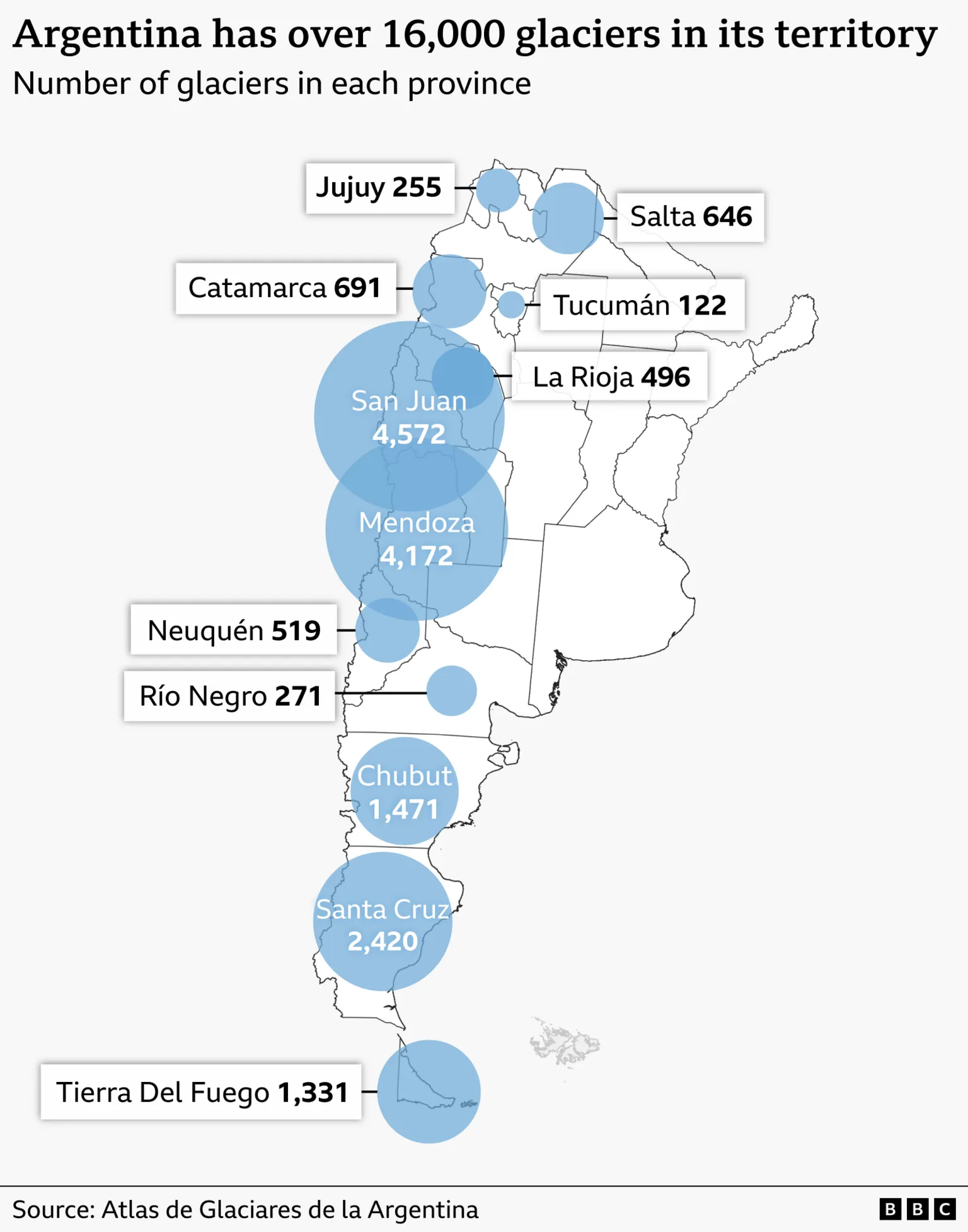
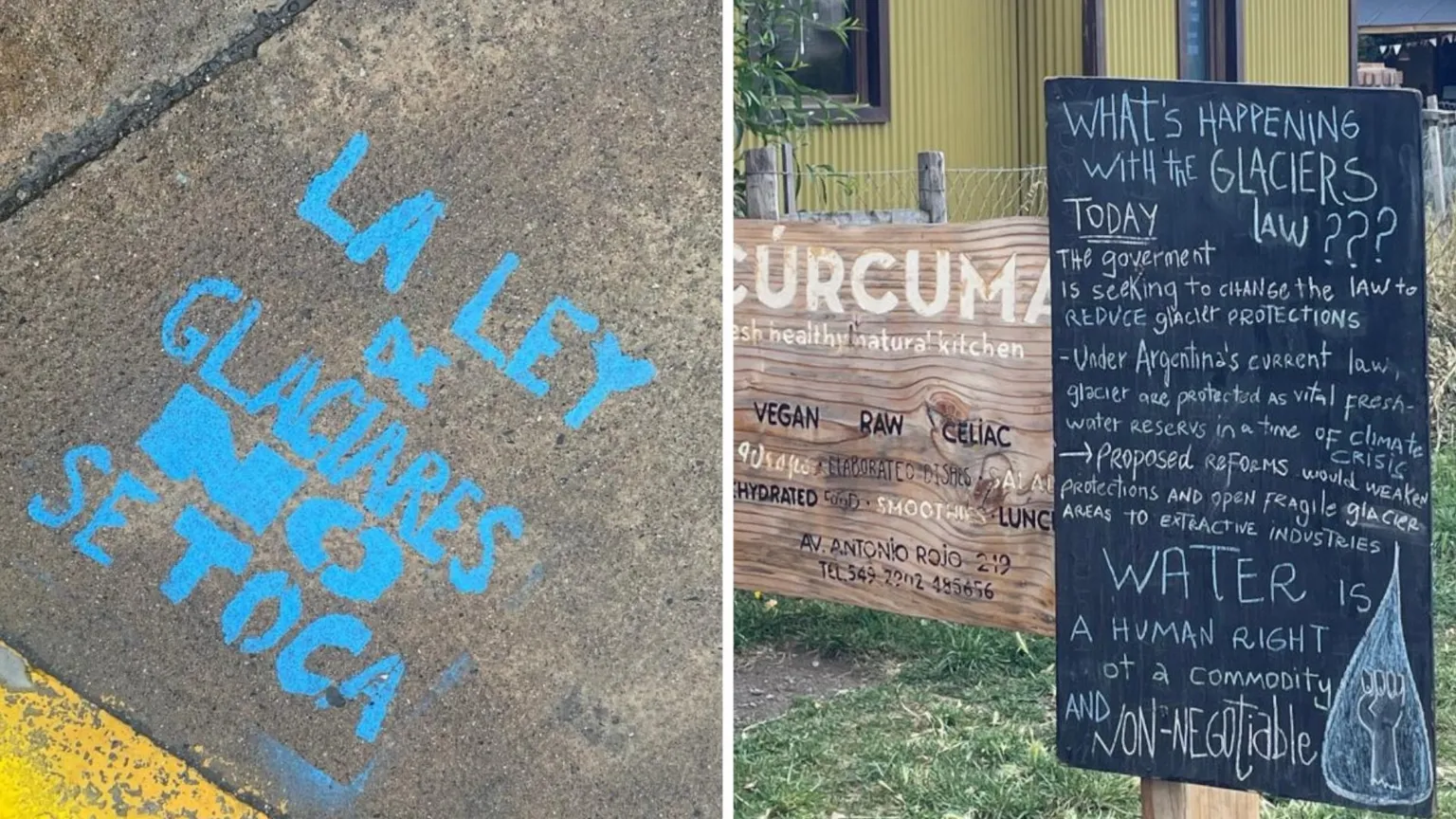
From Mendoza's vineyards to Patagonia's hiking town of El Chaltén, opposition to the legal changes is widespread, with the campaign slogan "Los glaciares no se tocan" (hands off the glaciers) visible across walls and pavements nationwide.
Over 100,000 people registered to participate in a public hearing on the reforms at Argentina's Chamber of Deputies in March, though fewer than 400 were able to speak during the two-day event.

"It made clear that it's not just environmental organisations who were asking for this law not to be amended; it was the people, the public, who were asking for water to continue to be protected," says Agostina Rossi Serra, a biologist with Greenpeace.
Economic Prospects and Political Views
President Javier Milei views the Andes as a gateway to billions in mining investments. Mineral-rich provincial governments argue the previous law obstructed "sustainable economic development."
"Argentina doesn't export even a single gram of copper, while Chile, which shares the same mountain range with us, exports $20bn [£15bn] a year," Milei stated at a business forum in November, advocating for deregulation.
De Valle counters,
"Milei doesn't care about natural resources or how it's going to end."
Mining executives from Glencore, Lundin, and BHP Group have met with Milei in the past year. According to Bloomberg, these and other companies aim to invest approximately $40bn in Argentina's untapped copper sector.
Some provinces advocating for the law's amendment, including Mendoza and San Juan, are arid or semi-arid regions where water scarcity is already a concern, Serra notes.
"They are provinces that believe mining development is far more important than ecosystems and the communities themselves," she tells the BBC.
Debate Over Legal Arguments
Milei's party, La Libertad Avanza, asserts the reform will protect only glaciers and periglacial environments with proven water-related significance, allowing development on others.
However, glaciologist Lucas Ruiz challenges this, calling the amendment based on "false arguments."
"The most false part of it all is the claim that there are glaciers that do not contribute to rivers. If it's a glacier, it has ice and contributes water. It's very basic," Ruiz says.
He criticizes the reforms for their lack of clarity and uncertain consequences.
"We are left not knowing what criteria will be used, not knowing which technical bodies will be involved, and clearly, any glacier and any periglacial environment could be at risk," he explains.
Scientific Paradox and Environmental Concerns
Ruiz, an independent researcher at Ianigla, highlights a "stark paradox" in the scientific community's response to the reforms.
"We know that at the rate at which glaciers are melting, it is highly likely that by the end of the century Europe will be almost entirely glacier-free, as will the tropical Andes in Peru and large areas of the Southern Andes," he states.
"And the only way to prevent that is for us to reduce our carbon footprint. And if we do not make the energy transition, which cannot be achieved without more copper and lithium, it will not be possible.
"It is a stark paradox, hard to accept, but it is the reality. Because the message from science is that energy transition is necessary," Ruiz adds.
He emphasizes that mining must be conducted responsibly, with thorough assessment of impacts on glaciers and periglacial environments.
Concerns Over Deregulation and Investment Competition
Greenpeace warns that financial incentives may encourage provinces to relax glacier protections.
"If I have an international company looking for a place to develop a project, I'll probably choose the province with the fewest environmental restrictions. That's the concern we're going to face," Serra says.
Conversely, Federico Palavecino, a Buenos Aires lawyer advising on mining projects and glacier law, supports provincial autonomy in glacier protection, arguing they bear the consequences of decisions.
"Why should we tell them how to live?" he asks.
He contends that removing barriers to multi-million-dollar projects could provide essential funding to local communities.
Meanwhile, in Mendoza, Virginia de Valle actively informs visitors to her family's vineyard about the law changes.
"It will affect wineries, but first, it will affect life," she says.