Humans have long sought to geoengineer the Earth’s environment. Tim Flannery outlines a few of the wildest ideas from the 20th century.
An increasing number of scientists believe that the climate crisis has been allowed to worsen so significantly that technological interventions may be the only viable option to prevent escalating disasters. Concepts such as cloud brightening, injecting sulphur into the atmosphere, and deploying tiny mirrors in space—all aimed at reducing the amount of sunlight reaching Earth’s surface—are being promoted by entrepreneurs and governments alike. They argue that such geoengineering is now inevitable.
Since the time when the God of the Old Testament granted humanity dominion over the Earth, the notion of reshaping the world to better suit human needs has been a persistent theme in human thought. For centuries, grand ambitions to alter and reform the climate and environment have been proposed, many of which now appear impractical or even absurd in hindsight.
With new ideas emerging, it is worthwhile to reflect on some past initiatives aimed at geoengineering our planet.
1. Atlantropa
In the 1930s, the German engineer Herman Sörgel proposed constructing a dam across the Strait of Gibraltar to lower the Mediterranean Sea level by two hundred metres. This would create vast new fertile lands, or lebensraum, to be cultivated by African laborers, thereby addressing a long-standing cause of conflict in Europe. Additionally, Europe and Africa could benefit from virtually limitless hydroelectric power.
The vision captivated many, with leading engineers even designing the massive dam. Some critics raised concerns about the impact of draining the Mediterranean on features such as Venice’s canals; however, Sörgel promised that “special measures” would address these issues.
Astonishingly, the Atlantropa plan persisted beyond World War II and continued to be discussed until the 1960s.
2. Soviet Plans to Modify Nature
Russians have historically felt disadvantaged by their climate. As US climatologist P.E. Lydolph, an expert on the geography of the Soviet Union, stated:
“In general, the country lacks heat.”
To address this, Soviet engineer P.M. Borisov proposed raising the Earth's temperature by a few degrees by building a dam across the Bering Strait to melt the Arctic ice cap.
This was a massive undertaking, and other Soviet scientists suggested an alternative: cutting a hole in the Thompson-Wyville Ridge, which would require excavating approximately 3,000 square kilometers of seabed at depths exceeding one kilometer.
This line of thinking was part of the broader “Great Stalin Plan for the Transformation of Nature” proclaimed in 1948, which explored large-scale engineering projects to make the Soviet environment more productive and hospitable. Even decades after Stalin’s death in 1953, such ideas continued to be seriously considered, although economists raised concerns about the high costs involved.

3. Bombing to Save the Planet
The discovery of atomic power ushered in an era of techno-optimism. Harry Wexler, who led the scientific services division of the US Weather Bureau from the 1940s until 1962, believed that detonating 10 carefully placed hydrogen bombs could melt the Arctic ice cap and initiate an unprecedented warming period.
The Soviets also viewed nuclear weapons as tools to redirect rivers. They detonated three nuclear devices in an attempt to divert some northward-flowing rivers but were surprised to find that three atomic bombs only cleared 700 meters of canal. Additionally, the unexpected radiation released made it impossible to continue such projects.
4. Making a Second Moon
Few geoengineering projects have progressed beyond the conceptual stage, but in the 1990s, Russia actually succeeded in creating a “second moon,” albeit on a much smaller scale than originally envisioned.
The goal was to reflect sufficient sunlight onto Russia’s Arctic regions to increase illumination comparable to a full moon. This was achieved by deploying reflective foldable satellites in sufficient numbers to significantly extend daylight hours, thereby providing additional warmth and energy savings.
The initial batch of satellites illuminated a 5-kilometer patch of light. However, a second group of satellites became stuck in the MIR space station, and the declining Russian economy made the project financially unsustainable, leading to its abandonment.
5. New Australian Mountains
Laurie Hogan believed that Australia had been underserved by its mountainous terrain. The country’s only significant mountains are relatively low and located along the east coast, creating a narrow green strip and a vast arid interior. Hogan proposed that it would be better if mountains were positioned further west.
In 1979, he published Man Made Mountain, advocating for the creation of a second mountain range along Western Australia’s border. This new range would be 2,000 kilometers long, 4 kilometers high, and 10 kilometers wide. Hogan envisioned 49 large cities laid out on a rectangular grid and 180,000 fish farms adorning its slopes.
When the book failed to galvanize national support, Hogan founded the Engineered Australia Plan party, which contested the 1983 federal election. Analysis of his plan revealed that it would require moving many times more rock than humanity has ever moved throughout history. Ultimately, both the book and the party faded into obscurity.
These five examples represent only a fraction of the geoengineering concepts proposed throughout history. Serious efforts have been made to increase rainfall, control hurricane paths, and manipulate weather for military advantage, all without lasting success. This reflects humanity’s persistent and often overreaching ambition.
Today, society faces a critical choice: whether to pursue geoengineering on a large scale or to accept life in a dramatically altered and increasingly hostile climate.
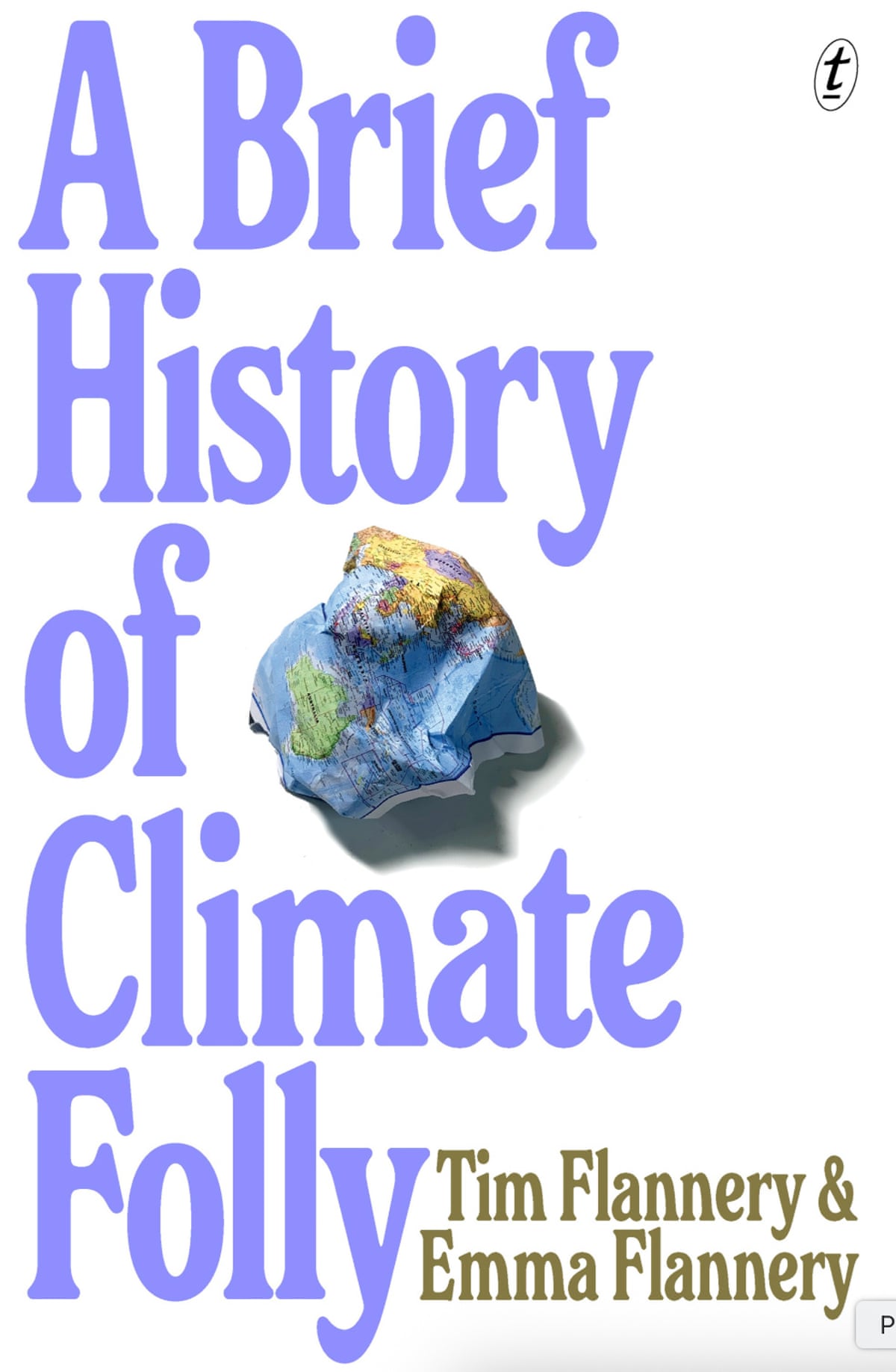
A Brief History of Climate Folly by Tim Flannery and Emma Flannery is now available from Text Publishing.