Asili ya Mama: Tanzanian Women’s Traditional Music
(Hukwe Zawose Foundation) These narratives of familial connections capture traditional music that is equally rhythmic, melodic, and harmonic, and seldom heard beyond Indigenous communities.
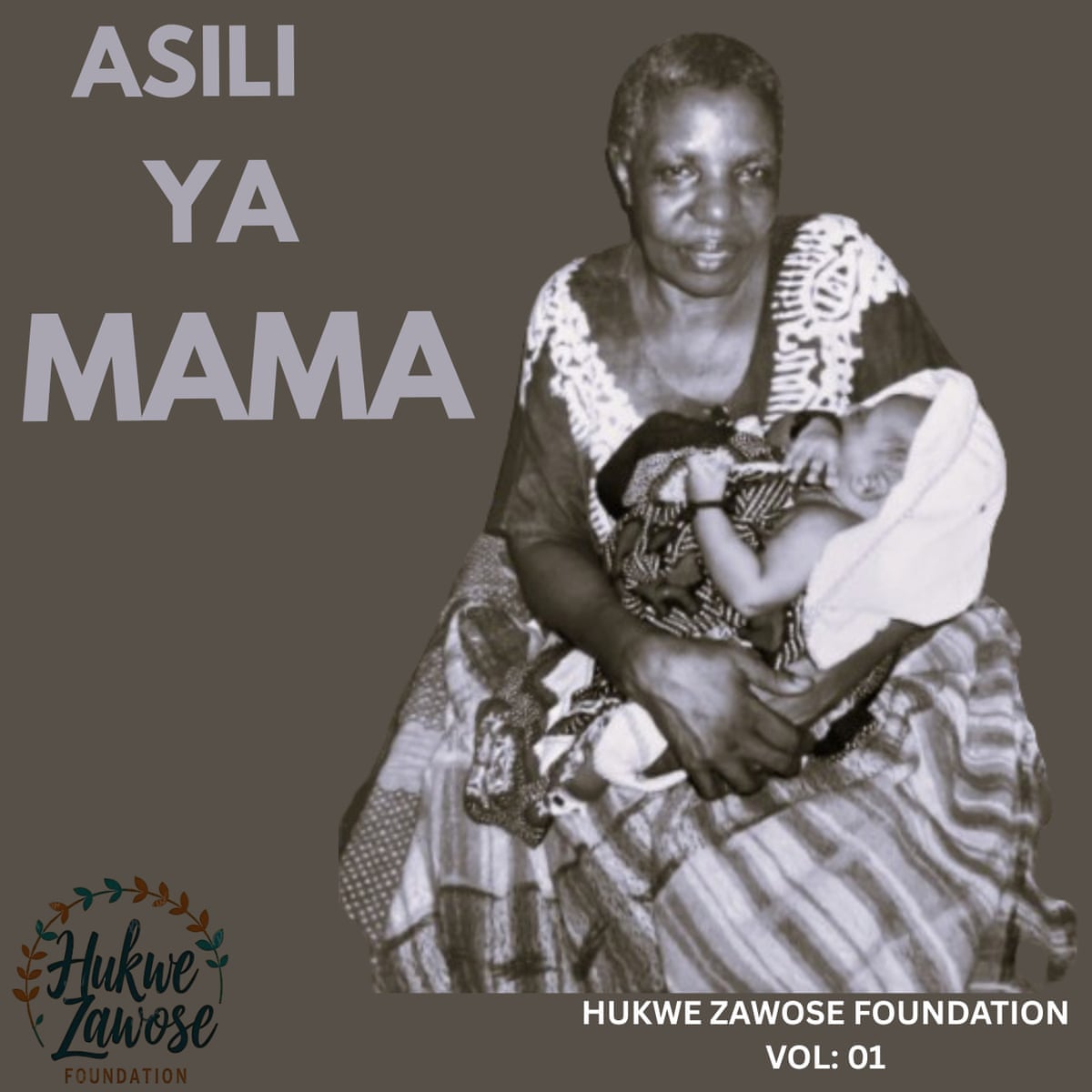
Folk song collection by women has a distinguished history and a vibrant present, as demonstrated by this compilation of 10 spirited Tanzanian field recordings. Curated by documentarian Ruth Ndeto and musician Msafiri Zawose (brother of Pendo from the acclaimed Zawose Queens and son of the late folk pioneer Hukwe), Asili ya Mama (Origin of Mother) highlights the rhythmic, melodic, and harmonic creativity of Wagogo, Waluguru, and Wasambaa women. The liner notes state that these songs have
"carried culture and music in everyday life"while rarely being heard outside their communities.
Contrasting with the croak of passing birds, a brisk female vocalist initiates the album’s opening track, Baba Mwenda, a storytelling song cautioning against greed. She is joined by other women singing in unison, accompanied by traditional shakers and tin drums, creating a bubbling, playful defiance. The wedding song Chamsola follows, propelled by the resonant tone of a mheme drum and harmonies that shimmer with an opaque quality, reminiscent of a midnight-blue sea. Next is Chamwiloa, a fast-paced song about the formal union of families after marriage, which builds towards its conclusion with intense percussion.

The call-and-response singing, recorded in courtyards, homes, and open village spaces, is infectious, complemented by trilling vocal solos and bursts from the ngangafirimbi flute, which add lively punctuation. The songs’ themes are powerfully conveyed through their performances. In Kuku Mnywa Maji, a song about love and companionship, voices and instruments intertwine in tight repetitions. Meanwhile, Mlembwe, a song about understanding others’ life experiences, constructs deeper-pitched harmonic layers like foundational stones. In this track and the shaker-filled closing song, Sunyunize, women lead men in performance, expressions now recorded, archived, and widely shared, extending their profound impact.
Also Released This Month
The spirit of Bert Jansch is vividly present in Sam Grassie’s debut album, Where Two Hawks Fly (Broadside Hacks). It is not a pastiche but an echo of Jansch’s authority, evident in Grassie’s gutsy delivery of songs such as Burning of Auchindoun and his intricately arranged guitar work. The woodwind elements in Orchy Falls and Kishor’s are also captivating.
Jim Moray marks 25 years in the traditional folk scene with his eighth album, Gallants (Managed Decline), featuring an image of himself dressed as a Whittlesea straw bear holding an electric guitar. His bold, bright voice stands out on the Shetland song When I Was a Little Boy, driven by moody sub-bass and drums, as well as on the Wilco-like swagger of American Stranger.
Scottish clàrsach player and folk singer Anna McLuckie’s album The Little Winters (Hudson Records) offers ten invigorating tracks filled with frosty light. Notably spiky and sublime are McLuckie’s original New Northern Lullaby and The Dark Island, a creative reinterpretation of a composition by Scottish traditional musician Iain McLachlan.