The Bizarre Return of Mr Blobby
He is pink, covered in yellow spots, and as quintessentially British as a Boots meal deal. In recent months, Mr Blobby has reemerged in the public eye, duetting with pop stars, appearing on Saturday Night Live UK, and being hailed as the UK’s equivalent of Mickey Mouse. What explains this unusual resurgence of a character once dismissed as irredeemably naff?
A Surreal Saturday Night Live UK Finale
During the finale of Saturday Night Live UK’s debut season, a darkly comedic spoof documentary revealed a fictional but striking narrative: Margaret Thatcher was not responsible for the closure of Britain’s coalmines—Mr Blobby was. According to the sketch, drilling at Nottinghamshire’s Grimethorpe Colliery in 1992 unearthed an evil entity beneath the earth. Mr Blobby then embarked on a relentless and gruesome rampage, maiming miners and becoming “an atom bomb made flesh.”
This image of Mr Blobby being disinterred serves as an apt metaphor for his recent revival. Over the past months, the pink-and-yellow agent of chaos has been unearthed and is making a comeback. He has appeared on primetime television, performed duets with pop stars, and inspired nostalgic fans to spend significant sums on Blobby-themed merchandise. But what has triggered the revival of a character once considered a cultural embarrassment?
Mr Blobby’s Enduring Presence
Comedy writer Joel Morris, author of Be Funny Or Die: How Comedy Works and Why It Matters, reflects on Blobby’s persistent presence.
“I’m not sure Mr Blobby’s ever gone away,”he says.
“It was thrilling to see him on that SNL UK sketch, the millennial writers’ room not giving a fat stuff that kids at home would need him explained by their parents. This is your heritage and he’s as British as a Boots meal deal. I do hope Blobby is in the citizenship test.”
Explaining Blobby to a New Generation
Last month on The Claudia Winkleman Show, comedian Josh Widdicombe—who dedicated an entire episode of his Museum of Pop Culture podcast to Mr Blobby, describing him as “pink, spotty and rubber, with an insatiable appetite for destruction”—attempted to explain the character to a confused Canadian actor, Dan Levy of Schitt’s Creek. When Mr Blobby unexpectedly appeared on the show, Levy visibly recoiled and hid behind the sofa.
“That’s our Mickey Mouse,”said Winkleman proudly.
Mr Blobby’s Nostalgic Appeal
This squishy cultural icon of the 1990s has become highly sought after on the nostalgia circuit. Blobby costumes have sold for thousands of pounds on eBay. In Scotland, Blobby-shaped iced biscuits at Bayne’s bakers—made with natural colouring—have become cult bestsellers, rivaling the popularity of Gregg’s sausage rolls.
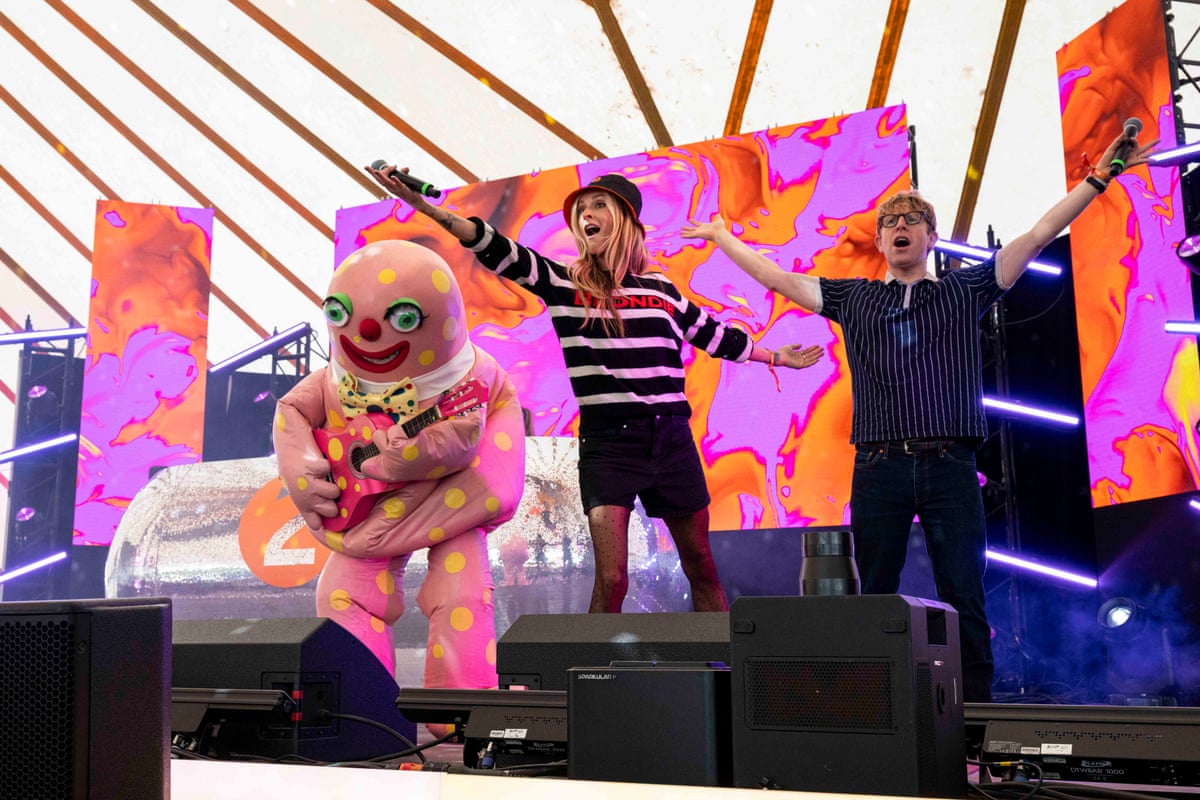
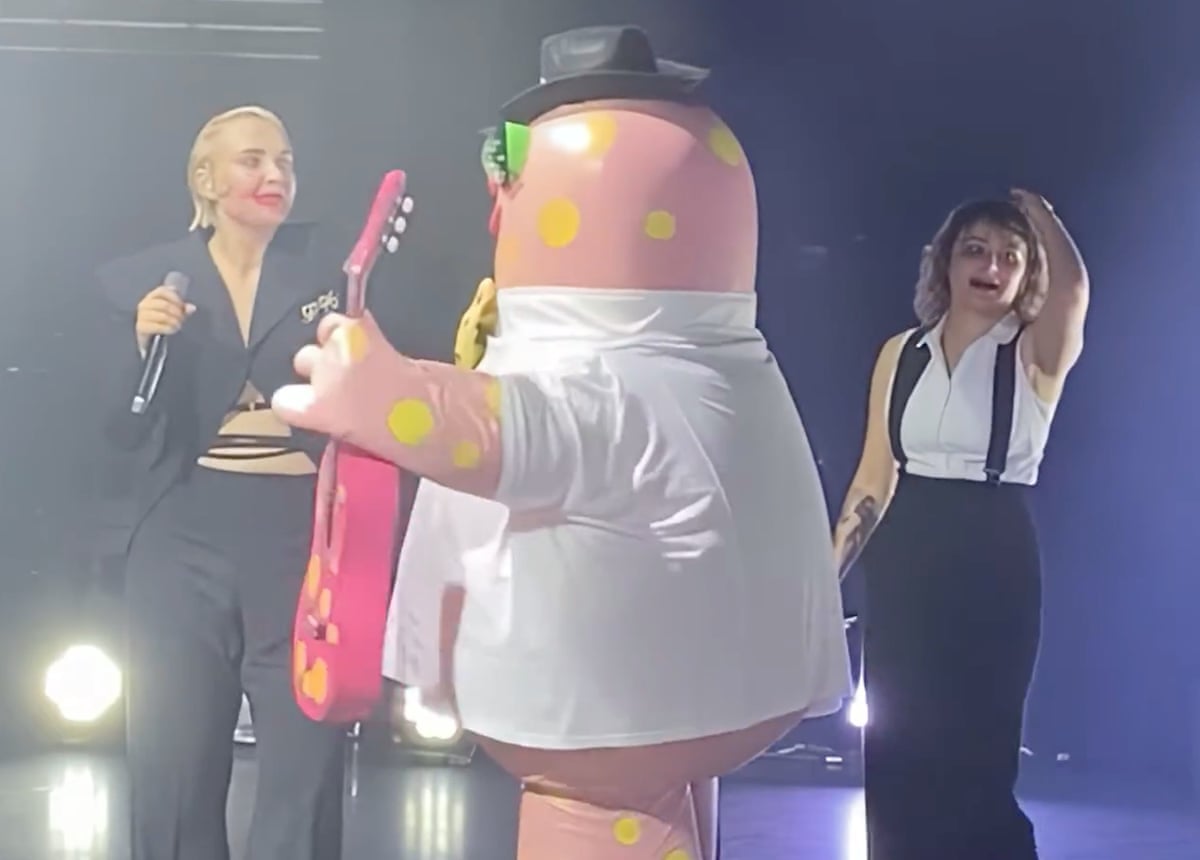
Singer and actor Self Esteem, also known as Rebecca Lucy Taylor, is an outspoken admirer who invited Mr Blobby to join her on stage at her Hammersmith Apollo concert. After performing a surreal duet of her song The Best, she described the experience as
“the highlight of my career.”
Mr Blobby was also recently featured on the cover of GQ magazine, included among “modern British icons” alongside Emma Thompson, Ian Wright, and Brian Cox. His contribution to the interview consisted solely of saying “Blobby,” as expected.
A Sign of the Times?
For cultural historian Dr Matthew Sweet, Mr Blobby’s revival reflects the current cultural climate.
“Mr Blobby is a creation of breathtaking stupidity,”he says.
“His stupid name, his stupid appearance, his stupid voice and its ceaseless repetition of his own stupid name are unimaginative to the point of atavism. Somehow, his dumb relentlessness has allowed him to push through into some other territory. Maybe his blundering, lobotomised qualities strike a chord in a world that’s commonly said to be getting more stupid.”

The Origins of Mr Blobby
The Pepto Bismol-colored clown was created by accident. He first appeared in 1992 as a one-off skit on Noel Edmonds’ Saturday night hit Noel’s House Party, where he pranked celebrities who believed they were appearing on a children’s TV program. The character was roughly sketched in mauve felt-tip by the show’s co-creator Michael Leggo. Standing 7 feet tall and pear-shaped, he resembled a cross between the Honey Monster and Mr Greedy. When the BBC costume department brought him to life, the bulbous pink figure featured a permanent grin, googly green eyes, and yellow spots. He communicated solely by saying “blobby” or “blob” in a Dalek-like distorted voice.
Unexpected Popularity
Mr Blobby was originally intended to exit at the end of the series. However, the BBC underestimated the British public’s affection for him. Noel’s House Party received three bulging postbags of mail per week, and soon most of the letters were about Mr Blobby rather than Noel Edmonds. The fan favorite not only remained but was promoted to Edmonds’ full-time sidekick. His popularity soared further when he began firing cream cakes into the studio audience with a catapult.
Blobbymania and Cultural Domination
In the fictional village of Crinkley Bottom, Blobbymania was born. Like a tidy-bearded Dr Frankenstein, Edmonds had created a monster. Mr Blobby dominated pop culture with dolls, cuddly toys, pasta shapes, bubble bath, lampshades, duvet covers, crisps, and fizzy drinks—naturally, pink lemonade. The character’s success extended to a computer game, three Blobbyland theme parks, and even a Christmas No. 1 single, which knocked Take That’s “Babe” off the top spot. Two decades later, Gary Barlow reunited with his old chart rival on Alan Carr: Chatty Man, where Barlow pushed Mr Blobby over and pulled his leg off.
Fading and Sporadic Appearances
When Noel’s House Party was cancelled in 1999, Mr Blobby faded from the spotlight. Throughout the 2000s, he made sporadic appearances on various TV shows, bringing his trademark mayhem. The polka-dotted figure would waddle on set, wave, and say “blobby” repeatedly. In his clumsy enthusiasm, he would fall over, drop props, break furniture, and embrace or wrestle unsuspecting celebrities. He appeared in Peter Kay’s “(Is This the Way to) Amarillo” video, gunged Simon Cowell on Britain’s Got Talent, rolled around with Loose Women’s Carol McGiffin—losing one eye in the process—and guested on The Big Fat Quiz of the 90s, where Jack Whitehall compared him to a “fat, jaundiced baby” in a panic.
Divisive Figure
If you find Mr Blobby’s return exasperating, you are not alone. He has always been a polarizing figure, provoking as much annoyance as amusement. The New York Times once wrote:
“Some commentators have called him a metaphor for a nation gone soft in the head. Others have seen him as proof of Britain’s deep-seated attraction to trash.”Michael Parkinson found him “far from amusing,” while Bob Mortimer described him as a “pink, spotty, rubber twat.” This newspaper once dubbed him a “.”
The Comedy Behind the Confusion
Joel Morris offers insight into what makes Mr Blobby funny.
“What’s funny about Blobby is that he was meant to be confusing,”he explains.
“The original joke was that he came from some nonexistent kids’ show. But because he was entirely invented, there’s nowhere he doesn’t fit. He’s always in the wrong place, which makes for powerful comedy. He’s a court jester but also looks like a pig’s bladder on a stick. The ultimate combo.”
A Quintessentially British Phenomenon
As Dan Levy’s bewildered reaction demonstrated, Mr Blobby is a distinctly British cultural phenomenon. Morris elaborates:
“To speak as a technician, the comedy toolbox requires figures like Blobby – or Sooty or Zippy – as cultural touchstones, so they can be put in the wrong context for humorous effect. It makes me sad that future generations might have to rely on multinational brands such as Pokémon or Grogu as punchlines when Mr Blobby is right there, ready to be used. You can drop him anywhere, like a comedy bomb. If there was a British Avengers Assemble, he’d be the Hulk.”
Unease and Nostalgia
Like Dan Levy or Jack Whitehall, some remain more unsettled than amused by Mr Blobby. Dr Sweet reflects:
“Many things from our childhoods seem, in retrospect, weird and haunted. Most are charming, amusing, dramatic or cleverly made. Mr Blobby is none of those things. Imagine waking up in the night and finding him at the end of your bed. How terrifying would that be?”
Looking Ahead: The Blobaissance
With renewed interest and rumours of further Mr Blobby antics, it is likely that more pink-and-yellow chaos will be forthcoming. After all, 2026 has been dubbed the year of the Blobaissance. Resistance appears futile. As the character himself might say: blobby, blobby, blobby.