

Creme Eggs and Easter Classics
Creme eggs have been a staple of British Easter celebrations for over 50 years, eliciting varied reactions depending on individual tastes.
"I scran them up so fast,"
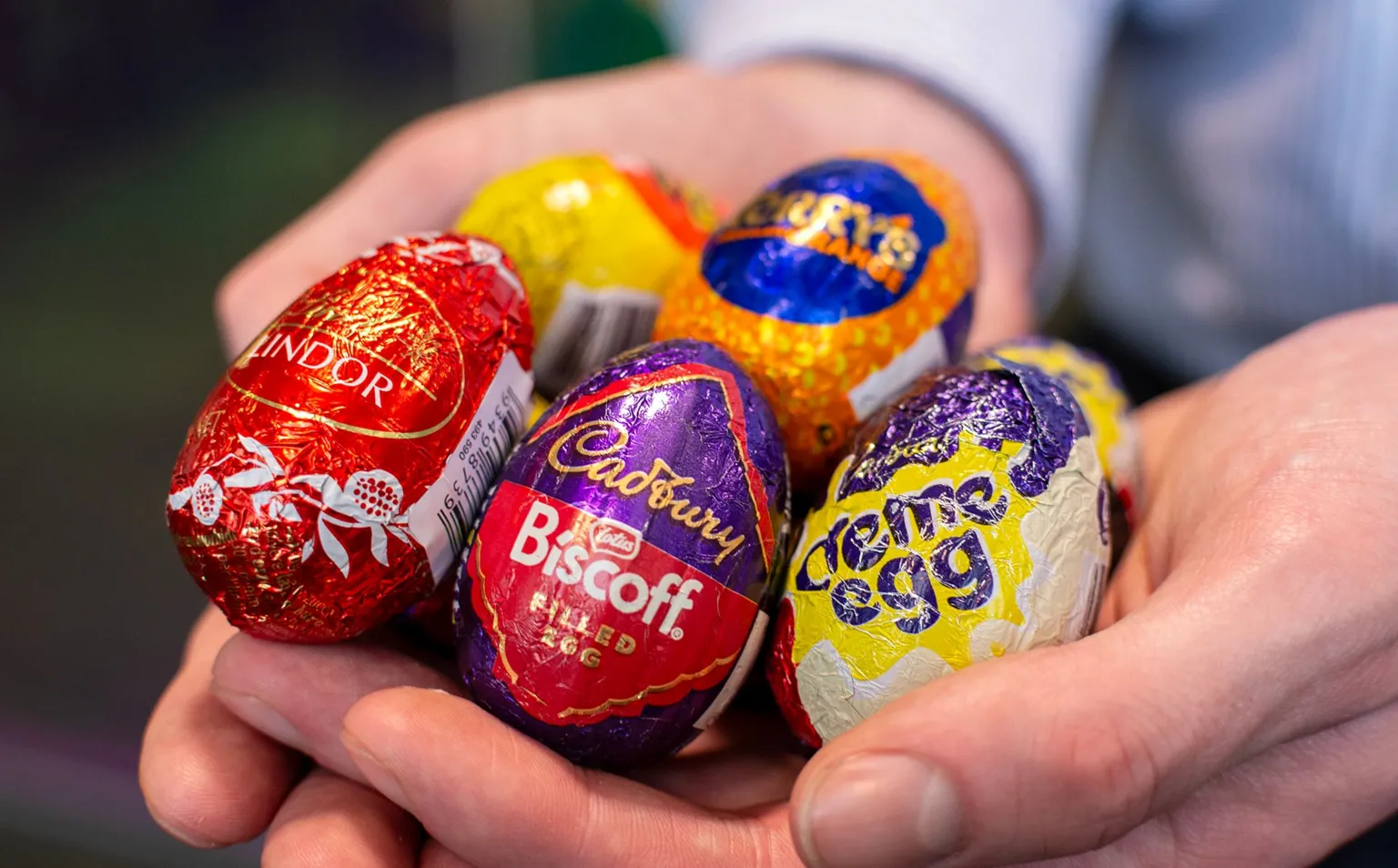
states Ethan, a 23-year-old from Manchester, en route to a gym session. An avid fan of Easter treats, Ethan has sampled various Cadbury creme egg varieties, including the newly introduced Biscoff-filled version released this year.
"I'm not a fan,"
Ethan remarks with a grimace.
"It's too gritty, that texture ain't for me."
The caramelised biscuit Biscoff creme egg has recently appeared alongside other varieties such as white chocolate, Terry's chocolate orange, Lindt, and Reese's peanut butter in supermarkets.
The filled egg represents just one example of the expanding range of Easter staples now available in diverse flavours.
However, questions arise as to whether consumers truly desire these inventive takes on traditional Easter treats or if a simpler, back-to-basics approach is preferable, especially amid rising living costs.
These products are widely available across major supermarkets. conducted visits to three leading stores this week to gauge public opinion, which revealed mixed responses.
Hot Cross Buns: Tradition Meets Innovation
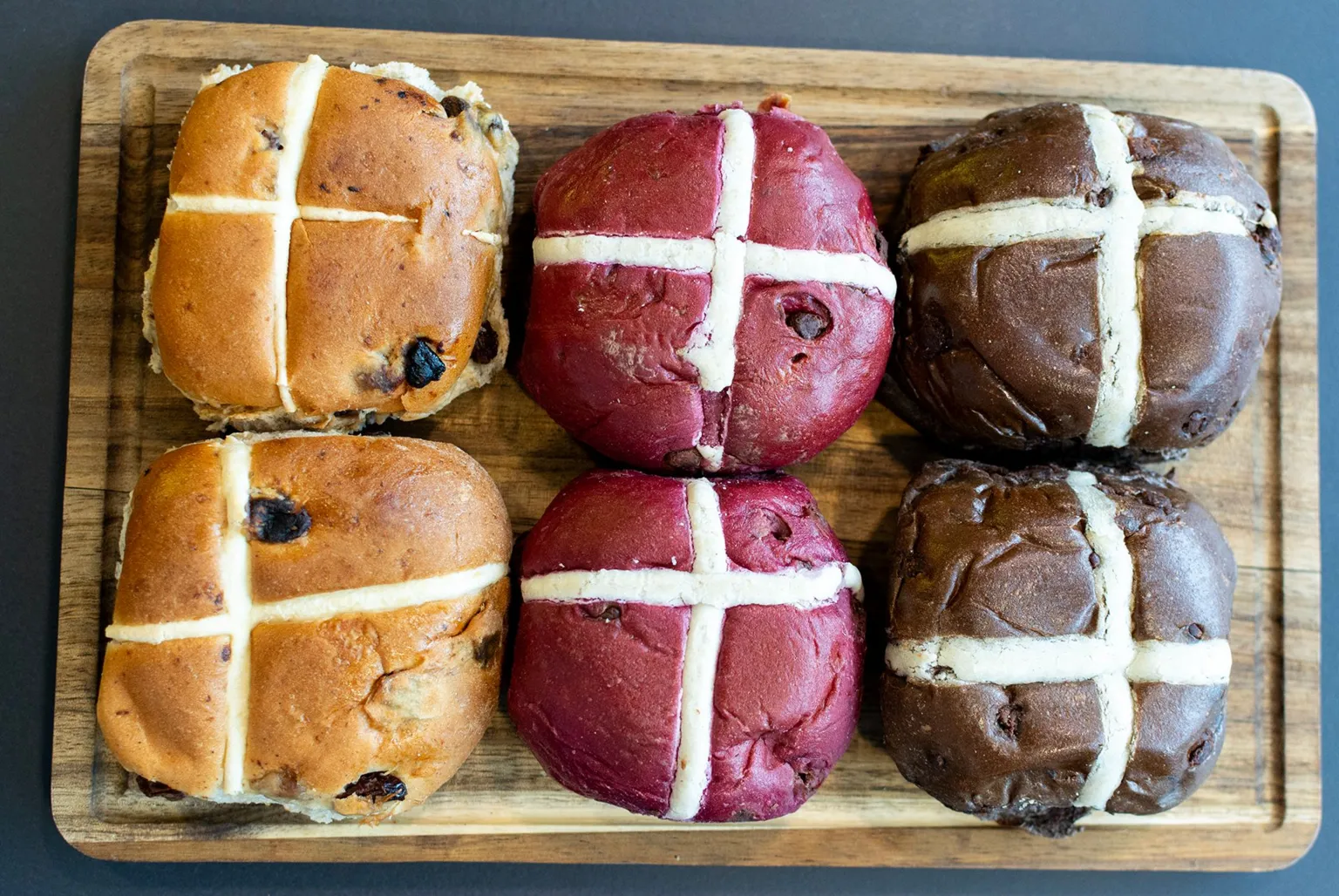
The origins of hot cross buns are ancient and debated among historians. Today, the traditional currant-filled spiced buns, typically consumed on Good Friday, have become a subject of debate due to the introduction of new flavours.
Marks & Spencer offers varieties including red velvet, lemon curd, tiramisu, caramel fudge, chocolate, cheese, and apple versions.
Sainsbury's presents a similarly broad selection featuring orange marmalade, salted caramel, carrot, cherry, rhubarb, ginger, and cinnamon.
Outside a supermarket, Ethan shares that he has heard positive reviews of lemon curd hot cross buns.
"I'd be up for trying all of them,"
he adds, visibly disappointed that no samples were available.
Nearby, Jann, an 80-year-old resident near Oldham, expresses a contrasting view.
"I'm not into all that,"
she says.
"Just give me a hot cross bun, plenty of fruit… toasted and buttered."

Expanding Flavours in Easter Treats
Mini eggs have also diversified in recent years. In 2024, Cadbury introduced orange mini eggs, competing with Terry's chocolate orange versions first launched in 2020, alongside existing milk and white chocolate varieties.
Similarly, large Easter eggs have seen innovation. A Manchester city centre supermarket displayed two types of "layered" Easter eggs—one combining chocolate with a caramelised biscuit spread, and another featuring caramel without biscuit.
A "chocolate doughnut Easter egg" attracted attention, featuring a shell blended with shortbread and fudge pieces, topped with sprinkles.
John, 78, whom met nearby, is open to trying new foods but maintains an affinity for traditional options.

"You're kind of torn between holding on to the original and trying the new,"
he reflects.
"But I quite like the hot cross bun with a bit of apple."
John's preferred Easter treat is the Simnel cake, a traditional fruitcake often layered with marzipan or almond paste and associated with Lent.
"You don't find it very much [now],"
he laments.
"It's a wonderful thing, very special for Easter."
Consumer Trends and Market Insights
The proliferation of inventive Easter products is driven by consumer interest. Research firm Mintel reported that 75% of 2,000 surveyed individuals in December had purchased food or drink for Easter in the previous year, with chocolate being the most popular item (48%), followed by cakes, sweet bakes, or desserts (23%).
Additionally, Mintel's October 2025 research indicates that seven in ten people generally enjoy food and drink offering new experiences such as novel flavours.
However, global cocoa price increases have resulted in chocolate costing 15% more than a year ago. Easter 2026 arrives amid financial pressures on many UK households.
While chocolate manufacturers have faced criticism for shrinkflation, Cadbury archivist Sarah Foden asserts that creme eggs remain
"exactly the same size"as in 1971, showing moulds from the company's Birmingham factory dating back to that year.
Cadbury estimates the UK Easter chocolate market at approximately £700 million. Dave Clements, the company's vice president of marketing, states that Biscoff-filled creme eggs are
"doing incredibly well", attributing this to consumers'
"new desires about textures, tastes, flavours and bringing something a little bit different to more traditional eggs."
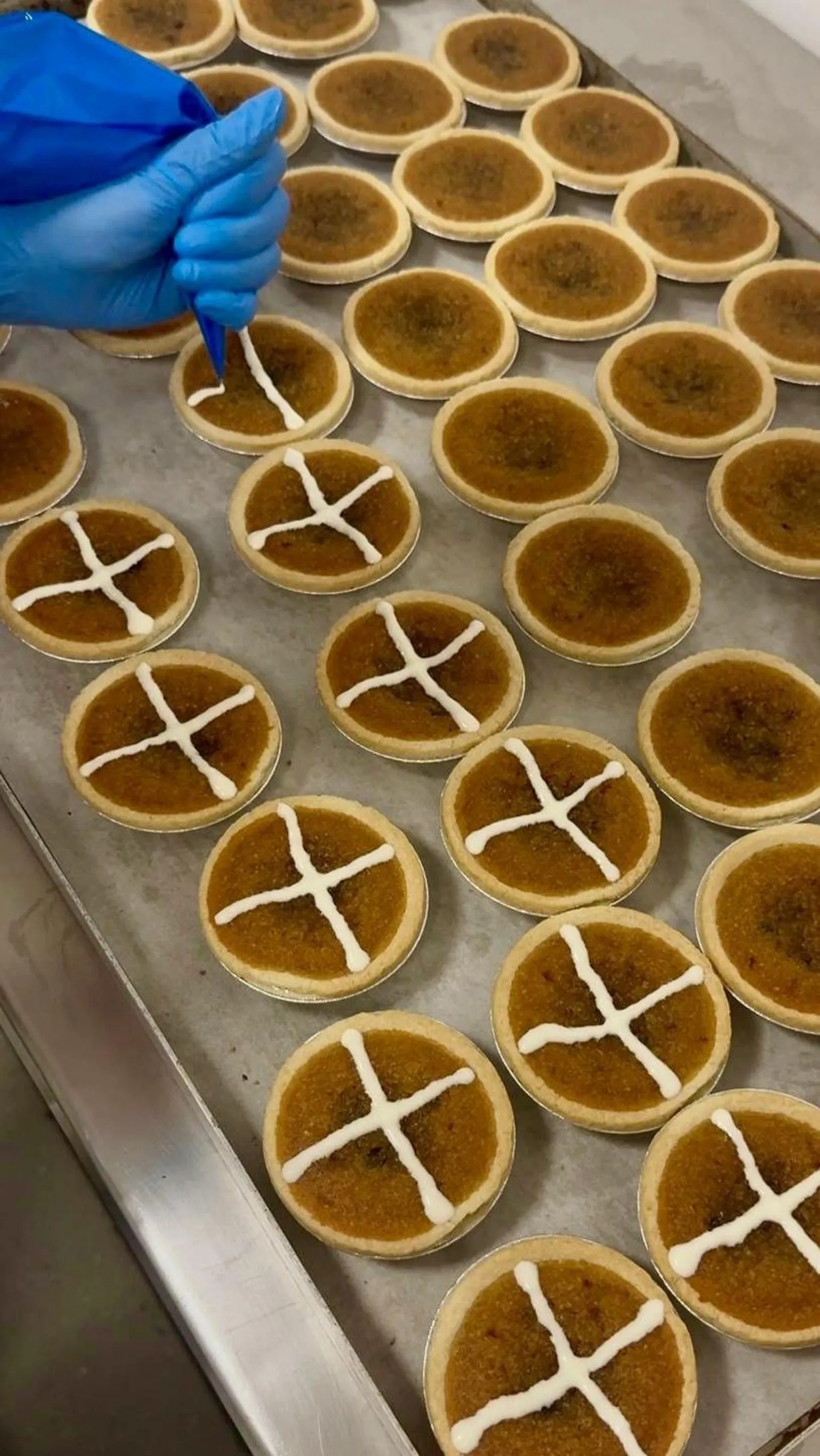
Other companies optimism regarding creative Easter treats. Yorkshire-based bakery Lottie Shaw's, operational since 1912, reports an 800% sales increase in its "hot cross tarts," which combine spiced fruits with treacle in shortcrust pastry, since their launch last year.
Innovation in Hot Cross Buns
Neil Rocklif, head of innovation at Finsbury Food Group, which produces approximately 100 million hot cross buns annually for several major supermarkets, notes that experimentation with varieties began in the early 2010s and accelerated following lockdown.
His team draws inspiration from cakes and desserts, recently developing a hot cross bun inspired by carrot cake.
"We used roasted carrot shreds in that one [with] pockets of white chocolate in the bun to replicate the frosting that you'd normally get on your carrot cake,"
he explains.
"And then to give it some crunch, we used pumpkin seeds in there as well."
Of the millions of hot cross buns produced yearly, two-thirds remain fruit-based. Regarding new flavours, Neil remarks,
"it's your imagination, that's the only limitation."
"I've eaten all of the different flavours at this point,"
he adds with a grin.
"All in the name of research, of course."
Consumer Perspectives Amid Rising Costs
Outside another Manchester supermarket, 24-year-old Alina shares that rising chocolate prices have reduced her purchases, leading her to bake more at home.
"I work in retail,"
Alina says,
"you barely scrape by."
She enjoys mini eggs and misses indulging in them but can forgo creme eggs.
"They are too sweet for me,"
she notes,
"and I have a sweet tooth."


