Irish Roots of U.S. Presidents
President John F. Kennedy, proud of his Irish heritage, received an enthusiastic welcome during his four-day visit to Ireland in 1963.
As the United States marks 250 years of independence, there is renewed interest in the influence of Ireland on the history of the nation.
Of the 45 individuals who have served as U.S. president since the country's founding, approximately half have at least one ancestral line tracing back to Ireland.
John F. Kennedy, the first Catholic president and the most notably Irish-American leader, had Irish ancestry in every branch of his family tree.
Less widely recognized is the significant number of presidents whose Protestant forebears originated from the north-east of Ireland, a heritage referred to locally as Ulster-Scots and in the U.S. as Scots-Irish.
Andrew Jackson and Ulster-Scots Heritage
The earliest among these was President Andrew Jackson, whose Presbyterian parents emigrated from Carrickfergus, County Antrim, two years prior to his birth.
Jackson was the first U.S. president born into poverty and was largely self-made.
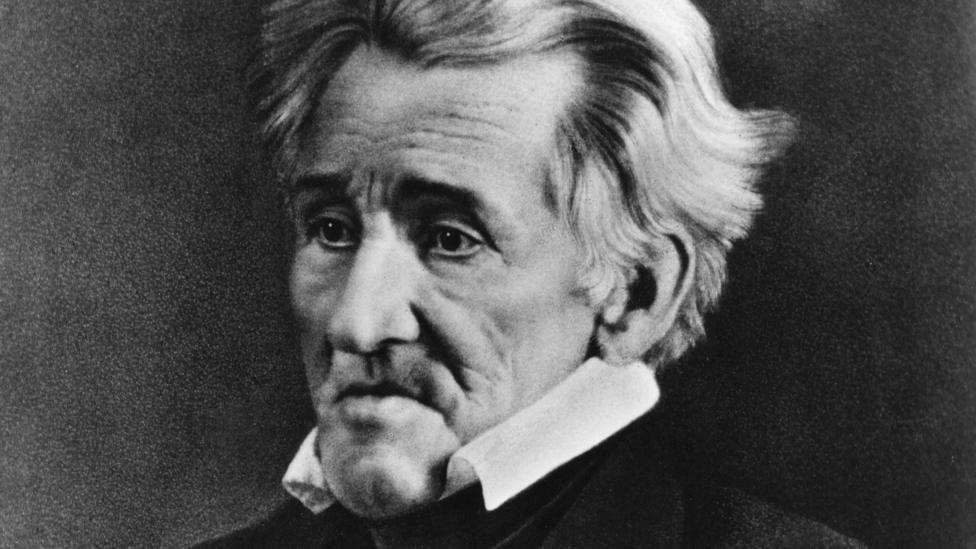
He pursued a career as a lawyer and military general before entering politics and contributing to the founding of the Democratic Party.
Jackson was a popular president who cultivated a "man of the people" image by opposing political elitism and advocating for the common citizen.
However, his legacy is complex due to his volatile temper, defiance of Congress, slave ownership, and policies toward Native Americans.
Recently, his legacy has been subject to renewed discussion.
President Donald Trump expressed admiration for Jackson and stirred controversy by prominently displaying Jackson's portrait in the Oval Office at the start of his second term.
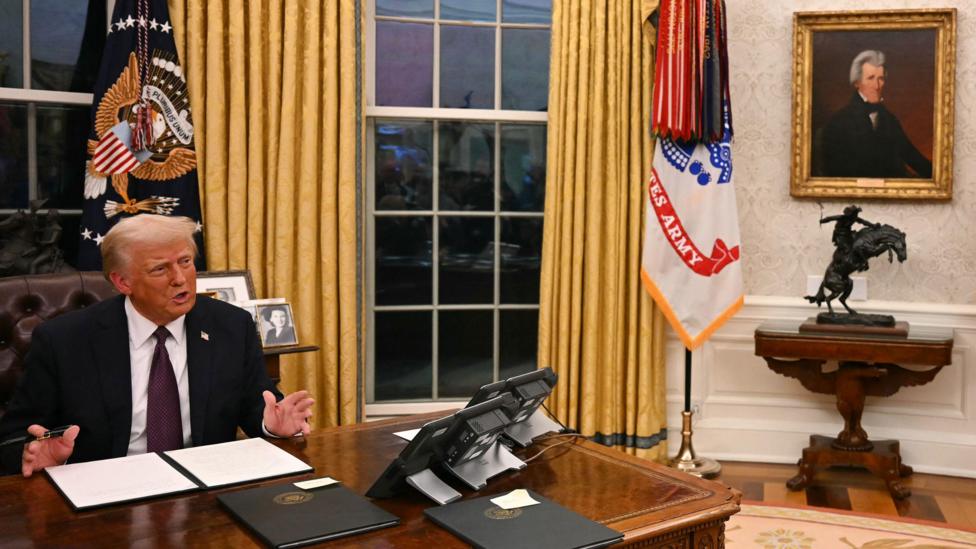
Jackson was among 16 former U.S. presidents with ancestral ties to what is now Northern Ireland, according to the Irish Family History Centre.
Others on this list include Teddy Roosevelt, Harry Truman, and wartime leader Woodrow Wilson.
Jimmy Carter's ancestors also hailed from County Antrim, as noted by Fiona Fitzsimons, director of the Irish Family History Centre.
Genealogical Research on Presidential Ancestry
Fitzsimons has traced the lineage of several U.S. presidents and presented a personal family history to Joe Biden in 2016.
Her research includes clarifying the family backgrounds of Richard Nixon and Gerald Ford, who succeeded Nixon following the Watergate scandal.
Unusually, both Nixon and Ford descended from Irish Quaker families, a departure from the more typical Ulster Presbyterian ancestry common among presidents.
"The Quakers - their records are absolutely meticulous,"Fitzsimons stated, explaining that it was possible to trace relatives back to the 1600s.
Nixon's maternal lineage originates from County Kildare, while Ford had Ulster roots; his fifth great-grandfather, John Blackburn III, came from Loughgall, County Armagh.
Additionally, Ford had relatives from the nearby townland of Creenagh and the County Down village of Donaghcloney.
The Bush family, which produced two U.S. presidents, has Irish ancestry traced to Rathfriland, County Down.
President George H.W. Bush's fourth great-grandfather, William Holliday, emigrated from Rathfriland to Kentucky over 200 years ago, according to Fitzsimons.
Among all Irish-American presidents, Fitzsimons considers Kennedy the most connected to his ancestral roots.

The Dunganstown Tea Party
During a four-day tour of Ireland in June 1963, President Kennedy met members of his extended family.
"Even before JFK was elected he was in contact with the relatives back in Wexford, he'd already visited them,"the genealogist noted.
"He obviously had a genuine interest because even as a young man in his 20s he was using his Irish holiday to reconnect with his Irish relatives."
She explained that at the time of his sister's wedding, Kennedy stayed at an Irish castle before traveling to Dunganstown to meet distant cousins.
"The families knew each other...he knew the exact townland address, where to actually rock up."
Later, as president, Kennedy returned to Dunganstown where he shared tea and cake with his Irish cousins in front of the global media.
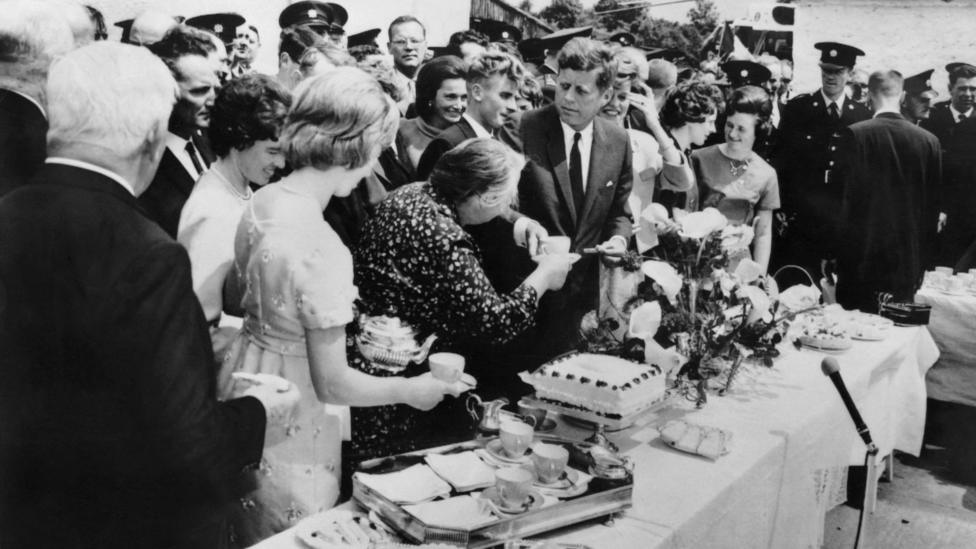
His four-day Irish visit set a precedent for subsequent Irish-American presidential visits.
In 1984, Ronald Reagan followed with a visit to his ancestral home in Ballyporeen, County Tipperary, where a pub lounge was named in his honor.
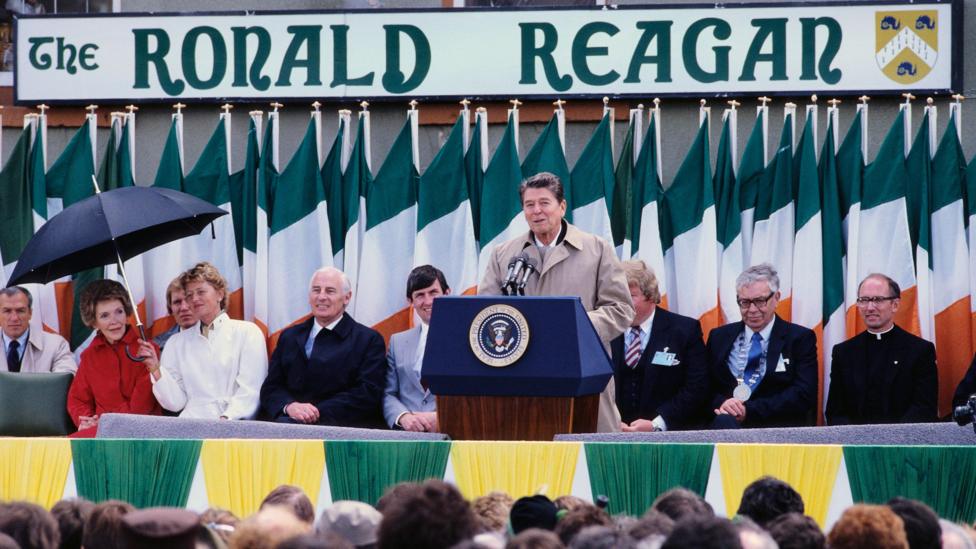
Barack Obama and Joe Biden, both descendants of Irish shoemakers, also toured their ancestral regions during their presidencies.
Changing Dynamics of Irish-American Influence
However, such presidential "homecomings" appear increasingly outdated, according to Professor Liam Kennedy of the Clinton Institute for American Studies.
He described Biden as the "last of a tribe" at a time when the U.S.-Ireland relationship has become politically more tenuous.
Professor Kennedy argues that the "fracturing" of Irish-America—the decline of its social networks and once-strong organizations—is reflected in its diminishing influence in the White House.
"We simply do not have the same numbers of Irish Americans moving into senior and important political office that we once did."
The most recent U.S. census recorded 38.6 million people claiming Irish roots, but Kennedy noted that this identity is "complex and nuanced."
"Their Irishness matters to them, but it doesn't matter to them politically."
Irish America is 'Transforming'
Joe Biden has familial links to County Mayo and County Louth and was warmly received by crowds when he delivered a speech in Ballina in 2023.
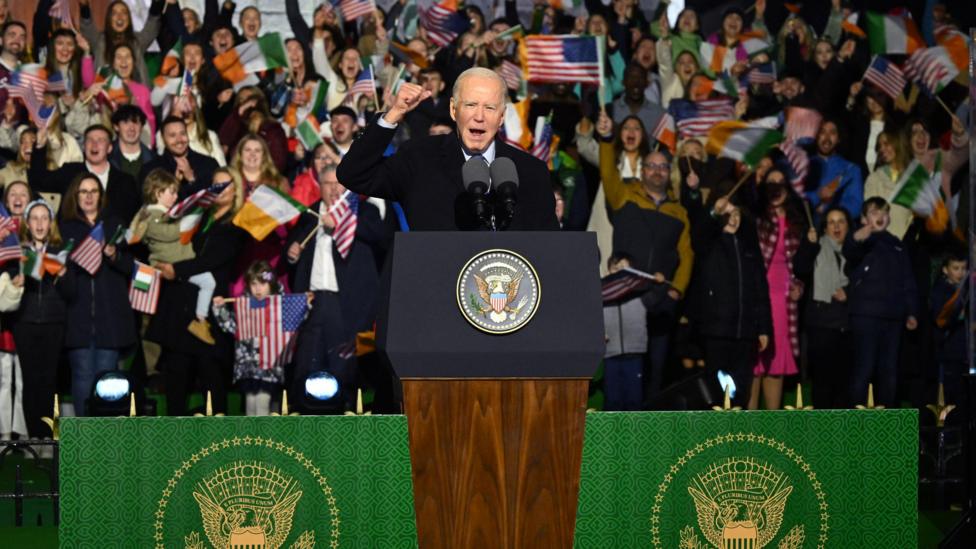
Professor Kennedy asserts that Irish heritage no longer plays a significant role in presidential elections due to the diverse and unpredictable views within the diaspora.
"There is no such thing as an Irish voting block in America, there hasn't been since, the 1950s, 1960s, because the Irish became too fully assimilated."
He noted that Biden is proud of his immigrant ancestry and would "play that Irish liberal card," but current attitudes toward U.S. immigration vary widely.
"Some Americans, when I interview them, they will very readily say: 'We were immigrants once, we weren't treated well in this country - that makes me very empathetic toward the current immigrants,'"he explained.
"You'll talk to other Irish Americans and they will say: 'Our ancestors, they came here, they were immigrants but they came the right way, not like these folks today'."
The professor believes there is a growing conservative minority within the Irish-American community that is "more visible and more vocal."
"I don't think Irish America is disappearing - it is transforming,"he concluded.