The Answers to Today’s Problems
Earlier today, I presented four puzzles from the Hyde Park Math Zine, a mathematics fanzine based in Austin, Texas. Below are the puzzles once again, accompanied by their solutions.
Perimeter Puzzle
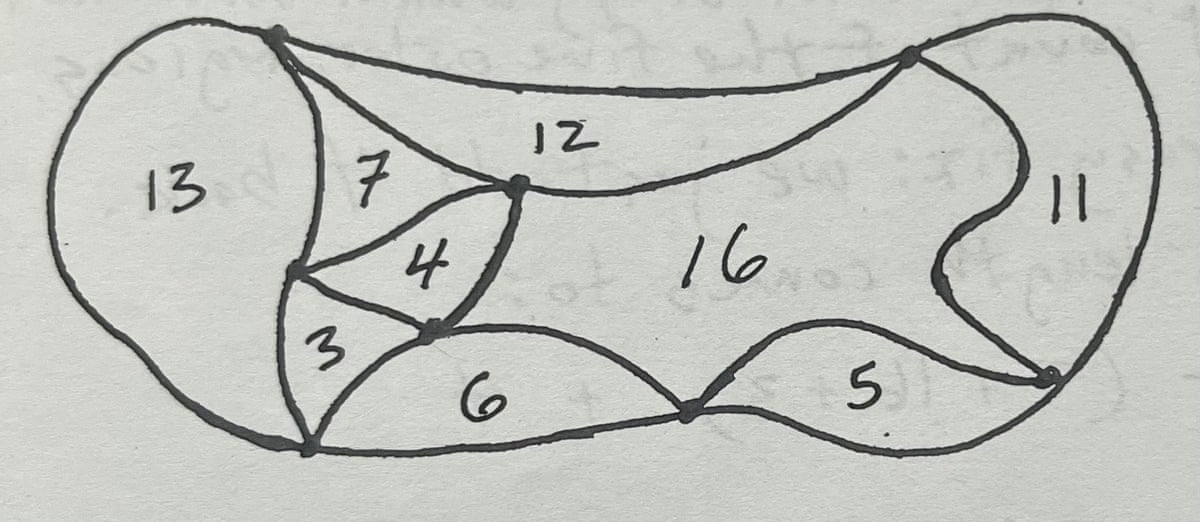
Each region in the figure has a perimeter equal to the number enclosed within it. The question is: what is the length along the edge of the entire figure?
The total perimeter length is calculated by taking the sum of the perimeters of the outer areas (12, 11, 5, 6, and 13), subtracting the perimeters of the adjacent inner areas (7, 3, and 16), and then adding the perimeter of the final area (4).
Alternatively, consider the problem from the inside out. The perimeter of the internal section containing the numbers 3, 4, 7, and 16 is 3 + 7 + 16 – 4 = 22. It is necessary to subtract 4 to avoid counting lines that are not part of the perimeter of that section.
Let P represent the sum of the perimeters of the outer areas, which totals 47. Then, the perimeter of the entire figure is P minus the perimeter of the inner section, so P = 47 – 22.
Digit Placement Puzzle
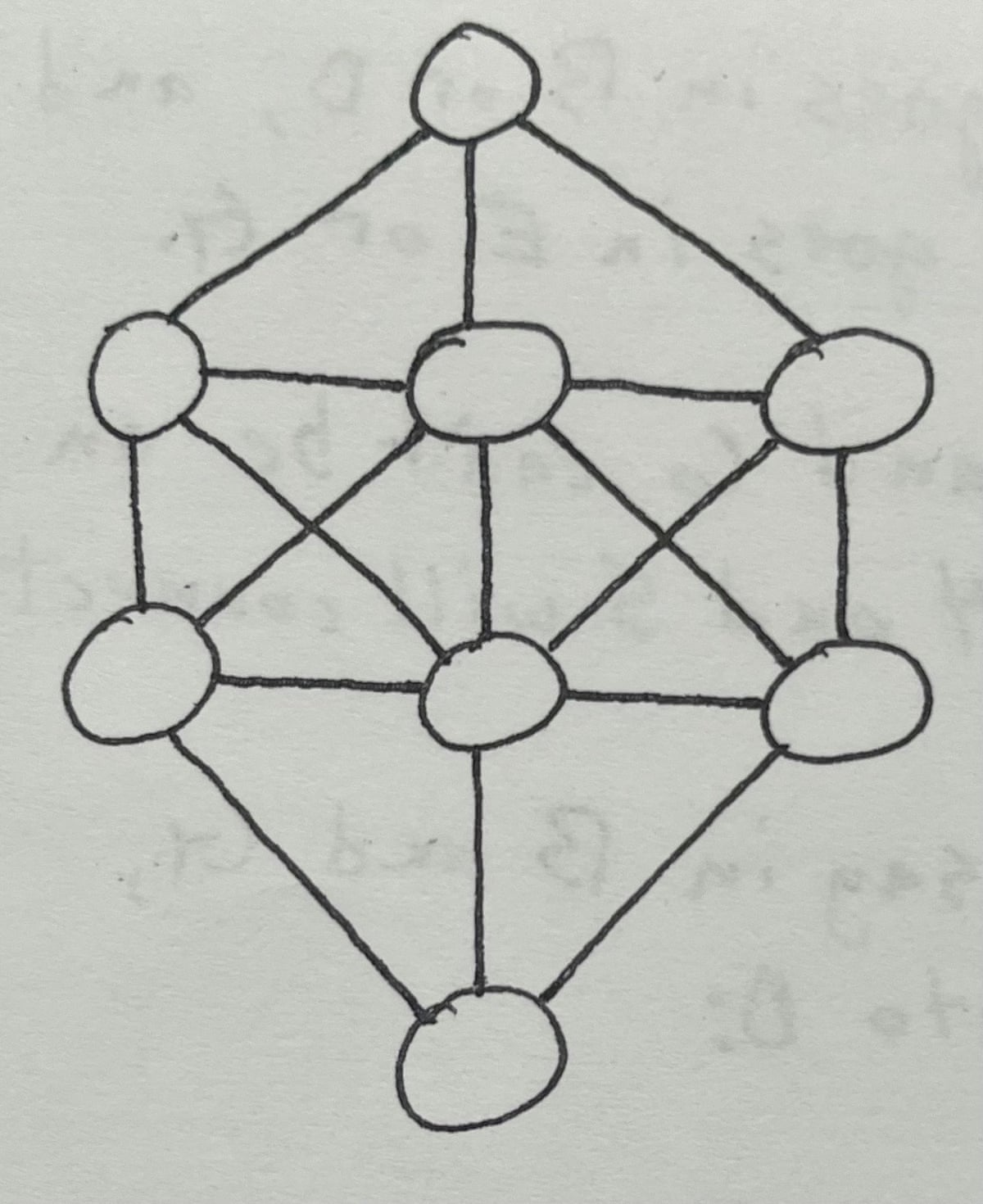
The next puzzle requires placing the digits 1 through 8 in circles such that no digit is adjacent to a digit differing by 1. For example, 3 cannot be adjacent to 2 or 4.
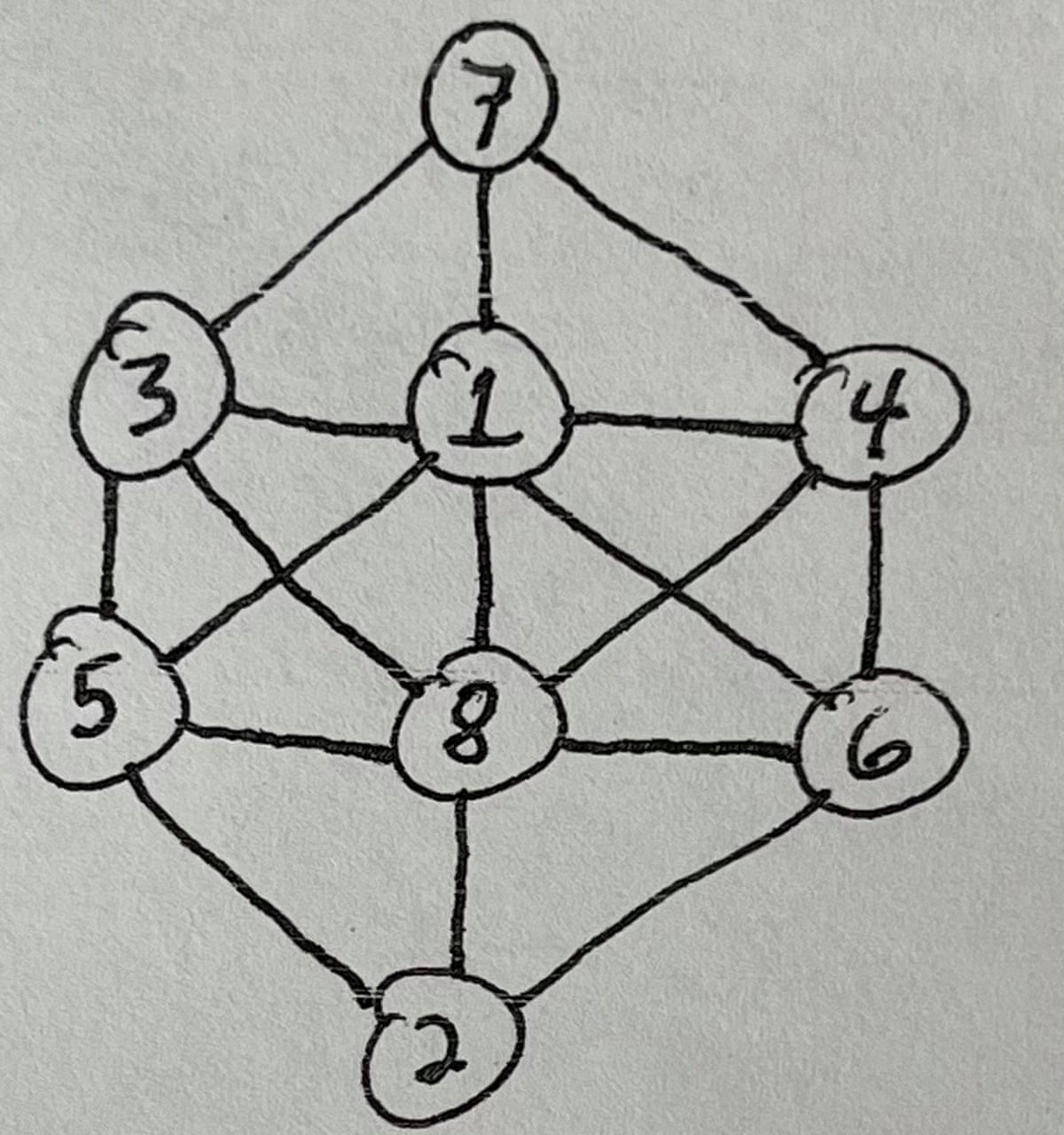
This puzzle is solved through a method of “enlightened” trial and error. The key observation is that the central circles connect to all others except one, so these must be the digits 1 and 8. If one of these central circles were, for instance, 2, it would not be allowed to connect to 1 or 3, but there is only one circle not connected to 2, leading to a contradiction.
Once this is established, the remaining digits fall into place quickly. All valid solutions are symmetrically equivalent to the one shown in the accompanying image.
Sum Puzzle
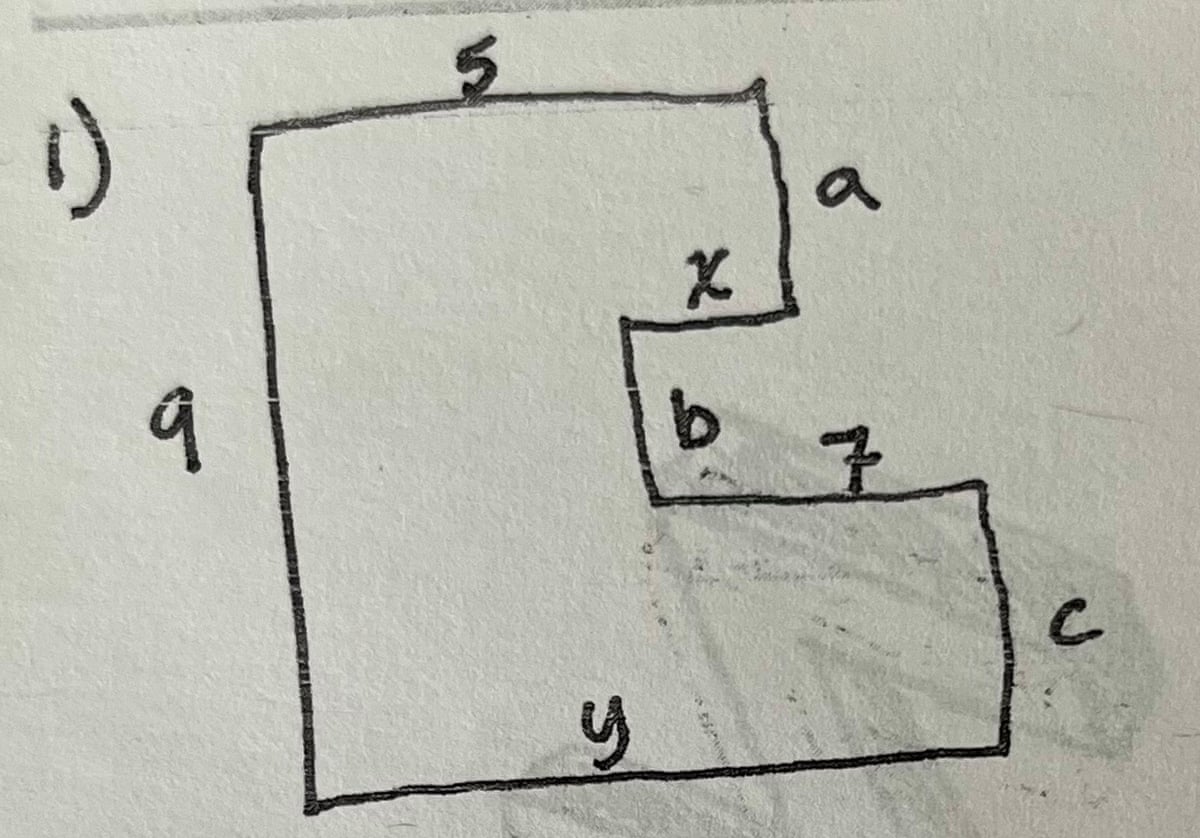
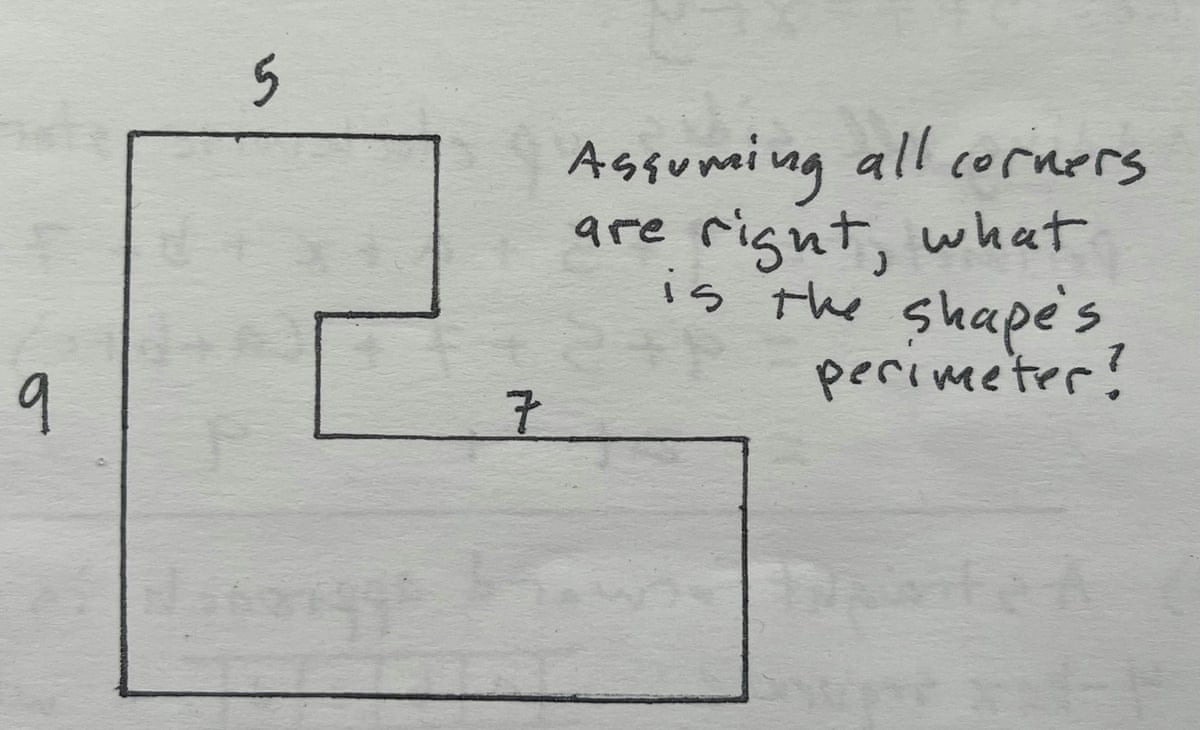
Consider the vertical sum: a + b + c = 9.

For the horizontal sum: 5 – x + 7 = y.
The total perimeter is therefore calculated as 9 + 5 + 7 + a + b + c + x + y = 42.
Tennis Probability Puzzle
Steffi and Boris are playing tennis, and the current game score is deuce. Steffi has a 0.6 probability of winning any given point, while Boris has a 0.4 probability. What is the overall probability that Steffi will win the game?
From deuce, three outcomes are possible: Steffi wins two consecutive points and wins the game; Boris wins two consecutive points and wins the game; or they split the next two points, returning the score to deuce.
The crucial insight is that the probability of winning from the second deuce is the same as from the first, which eliminates the need to consider infinite series. This explanation assumes some basic familiarity with probability concepts.
Let P denote the probability that Steffi wins from deuce. Then:
P = (probability Steffi wins next two points) + [(probability of split points) × P] = (3/5)² + [(3/5 × 2/5) + (2/5 × 3/5)] × P
Closing Remarks
I hope you enjoyed today’s puzzles. I will return with more in two weeks.
Thanks to Kevin Gately and his excellent Hyde Park Math Zine for these challenges.
I have been presenting a puzzle here on alternate Mondays since 2015 and am always seeking great puzzles. If you have one to suggest, please email me.