

Concerns Raised Over Wales' Glass Deposit Return Scheme
The owner of a historic wine merchant has expressed concerns that a new recycling initiative could cause significant challenges for Wales' retail sector.
James Tanner, proprietor of the family-run business Tanners, warned that the introduction of the deposit return scheme (DRS) from October 2027 might prompt alcohol retailers to exit the market and increase costs for consumers. He also indicated reluctance to expand his operations within Wales under the new system.
"I would be reluctant to expand my own company in Wales," Tanner stated.

In contrast, Owen Derbyshire, chief executive of the environmental charity Keep Wales Tidy, described the scheme as "transformational" in its potential to reduce litter and alter consumer habits.
The Welsh government emphasized that the scheme would build on Wales' "already world-leading recycling levels" and assured that it would be "carefully phased in" with exemptions designed to "prevent added costs for small businesses."
James Tanner operates Tanners with facilities in Welshpool, Powys, and Llandudno, Conwy county, employing approximately 60 people in Wales.
He characterized the impact of the DRS as "complicated," referencing difficulties encountered by the Scottish government in recent years.
In June 2023, Scottish ministers abandoned proposals for a Scotland-specific bottle return scheme following a dispute with the UK government.
Tanner's primary concern centers on the requirement for dedicated barcodes on each bottle to enable reverse vending machines and counting facilities to identify returned items. This would necessitate maintaining two separate stocks of wine for deliveries to Wales and England.
"It would add cost, and it's particularly difficult when you're delivering up and down the Welsh borders," Tanner explained.
He also noted that some suppliers might refuse to comply, and certain producers from "fine wine areas" of France may decline to place barcodes on their products.
How Will Wales' Deposit Return Scheme Work?
Starting in 2027, residents of Wales will be able to receive cash or vouchers for returning empty drink bottles and cans for reuse and recycling.
Consumers can return empty containers to designated return points located in local shops, supermarkets, and other venues.
Under UK-wide plans, England, Scotland, and Northern Ireland will implement a DRS covering plastic bottles and metal cans from October 2027.
The initiative aims to establish a coordinated approach to reduce litter, increase recycling rates, and promote a circular economy.
Wales' decision to include glass in the scheme has generated controversy.
Hospitality, retail, and beverage industry leaders have expressed concerns about potential cross-border fraud and increased drink prices for consumers.
The previous Labour Welsh government described the laying of regulations for Wales' DRS in March as a significant step toward ending a throwaway culture.
Tanner expressed support for the scheme if it effectively removes "cans and plastic bottles off the road."
"I'm all for the scheme if it means that it would keep cans and plastic bottles off the road," he said.
However, he acknowledged the risk of fraud without a UK-wide barcode system for glass returns.
"It all relies on English consumers not being able to go to Wales and redeem the 20p deposit from a Welsh retailer," Tanner added.
Tanner also noted that customers who consume other alcoholic beverages would face additional costs. While his company is "very involved" in Wales, he suggested that other operators based in England might consider withdrawing from the Welsh market.
"There's a very fluid market in the UK for buying bottled beer and spirits," he said. "If you have to go to a wholesaler and say you want the Welsh stock, I'd imagine that it won't be available or will be more expensive. There would probably be a reduction of choice as well in terms of wine going into Wales."
Conversely, others have welcomed the scheme, highlighting its numerous benefits.
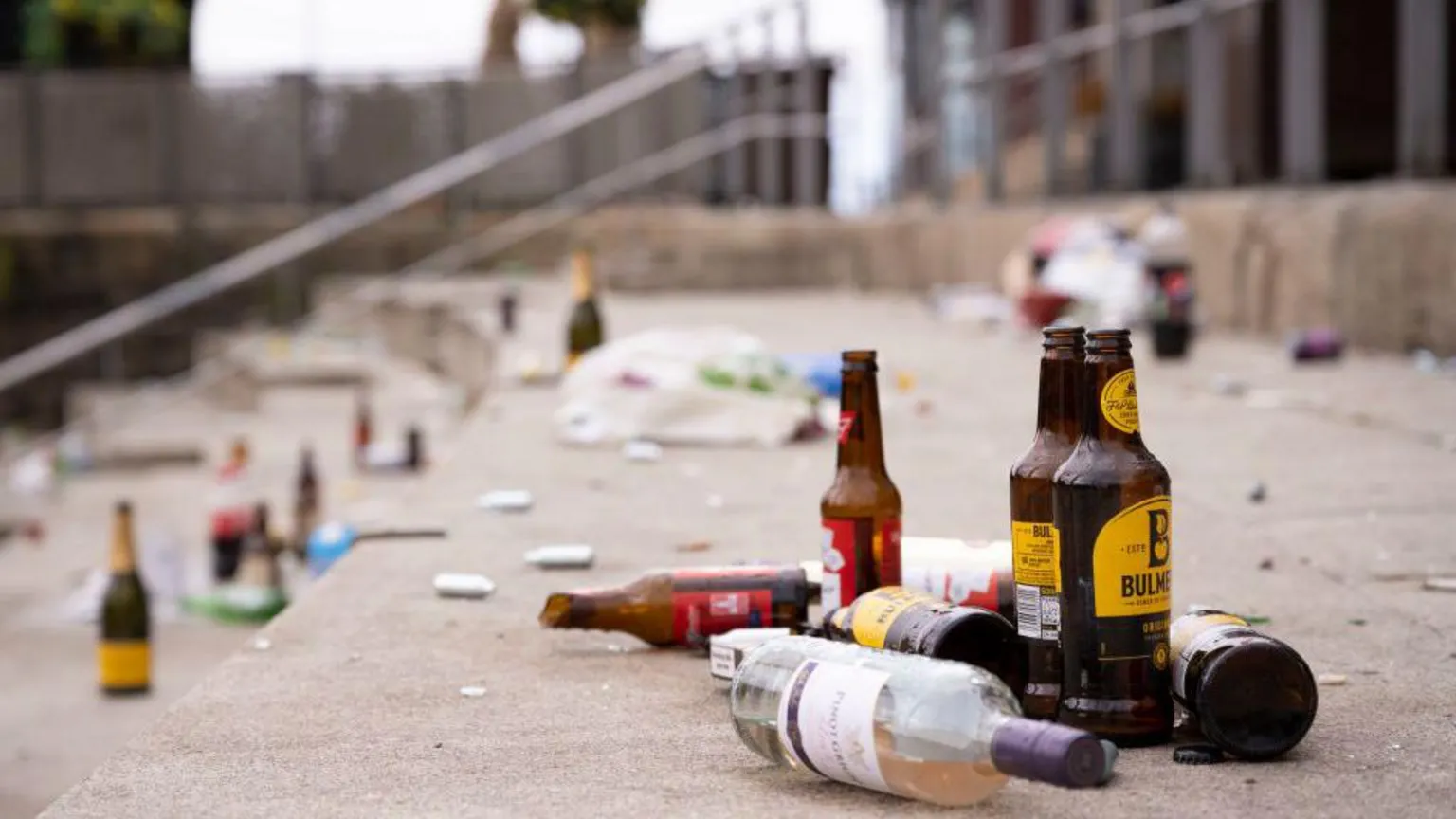
Owen Derbyshire of Keep Wales Tidy cited data indicating a "significant and quite dramatic uptick" in litter on Welsh streets.
This follows a recent survey revealing rubbish presence on 99% of main roads in Wales.
"If you look at how DRS operates internationally, within a year or two we see return rates going up and then the corresponding drop in litter rates is genuinely transformational," Derbyshire said.
"So, if we're thinking about this perpetual challenge of the cleanliness of Welsh streets just getting worse, this is a proper systemic intervention."
Derbyshire noted that recent statistics showed "one in seven streets" in Wales had glass litter, posing public health and cleanliness challenges.
"There are countless reports highlighting the damage littered glass could do to animals, as well as a reduction in violence relating to glass deposit schemes," he added.
An Investment in Cleaner Communities
Deposit return schemes are widely used internationally, including in Germany, several Scandinavian countries, and more recently, the Republic of Ireland.
Keep Wales Tidy reported that such schemes significantly reduce drinks-container litter, improve the quality of collected materials, and enable higher-value recycling or reuse.
Derbyshire emphasized the economic benefits of implementing a DRS for glass items.
"The quality of the glass is quite poor when it comes to remanufacturing bottles, and businesses desperately need that inflow of material," he said. "DRS has provided that. So it actually does in the long term drive down costs."
He acknowledged the concerns among small and medium enterprises, describing the scheme as a "big shift in the way that industries do things."
"But actually, there's investments in the circular economy in Wales and across the UK. It's an investment in cleaner communities," Derbyshire added.
Although the scheme launches next year, Derbyshire highlighted an "incredibly generous" four-year transition period for glass to assist producers and retailers in adapting to the new requirements.


