

Introduction: UK Inflation Stable Before Iran Conflict; Oil Prices Dip on Trump Peace Plan
Good morning, and welcome to our continuous coverage of business, financial markets, and the global economy.
UK inflation remained steady last month as anticipated, prior to the escalation of the Iran conflict which has increased global energy costs and threatens to cause a renewed rise in prices.
Official data revealed that the Consumer Prices Index (CPI) held steady at an annual rate of 3% in February, unchanged from January. This matched economists’ expectations.
The Office for National Statistics (ONS) reported that clothing contributed most to the monthly increase, while motor fuels provided the largest offsetting downward effect.
The Consumer Prices Index (CPI) rose by 3.0% in the year to February 2026, unchanged from the 12 months to January 2026 as various price movements balanced each other out.
The outlook for inflation has shifted significantly since the outbreak of the Middle East conflict, which has disrupted the key transit route of the Strait of Hormuz, effectively closing it.
This development has altered interest rate expectations, with markets now anticipating multiple rate hikes this year instead of cuts.
Charlie Ambler, co-chief investment officer at wealth management firm Saltus, said:
"While we expected February’s inflation data to remain stable around 3%, increasing oil prices are widely expected to push up the headline rate of inflation to near double the 2% target later this year, threatening the Bank’s slow and steady rate cutting cycle and frustrating markets. Should this materialise, markets are unlikely to respond well."
Although the Bank of England has indicated a cautious, data-dependent approach to monetary policy, maintaining rates at 3.75% last week, financial markets have reacted sharply to the evolving global situation. Investors now price in the possibility of several interest rate increases this year, with some forecasts suggesting up to four hikes before the end of 2026. The divergence between market expectations and the Bank’s guidance underscores the uncertainty surrounding inflation.
Oil prices fell this morning to around $100 a barrel after former US President Donald Trump submitted a 15-point peace plan to Tehran and expressed optimism about ending nearly a month of conflict.
Brent crude declined 4.1% to $100.2 a barrel, while New York light crude dropped 3.5% to $89.12 a barrel. Both benchmarks had risen nearly 5% on Tuesday.
However, Iran launched a new series of attacks on locations including Tel Aviv and Kiryat Shmona, as well as US bases in Kuwait, Jordan, and Bahrain, according to Iranian state media.
Asian stock markets rebounded strongly, with Japan’s Nikkei rising 2.87% and South Korea’s Kospi increasing 1.6%.
- 8:45am BST: European Central Bank President Christine Lagarde speaks
- 9:00am BST: Germany Ifo business climate report
- 9:30am BST: UK house prices and rents data
- 11:00am BST: US weekly mortgage applications
UK Rents Rise 3.5% While House Price Growth Slows
Rent increases in the UK have moderated recently, alongside a slowdown in house price growth, according to official statistics.
The Office for National Statistics reported that average private rents rose by 3.5% to £1,374 in the 12 months to February, unchanged from January.
Average rents increased to £1,430 (3.6%) in England, £828 (5.5%) in Wales, and £1,022 (2.4%) in Scotland over the 12 months to February. In Northern Ireland, average rents rose to £875 (5.2%) in the 12 months to December 2025.
Within England, private rent inflation was highest in the North East at 7.6% and lowest in London at 1.7% in the year to February.
The average home value increased by 1.3% to £268,000 in the 12 months to January, down from 1.9% in the year to December.
Average house prices rose to £290,000 (1.1%) in England, £210,000 (2.0%) in Wales, and £188,000 (1.3%) in Scotland.
Average UK house prices increased by 1.3% to £268,000 in the 12 months to January 2026, down from 1.9% in the 12 months to December 2025. Average UK private rents rose by 3.5% to £1,374 in the 12 months to February 2026, unchanged since January 2026.
UK Fixed Mortgage Rates Invert: Five-Year Rates Now Lower Than Two-Year
Following shifts in inflation and interest rate expectations since the Iran conflict began, fixed mortgage rates in the UK have risen. Markets now anticipate multiple Bank of England rate hikes rather than cuts.
The average two-year fixed mortgage rate increased from 4.83% at the start of March to 5.56% currently, the highest level since September 2024, according to Moneyfacts. Notably, mortgage rates have inverted, with the five-year fixed rate now priced lower than the two-year fix.
The average five-year fixed rate rose from 4.95% to 5.54%, the highest since January 2024.
Rachel Springall, finance expert at Moneyfacts, said:
"The turmoil in fixed mortgage rate pricing has worsened, as ongoing hikes have made the two- and five-year fixed rates invert, where five-year is slightly cheaper on average. Swap rates have been inverted for a few days now, so it was only a matter of time for the market to catch up. There is hope this will be a temporary blip until the markets settle down, but it depends how long volatility prolongs. This is unusual, however, its all down to how the markets foresee interest rate setting, many expect higher rates over the shorter-term."
This inversion follows fallout from the mini-budget, which took approximately three years to resolve previously. Traditionally, the two-year fixed deal would be cheaper than the five-year, but unrest in the Middle East has raised concerns about the trajectory of interest rates, with inflation expected to rise in coming months.
The uncertainty has prompted mortgage lenders to withdraw over 1,500 deals since early March, leaving fewer than 6,000 available. Springall added:
"If deals come back within the coming days, they will likely be at inflated rates to catch up with the current state of play. After all, a volatile mortgage market tends to be a more expensive one. Seeking advice will be essential right now, but even brokers are rushed off their feet trying to keep on top of the mortgage mayhem."
Peter Kyle: 'Everything Is on the Table' to Offset Energy Price Surge
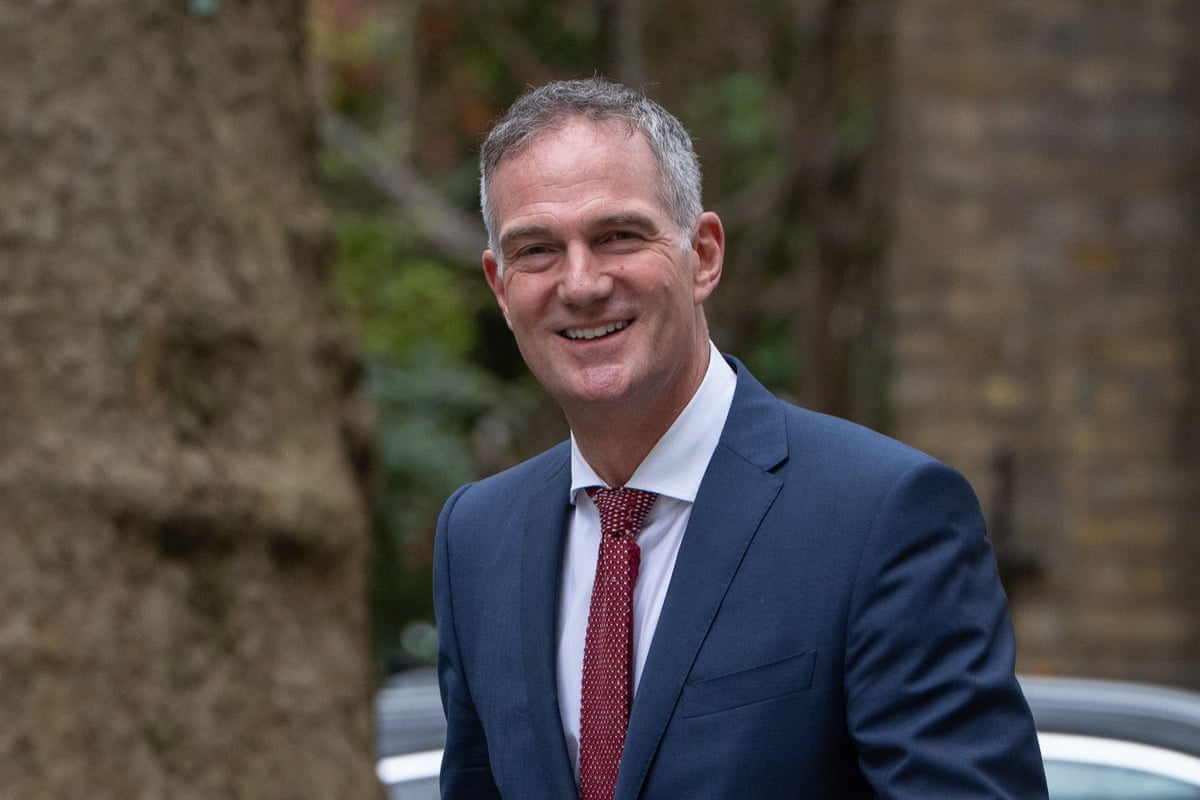
The UK Business Secretary Peter Kyle has stated that the prospect of sustained high oil prices, which could elevate inflation and interest rates, means "everything is on the table" as the government seeks measures to mitigate impacts on households and businesses.
Speaking at an event in London recognizing companies that pay suppliers promptly, Kyle emphasized tackling profiteering and high import prices as priorities, alongside strengthening ties with the EU to promote growth.
Kyle, who acknowledged the Iran conflict has affected his sleep, began collaborating with Chancellor Rachel Reeves on Monday to identify imports where tariffs could be reduced or, in some cases, increased to protect domestic industries. He recently raised tariffs on steel imports.
"We know there will be an impact on our economy from the events in the Middle East. We are making assessments as to what those impacts could be, so that we are prepared and resilient should any of the waves being created in that region begin lapping at our shores.
My department has begun outreach to a whole variety of businesses deep into the roots of the economy. Everything will be assessed – supply chains and products that are central to a thriving and successful economy and society.
He said the range of interventions could be broad and he would act “with urgency and boldness”.
Kyle was animated about the need to crack down on businesses profiteering from the conflict by hiking prices, even where a particular industry is little affected.
"In the financial crisis and during the Covid-19 pandemic we saw people profiteering for personal gain. We have an outstanding regulator in the Competition and Markets Authority and we will be tasking them with making very rapid interventions."
Regarding the EU, Kyle noted ongoing collaborations on health, climate technology, and defense that could foster growth despite current challenges.
He added that there are "no treaty obligations" in many areas where the UK could cooperate with the EU.

BlackRock CEO Warns Oil Prices Near $150 Could Trigger Global Recession
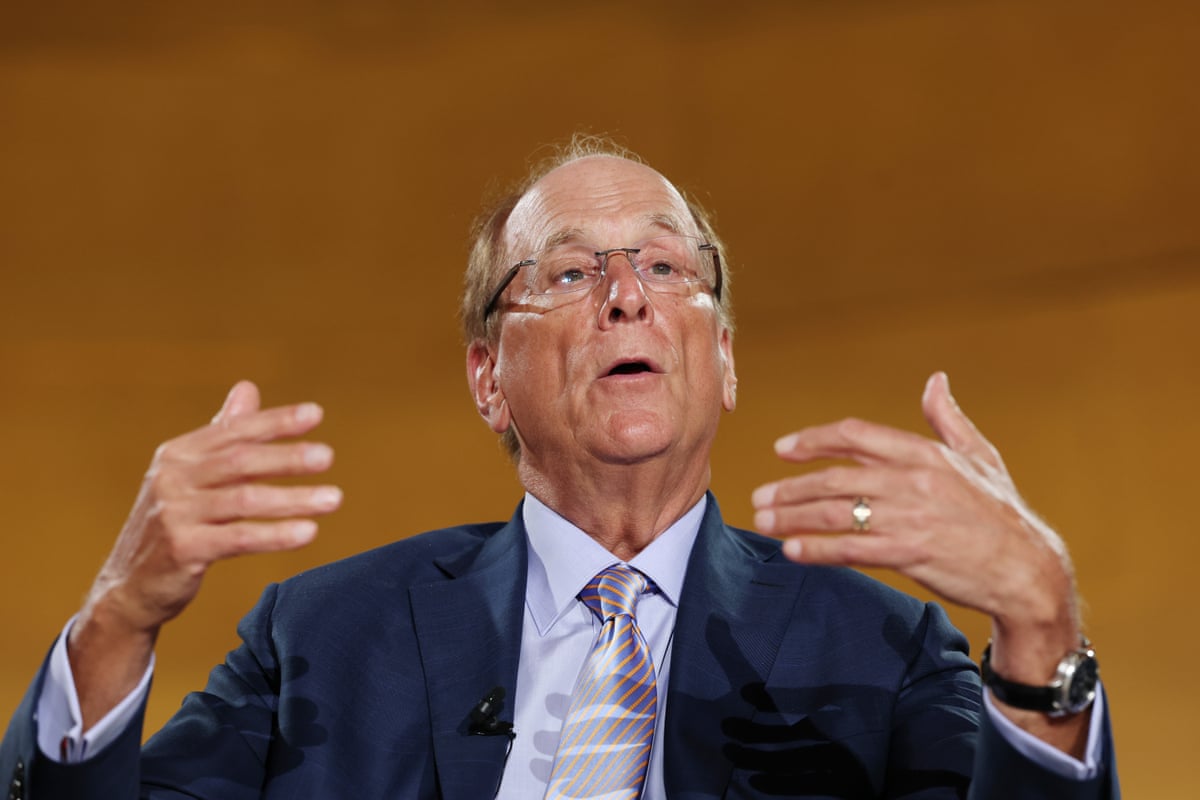
Larry Fink, CEO of BlackRock, the US fund manager controlling $14 trillion in assets, warned that if oil prices remain above $100 a barrel for several years and approach $150, it could trigger a severe global recession.
Fink stated that if Iran "remains a threat" and oil prices stay elevated, the global economy would face "profound implications." He outlined two possible scenarios: one where the conflict ends and Iran is accepted internationally, allowing oil prices to fall to pre-war levels; and another where oil remains above $100, nearing $150, causing a "stark and steep recession."
He emphasized the need for countries to pragmatically diversify their energy sources. While the UK has solar, wind, and hydrocarbons, sustained high oil prices would accelerate shifts toward renewable energy.
Some analysts have drawn parallels between current market conditions and those preceding the 2007-08 financial crisis, noting surging oil and gas prices and signs of financial system stress. BlackRock and other firms have limited investor withdrawals from private credit funds amid this volatility.
However, Fink rejected the notion of a repeat financial crisis, citing stronger financial institutions today.
"I don’t see any similarities at all," he said. "Zero."
Fink also dismissed concerns of an artificial intelligence (AI) bubble, predicting AI will create many jobs, particularly for electricians, welders, and plumbers rather than office roles.
"I do not believe we have a bubble at all.
Could we have one or two failures in AI? Sure, that I’m fine with.
I believe there’s a race for technology dominance. I believe that if we do not invest more, China wins. I believe it’s mandatory that we are aggressively building out our AI capabilities."
Last year, BlackRock participated in a $40 billion consortium acquisition of Aligned Data Centres, one of the world’s largest data center providers.
Fink noted that energy costs are the biggest barrier to AI expansion in the US and Europe.
Earlier this week, Fink warned that the AI boom could exacerbate inequality, benefiting only a small number of firms and investors.
European Stocks and Gold Rise as Oil Falls 6%
European stock markets advanced following strong gains in Asia overnight, while gold prices increased.
The FTSE 100 in London rose 1%, gaining nearly 100 points to 10,063. Germany’s DAX and Italy’s FTSE MIB both climbed 1.7%, France’s CAC increased 1.5%, and Spain’s IBEX was up 1.6%.
Spot gold rose over 2% to $4,564 an ounce, though it has declined 13% since the Iran conflict began on 28 February, when it traded at $5,277 an ounce, raising questions about its role as a safe-haven asset.
Oil prices fell this morning amid hopes for a ceasefire after Donald Trump submitted his peace plan to Tehran, despite Iran launching further missile attacks. Brent crude dropped 6.3% to $97.96 a barrel.
UK Offers to Host International Summit on Reopening Strait of Hormuz
The UK has proposed hosting an international security summit to develop a "viable, collective plan" to reopen the Strait of Hormuz as economic consequences of the Middle East conflict persist.
Defence officials have been exploring options to unblock this crucial shipping lane, through which approximately 20% of global oil supplies transit, amid the crisis triggered by the US and Israel.
The Ministry of Defence has deployed military planners to US Central Command to assess options for ensuring tanker passage through the strait, which Tehran has effectively closed by threatening retaliatory attacks.
More than 30 countries, including the United Arab Emirates, UK, France, Germany, Canada, and Australia, have signed a joint statement committing to "appropriate efforts" to safeguard the waterway.
Rachel Reeves, the UK Chancellor, responded to the inflation data:
"In an uncertain world we have the right economic plan, taking a responsive and responsible approach to supporting working people in the national interest.
We’re taking £150 off energy bills [from measures in November’s budget] and providing targeted support for those facing higher heating oil costs. We’re also acting to protect people from unfair price rises if they occur, bring down food prices at the till, and cut red tape to boost long-term energy security — building a stronger, more secure economy."
On Tuesday, Reeves ruled out universal support for future energy bill increases, stating any government assistance would be targeted, and criticized calls for universal support as unaffordable and irresponsible.
She also said she would review the planned fuel duty increase scheduled for September but did not commit to postponing it.
UK Food Price Inflation Eases but Industry Warns of 'Calm Before the Storm'
Food price inflation in the UK has moderated, but the Food and Drink Federation (FDF) cautioned this may be "the calm before the storm," as the Middle East conflict threatens to raise food prices again due to higher energy and fertilizer costs.
Food and non-alcoholic drink prices rose at an annual rate of 3.3% last month, down from 3.6% in January.
Confectionery, especially chocolate, contributed to the lower annual rate as prices fell in February but had risen a year earlier. This was partially offset by small increases in dairy products and vegetables.
Prices declined in nine categories, with the largest drops for olive oil (-10.4%), flours (-8.3%), and pizza (-4.9%).
Prices rose most rapidly for beef and veal (20.6%), offal (17.0%), and whole milk (13.1%).
Karen Betts, chief executive of the Food and Drink Federation, said:
"While food inflation fell slightly in February 2026, I am concerned that this is the calm before the storm. The longer the conflict in the Middle East goes on, the bigger its impact will be on food prices. With food and drink price inflation already running above historical averages, heightened energy, maritime fuel and fertiliser costs will put further pressure on prices.
Food and drink is an essential, bought by every household, every week. While it can take several months for cost rises to filter fully through to shop shelves, the cost of the Iran conflict will be felt by shoppers this year. If government is serious about tackling the rising cost of living, it must provide our industry with at least the same support as other manufacturing sectors. The current energy shock is yet another structural shock our industry will have to absorb, on top of the Ukraine war, the costs of realigning food law with the EU once again, and new regulatory burdens.
The federation’s members have reported that UK haulage companies have implemented an increase on emergency fuel surcharge of up to 20%. And the ocean freight lines have also implemented an emergency bunker surcharge of around $400 per container to cover higher oil costs."
UK clothing and footwear prices rose by 0.9% in the 12 months to February, compared with no change in the 12 months to January. This February figure was the highest recorded since March 2025, when the rate was 1.1%.
Prices typically rise in February as spring collections enter stores following the post-New Year sales period, the ONS noted.
This increase was offset by a decline in petrol prices, as the ONS collected data before the US and Israel launched air strikes on Iran on 28 February.
Transport prices overall increased by 2.4%, down from 2.7% in January. The largest downward effect came from motor fuels, where the average petrol price fell by 1.6 pence per litre between January and February to 131.6p, compared with a 2p per litre rise a year earlier.
Similarly, diesel prices fell by 1.4p per litre to 141.1p, compared with a 2.3p per litre increase a year earlier.
Commenting on February’s inflation figures, ONS Chief Economist Grant Fitzner said:


