

Workplaces Embrace Beekeeping to Support Mental Health and Team Spirit
Across the UK, the typical lunch break ambience in many offices is evolving from the familiar rustling of sandwiches to the gentle buzz of bees housed just outside office windows.
Companies from Manchester to Milton Keynes are collaborating with professional beekeepers to place hives on rooftops, courtyards, and car parks. This initiative is not merely a novelty but a strategic approach to alleviate stress, foster community, and reconnect employees with nature amid the challenges of hybrid work and burnout.
“There’s something very special – almost spiritual – about enabling your employees to take time away from work to see how nature has created the greatest example of how every business should run,”said Chris Payne, co-founder of Green Folk Recruitment.
“If every organisation ran like a beehive – with shared, purpose-driven goals, decentralised decision-making where individuals act autonomously for the collective good, and honest communication – it would be a very successful business indeed,”he added.
Twice annually, Payne organizes a four-hour journey for his employees to Buckley’s in Crewe, where they receive beekeeping training and learn to construct hives.
“When we’re qualified, we’ll bring the hives we’ve built back to our offices,”he said.
“It will be a magical moment.”
Emma Buckley, chief executive of Buckley’s Bees, serves approximately 24 UK clients and over 10 international ones. Due to rapid business growth, she is expanding her team.
“Our motivation is improving people’s mental health, which employers increasingly understand is closely linked to nature,”Buckley explained.
“It’s amazing to see the engagement on people’s faces as soon as we start talking about bees: they get completely lost in the world of bees and forget all about their troubles.”
Buckley offers lunchtime workshops for employees and installs cameras inside hives, enabling staff to observe bees from their desks.
“We even have one company that livestreams into their break room,”she noted.
Calming and Educational Experience Fosters Team Bonding
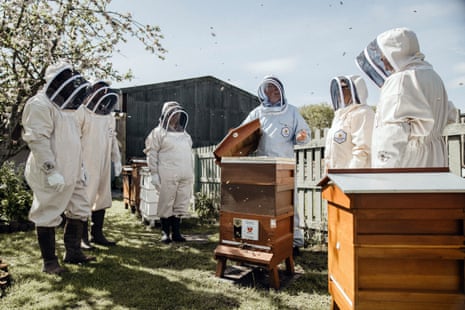
Mark Gale, founder and managing director of BeesMax Ltd, described the beekeeping experience as calming, educational, and uniquely bonding. It provides employees a rare chance to disengage from screens and collectively care for a fragile living entity.
“It’s like nothing else you could possibly experience during a working day,”Gale said. His company manages hives at locations such as the QEII Centre in London, video game developer Codemasters, and the DoubleTree by Hilton hotel chain.
“One minute employees are eating their sandwiches at their desk – and the next, they’re in full body suits with 10,000 bees flying around them.”
Gale reported a significant increase in demand, prompting him to hire new full-time staff.
“The increase is entirely organic,”he said.
“It’s all word of mouth.”

Office Apiaries Offer More Than Novelty
Advocates of office beekeeping emphasize benefits beyond novelty, highlighting improvements in workplace wellbeing, team building, and visible environmental commitment that companies can demonstrate to clients and employees.
Some teams have found that bees foster camaraderie. In workplace cultures where perks often include gym subsidies or free snacks, nature-based experiences provide a purposeful and quietly transformative alternative.
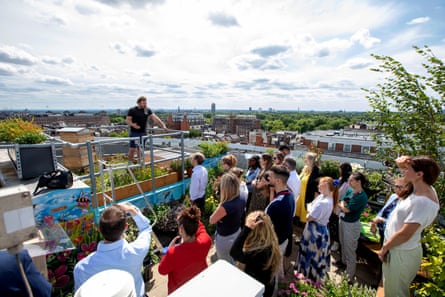
“A gym discount or fruit bowl is nice, but the bees create a shared story and a sense of stewardship,”said Phillip Potts, general manager of Park House on London’s Oxford Street, which houses seven floors of office space.
“Our tenants say it is the most unusual and memorable workplace perk they have experienced – and our queen bee has developed something of a cult following in the building,”he added.
“We call her Philippa.”
Damson Tregaskis, founder of Hive5 Manchester, has also observed rising interest.
“Employers want to encourage workers to connect more with nature,”she said.
Environmental Concerns Amid Growing Popularity
As the trend expands, ecologists and conservation groups caution that the proliferation of managed honeybee colonies, especially in urban areas, may have unintended negative effects on biodiversity.
These concerns are relevant throughout the UK, from regional cities to market towns. Areas with limited green space risk placing additional strain on already declining wild insect populations.
Tregaskis is mindful of these issues.
“I know really big companies who have been interested but their motivation has been, for want of a better word, greenwashing,”she said.
“Even in these cases, though, you can connect with the people on the ground and make sure you make a real difference,”she added.
Buckley also acknowledges these challenges, citing research that in areas with high hive density, honeybees may compete with native bees, butterflies, and hoverflies for limited nectar and pollen.
“We’re careful not to take on any business in locations that are densely populated or already have a lot of beekeepers,”she said.
Office Apiaries Address Workplace Wellbeing and Environmental Action
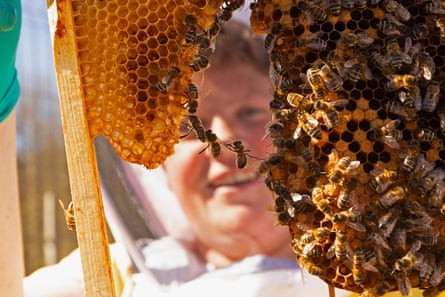
Office beekeeping initiatives arise from two contemporary concerns: the urgent need to enhance workplace wellbeing and the imperative for businesses to demonstrate environmental responsibility amid nature’s decline. During a single lunch break, the bees’ quiet hum can provide a moment of both reflection and connection.


