Introduction: UK diesel prices record biggest monthly drop on record, RAC says
Good morning, and welcome to our continuous coverage of business, financial markets, and the global economy.
The sharp decline in oil prices has led to significant reductions in fuel costs for motorists in the UK during June.
The average price of diesel decreased by nearly 17p per litre in June, according to the RAC, marking the largest monthly drop since 2000. Diesel prices fell from 183.75p per litre at the beginning of June to 167.14p per litre by the end of the month, a reduction of 16.6p.
This followed a 20% slump in crude oil prices in June.
Petrol prices also declined by 8p per litre in June, dropping from 159.37p to 151.40p per litre.
“June has been a far better month for drivers on the back of the announcement of a deal between the US and Iran to end the conflict. The price of oil has fallen dramatically and prices at the pumps have reflected that.” – Simon Williams, RAC head of policy
Diesel, while essential to many sectors of the UK economy, is classified as carcinogenic by the World Health Organization due to its exhaust emissions. The Dieselgate scandal has been linked to approximately 16,000 deaths and 30,000 cases of asthma in children in the UK.
Despite these concerns, diesel remains critical for long-haul trucks in freight and logistics, buses, coaches, and passenger cars, although diesel car sales have declined in recent years.
The reduction in diesel prices is expected to alleviate some of the cost pressures faced by UK households and businesses.
Crude oil is currently trading at $70.70 per barrel, lower than before the Iran conflict began.
However, diesel and petrol prices remain above pre-conflict levels.
“At the time the conflict began drivers had average prices of 132p for unleaded and 142p for diesel, so we’re still some way off those levels. As things stand, petrol should dip under 150p soon and diesel ought to get to below 160p but we would need the price of oil to fall further to see a return to the pre-conflict prices.”
The agenda
9.30am BST: Bank of England credit conditions survey
1.30pm BST: US non-farm payrolls jobs report for June
1.30pm BST: US initial jobless claims data
3pm BST: US factory orders for May
Coffee hits five-month highs on crop concerns
Coffee futures have reached five-month highs amid concerns about the 2026/27 crop in Vietnam, the world’s top robusta coffee producer.
Robusta coffee peaked at $3,920 per metric tonne, according to .
“This year’s irregular rainfall and extreme heat have increased fungal diseases, raising concerns about production,” a trader in Vietnam reported.
Rise in Divisia money growth 'creates breathing space for Burnham'
Professor Costas Milas from the University of Liverpool’s Management School highlighted positive economic signals for the incoming prime minister.
“Although the latest data suggests that business confidence has taken a hit, there is good news on mortgage rates (which are on their way down) and, at the same time, Divisia money growth is holding up rather well at 2.6 percent per annum. This is good news. As I discuss in my latest (co-authored) LSE Business Review blog, Divisia money is a powerful measure of liquidity conditions in the UK economy which is currently ruling out a (material) hit to GDP growth. This gives some material breathing space to prime minister (in waiting) Andy Burnham as long as he explains how he will finance his growth-enhancing devolution plans before financial markets revert to anxiety mood...”
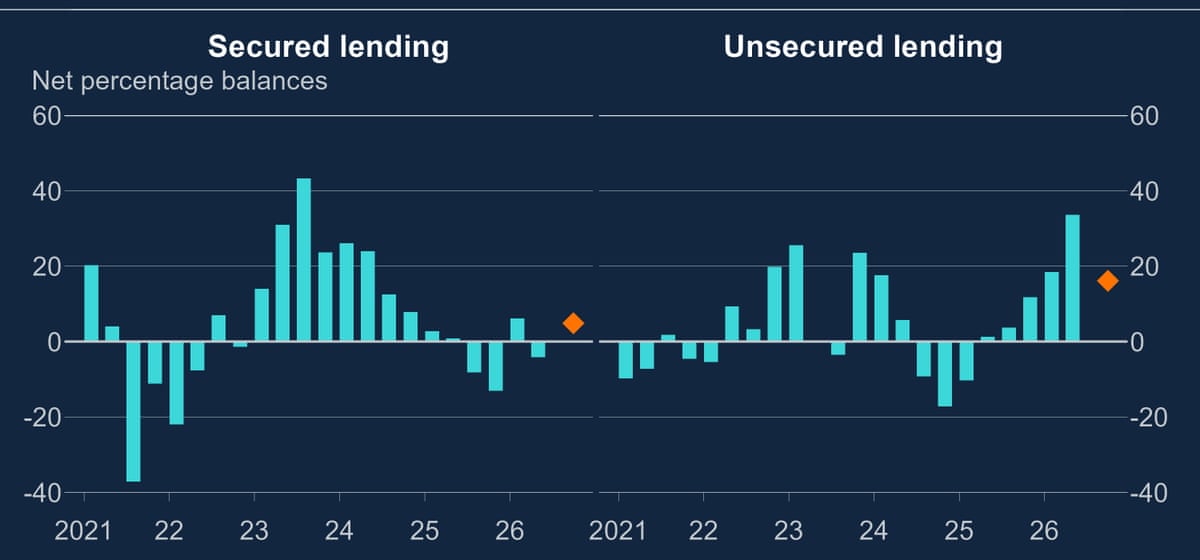
The Bank of England’s quarterly Credit Conditions Survey revealed that British lenders expect demand for new mortgages for house purchases to decline in the three months ending August. Despite rising mortgage costs after the Iran conflict began, demand increased in the three months to the end of May.
UK credit card default rates are rising
New data from the Bank of England indicates that default rates on UK credit cards and other unsecured lending increased in the April-June quarter.
Defaults on credit cards are expected to rise further in the third quarter of 2026, while defaults on other loans are projected to remain stable.
UK mortgage rates dip again today
Mortgage rates in the UK have decreased slightly today.
Moneyfacts reports that the average fixed residential mortgage rates for two-year and five-year terms both fell to 5.51%, down from 5.52% the previous day.
ECJ dismisses Google fight against €4.1bn antitrust fine
The European Court of Justice (ECJ) has rejected Google and Alphabet’s appeal against a €4.1 billion (£3.5 billion) antitrust fine imposed for anti-competitive practices related to the Android operating system.
The European Commission found that Google required mobile manufacturers to pre-install Google Search and Chrome apps as a condition for accessing the Google Play Store, which the ECJ upheld.

The ECJ confirmed the 2022 General Court ruling, which reduced the original fine from €4.34 billion to €4.125 billion.
“The appeal brought by Google and its parent company Alphabet against the judgment of the General Court is dismissed, thereby confirming the penalty imposed for Google Search’s abuse of a dominant position in the context of the Android operating system.”
AI demand fears hit chip stocks
Chip stocks in Asia-Pacific markets have suffered a sell-off amid waning investor enthusiasm for the artificial intelligence (AI) sector.
South Korea’s SK Hynix shares dropped 14.5%, Samsung fell 9.6%, dragging the KOSPI index down by approximately 8%, erasing some of its gains from the first half of the year.
This followed a decline in US chip stocks, which reduced the Philadelphia Semiconductor Index by over 6% overnight.
The sell-off was triggered by news that Meta Platforms is developing a cloud business to sell excess AI computing capacity.
Meta’s shares rose 9% on this announcement.
“Meta has spent too much, eaten more than its stomach could take, and now needs to spit part of it out. It took debt on its shoulders along the way. It failed to release a go-to model, and it’s now moving to Plan B to make its investments worthwhile. Plan B will cost the company, so in theory, Meta is arguably in a worse place than the company itself thought it would be. I didn’t get why it rallied 9% on yet another failed business attempt.” – Ipek Ozkardeskaya, senior analyst at Swissquote
The cost of living squeeze has also eased somewhat in Switzerland.
Swiss inflation slowed in June for the first time in eight months, with consumer prices rising 0.5% year-on-year, down from 0.6% in May.
This suggests that lower oil costs are beginning to impact the domestic economy.
UK's Currys: memory chip shortage will mean price rises
While motor fuel costs have declined, prices for semiconductors continue to rise amid global shortages.
Currys CEO Alex Baldock warned that shortages of memory chips will lead to price increases for consumer electronics.
“AI and data centres are eating up the world’s supply of silicon, leaving less for the likes of mobile phones and laptops which does create availability challenges and will produce some cost price inflation. Inevitably there are going to be some price rises but we’re in a pretty good position to dampen that as much as possible.”
Currys also reported a profit increase to £153 million in the year ending 2 May 2026, up from £124 million the previous year.
UK business confidence slumps to near four-year low
UK business confidence has fallen to its lowest level since late 2022, as companies grapple with the economic impact of the Iran conflict.
The Institute of Chartered Accountants in England and Wales (ICAEW) reported that weaker sales expectations, rising costs, and geopolitical uncertainty are weighing heavily on business sentiment.
The ICAEW’s Business Confidence Monitor (BCM) highlighted geopolitical risks as the top concern for 65% of companies, reflecting the fallout from the Iran conflict and domestic uncertainty ahead of a potential change in prime minister.
Labour costs were the second biggest challenge, cited by 58% of firms amid a significant minimum wage increase during the survey period.
Energy costs were also a growing concern, with 55% of businesses highlighting this issue in Q2, up from 35% in Q1.
Transport worries nearly doubled from 11% to 20%, the highest level in over two years, due to the closure of the Strait of Hormuz and rising fuel prices.
Analyst: Brent may rise back over $80 soon
Investment bank Shore Capital suggests that the recent decline in oil prices may be an overcorrection.
Brent crude has fallen from approximately $110 per barrel in mid-May to below $71 per barrel currently.
Shore analyst James Hosie anticipates Brent prices could rise above $80 per barrel once the initial supply boost from the reopening of the Strait of Hormuz subsides.
“Rapid decline to low $70s may be an over-correction - Near term oil prices have declined by over 15% following the mid-June US-Iran ceasefire agreement that has enabled the gradual resumption of transit through the Strait of Hormuz and reduced the threat of a fresh escalation in the military conflict. In our view, the sharp drop in oil prices has been driven by the release of oil tankers previously stuck in the Gulf back onto the global market, including Iranian cargoes that are currently sanction free. As this initial supply boost passes, we anticipate a rise in Brent prices back above $80 per barrel based on a gradual recovery of Persian Gulf oil production.”
UK mortgage rates down too
Mortgage rates in the UK have also declined alongside fuel prices.
The average fixed-rate mortgage for two-year and five-year terms fell to 5.52% yesterday, down from 5.68% and 5.63% respectively at the start of June.
This reduction has been influenced by the fall in oil prices, which has eased inflation expectations among investors.
However, rates remain above pre-Iran conflict levels; on 27 February, the average two-year fixed mortgage rate was 4.83%.