

Trump's Venezuela Oil Ambitions
Following the US-led seizure of Venezuelan President Nicolás Maduro last month, President Donald Trump has expressed intentions to exploit Venezuela's vast oil reserves, which are the largest globally.
Trump recently announced plans to visit Venezuela, although no specific date has been determined.
These remarks came after US Energy Secretary Chris Wright concluded a two-day visit to Venezuela to assess the country's efforts to reopen its oil sector to US companies.
Wright's trip followed the Venezuelan National Assembly's passage of legislation permitting private and foreign investment in the oil industry, ending two decades of stringent state control.
Trump views this as a significant opportunity for the US oil sector. At a mid-January White House press conference, he stated,
"We're going to be extracting numbers in terms of oil like few people have seen."
This statement followed a meeting with energy industry leaders.
However, US oil companies face a critical question: do the economic prospects justify investment?
Economic and Operational Challenges
William Jackson, chief emerging markets economist at Capital Economics, explains that Trump's goal is to "revive Venezuela's oil sector and use that energy to increase supply and reduce costs to the consumer, possibly providing a source of revenue for a more friendly Venezuelan government to rebuild the economy after years of mismanagement."
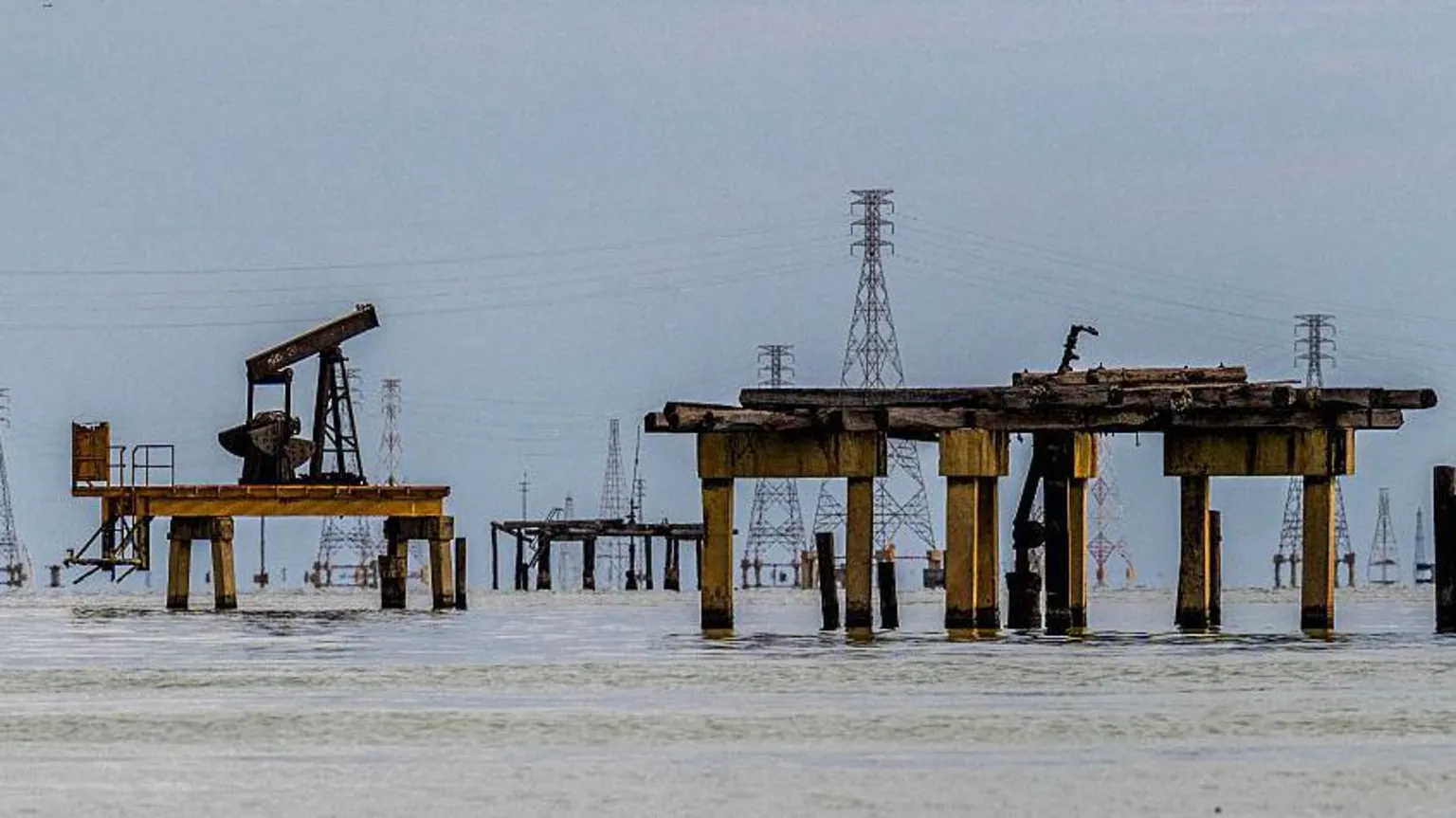
Despite this vision, practical challenges abound. Venezuela's state-owned oil company, PDVSA, has significantly deteriorated.
Both Maduro and his predecessor, Hugo Chávez, extensively exploited PDVSA's revenues to fund social programs such as housing, healthcare, and transportation, but neglected investment in maintaining oil production capacity.
Production has sharply declined in recent years, partly due to US sanctions, which may now be subject to revision.
"In Venezuela, you're dealing with equipment that's been degraded by many years of neglect,"Jackson notes.
"Ten to 15 years ago, Venezuela was producing 1.5 million barrels a day more than it does today."
Monica de Bolle, senior fellow at the Peterson Institute for International Economics, concurs that PDVSA is in a dire state.
"A lot of things have to be scrapped completely and rebuilt from the ground up,"she told the BBC.
"In fact, if political constraints did not matter, the best thing to do would be to scrap PDVSA, but that isn't going to happen.
"It's a big nationalist symbol, it's attached to sovereignty. Would the Venezuelans be willing to do whatever the US says and roll over? I don't think so."

Trump has urged US oil companies to invest at least $100 billion (£75 billion) to restore Venezuela's deteriorated oil infrastructure, a prerequisite for increasing oil exports.
Officially, Venezuela holds 300 billion barrels of oil reserves. However, in 2023, it exported only 211.6 million barrels valued at approximately $4 billion. By comparison, Saudi Arabia, with 267 billion barrels of reserves, exported oil worth $181 billion during the same period.
Thus, there is considerable potential for growth on paper. Nevertheless, Jackson raises doubts about the accuracy of Venezuela's reserve estimates.
During Chávez's presidency, Venezuela reclassified its reserves, increasing reported extractable oil from 80 billion barrels to nearly four times that amount by 2011. This adjustment was facilitated by high oil prices at the time, which made previously uneconomical projects viable.
"There was a big step – jump – that people have questioned,"Jackson said.
"But now the world is awash with oil and it's not clear that the same calculations still apply."
When Chávez assumed office in 1999, oil prices were rising, often reaching around $100 per barrel in the early 2010s, providing substantial revenue for social programs. Currently, with prices near $65 per barrel, Venezuela appears less attractive for investment.

Additionally, Venezuelan oil is of lower quality than Saudi crude. It is sour, heavy, difficult to extract and refine, and its high sulfur content causes pipeline corrosion.
A revival of Venezuela's oil industry could affect Canadian producers, who export similarly viscous oil to the US, but analysts consider this risk minimal.
Capital Economics research suggests Canadian oil will remain competitively priced even if Venezuelan production rises.
Human Capital and Security Concerns
Venezuela's ongoing economic crisis has prompted nearly eight million people to emigrate in search of better opportunities.
This exodus includes skilled engineers formerly employed by PDVSA, whose absence hampers oil production, which currently operates with minimal staffing.
Thomas Watters, managing director and sector lead for oil and gas at S&P Global Ratings, emphasizes that US firms can repair Venezuela's infrastructure only if it is economically viable.
"At the end of the day, oil and gas companies have to deliver value to shareholders,"he said.
"They have very good managers. You can build anything, as long as you can pay for it.
"But you need an oil price that makes that worthwhile. Unless you can generate sufficient money to justify that, it's very difficult to see the industry coming back."
US oil companies also have prior negative experiences in Venezuela. In 2007, ExxonMobil, ConocoPhillips, and others had assets seized after refusing PDVSA majority control.
These companies won substantial damages in international courts—$8.3 billion awarded to ConocoPhillips—but have yet to receive payment.
With the current Venezuelan regime largely intact, led temporarily by former Vice-President Delcy Rodríguez, concerns about renewed expropriation persist.
Furthermore, US Energy Secretary Chris Wright has stated that the Trump administration does not plan to provide security guarantees to oil companies operating in Venezuela.
This omission is significant given the presence of state-sanctioned paramilitary groups known as "colectivos," which often function as criminal gangs.
Without stronger government incentives, oil companies may hesitate to invest in what could be a costly venture.
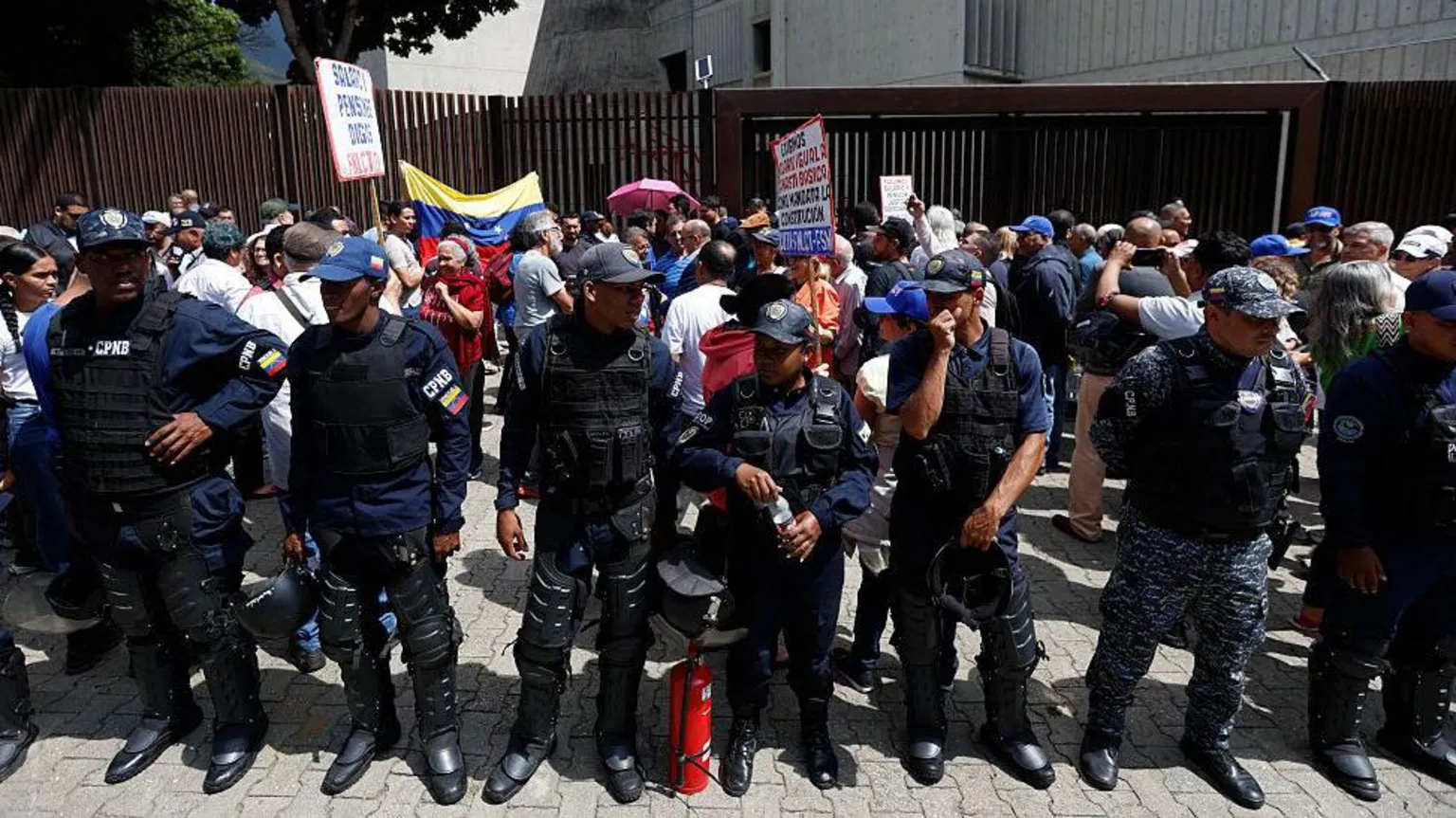
ExxonMobil CEO Darren Woods has described Venezuela as "uninvestable" in its current condition.
Notably, Trump did not offer incentives to encourage investment but instead threatened to block ExxonMobil's involvement in Venezuela.
Monica de Bolle characterizes this approach as
"all stick, no carrot,"adding,
"And it doesn't seem like they understand that they do need carrots."
She critiques the Trump administration's perspective as an "imperialist vision" of Latin America, viewing the region's resources as US property.
De Bolle views private oil companies' reluctance to invest in Venezuela as a positive barrier against such resource exploitation.
"This is a time when you think, 'Thank God the US doesn't have a state-owned oil company,'"she said.
"They need the private sector, but for the moment, the private sector isn't budging. And what company in their right mind is going to put money into Venezuela?"
Potential Impact on Global Oil Markets
If Venezuela's oil production eventually increases significantly, it could influence global oil prices. However, analysts remain cautious.
William Jackson of Capital Economics stated,
"It depends on the scale at which it happens.
"The situation is very fluid, very opaque, and there's a big geopolitical angle. We're in the early stages where Venezuelan production is concerned."


